Safety Dance: Covid Harm Reduction for the Rave Scene

No one wants to talk about this. We all hate it. We’re tired. Believe me, I feel that tiredness in my bones. And I know you’re busy and overwhelmed, so I’m taking on the labour of making this as straightforward as possible so you don’t have to figure it all out yourself. And I promise I’ll make your experience of reading this as joyful as possible, to show my gratitude for you reading it at all! (Skip to the goods here if you’re already sold and just want the best practices.)

Because as tired as we are, we can’t live with our heads in the sand. That’s some conservative, climate-denying shit that we’re not on. We’re building caring community, here. We love each other, and we want to keep each other safe so we can party til we’re old and hobbling around like sparkly cryptkeepers.

And the best part is, we already have deep traditions in our community around keeping one another as safe as possible while still being debaucherous hedonists. And there’s nothing I want more than to be able to facilitate all our various sins and perversions. We can just do it safer than we are now is all, and honestly without all that much effort!
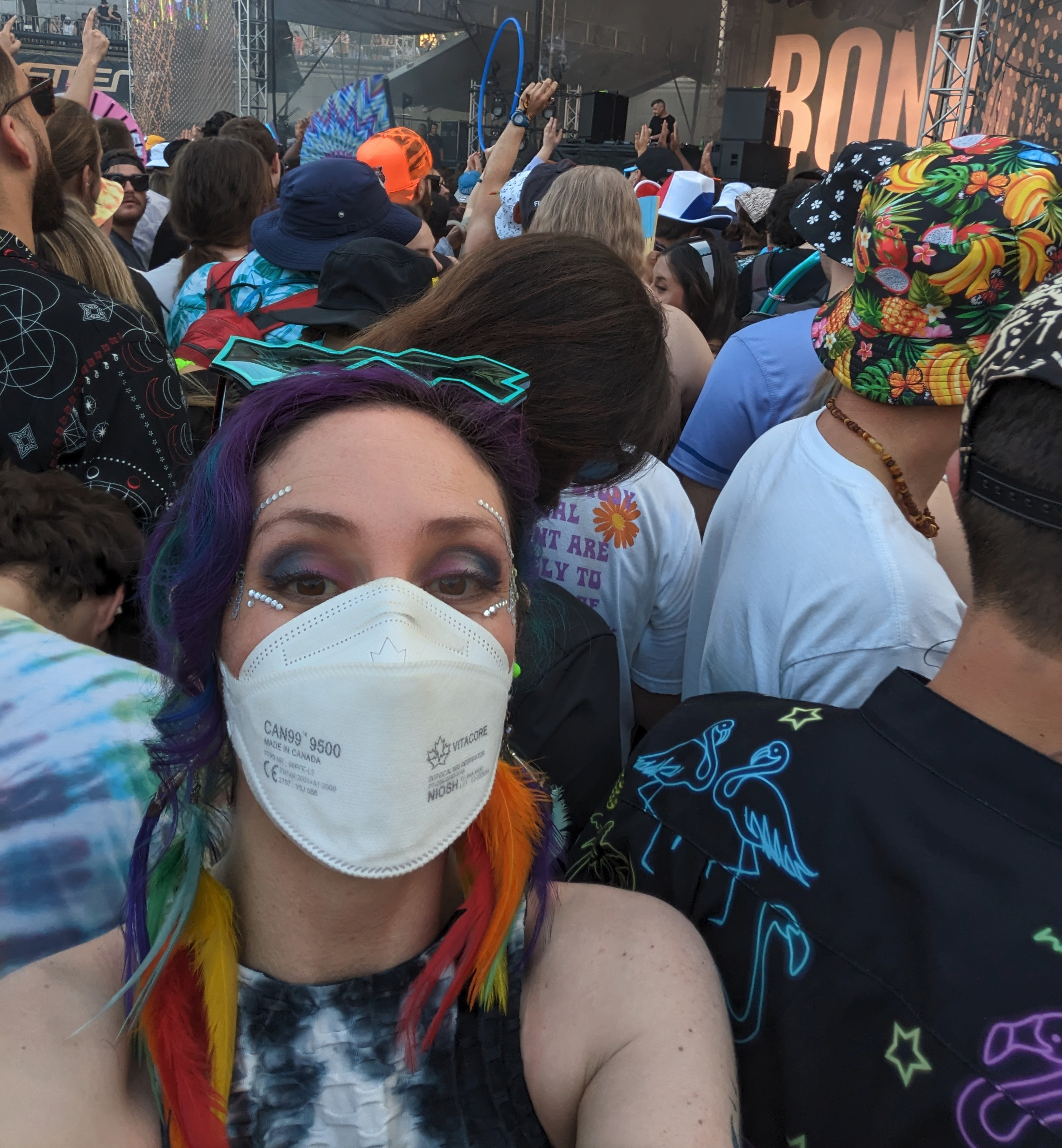
I love keeping myself and others safe as a ‘fuck you’ to the systems trying to kill us all for profit

Drugs and sex come with risks, but harm reduction is so embedded in the culture (our niches, at least) now that we barely even notice the behaviours we have normalized to reduce those risks–indeed, taking care of each other is part of the fun. Here’s a clean straw for you, my love. Have you drank water yet tonight? Let me arrange these free condoms in a big goofy smiley face at the kink party.

I have embraced the role of rave mom. I have rave mom’d so hard I have become a rave elder, a rave grandma with little 30-year-old rave grandchildren, out there with GHB syringes and magnesium. I love you, I care about you, and I am a collector and sharer of information. So I will keep you as safe as you’re willing to consent to.

I am so passionate about rave safety and harm reduction that I’ve evolved beyond “drink water” and “don’t mix ketamine and alcohol” (though those are obviously important). If anyone doesn’t feel safe at the party, then the party needs work. That includes our Palestinian (an article for another day, though start here to learn more) and disabled/vulnerable comrades, and the children in our community that depend on us to keep them safe.

I need to get real for a second here, so please take a breath and open yourself up to the information I’m about to share. I offer it as a gift, because I care: covid is still very dangerous and it is still hurting people. I personally know three people now who are suffering from Long Covid, two of them from the rave scene in Toronto, one of whom aquired it in August 2023. None of them were disabled or immunocompromised before they got it, but their lives have been completely upended since.

As we’re all realizing in more ways every day, colonial and for-profit institutions are not built to help us, and the few protections that we have are failing as capitalism crumbles and neoliberals privatize everything. So it’s up to us to build a culture of community care, and keep each other safe. Vaccines help—please get an updated vaccine!—but they do not completely prevent Long Covid. Covid is airborne—it spreads through the air, not just through droplets. There are things we can do to lower the risk of giving or getting covid, while still partying as much as we like.
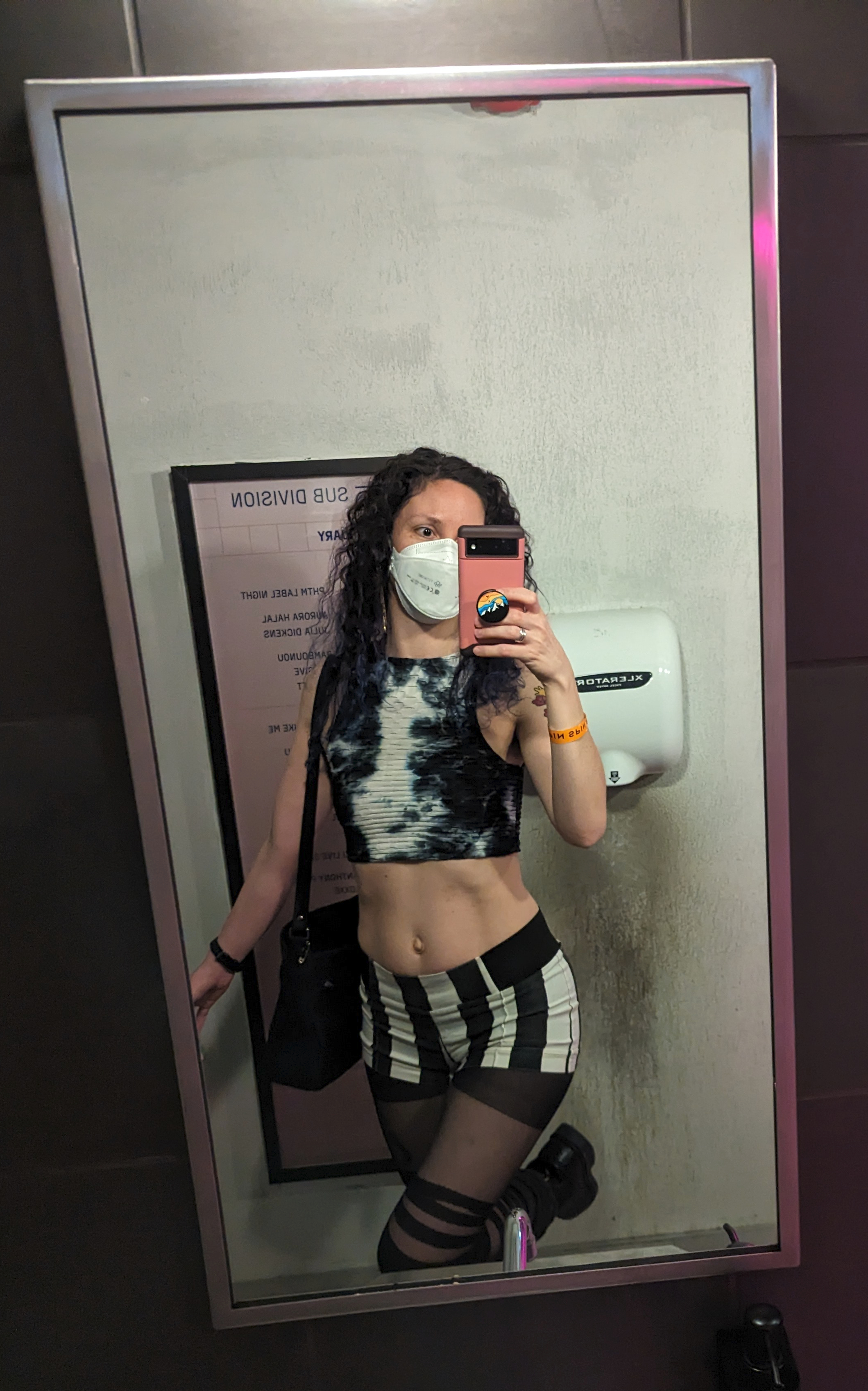
Make masking hot again

“I view COVID mitigations as part of a consent culture,” says my covid-safety collaborator Ryan Utter, who once lovingly but firmly dommed me into eating a plate of ribs at a festival because I was too high to deal with the bones but needed sustenance in my body before a night of dancing. “We want to go out, and we should be able to trust that buildings (and organizers) follow regulations and best practices for indoor air quality. We can’t consent to risks we don’t know about, so if a party isn’t upfront about the ventilation (or lack thereof), CO2 levels, presence of HEPA and their clean air delivery rate, people cannot consent to the risk.”

As longtime harm reductionist Alex Betsos pointed out to me, clean air precautions make the whole party experience better anyway. “I think we have this idea that covid precautions have to suck, and that’s really not true. Like, would you not rather be on a dancefloor with lots of space to dance, good ventilation & UV lighting than the inverse? The feeling of being drenched in sweat b/c you walked into a nightclub with shit ventilation is so visceral.”

Just like with any form of harm reduction, you don’t have to take an all-or-nothing approach if some of these aren’t practical for your parties at the moment—the more of these protocols you use and strive towards, the safer your events will be!

HOW TO MAKE YOUR PARTIES MORE COVID-SAFE

  • Open the windows. I can’t stress this enough. All of them, or as many windows as you can. Put signs on the windows saying “do not close.” Tell people in the event invite that you’ll be leaving windows open for covid safety, and that if they get chilly, to put their jacket on or bring a cozy blanket.
  • Invest in HEPA filters and/or Corsi-Rosenthal boxes. Plug-in HEPA air purifiers will filter out viruses from the air. Have one in every room, and 2-3 if the room is very large.* This is an investment (depending on the size of your parties, around $300-600 initially, then $150-300 a year for replacement filters), but it’s one that should become as standard as offering water and earplugs. Less expensive and often more-powerful options like Corsi-Rosenthal boxes (a box fan + MERV-13 furnace filters) can also be constructed easily and re-used over and over. Consider fundraising at the party to buy filters if your margins are super tight! I like Levoit, get in touch with me if you want help researching which filter to buy. HEPA filters and CR boxes should become standard party equipment in our scenes, as essential as speakers and decor. As a bonus, they work as fans to cool people down! Decorate them with lights and paint to add to the ambiance. For more on deciding which to use, see below.
  • Encourage people to wear masks. You do not have to make them mandatory, but simply writing in the event description and having signs saying “masks are encouraged, keep each other safe!” goes a long way. 
  • Offer masks as people enter the party. N95/N99s are ideal, but these are of course expensive, so KN95s are a good next bet, and ASTM-3 surgical masks are much better than nothing. You don’t have to make them mandatory, but if people know they’re offered and normalized, more people will be likely to wear one.  
  • Set up a testing table where people can test if they want to, and encourage people to. This can go a long way – it has worked to catch cases at parties before! If you feel that you can, you can also make testing at the door mandatory – this requires a bit of planning and volunteers, but it’s one of the best ways to keep everyone safe. Alternatively, for smaller parties, ask everyone to test in advance and post a photo of their negative test in the group chat or event page.
  • Venue ventilation: When you’re looking for venues, ask the venue owner if they have an HVAC system that will deliver fresh outdoor air, if it will be turned on during the party (some are set to automatically turn off at night) and if they have upgraded the HVAC filters to MERV-13. If they say yes, ask for specific details. Try to go with locations that do these things. Even if the location doesn’t have all elements and you end up having to choose that location, the more that organizers express that it’s a concern, the more we normalize the idea that it’s what we want.**
  • When weather permits, have your parties outside! Get creative, ask your community for recommendations. Ask people to help by bringing shade/rain structures if it’s looking like weather.
  • Stay home if you’re sick: Tell people to please not attend the party if they have any cold symptoms or are feeling unwell. Generally in our culture, we should be encouraging people stay at home any time you are sick, and test every day that you have cold symptoms (sometimes people test negative for a couple days, then get a positive!).
  • CO2 monitoring: People exhale CO2, so monitoring CO2 with a handheld device can give you an indication if the ventilation of the space is adequate. Outdoor air is around 450ppm, and if CO2 stays below 1000ppm, ventilation is generally considered adequate. But we’ve seen CO2 levels approach 4000ppm at some parties. 4000ppm means that 9.4% of the air in each breath you take was previously inside someone else’s lungs. Since COVID is spread by aerosols generated when people breathe, talk, shout, sing or sneeze, this level of CO2 indicates that aerosol-laden air is not being replaced by fresh air and the space has become high-risk. Opening windows, adjusting the HVAC system or adding air filtration are all valid responses to poor CO2 levels/poor ventilation.
  • UV disinfection: There is new air disinfection technology on the horizon – notably far-UV (UV light at 222nm which deactivates viruses but is safe for skin/eyes). Some members of the community are already experimenting with deploying these devices, so keep an open mind if they approach you with offers to use them at your parties. They are safe and they work! As a friend pointed out, they also look dope, like they were MEANT for raves.
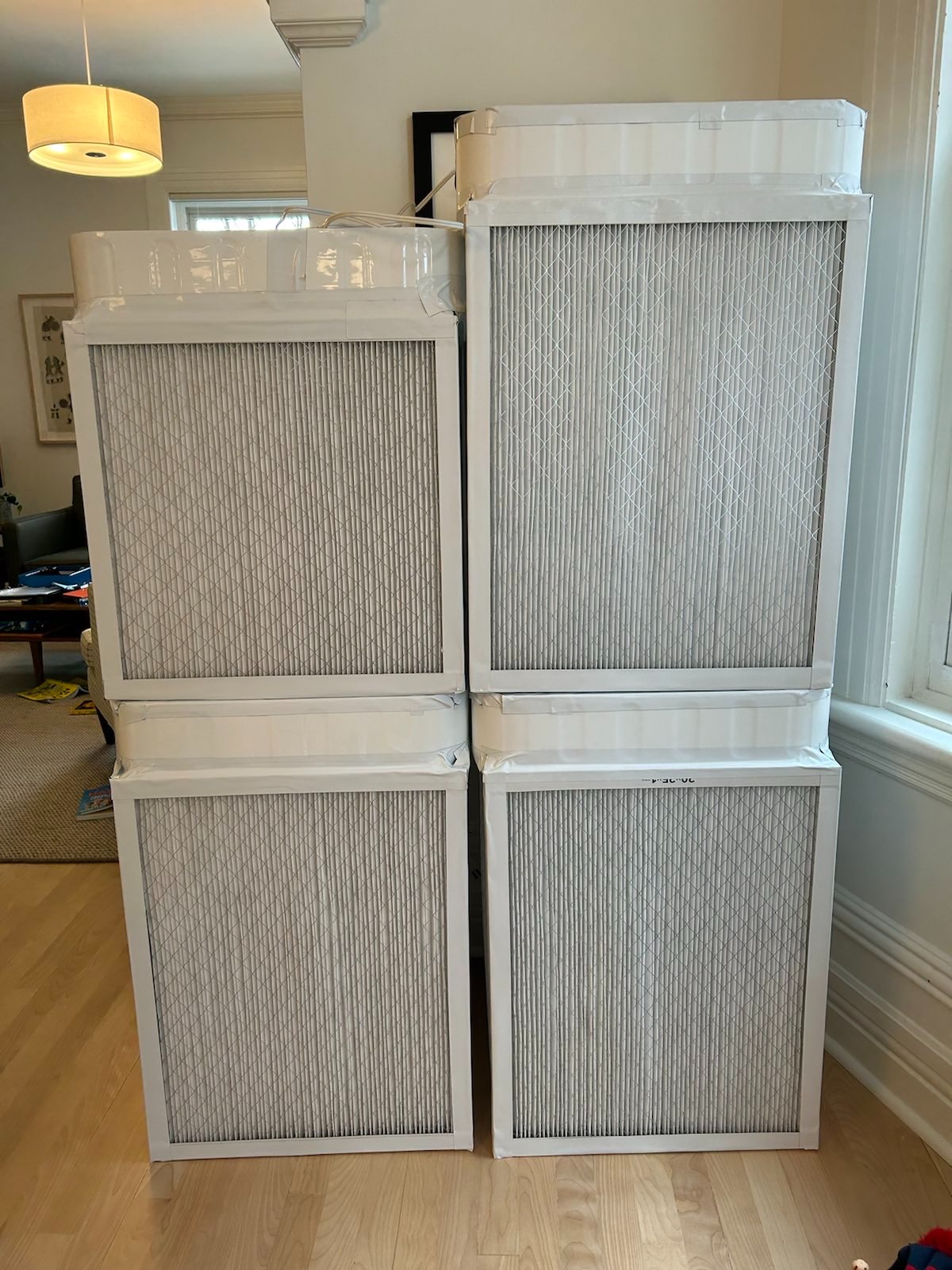
Corsi-Rosenthal boxes made for a party collective

Thank you for reading this. This is disability justice – you’re doing it. As a party organizer, you occupy an important role in the community, and using it to keep people safe helps create a culture where we can withstand infrastructural collapse as we transition from colonialism/capitalism into systems that don’t suck.

If you’re in Toronto, I am absolutely willing to be the anti-covid fairy at your party, just ask. I’ll bring signs for the windows and make up a whole elaborate medieval bit where I’m jousting invisible viruses or something, whatever you need. Ryan Utter is also willing to consult about air cleaning and ventilation options.

I am a community organizer, low-income PhD student & mother of two young children. If you appreciate the labour that went into this article, consider sending me and my kids some masks, HEPA filters, diapers or books, or just a cash tip 🙂

With great thanks to my collaborators on this piece, Ryan Utter and Rine Vieth!

Additional info for superstar organizers who want more:

*Ideally “do the math” to ensure the combined clean air delivery rate (CADR) is appropriate for the size of the space and occupancy (we can help with this).

**Note that ventilation requirements are set out in the provincial building codes, but HVAC systems are often not run as designed (i.e. limiting outdoor air intake to save energy costs). Where adequate ventilation does not exist (like in a warehouse space) employing stand-alone air filters and opening windows becomes even more important. 

How do I decide between Corsi-Rosenthal boxes, and HEPA filters?

The main factor is cost. CR boxes are less expensive, but a higher level of effort, and they are bulky and loud. But they DO delver more clean air, so that’s a big advantage, especially in large spaces. Someone also needs to spend a few hours building them and then replacing filters once a year. So HEPAs are great and much easier to use/move around if you have the money, or are short on volunteers to make CR boxes.
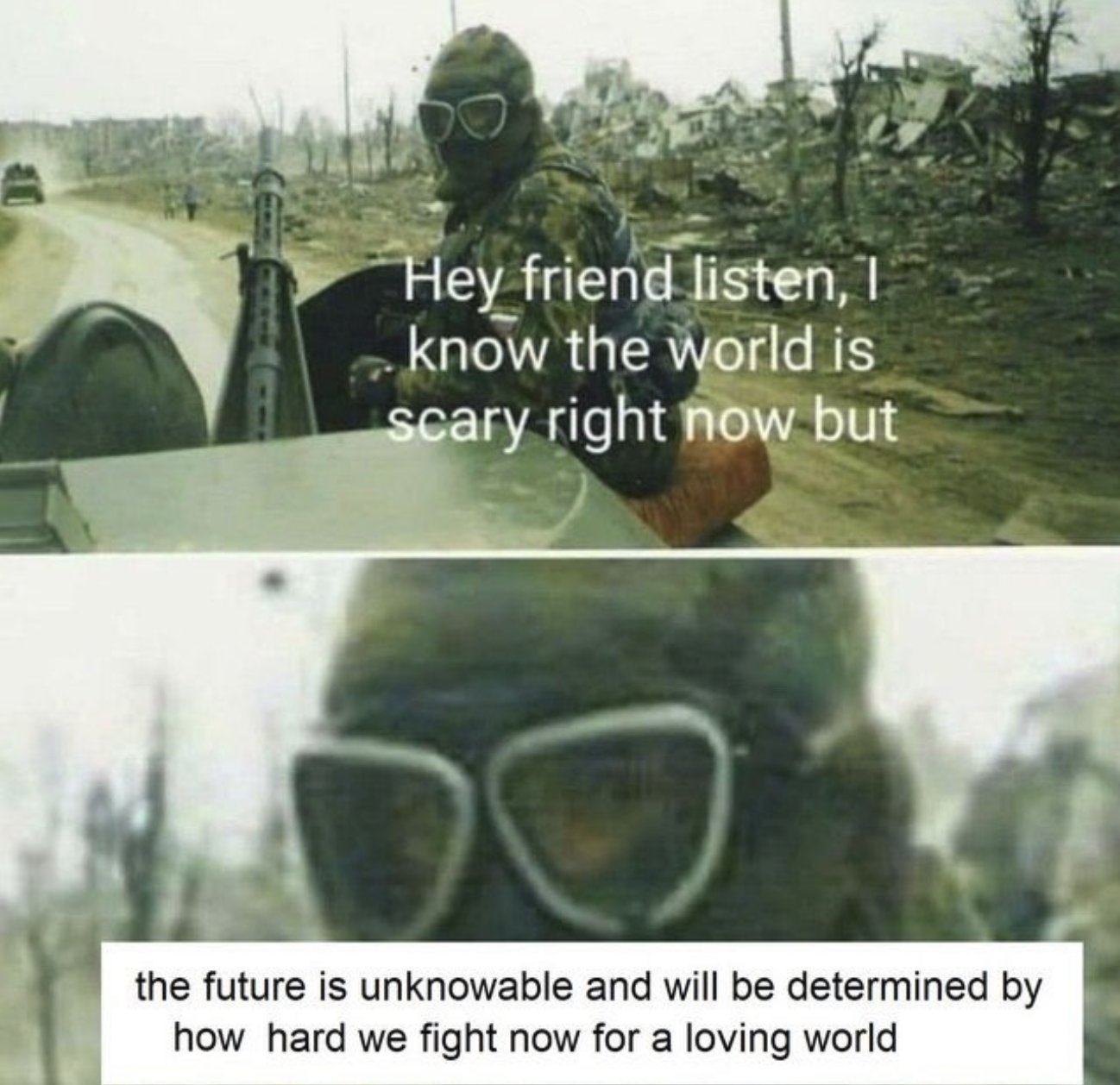
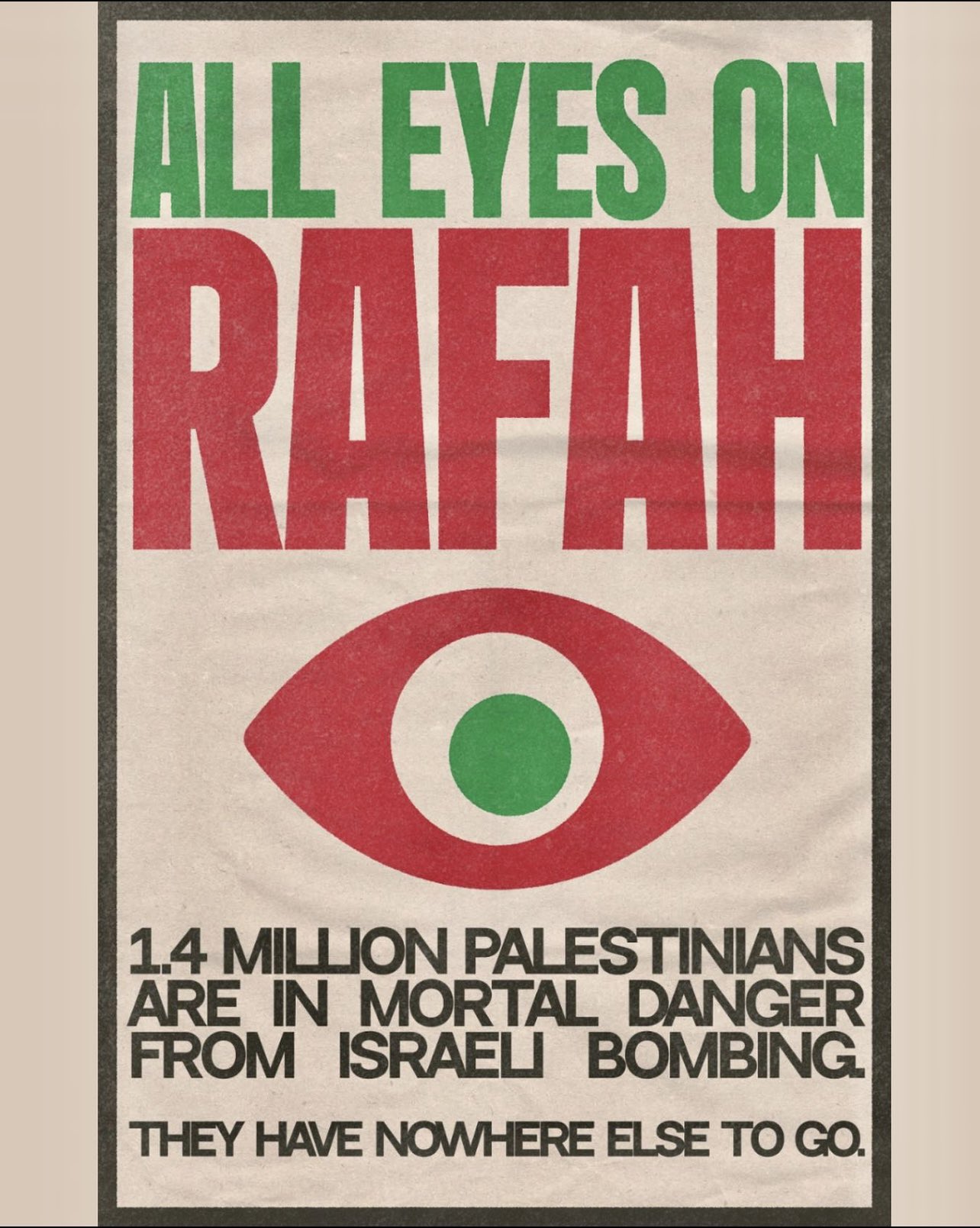
Radical action for Palestine: Here’s what to do

Are you struggling to know what to do about Palestine right now?

As an organizer, I have advice for you. Please share this list widely (here it is in Twitter thread format, no I will not call it ‘X’). You may copy any part of this article and share it freely.

Note: The work I do to put together resources like this and organize in my community takes a lot of time and energy, and I do it for free in my limited spare time as a grad student and mother of two small children. If you are grateful for my work and want to support me making more of it, your help is deeply appreciated and will go to feeding myself and my two little kids:

💲 Send money on PayPal
🍼 Send my baby some diapers (or me some books)
❤️ Support me on Patreon

I love you. Stay strong. Act always from care, not hate. Spend your energy wisely. Model the world you want to see ❤️

Are you in Toronto? Make sure to check out this section!

  1. THINGS EVERYONE SHOULD DO
  2. SPECIFIC ACTIONS YOU CAN TAKE TO HELP PALESTINE
  3. WHERE SHOULD YOUR MONEY GO?
  4. A NOTE ON PROTESTS
  5. SAFETY CONSIDERATIONS
  6. THIS IS HOW WE WIN
  7. Additional considerations
  8. Toronto-specific resources

THINGS EVERYONE SHOULD DO

1) First, stay calm and focused.

Stop doomscrolling when you feel like dying. You know it’s bad right now and action is needed, that’s enough. You don’t need more news if it’s going to make you ill. Keep informed, but conserve your energy for action.

2) Do a search for Palestine rallies and socialist/communist/anti-imperialist groups in your area.

Go to rallies, and importantly, find out which organizations are currently mobilizing, and when their meetings are. If they’re led by BIPOC, attend them. Listen. Take notes. Talk to people. Share things you learn (nothing that incriminates any group, just educational info and organizing advice) on social media. Encourage your friends to come with you to these events. [If it’s not safe to protest or attend meetings in your area, go to step 4.]

3) Spend time around other people who really fucking care about what’s happening, and are taking steps to do something about it.

I spent the first week of the bombings in a very dark place. Utterly paralyzed by grief. Then, I dragged myself out of bed and went to a socialist action conference (with Spring, who I highly recommend if you’re Canadian), and spent two days around a bunch of other people who felt the same as me, but were taking steps to actually do something about it. It’s hard to even describe how life-giving this is. It’s the only true cure for the panic and doom you feel when reading about what’s happening. It is also the best defense against the harm from being gaslit by our political “leaders.”

4) Post on social media! But when engaging with people online, ask yourself: Am I more interested in helping Palestinians, or in venting my rage in impulsive ways?

If the latter, please consider logging off and taking care of yourself. Do not let Z*onists provoke and drain you. To be honest, as someone who’s been doing this work for a long time, it’s endlessly frustrating to watch leftists insult and swear at people instead of using that energy to educate, gain comrades and build the movement. Obviously some people can’t be reasoned with, but many more are simply uninformed, and approaching them in good faith gives you a better chance of changing their mind than going in hot with insults. If someone is being particularly obstinate then you’re wasting your valuable time and energy engaging with them anyway. Try to instead:

  • Share educational resources with people
  • Share about how you unlearned Z*onism
  • Boost engagement and voice your support on posts from activists, or news articles/posts about direct action
  • Comment with action ideas on viral posts
  • Ask influencers to talk about Palestine
  • Ask questions intended to make people think their positions through (here’s an example of how to do this with drug policy)
  • Do a search for people asking “what can we do”/”what can I do” and share this article with them, or anything from the action list here
  • Yell at politicians & shitty journalists if you’ve gotta yell at someone
  • Censor words like Palestine, Israel, Z*onist (eg. switching capital i’s and lowercase L’s, and using one of these guys ¡ for lowercase i’s

Practice emotional regulation, we’re building something here. ❤

Yes, I know that telling fascists to fuck off is cathartic, but I’ve seen way too many leftists waste their time arguing with brick walls, pounce on regular people asking real questions, or immediately and disproportionately escalate HARD. If screaming at each other online worked to build movements, we’d have transitioned to a post-capitalist paradise four days after the birth of the internet.

Palestinians don’t need you to waste time arguing with brick walls, they need you to get your country to stop funding Isr*eli genocide.

5) Take covid precautions.

Here is an article outlining a number of harm reduction measures you can take. You don’t have to be perfect – anything you do to help prevent catching or spreading covid is helpful to your comrades. You won’t be able to do much activism if you become disabled from Long Covid. Additionally, masking during protests helps protect you from the surveillance state.

6) Stay vigilant about anti-Semitism.

White supremacists are using the pro-Palestine movement to sneak anti-Jewish conspiracy theories and hatred into the mainstream, and that’s bad for a whole host of obvious reasons. It harms Jewish people, who are already being put even more at risk by the actions of IsraeI, and it distracts from the focus on the real sources of the genocide (settler colonialism, capitalism, Z*onism) and dilutes the strength of our messaging and solidarity-building. Jews are our cherished siblings, and many of them are at the forefront of the anti-occupation movement. Look out for anti-Jewish/fascist dogwhistles like “globalists,” “degeneracy,” anything about “controlling the world” etc, using the words Jews when talking about the actions of the state of Israel, or people cryptically using the words “them” a lot. Check your sources!

7) Learn about the wider context in which this is all happening: colonialism and capitalism.

This extends beyond Palestine. None of us are free until all of us are free. But a new world is possible–join us in building it! Here is an extensive list of educational resources.

SPECIFIC ACTIONS YOU CAN TAKE TO HELP PALESTINE

Now we’ll talk about a variety of actions you can choose from, based on your experience, skills, risk tolerance, and access to resources. Remember diversity of tactics: There is no one single thing that’ll do it. We need many people trying many different things. No matter who you are, you are an important part of this movement and can contribute!

  • Talk to people who love and trust you about Palestine. Don’t shame them for inaction, invite them to join you in learning. Invite them to actions with you.
  • Are you in a union? Organize to pressure your union leadership into releasing statements condemning the genocide.
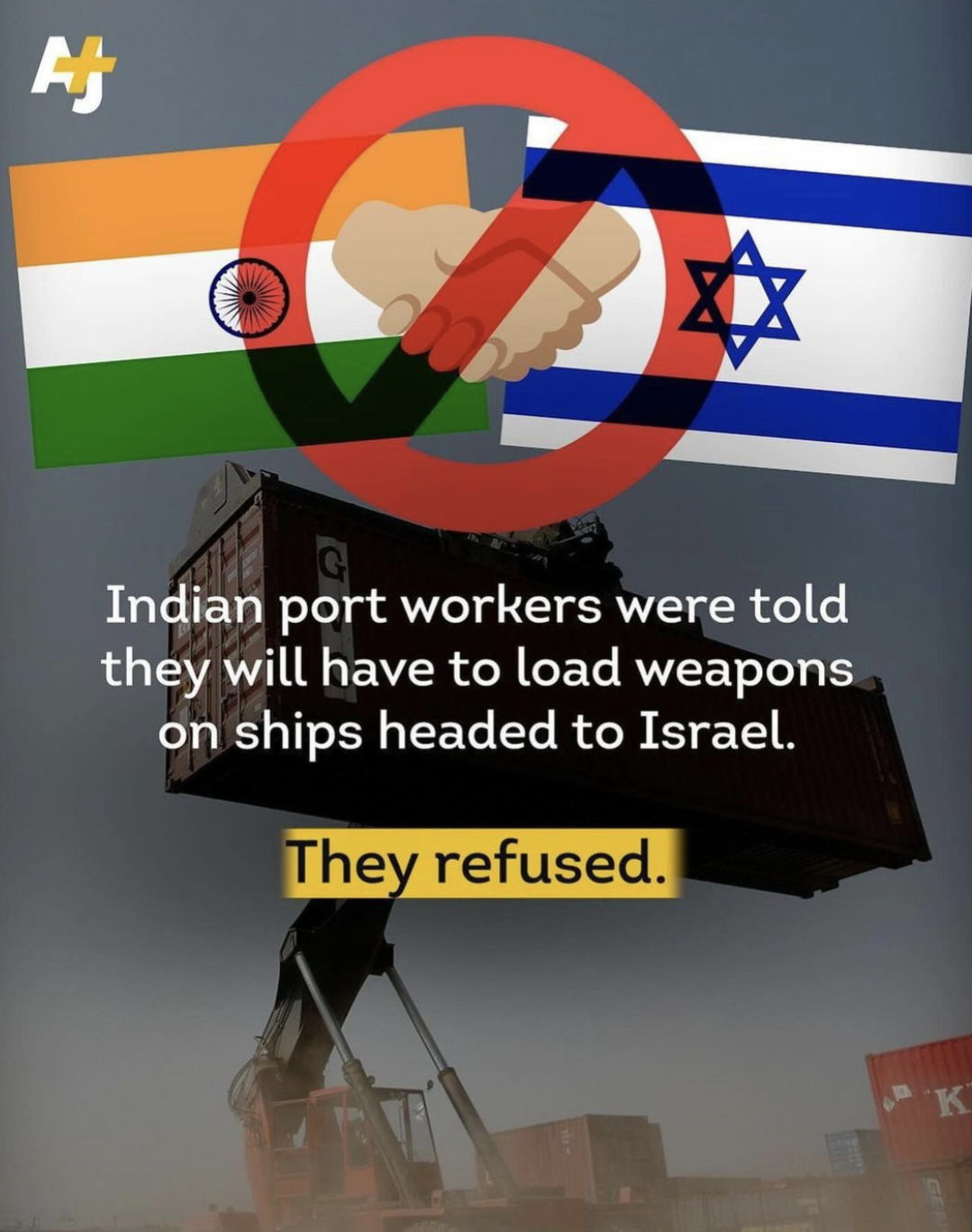
  • Pressure your union into striking if you work for a company that supports Isr*el or can exert pressure on politicians.
  • Not yet unionized? Start the process NOW so you can wield collective power when you need to. Capitalists are not gonna play nice during this global revolution
  • Show public solidarity with Palestine and those who are putting their careers and freedom at risk to speak out and take action. Everywhere, all the time. Plaster social media with accurate information and calls to action! This is important to counter heavily funded Isr*eli propaganda campaigns. Again though, breadth of comments on many posts is more useful than miles long reply chains with a single jerk who’s wasting your time. DO NOT GET TRAPPED IN ARGUMENTS
  • Share advice with one another on how to best talk to friends and family (remember that emotional regulation is essential – see above)
  • Gather some online friends (4-10 people) into a Signal support group (use the disappearing messages function). Vent with each other, share successes and resources, and brainstorm different ways you can help. Even just sharing stories of a person who responded positively to something you shared that made them think, or of successful direct actions you came across, will help keep morale and motivation up
  • Share educational resources on social media
  • Print posters and put them around your neighbourhood. Here is an incredible repository!
  • Do you have graphic design skills, even basic ones? Turn this list and other educational resources into square images for sharing on social media.
  • Send physical letters and faxes to politicians demanding a ceasefire
  • Express support (on social media, in emails to their political parties) for politicians who have been punished for supporting Palestine (eg. Sarah Jama in Ontario)
  • Talk to your union about planning workshops explaining why Palestine solidarity is relevant to union struggles
  • Learn about police abolition. Police are the biggest impediments to successful protesting. They do not keep us safe, they exist to protect capital.
  • Boycott, divest, sanction (BDS)
  • Consider downloading the No Thanks Boycott app – it seems ok, though I have not done thorough research on its creators, so be aware
  • Learn about the variety of tactics people are usingsome of them are very creative, and effective
  • Skills for specific professions:
    • Are you a massage therapist, osteopath, cook etc, or other type of healer/care worker? Consider offering your services for free to Palestinian activists, all of whom are extremely burnt out at the moment.
    • Are you a therapist? Sign up for The Diaspora Psychologist project
    • Are you an outspoken, justice-obsessed, possibly neurodivergent person? Create a TikTok account now and start practicing yelling and joking into your camera about the things you care about. We need more voices to counter the well-funded propaganda! It doesn’t matter if you suck at it now, doing it is how you get better. I have 79,000 followers somehow and I promise you, my first TikToks were awkward garbage. If you care about other people and our planet and want to live in a better world, that’s all that matters – talk about that.
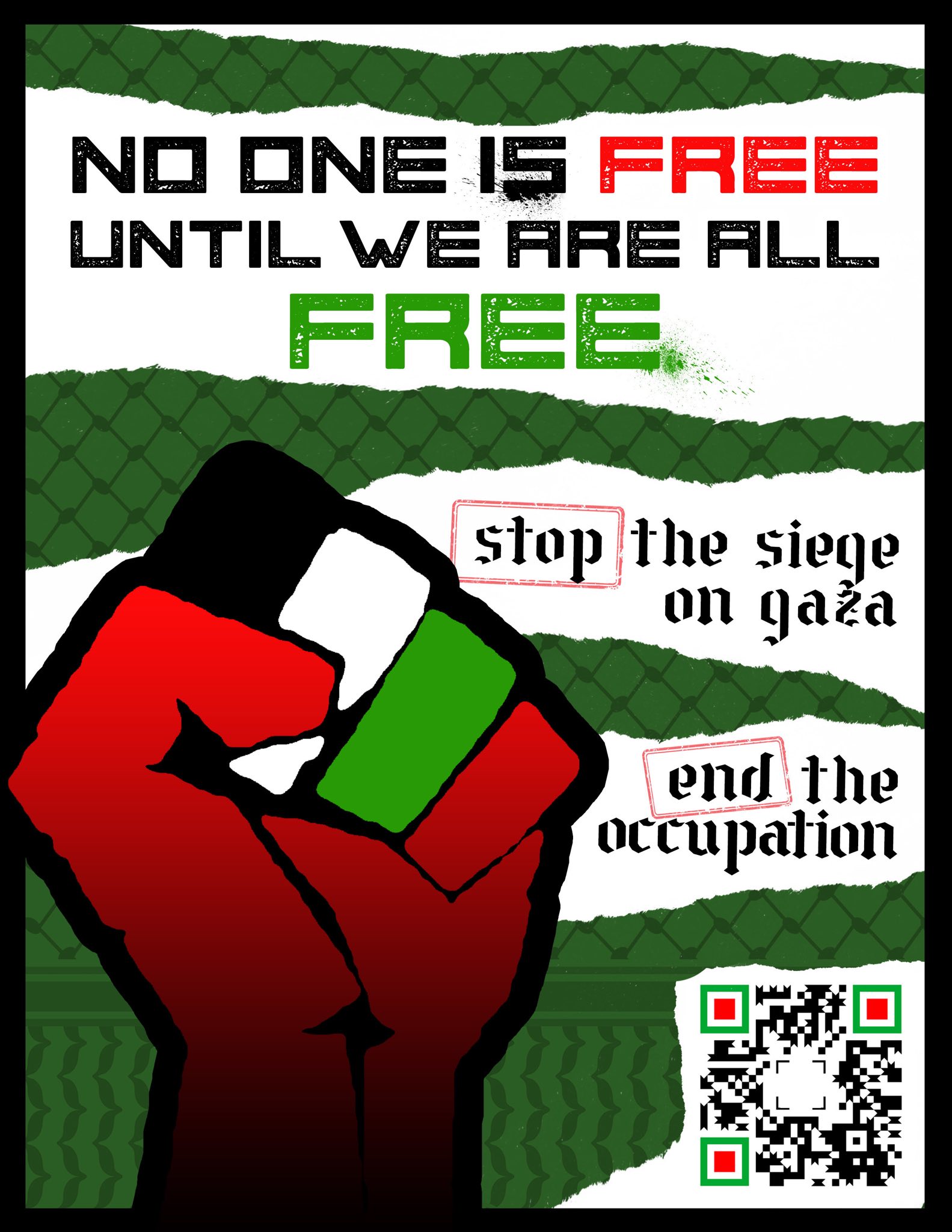
A shareable image with a QR code linking to this page

WHERE SHOULD YOUR MONEY GO?

Money and aid aren’t getting into Palestine right now. Here are some other places it can be of use. Donate to:

We have to make it safe for people to do activist work. This is as true of Palestine solidarity work as it is for abolition and other forms of activism. Surround organizers with love, protection and material support. When we provide that, we incentivize more people to take action.

  • Buy meal gift cards for organizers from your local Palestinian or other activist groups. Or just give them money. They are exhausted. If you know any personally, go clean their apartment for them. Wash their dishes. Do their laundry. This is genuinely essential mutual aid!
  • Support independent social media culture & education workers (aka content creators), especially Palestinian, Black and Indigenous creators
  • Subscribe to independent anti-capitalist news organizations

A NOTE ON PROTESTS

Many people say that protests are most effective when they are DISRUPTIVE. “They should make powerful people extremely uncomfortable, and disrupt the flow of capitalism,” one organizer told me. “Make them fear our power, not the other way around.”

Disruptive tactics people have used:
(I am not condoning or suggesting any of this. I am just sharing what’s been done.)

  • Blockading the entrances to weapons manufacturers
  • Blocking major ports, rail lines, highways
  • Protesting at politicians’ offices or other places they frequent

Those who don’t like these tactics should be aware that if the genocide continues, people may start destroying corporate property, sabotaging infrastructure, hacking into websites, etc. That would be… bad. So, better go sign some petitions really hard if you want to avoid that.

Remember that public-facing movement organizers are vulnerable. They can’t tell you to break the law, even if they know it’s more effective. More radical direct action is organized carefully, without relying on prominent leaders and well-known activists

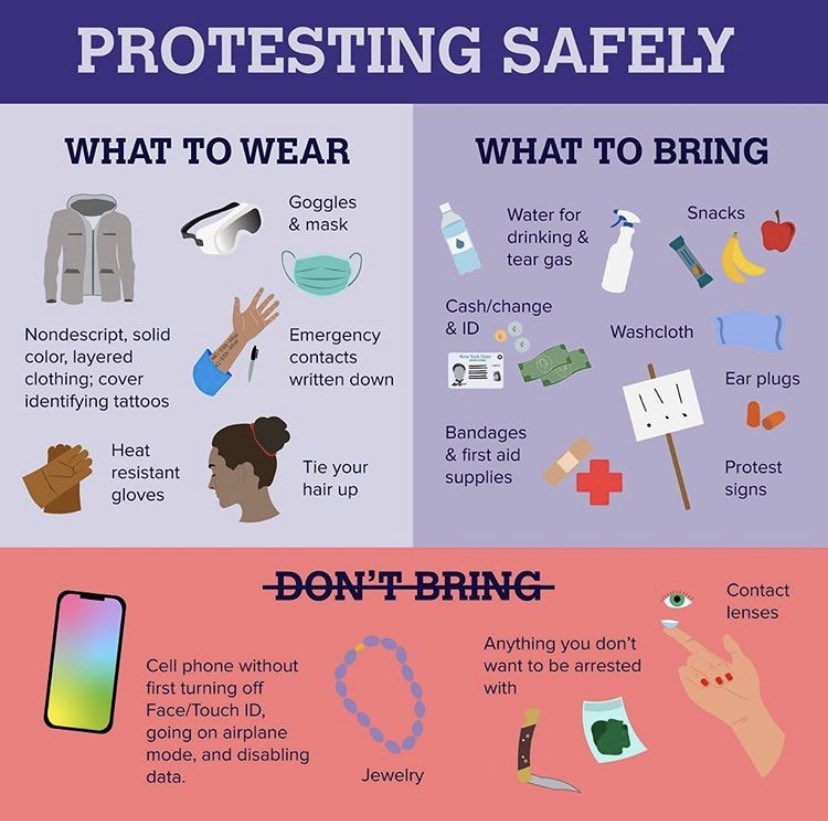
SAFETY CONSIDERATIONS

  • If organizing via group chat, use Signal with disappearing messages turned on
  • Wear masks to protests to protect yourself from cameras, and protect yourself and others from covid
  • Personal risk assessment: Do not participate in risky actions if you are not currently in a position to weather possible charges. If you are BIPOC (especially if you are Black, Indigenous or Palestinian/Arab) you are at higher risk, if you are entangled in the criminal injustice system you are at higher risk, if you have kids you are at higher risk

They can’t put everyone in jail, but they sure will try. Assess whether you can take on that risk right now, considering things like how effective/important the action might be, your ability to keep doing this work in the future etc.

THIS IS HOW WE WIN

Here’s a list of examples of successful actions. It’s very important to share small victories, so we remind ourselves that we can make a difference! This wave of solidarity is becoming a tsunami, bit by bit.

Additional considerations

  • One of the most important things you can do going forward is to learn about colonialism, capitalism, white supremacy, heteropatriarchy, and how those things intersect. What’s happening in Palestine is part of a broader series of entangled systems of hierarchical power. All our struggles are connected–when we learn about these connections, we realize that fighting for our friends and neighbours means improving all of our lives, collectively. Building networks of solidarity is what will get us through this current tumultuous transition into a post-capitalist world. We keep us safe. Read this book ASAP!
  • Prepare to be disappointed in politicians and anyone else who’s wealthy or powerful, no matter how progressive they seem. With a few exceptions (almost always artists of some kind), rich and/or powerful people got that way by blinding themselves to the suffering of others. The system works for them. Do not expect them to be allies. The systems that gave them power are the obstacles in the way of our collective liberation. No idols, no gods, no masters.

Toronto-specific resources

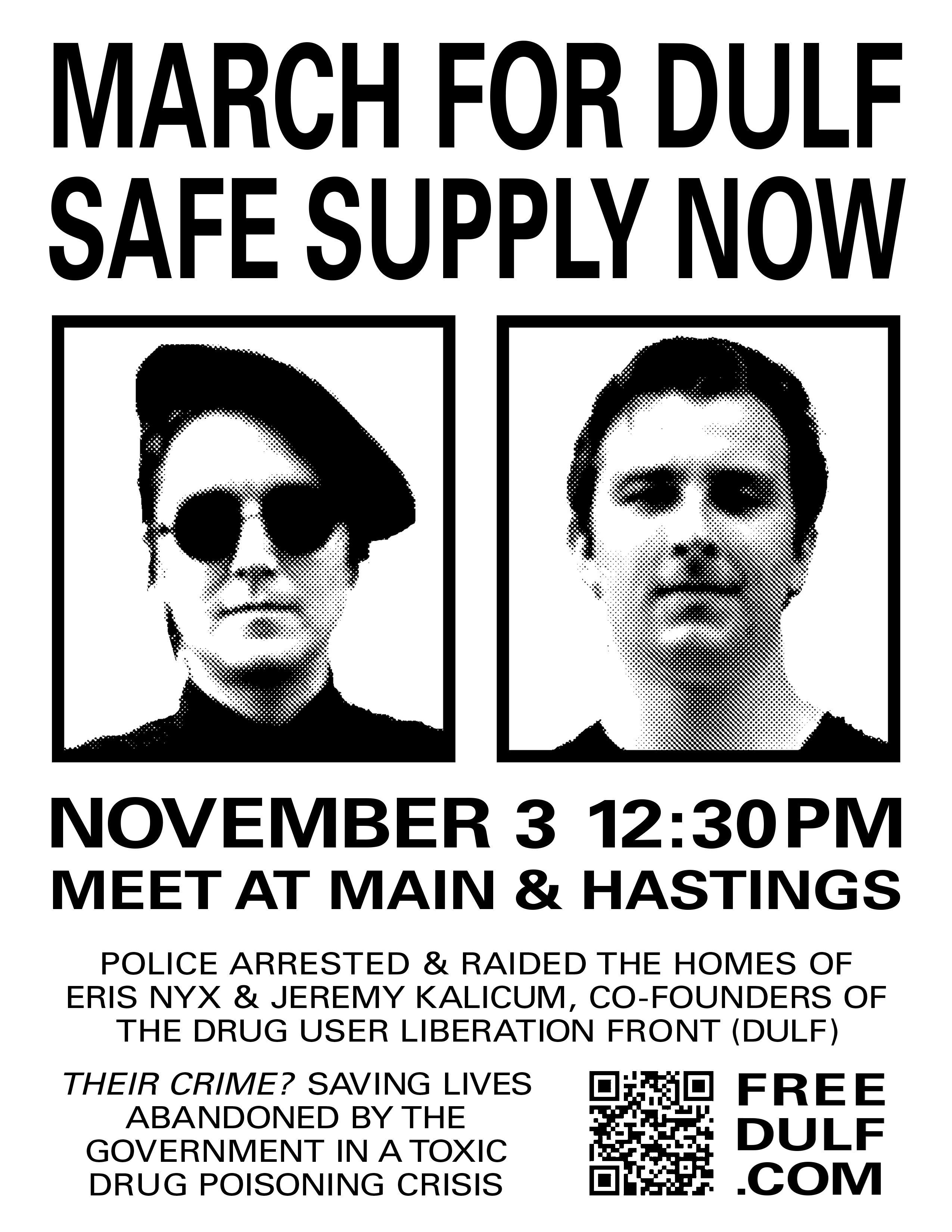
Community organizers were arrested for providing a safe supply. They need our solidarity.

Skip to the action steps

You know how we’ve been fighting to legalize and regulate drugs, so people have access to a safe supply? Well, two community organizers in Vancouver got tired of watching their friends die from the poisoned supply, so they went ahead and created their own safe supply organization, the Drug User Liberation Front (DULF), to give away free, pure, tested drugs to people who need them. This is the kind of direct action civil disobedience we need more of! DULF has been running for over a year with few problems. It has saved countless lives, and is a crucial living demonstration of the possibilities of community care and self-sustenance.

However, after right-wing backlash this summer (Poilievre and the National Post have been relentlessly attacking harm reduction so they can scapegoat drug users and blame them for the effects of the housing crisis, as capitalists always do when their profiteering wreaks havoc), this week two co-organizers at DULF, Eris and Jeremy, were arrested. Solidarity protests are being organized around the country right now. This is an injustice!

Supporting and protecting activists and organizers is essential for dismantling capitalism. As we fight for a better world, we need to ensure that the people taking risks to create alternative infrastructures and divest from carcerality and capitalist modes of production are protected, supported and loved. Stand in solidarity with these brave community organizers!

More information is available here. Action steps below.

Action Steps:

The last free words of a cannabis prisoner

My friend Daniel Muessig went to prison today.

A former criminal defense attorney himself, he sold cannabis in Pennsylvania, a state where it’s legal. But it’s still illegal federally, and now he’s spending the next 5 years of his life in a cage, torn from his family. He left me the letter below to share with you. They are his parting words. Share them with anyone who still doesn’t understand how the War on Drugs is destroying lives.

To hear the whole story of what happened to him, listen to my interview with Dan, or read one of the articles linked below the letter.

To all free people,

By the time you read this I’ll be inside a federal prison for the first day of my five year sentence for cannabis trafficking.

The last few weeks have been a dystopic and sickening blur as I sought to wind down what was left of my life as a nominally free man.

Tonight will be the last night I sleep next to my wife in several years and tomorrow will be the last time we kiss, touch, or hold one another until I’m free or COVID restrictions cease, an unlikely prospect given the rapacious and adaptable nature of the virus and the utter recalcitrance of the staff to be properly vaccinated. My prison is in “Let’s Go Brandon” country and little as I like Biden I at least agree people should be vaccinated.

This small digression was to provide context for why I will most likely pass my first few weeks to a month inside in quarantine, unable to leave my dorm, obtain commissary, or interact with my new environment. I probably won’t have access to much else save a bunk and a few rancid meals a day until such time as I’m deemed fit to enter the compound and begin my prison life in earnest. The fact I’m vaxxed and double boosted is meaningless although it may keep me alive through the inevitable multiple COVID cases I will be infected with during my sojurn in the human petri dish sans medical care that is prison in America.

My release date will be almost 5 years to the day I walk in, whenever they bother to update it.

Now my personal space will be truncated to a bunk. I will answer largely to a number, stand to be counted, wear only a uniform, and have my day subject to the whim and will of staff, guards, and counselors.

My life in any sense one would want to live it is over for quite a while.

Some people find meaning in this suffering. They rise above it and forge an architecture of righteousness and purpose. Others, poisoned by the assaultive nature of confinement and its incessant aggressions, humiliations, depredations, and losses oscillate between depression and rage, their souls brittle and unable to ever embark any meaningful joys or salutory impulses like patience or peace. The former exit emboldened with a mission to do good. The latter with a wish to die.

I don’t know which I’ll be. I know which I aspire to. But any prediction smacks of the premature.

I can only do what every convict with a release date can do: take it day by day.

For how many days? I do not know.

I don’t know the future. I do know pain.

I’ve experienced agony behind this process that I cannot adequately describe. My abilities fall so short to convey the terror, rage, helplessness, loss, and stultifying, suicidal depression that takes hold of one when a Damoclean sword hangs over one’s head for years on end.

My wife and I strove so mightily to create a new life for ourselves. Away from the risk and pain of my previous life and line of work.

There were some beautiful moments inside of that interstitial fever dream of a life.

We tried to adopt a child. We stood in the high desert Mesa near Taos and hugged narrow mountain passes to siesta at Alpine lakes.

We smoked chopper joints at the rocky Maine coast and watched the spray break on the gray ziggaraut of rock that jutted like an alien edifice or battlement, crenelated and speckled with tidal pools suspended at heights far above the rolling floor of green glassed thunder that leapt at impact.

We saw seals roost at the coves in La Jolla and watched a technicolor sun paint the palms each night.

We sat on a loamy berm above Algiers Point New Orleans with colorful overpainted Queen Anne’s and shotgun bungalows lifted four feet off the dusty ground and watched Oil Tankers and and barges wend their way down the placid, muddied, riverine highway of the Mississippi.

The copper adobe azure sky with Pueblo Terra Cotta of an Indian village outside of Santa Fe and the black glass glacis of the stratotowers of Midtown Manhattan.

We went everywhere COVID would let us post Vax because we knew on some base, elemental level that our world was fragile. One phone call would end it like the Death Star’s laser pulverizing Alderaan.

And one humid night after a mundane day in what would going to be a beautiful life that call came.

We lost our child to be, our sanity, peace, hope, and future.

My refusal to cooperate is well documented. We don’t have to masticate that morsel again.

Instead I want you to know that my mother felt frail when I hugged her goodbye and she shook when she wept. She felt leaflike in my arms. Her 300lb son hugging her 90lb frame while we both sobbed.

My father cried in a way I’d never seen him do in my entire 40 years. His grief so raw and seismic that it almost separated my feet from the ground when it pulsed like orange magma from steaming crater.

I didn’t want to cry after I left them. I wanted to die. I never wanted to see that again and know I caused it. But I did. This did.

My wife and I passed our last night in loving embrace. Whispering our dreams to each other. Things many of you take for granted. Peace. Freedom. Hope. A chance to be together again. I haven’t left her side since 2003 for more than a few months on tour and now I will be gone years.

The gods gave Odysseus and Penelope an eternal night at one point. But no delphic deities touched here. Ours ends at dawn.

She’s my world. And I’m leaving her.

She should have my presence and protection. My love and attention. Instead I leave her with a tear spattered kiss and depart.

I met some of the fellas and said goodbye.

We hugged and slapped backs.

Til the next time, we said. We joked about past travails… the bum deals and the near misses. The fast money and the teeth cracking Ls.

I on boarded a rapid fire stream of advice about prison life as they imparted their wisdom and my friend called from Otisville.

Get your Pax # he said.

112# gets you on the payphone. You’ll be quarantined. Stay level.

He said one day we’d be cracking lobsters next to our wives and eating babka for dessert.

I won’t see or hear from him for years. We’d spoken nearly every day since 2019. He’s been in since 2020.

Before I left one friend said:

Thank you. Thank you for keeping me free. You know what you did. And it’s appreciated.

I said it was my pleasure. And it is.

I didn’t do what I did to buck authority.

I didn’t do it to be a gangster or want to be one.

I didn’t do it to burnish a rep.

I did it for love.

I’m not a hero. I’m a crook. Your parents are heroes. Doctors are heroes. People who house the homeless are heroes. Democracy activists and community organizers are heroes. Not me. .

What I did is the baseline of what a decent human being should do.

I didn’t emmiserate the next person so as to diminish my own fear or pain.

I could never do to another person what was done to me here.

No one else’s wife or mother or father or brother should have to feel like this.

No one else should be sitting in the bedroom in these scant predawn hours so wracked with grief and stress that sleep is a fantastic myth for the nth night running writing their farewell missive to the world, physically ill from sadness, loss, and trepidation.

I look at our wall art, our pillows, and most of all her and I know that I won’t be here for YEARS and I die inside. Each heartbeat is poison pain.

But I could never make anyone trade with me. So I will go. My fate is sealed.

I love the people I saved. Those whom I’m close with and those I never will speak to again. I can one day sleep again knowing that they are free no matter what happened to me.

And although all I want is to be with my wife again for just one more night I also understand I could never be with her at peace knowing my freedom was purchased by the incarceration of others.

Love of humanity. Love of good. Love of my family. Love of an ideal that should be followed even if others break it.

To inform was based in fear. It’s opposite was always based in love.

Remember me well,

I will miss the world fiercely,

But most of all I’ll miss my wife, she is my world.

When I ran away from that raid lurching to freedom I just wanted to see her one more time.

And now as I say goodbye to her and depart for captivity my wish is unaltered.

“Just let me see her one more time….just one more time….I have to make it….one more time.”

Till that time,

Daniel Muessig
61770-509
FCI Morgantown
60 months
No cooperation

Dan has asked people to do just one thing, which is to sign this pledge: No Pardons, No Votes. http://pardonsnow.com Agitate your elected officials. Tell them to legalize cannabis (and all drugs) and pardon cannabis (and all drug) prisoners.

Note: I do this abolitionist/anti-prohibition work in my spare time, and it costs a lot in child care money. If you want to help me keep doing it, please consider sending a tip on PayPal, supporting me on Patreon, or sending some diapers for my baby from my Amazon registry. I’m a grad student and mother of two trying to fight against the devastation of the Drug War—every little bit helps.

Other places to find me on the internet ranting about drug policy, criminal justice reform, capitalism, psychedelics and anthropology:

YouTube
Twitter
TikTok
Bread & Poppies Podcast
Facebook
Twitch

More on Dan:

https://truthout.org/articles/im-facing-60-months-in-prison-cannabis-prohibition-has-destroyed-my-life/

https://www.forbes.com/sites/andrewdeangelo/2022/02/03/meet-one-of-the-last-cannabis-prisoners-daniel-muessig/

The ad that made Dan famous: https://www.youtube.com/watch?v=i_iaugcJW7Q

Marxism is amphetamines, biopolitics is cocaine: Social science theories as drugs.

Okay so hear me out, I have a new bit: Social science theories as drugs.

Biopolitics is cocaine. Fine in small doses, and I can see why others REALLY like it, but there’s something about it that just doesn’t quite do it as a mainstay. Leaves you feeling a bit empty and unsatisfied.

Affect theory is LSD. Everything is suddenly clear and illuminated, everything is connected! Holy shit! Makes the world more fun and interesting to interact with. Compatible with literally everything else because that’s how good it is.

Actor-network theory is caffeine. Bizarrely popular, and I can see the appeal I guess, but why would you need it in your life when Marxism/amphetamines exist? The French think theirs is the best but they’re wrong.

Decolonialism is peyote. If you’re not Indigenous or being guided by an Indigenous person, there’s a high chance you’re doing it wrong and are going to trip over your own ass and look like an idiot.

Moral philosophy is Xanax. It can be very useful and comforting, but be careful or you will become insufferable to everyone around you. Extremely easy to overdo.

Marxism is amphetamines. Needed to survive, it keeps you going on a daily basis. Without it, you feel exhausted and confused, and eat too much. It makes you want to get up out of your chair and get shit DONE. Works best when blended with others to take the edge off.

Human evolutionary ecology is weed. I dabbled too much in my youth, and now it makes me paranoid and anxious. Every time I use it around other people I regret it. People who make it their whole thing are weirdos.

Evolutionary psychology is synthetic cannabis. Why? Why are you doing that when there are hundreds of better options that actually work? Stop staring at my chest, get away from me, UGH

Critical race theory is ketamine. It’s like seeing into the Matrix. So good you’ll be angry that more people can’t see how useful it is. Once you get it you will defend it with your life.

Feminism is mushrooms. It connects you to the earth and makes everything make sense. If anyone insults it you can immediately dismiss them as an ignorant asshole. Too much on its own can make you feel cold and nauseous, but life without it is sad and colourless. Makes you want to call your mom and tell her you love her.

Neoliberalism is huffing gas by breaking the natural gas pipes in your apartment building. What the fuck is wrong with you? You’re going to get us all killed with your bullshit.

Intersectionality is polydrug use. You’ve gotta try it, man, it rocks. You take one thing and put it with another thing and it becomes a WHOLE NEW EVEN BETTER THING!

The ontological turn is alcohol. Difficult to relate to, it has its uses I guess, but I do not understand the appeal and think people who use it exclusively probably just need to try some other stuff. Is there anyone who really LOVES it who isn’t also kinda problematic?

Dialectics are DMT. I haven’t been able to make it work for me yet but it looks cool and I’m sure it’s great once you figure it out. Marxists seem to love it. Indigenous people invented it a long-ass time ago and don’t get credit for it.

Postmodernism is MDMA. It’s amazing if you haven’t tried it before, and it’ll do so much for you! You will make friends and heal trauma from a lifetime of objectivism. But do NOT use it too often or you WILL destroy your brain.

Anarchism is kratom. I don’t know very much about it but I like a lot of people who do it so, cool! Sounds good to me! (From David Graeber: “People get all excited because it seems too good to be true and insist it must be really bad for you somehow, but they can never give you a convincing reason why.”)

Capitalist realism is ayahuasca. You will be extremely ill while you figure it out, but afterwards you’ll never be the same again. The world looks different forever.

Positivism is tobacco. It’s addictive and gives you a thrill, but it sucks and you need to quit immediately before it kills you.

Reflexivity is GHB. It’s misunderstood and co-opted by people who don’t understand it, but it’s so good and can totally replace more harmful stuff if you do it right.

Market economics is black market steroids. You think it makes you look really cool, but everyone around you is grossed out and wants you to stop. If you find yourself vehemently defending it, you might want to re-evaluate your life choices.

Structural-functionalism is laudanum. We have opium and heroin, so why bother? What is it, 1902?

Object-oriented ontology is salvia. It makes you go temporarily insane and then has no actual long-term effect on your thinking. Only for people who have too much time on their hands and have fried their brains trying everything else first.

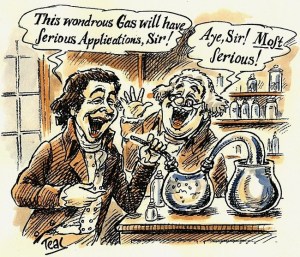
Cultural relativism is nitrous oxide. It just straight-up rocks. It has limits, but the world would be a better place if more people tried it. It makes everything so much more interesting.

White feminism is krokodil. Not even once.

(Credit to @emknird on Twitter for the laudanum idea, and @LericDax for the salvia connection!)


If you like my writing, please consider supporting me on Patreon, or sending some diapers for my baby from my Amazon list 🙂 I’m a low-income grad student and new mom trying to fight against the devastation of the Drug War—every little bit helps.

Find me on Twitter ranting about drug policy, criminal justice reform, capitalism, psychedelics and anthropology: @HilaryAgro

Meet nitrous oxide: the fun drug that, because of prohibition, is terrible for the environment

The War on Drugs is an expensive, harmful disaster. It’s the most destructive and racist set of policies that exist in the modern era. But! Did you know that it’s not only bad for people, but for the environment too?

IMG_1979

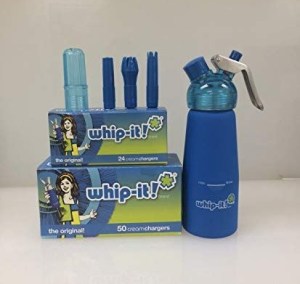
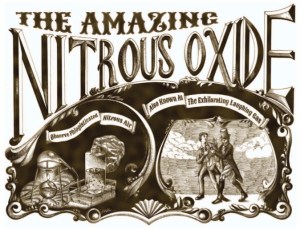
Meet nitrous oxide. It’s a relatively harmless* drug that you probably know as “laughing gas.” Dentists and hospitals use it as an anesthetic, and it’s sold in little metal canisters to make whipped cream. If you’ve ordered something with whipped cream from Starbucks, they used nitrous oxide to make it.

It’s also a fun high.

It’s popular at music festivals, especially the hippie kind, because it mixes incredibly well with psychedelics. The familiar ksssht! of canisters discharging into balloons is a well-known sound around festival campgrounds. Even if you’re already having a pretty crazy trip, do a hit of nitrous while on acid or mushrooms and your spaceship will blast off ten times harder into the shattered, echoing universe (for about a minute).

IMG_1985

Nitrous is affectionately known as “hippie crack” for good reason.

People have been using nitrous as a medical painkiller, and as recreational drug, for over two centuries. It’s so safe, pregnant women use it in labour. But because the only drugs we’re allowed to enjoy legally are alcohol and tobacco (and cannabis if you’re Canadian or Uruguayan), it’s illegal to sell nitrous for recreational consumption. So that means there’s only one way recreational users can buy it: in those tiny canisters meant for making whipped cream. And do they buy them? Oh boy do they ever. Loads of them.The entire whippit industry is based on a lie that we all pretend is true: that these things are sold only to be used by bakers.

Hah. Not even the companies that make them believe that. You can buy whippits in cases of 600 at a time. No one’s eating that much whipped cream.

But because of drug prohibition, the don’t-ask-don’t-tell continues. And who pays the ultimate price from this nonsensical policy? The environment.IMG_1981

The canisters can’t be recycled because of safety concerns (in case the canister hasn’t been discharged of the gas), so millions of them end up in landfills. Each one gives you about a 30-second high, and then it’s chucked. Incredibly wasteful, right? But before you get mad at the people buying them, think for a minute about the logic behind the laws that create this setup.

We COULD change the laws and allow nitrous oxide to be sold in larger, recyclable containers. We COULD stop this charade, start being practical and allow recreational users to buy it in ways that don’t ravage the environment.

But because of drug prohibition, we don’t.

IMG_1984
Because of a set of laws that were only implemented in the first place as an excuse to lock up and disenfranchise the poor and people of colour (beginning with Black people in the Jim Crow-era USA, and Chinese labourers in Western Canada), we all just let this happen. A bunch of people believe the lie that says “drugs are so bad we need to arrest anyone who so much as carries them in their pocket,” so we throw single-use nitrous containers into landfills and burn entire fields of cannabis plants as if more carbon in the air is preferable to letting some people get high with their friends.

Realistically, we are never going to stop people from using this safe and fun drug. Why should we? Who are you or I to tell someone what they can and can’t put in their body, and worse, to use the violent power of the state to enforce that opinion?

Our drug laws right now aren’t based on safety. We know the’re not, as alcohol, widely known to be dangerous, is sold in corner stores, and yet people are still sitting in jail, taken from their families and communities, for having a joint on them.

Humans have been getting high since the dawn of time and that is N E V E R going to stop. We need to start looking at drug laws for what they are:IMG_1987

  • A way to control certain populations via selective enforcement (specifically, the poor and people of colour, especially Black and Latino men).
  • A way to make rich people stay rich (Big Pharma, alcohol and tobacco companies, private prisons and the vendors that supply them with food, toiletries and video calls).
  • An absolute disaster in every conceivable way.

So, here are some things you can do to help end drug prohibition:

  • Demand not just cannabis legalization from your politicians, but full drug legalization. (You can start with decriminalization, but legalization is the only goal that will end the Drug War’s devastation in Latin America and Asia.)
  • Educate your friends and family about the issues. Here are some tips for how.
  • Don’t use stigmatizing language (addict, junkie, druggie etc), and call it out when you see it.
  • Support politicians that openly critique capitalism, which is what drives the War on Drugs. Evil needs to be named.
  • Recommend the movie 13th to everyone you know (it’s on Netflix, here).
  • Don’t separate drugs into “the good ones” and “the bad ones.” All drugs can be used in beneficial or problematic ways. There are no “bad drugs,” only bad policies.
  • Learn about the racist origins of the War on Drugs.IMG_1988
  • Listen to people who use drugs that aren’t sanctioned and regulated by the government. We are human.
  • Realize that if you use alcohol or caffeine, you are a drug user too.
  • Think about why you won’t be arrested for using your drug of choice, and others will. People whose lives matter.
  • Demand change.

*A note on the safety of nitrous oxide:

There are some risks of using nitrous oxide regularly. In a nutshell, using too much is not good. This applies to every drug in existence.

Relative to how much you have to use to experience harms, nitrous is pretty safe. That’s why it’s so common in medicine and dentistry. However, using too much (several canisters, multiple times a week) can lead to a vitamin B12 deficiency, which sounds like not a big deal, but it but can have many unpleasant (and, rarely, permanent) side-effects. Be careful when discharging a whip-it into a whipped cream dispenser, as gas comes out so quickly that the place around where the canister is punctured can get so cold that it can “burn” the skin. Also, don’t use it standing up as you can fall. IMG_1982

That being said, almost everything we do and consume has negative side-effects. Red meat has harms. Sugar has harms. Everything not consumed in moderation has harms.

But recreational drugs are defined in the public consciousness almost ENTIRELY by their harms. This framing needs to shift.

Everyone is well aware that there are risks from using drugs, but the disproportionate focus on those risks is mostly a product of “reefer madness”-style propaganda meant to justify keeping most drugs illegal. This is exactly the kind of stigma that furthers drug prohibition on behalf of the white supremacist prison industrial complex and foreign policy interests. Don’t fall for it.


If you like my writing, please consider supporting me on Patreon, or sending some diapers for my baby from my Amazon list 🙂 I’m a low-income grad student and new mom trying to fight against the devastation of the Drug War—every little bit helps.

Find me on Twitter ranting about drug policy, criminal justice reform, capitalism, psychedelics and anthropology: @HilaryAgro

Fear and Loathing in Atlanta: Racism and the War on Drugs

Content warning: racism, violence, forced miscarriage.

I was on my way to the airplane that would take me back home, to Canada. I boarded the train between the Atlanta airport’s two terminals, eyes bleary from sleep deprivation and last night’s makeup. A blind man and an airport employee helping him walked onto the train, led by his dog. Minutes passed in silence before he told a story, out of the blue, foggy eyes staring at nothing.

“One time I was leaving a store, and my dog, she led me into the wrong car,” he said to his helper. “It wasn’t my wife in the front seat. ‘I think you’re in the wrong car,’ I heard a woman say. ‘I think you’re right,’ I said.”

I shifted my backpack and smiled at the story.

“I’m just glad she didn’t have a .45 on her,” the blind man added.

“Yeah. That would have been messy,” the helper responded.

They said it seriously, but so casually. Like it was nothing. Normal.

I couldn’t take it anymore. I broke down crying.

* * *

Just five days in the U.S. south, at the International Drug Policy Reform Conference, changed how I view the work I’m doing. I’m a PhD student who studies the effects of drug prohibition on drug users and sellers. I know about gun violence, about racial oppression, about how the War on Drugs systematically targets the poor and people of colour. I’ve read everything I can get my hands on, I’ve watched the documentaries, I’ve talked to people, I’ve done a Master’s degree’s worth of ethnographic research on the subject. I’ve lived in Mexico and seen the ugly effects of cartel power in person. There’s a reason I’m doing this work. But I’d never seen what I saw in Atlanta, so much in so few days.

Monstrous things that seemed to faze no one. Monochromatic homelessness, all black. I was catcalled constantly on the street, and then later told I was an idiot for walking alone at night at all – you can’t do that here. The transit security guard on the subway had a gun. I guess all of them do. I got a physical shiver when I saw it, a weight in my stomach. I couldn’t remember the last time I saw a gun in person. I live in the kind of place where you can go months, even years without seeing a gun.

Photo 2017-10-11, 1 04 06 PM

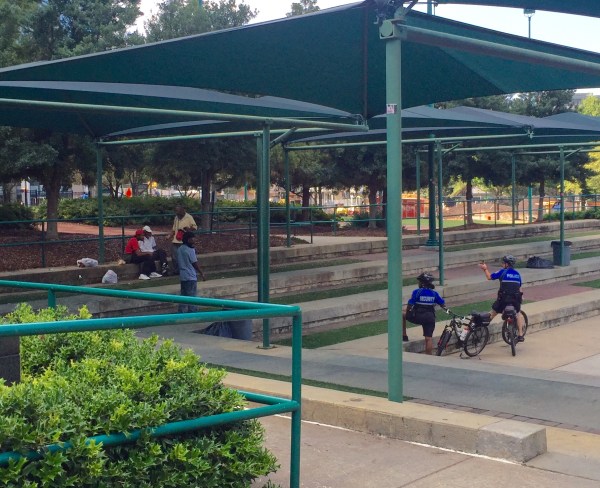
A group of black men being bothered by cops for no reason I could discern, one of the first things I saw when I got into the city.

I heard story after story of people being arrested for drugs, years of their lives and their mental and physical health taken away from them, families destroyed. Racial tension was everywhere. Fear was everywhere. Buzzing, insidious, toxic textures at the periphery of the senses. Fear seeped from the walls and coated every interaction. Hackles raised, human connection difficult without concerted effort. I made the effort and was rewarded with tiny moments of solidarity, bright sparks, smiles. Atlanta, like the US as a whole, is full of good, kind people, trapped in a cultural venn diagram of overlapping toxic systems that are slowly killing them and keep them turned against each other instead of against the systems themselves.

White supremacy is real, and it is everywhere. The geographic and economic segregation along racial lines was astounding. I sat eating a Big Mac in a McDonald’s at 11 pm on a Wednesday, the only white person among 30 black people. I then walked six blocks north and was hit by a wall of white bodies in confederate flag shirts—returning from a Garth Brooks concert, I later learned. I was very uncomfortable in the latter situation and felt fine in the former, but the sheer, naked, normalized segregation in both made me deeply uneasy.

I sent my partner a drunk text about how the food here didn’t feel digestible. That Big Mac haunted me. It was like eating ash and plastic, no nutrition at all. You don’t have to believe me, but I mean this honestly when I say that American fast food is worse than the fast food I’ve eaten in any other country. You can taste the difference in agricultural production and food standards. It hurt to think that it’s all that millions of people can afford. It’s barely food. They deserve so much better.

Photo 2017-10-14, 3 21 11 PM

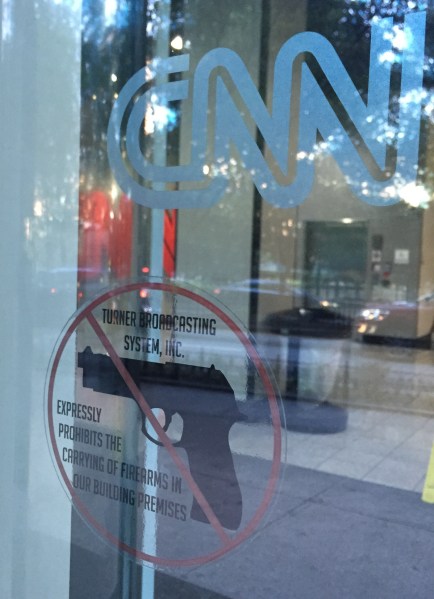
These signs don’t exist where I live

I fended off catcalls as I walked home that night, a deep sense of shame and disgust at my skin colour setting in already, at how I was necessarily perceived to be one more white link in the chains that hold half that country hostage. I couldn’t hide my whiteness, so I shamefully found myself hoping people would at least notice my broken glasses and crappy old boots and think I’m poorer than I am. I’m not wealthy—I just barely identify as middle class—but I am not poor. Not like the homeless man to whom I gave my change instead of all the money in my pocket like I should have. My partner and I don’t make much money, but with free health care and the various other social and academic supports I have access to, I can afford to fly to conferences in other countries where I deal with the embarrassment of being a walking pile of privilege by hoping my taped-up glasses camouflage my relative wealth. I have to remind myself as I walk by that those people don’t have nothing because I have something: those people have nothing because a small handful of people have everything, and will not share until we make them. I channel that knowledge back into my work. Guilt is not productive. Action is.

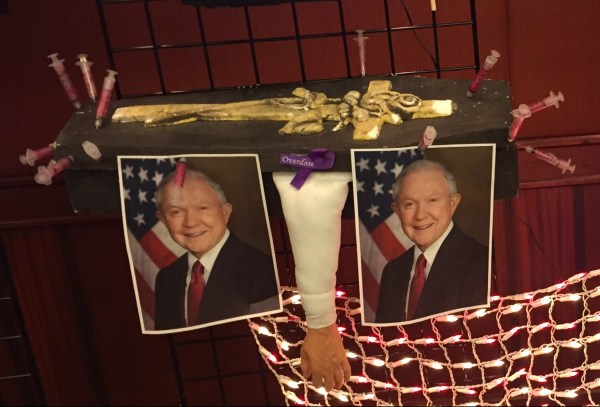
jeff sessions is an absolute monster

So much blood on this man’s hands

The next day at the conference, I listened to a formerly incarcerated black woman on a panel tell her story. She was in federal prison for selling drugs, and she was pregnant when she was locked up. The water that came out of the taps in the prison was brown. She told them she couldn’t drink it, and they told her to go thirsty. One day, she began feeling pain in her belly. They took her to the infirmary—they didn’t have the right paperwork to get her to a hospital, and didn’t bother finding it. They shackled her, bleeding, to the bed, as she begged for help. She miscarried and lost her child. They threw her sheets, and the fetus, into the trash. Soon she was forced to return to her “job,” welding bunk beds for the men’s prison. Three beds high, three feet of vertical space per bed. The audience quietly cried as we listened. She sold things to people who wanted them, and the state robbed her of unborn child and gave her post-traumatic stress disorder.

Hers was not the only story like this.

* * *

Photo 2017-10-12, 3 59 53 PMI was saved by the people at the conference, hundreds of tiny lights in a landscape of confused darkness. Activists, scholars, authors, health care workers, psychonauts, researchers, patients, libertarians, socialists. All of us bound together by the knowledge that drug prohibition is the modern day Jim Crow and the driving force behind death and destruction in the Americas. We clung to each other for sanity, sharing our successes and failures, our experiences, our self-care rituals. Every victory was tainted by the knowledge that while capitalism stands, its vultures will always find a way to profit and oppress. Marijuana is being legalized—great! But anyone with a felony record is barred from working in the legal market, meaning all the people of colour who were selling it before—shit. Companies who make ankle GPS trackers, video call systems for prisons, and opioid medications pour billions of dollars into lobbying to maintain the system the way it is, while Black and Latinx communities have their young men stolen from them and their women and children surveilled by the state through the welfare system.Photo 2017-10-12, 6 42 40 AM
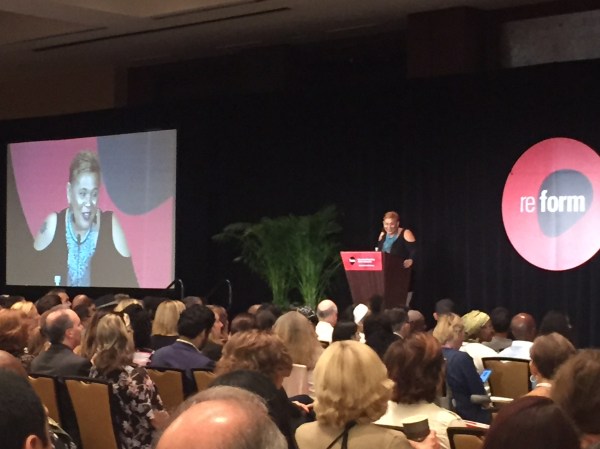
“Poor activist communities are being destroyed by the prison system,” said one panelist. “If you want to disrupt social justice, put all the men in prison and all the women under welfare surveillance.”

One woman on a psychedelics panel was asked about her experiences. She said she could never fully relax and enjoy a journey, given the space she occupies in the world. “Not even psychedelics can bring me to a place where I can escape from the reality of being black in America.”

Later I sat and watched Falcons fans on the way to a football game, laughing and shouting like everything was fine, and wondered if I was going mad.

Photo 2017-10-13, 8 31 07 AMSometimes, among drug policy activists, it feels like we’re the band playing on the Titanic. Sometimes it feels like maybe we can make a difference, like we’ll win. Like there’s no way we can’t win when all the evidence, and all the empathy, is on our side. But it doesn’t matter either way. We have to try. There’s just no other option.
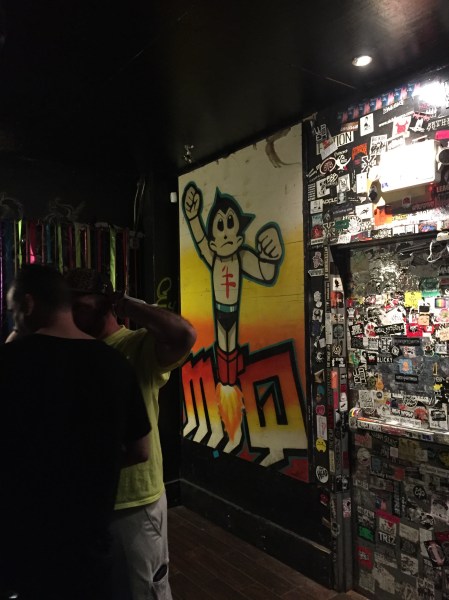
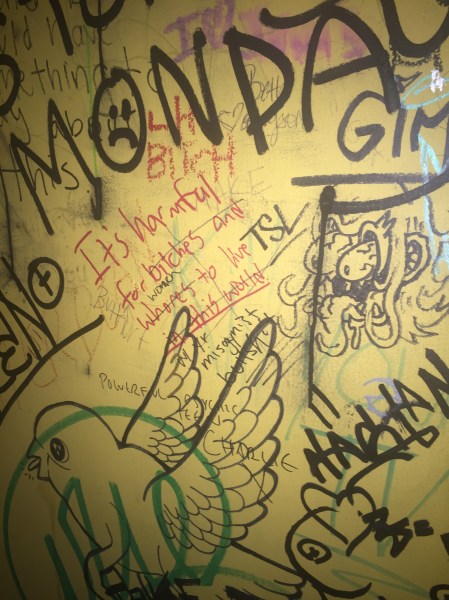
We have to do this work. Or who will?

* * *

Tiny squares of paper, an unlikely team: Leslie, from San Francisco, and Mark, a 21-year-old from New Mexico who’d never been outside his home state. All conferences have a culture of drinking—the culture at this one is a bit more unique.

Fear and loathing in Atlanta, hotel escalators like an Escher drawing. We managed to get to a club, where I danced like I could drown out my thoughts if I just moved hard enough. I listened to the lyrics of all my favourite hip-hop songs as if I’d never heard them before. Pain, power, poetry. They wrapped around my heart and pulled it down into the ground. The energy on the dance floor, the smiles, the movement—they crackled with intensity. I never wanted to leave.Photo 2017-10-14, 9 17 08 PM

Later, we stayed up til long past sunrise, trying to make sense of what we’d experienced that week. Legs stretched out on the hotel carpet, ears ringing. Talking to Leslie that night had been a moderating influence in the stark differences I kept seeing between our two countries. There were certain things she said didn’t exist in San Francisco either. But still, I began to feel terrible for how many times I pointed out how things like needing to carry mace with you is not normal in Canada, and should not be normal anywhere, let alone a country with this much wealth and resources. Transit officers with guns on the subway should not be normal. Having to ask whether the tap water is potable should not be normal. Fearing shootings in public should not be normal. Spatial segregation by race and class in a multiracial society should not be normal. Having to create GoFundMes to pay for surgery should not be normal. People fighting tooth and nail to keep professional sports team names that are straight-up racial slurs should not be normal.

Canada, like every country, has many serious problems that need immediate attention. I could write endless pages about what’s wrong with the capitalist, colonial state that I live in (and I often do.) Racism, inequality, misogyny, homophobia—they all exist in my home too. But it’s not the same. It’s just not.

Sometimes, we just sat in silence, the weak morning sun peeking through the hotel curtains.

“I’ve been very angry and afraid of other people for a very long time,” realized Mark numbly.

* * *

Photo 2017-10-14, 11 26 02 PMI’m not naïve: I knew all of this existed. I’ve been obsessed with American politics, how similar our two cultures seem until you scratch beneath the surface, for years. It’s not possible to be a hip-hop fan from a young age, or study the War on Drugs for a living, and avoid the global vortex of injustice and power that centres on the US. But knowing about it, and coming face to face with the sheer day-to-day mundanity of it all, are two different things. I’ve been all over the West and Northeast, where the cracks in the cultural pavement are more subtle, but touching and seeing and smelling a Southern American city for the first time, while listening to first-hand stories from around the country, poured gasoline on my deep belief that to accept conditions like this as “just the way things are” is the most dangerous possible reaction. The normalization of structural violence, white supremacy and drug prohibition allows all of it to continue, at a scale that boggles the mind. I don’t want to become complacent. I don’t want to get used to it. I don’t want to accept it.
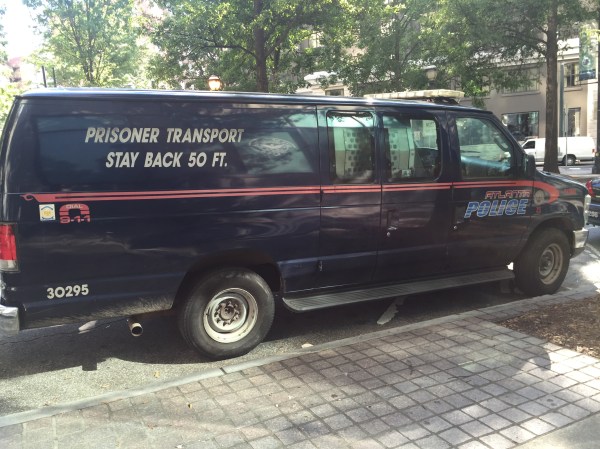
Judges who own bail companies and have shares in private prisons is not okay. A man facing five years in prison for picking mushrooms in a forest in Washington is an outrageous injustice. Thousands being held without even being charged, imprisoned for the crime of not being able to afford bail. Dozens of people shot every day by police. Women sexually violated by roadside cavity searches. All because human beings like getting high, and a group of wealthy, powerful people figured out how to turn that desire into capital by weaponizing racial oppression.

None of this is okay. Nobody deserves this kind of life.

I love Americans, I really do. They are incredible people, and so many of them have accomplished amazing things in the face of all this oppression. Watching American activists at work, fighting tirelessly under such difficult conditions, inspires me every day to work harder, work better, listen more closely, see more critically. But the country itself, the ideas that prop it up… How can we wake up the white American prohibition-supporting mainstream—which includes most liberals—to what is happening to people in their own country because of their complacency? I want to run around and shake people. Rip out the tentacles of media propaganda poisoning their minds, convincing vast swaths of the US that it’s their neighbours who are the problem, not corruption and inequality.Photo 2017-10-11, 12 54 33 PM

I guess it’s easier to be in denial, to feel like surely all those black people are wrong, overreacting with their protests and kneeling, than to confront the fact that your whole worldview is based on a mammoth lie. They’re like cult members—they just double down on their beliefs when they’re confronted with reality, because changing those fundamental beliefs, admitting the lie, would be too painful to bear. Maybe that’s how we need to start treating Trump supporters: like cult members who need deprogramming. They’ve bought into a certain narrative, that the US is fundamentally good, and to shatter that illusion would destroy a part of their very identity, their sense of self. Maybe we need to give them an out that allows them to shift that narrative towards something that provides the same positive identity, but acknowledges the truth: if you love your country, the most patriotic thing you can do is help to make it better for everyone in it.

* * *

It was Sunday morning. I’d slept for two disoriented hours. As I walked towards the subway train that would take me to the airport and the sweet sanctuary of home, I was torn between desperately wanting out, and feeling an urgent need to stay—there’s not enough time, I need to talk to more people. As if there could be an amount of time, or enough conversations, that would quiet the existential dread in my belly.

I passed a Muslim family outside the subway station. I wanted to run up to them, to every person of colour I saw and tell them I’m sorry for how hard it is to be them on this continent. I want them to know that I see them, I see what the world is doing to them, and it’s not okay, and I’m doing what I can to change things. That their experiences are real and valid. I don’t want to be one more person feeding into the twilight zone society that pretends this isn’t happening.

Photo 2017-10-12, 7 06 38 AMI’ve been texting with Mark regularly since I got back. We supported each other through our re-entry. “I was in a weird fugue state for a week when I got home,” he told me. “It felt like everything was going in slow motion.”
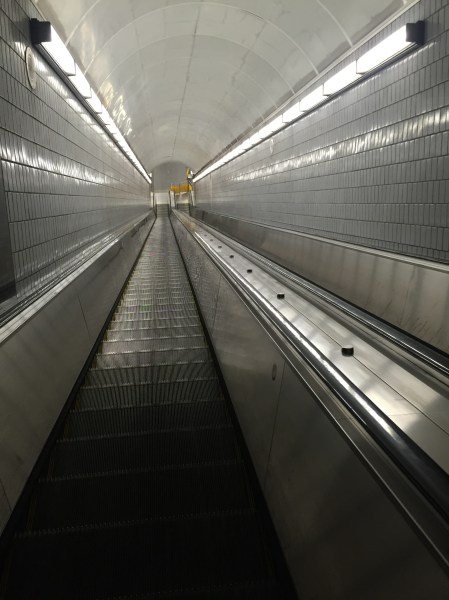
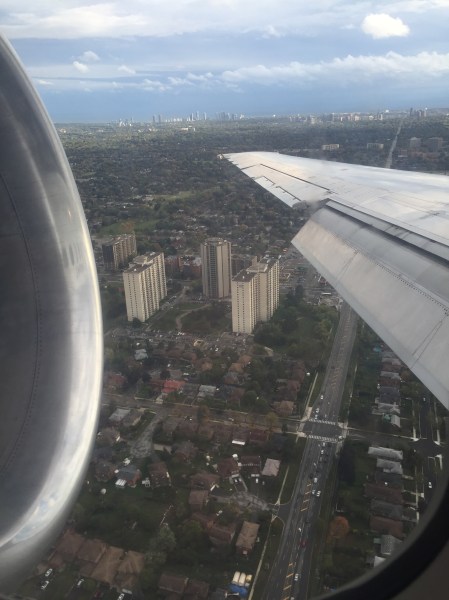
The airport alone was a surreal experience. I kept seeing innocuous but slightly bizarre things. I saw ads about “shopping for health care” and thought, those words don’t make sense together. I watched a man in the seat ahead and across from me sit and read all of the Wall Street Journal. He spent a particularly long amount of time on an article called “NFL weighs new anthem rules.” At one point, he pulled a wad of bills out of his pocket, counted them, and then put them back in his pocket.

I watched the guy next to me do a crossword puzzle, and it felt… I don’t know. Amazing. Ridiculous. Something. How can you do something so benign and simple and quaint and pleasant when the world around you is falling apart? How can you be so calm when 96 of your fellow citizens will die today from being shot with a gun? How are you not screaming with pitchforks at the front gates of every billionaire’s house?

I wanted to turn to the people across from me and ask, “Did you know that we’re living in the darkest timeline and everything we’re told about the way things work is a racist lie?”

But I couldn’t figure out exactly how to word that, so instead I asked them about football.
Photo 2017-10-11, 12 06 11 PM

I did talk with another Canadian headed to the same flight as me, and told her how I was feeling. “Atlanta is nothing,” she said. She’d gone to school in North Carolina, and left when she was done her degree because, she said, “it was too racist.”

* * *

When I started crying on the train after the blind man’s story, I couldn’t stop. I made my way to a fast food area with tables in the airport, sat down and sobbed. A woman—this woman—was playing the cello nearby, and I lost myself in the music, slow and sad. My body heaved as I wept. I was ignored by the other people at the tables. No one said a word to me.

By the time the music finished, I had too. I locked eyes with the cellist, whose name turned out to be Jenn, and she walked straight over to me as I stood up. She embraced me tightly, and I felt everything all at once.

We broke apart and I thanked her for her music. “I needed that,” I said.

“I could tell,” she answered. “Is there anything you want to share?”

We talked for a while, with another woman, and every second was both confusing and nourishing. Nothing I managed to verbalize about my feelings seemed to surprise them, and they were sympathetic. “It’s important to accept that not everyone is capable of feeling as deeply as you do,” one of them told me. It makes sense as a short term strategy, but it’s a pill I still refuse to swallow for the long-term. Everyone is capable. We’re just torn away from each other. We can rebuild empathy.

I had to go. They both hugged me goodbye as I wiped away tears, trying not to be embarrassed. “It’s okay,” I sniffed. “I’m okay.”

Jenn held my shoulders as she looked into my eyes. “It’s alright if you’re not okay, too.”

I felt the warmth in her words, and smiled. “I will be.”

* * *

Photo 2017-10-15, 1 49 54 PMOn the plane, I listened to Kendrick and let every word cut into me like wounds I never want to heal, wounds my soft, safe body will never actually have.
I’ll prolly die anonymous, I’ll prolly die with promises
I’ll prolly die walkin’ back home from the candy house
I’ll prolly die because these colors are standin’ out
I’ll prolly die because I ain’t know Demarcus was snitchin’
I’ll prolly die at these house parties, fuckin’ with bitches
I’ll prolly die from witnesses leavin’ me falsed accused
I’ll prolly die from thinkin’ that me and your hood was cool
Or maybe die from pressin’ the line, actin’ too extra
Or maybe die because these smokers are more than desperate
I’ll prolly die from one of these bats and blue badges
Body-slammed on black and white paint, my bones snappin’
Or maybe die from panic or die from bein’ too lax
Or die from waitin’ on it, die ’cause I’m movin’ too fast
I’ll prolly die tryna buy weed at the apartments
I’ll prolly die tryna defuse two homies arguin’
I’ll prolly die ’cause that’s what you do when you’re 17
All worries in a hurry, I wish I controlled things

If I could smoke fear away, I’d roll that mothafucka up
And then I’d take two puffs
I’ve been hungry all my life
I’m high now
I’m high now


If you like my writing, please consider supporting me on Patreon, or sending some diapers for my baby from my Amazon list 🙂 I’m a low-income grad student and new mom trying to fight against the devastation of the Drug War—every little bit helps.

Find me on Twitter ranting about drug policy, criminal justice reform, capitalism, psychedelics and anthropology: @HilaryAgro

How to convince people that drugs need to be legalized: a guide for getting skeptics on board.

I’ve developed a really nerdy, but kickass, superpower. Give me twenty minutes of one-on-one conversation time with a person, any person, and they will come out of that conversation convinced that illicit drugs—not even just weed, but the ‘bad’ ones like cocaine and meth too—must be decriminalized. Give me forty minutes with them, and they’ll be down for full legalization. It doesn’t matter what opinions they had about drugs going into the conversation. I can get them on board.

This is a skill I’ve developed over the last five years of dedicated research on drug use and drug policy (on top of 15 or so years of, let’s say, thinking about drugs differently than your average person). This isn’t because I’m the worlds greatest rhetorician, or because I’m generally good at debating, although practice has helped a lot. It’s because legalization just makes sense. It’s because the War on Drugs is a spectacular failure. It’s because the time is ripe. People are ready. The normies, the squares, the teetotalers, the smokers-and-drinkers, the legal drug users, the potheads who claim cannabis cures cancer but hypocritically shit-talk other illicit drugs—they are all teed up and waiting to be putted into the hole of drug policy pragmatism with the right arguments, even by someone who sucks at sports metaphors but uses them anyway.

11012449_10153502860849245_3423341969182463811_nThey’ve been primed by The Wire and articles about MAPS research and (at least for the young ones) their own experiences with MDMA and weed not living up to the propaganda telling them ‘one toke and you’ll die.’ OxyContin has shown that legal drugs can addict and kill, and fentanyl has shown that illegal drugs’ purity is at the mercy of the unregulated black market. Overdoses kill more people than car crashes now in North America. Over a thousand people died of opiate overdoses in Vancouver last year alone. Shit is getting real, and drug prohibition is not helping. It’s at the heart of almost all of the problems.
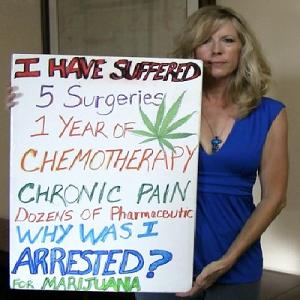
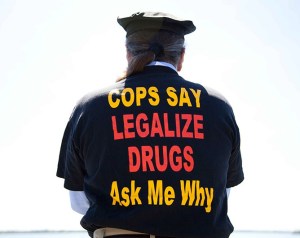
People have heard about Portugal’s success with decriminalization. They’ve heard about the U.S. for-profit prison industrial complex that is fed by the War on Drugs, and they may have even connected the dots to police brutality and the school-to-prison pipeline for Black men. Odds are they don’t know about historical trajectories like the 13th Amendment in the U.S. or the racist origins of the first drug laws in Canada (which were opium laws used to oppress and terrorize Chinese labourers), but still. They’ve heard whispers of these topics, fragments of the yelling drug activists have been doing for decades finally getting amplified by social media, breaking the segregation of this information from the general public. And they can see with their own eyes how badly the War on Drugs has been lost. Drugs are winning, and they know it.

Still, completely legalizing drugs is a cognitive stretch for most non-users. It seems too radical. They don’t all see firsthand what prohibition is doing to drug users and to marginalized communities. Even those who do often still fail to see the structural forces at work, and end up falling into the ‘personal responsibility’ trap. They frown and balk as their affective instincts kick in, deep in the body, before their brain catches up to justify the feeling. Completely changing some of our most entrenched laws? That can’t possibly be the answer. They often instinctively defend the status quo just because, well, this is the way things are, so surely there must be a point to these laws—surely we haven’t fucked things up so incredibly badly as a society that we need to overhaul our entire approach to drugs?

Uh. Cough. Yeah, actually. We have. And we do.

So I’m here to help you get these people on board. Because, and this is the important part—we need these people. We can’t win this fight alone. Marriage equality didn’t happen until straight people marched alongside queer folks. People of colour will keep being subjected to oppression until white people get off their asses and form blockades. Feminism needs men taking Gender Studies classes and talking to their bros about catcalling and emotional labour. Movements don’t succeed until people who aren’t directly affected by the civil rights being demanded are on board, and this means that non-drug-users need to demand legalization from their politicians for the latter cowards to feel that it’s a politically safe move to make. The most important thing you can do to help change drug policy is to have a conversation about it with someone who currently thinks we should keep putting drug users and dealers in prison.

So, below are some tips on how to have those conversations successfully. It’s hard work, and it’s emotional work. People can be extremely heartless about the plight of human beings they think they can’t relate to. But you know what’s harder? Being in fucking prison, or losing your son in a cartel shootout, or being physically dependent on a drug that could kill you at any moment if it’s contaminated. So yes, it’s incredibly frustrating to hear someone coldly say that drug overdoses are Darwin at work—but swallow that anger, and do it for all of those people.growtheeconomy

Remember, too, that changes in opinion sometimes happen after the conversation is over and they’ve had a chance to think a bit. They may not seem to have budged while you were talking to them, but as long as you kept your cool and didn’t insult them personally, some of the things you shared will likely get through. You just might not get the joy of watching it happen, but no one ever said this work would be easy or immediately fulfilling. We’re playing the long game here.

How to convince people that the War on Drugs sucks and we need to legalize everything:

  • Ask them questions. The idea isn’t to tell them how to think, it’s to guide them towards figuring it out for themselves. The argument really makes itself, it’s so obvious. Asking them questions also engages with them and shows an interest in their thoughts, instead of just lecturing or talking at them.
    • “Do you think that prohibition is working to stop people from using drugs?” This is the most important question, because their answer will determine how you proceed. Sometimes even just asking the question does half the work; a lot of people just haven’t thought about it that way yet. If they admit that it’s not working, then you can start talking about alternatives. If they think it is working, then your job is to introduce them to reality: it’s not.
    • “Why do you think alcohol is legal but other drugs aren’t?”
    • “Does putting dealers in jail stop people from accessing drugs?”
  • Remember that this isn’t an argument about whether or not people should do drugs. It’s about getting the person to pragmatically accept that we will never be able to stop people from doing drugs. Once they accept that, then it’s a natural next step to get them to realize that prohibition, therefore, will literally never work.
  • Keep the focus on whether prohibition is working. Talking about whether illegal drugs are good or bad is not actually relevant to whether or not prohibition is good or bad, and can be distracting if they have zero experience with any drug except alcohol. Convincing them that many currently illegal drugs are not actually harmful is a bonus, but you don’t necessarily need to do that in order to focus on the fact that prohibition is what makes most illegal drugs dangerous in the first place, and is causing more human suffering through the prison system and the militarized, global War on Drugs than drug use itself ever could.
  • Still, though: ask them if they’ve heard of the medical studies being done on the benefits of MDMA and psychedelics, and if not, share the good news. Especially don’t forget to mention that these studies are helping veterans with PTSD, survivors of child abuse, and terminal cancer patients—people who are hard to dismiss as burnouts. Then ask why they think these drugs aren’t legal while cigarettes are.canada-america-poll-angus-reid-marijuana-legalization
  • Ask them if they think that getting addicts medical treatment and therapy would work better than arresting them and putting them in jail.
  • “Well okay, I think marijuana should be legal, but not harder stuff.” Ohhh, I love this old chestnut. See the above question. Try also asking them if they think prohibition is preventing people from accessing those “harder” drugs. You can also poke them on the definition of “hard” drugs versus “soft” ones. This might be a good time to talk about the negative effects of alcohol, which is legal and should be, and compare them to something like MDMA.
  • Demeanour is key! Be respectful and kind, and always ask questions with an air of gentle curiosity, not like you’re about to trap them in their own hypocritical stupidity (even when you are). They’re not bad people, even the jerks who think addicts deserve their overdose deaths—they’re just very misinformed. Dehumanizing anti-drug propaganda has done its job, and that sucks, but getting mad at a person for being ignorant isn’t going to help. If you find yourself wanting to swear at them for being a cruel moron, and you don’t think you can engage with them calmly anymore,  just stop and leave the conversation. Giving in to your anger and calling them an idiot might feel good, and you might be totally justified, but it is not helping in the long run. Do better.
  • Ask them if they think the government should be telling people what they can and can’t put in their bodies, and using physical force to enforce those dictates. Libertarians respond pretty well to this one, and feminists should too.
  • Ask them if they think that people who finish their sentences and come out of prison and back into society—as almost all prisoners who are jailed for drug offenses do—are more or less likely to be involved with drugs afterwards. Note that prison traumatizes people, and trauma often leads to drug abuse. Note also that having a criminal record makes finding legal employment more difficult, which makes it harder to avoid the drug trade as a means of subsistence.
  • If you’re talking with an incrementalist—someone who is turned off by the idea of rapid or drastic social change—first focus on decriminalization: let’s at least stop putting drug users in jail, because clearly that doesn’t help anything. cops-say-legalize
  • Next, see if you can get them to agree that we will never fully eradicate drug use in our society. Then, shift it towards legalization with arguments around how, that being the case, we are currently allowing cartels and diffuse groups of individuals to control the entire illicit drug supply, completely unregulated. We, as a society, are making that choice. We are choosing to let dealers, some (not all) of whom don’t care about the quality or safety of their drugs, control the drug supply. We’re letting them do that by not regulating the drugs ourselves. It’s a choice. Legalization is the other choice we can make.
  • Some points you can use:
    • Drugs are purer, stronger, cheaper, and more accessible today than they were when the Drug War was started by Nixon. So, uh… Yeah, the current approach is clearly not working.
    • In response to, “we’re just not hitting the dealers hard enough, or being tough enough with our borders”: We can’t even keep drugs out of prisons, the most heavily controlled and policed environments on earth. Why do we think heavier policing is going to work anywhere else?
    • Most opioid addicts get addicted initially through legal prescriptions. Drug addiction is a health issue, not a criminal issue.
  • In this fucked-up era, not only do facts not really mean anything anymore, words often don’t either. But that’s okay. (It’s actually not but whatever.) The facts are on your side anyway, so you can try using them. It might work. But what you really want to do is get the other person to feel something. To empathize with drug users, drug addicts, and their families. To understand how our drug laws are used to systematically oppress people of colour, and get angry about it. This is often the hardest part, because illicit drug users have been strategically dehumanized and stigmatized for decades, and that dehumanization runs deep. It can be helpful to talk about all the “regular” people who do drugs, as a way of showing that drug users are people too, and addiction can happen to anyone. (This tactic is problematic for other reasons, but in the short term, it’s still useful.) Some examples: Steve Jobs and LSD, indigenous South American communities and ayahuasca, literally everyone and weed, Freud and cocaine, blue collar labourers and opioids for pain. You can point them to the entire Master’s thesis that I wrote about regular, hardworking people—doctors, social workers, teachers—who use all sorts of illicit drugs and are completely fine (and in most cases, better off because of it).
  • If you’re a person who uses illicit drugs from time to time, and you’re feeling really bold, and the person you’re talking to knows you—come out of the closet as a drug user. If they already respect you, it’s the most effective way to change someone’s perception of all drug users as homeless or addicted or whatever other discriminatory way they view human beings who make different recreational choices from them.leap_billboard_350
  • If you’re Canadian, British or from another country with socialized medicine, you have a huge advantage! (Americans, I’m really sorry. I feel deeply for you, for real. Keep fighting for single payer.) Because our countries have decided that all people deserve medical treatment, that means we’ve socialized the costs of said treatment. Which means we don’t leave overdose victims to die, we try to save them. This costs huge amounts of money—more money than preventative care and treatment would cost—and when added to the costs of enforcing drug laws, it’s a crazy amount of money. And it’s all money we could be pouring into prevention and treatment (there’s Portugal again!). Furthermore, most of the overdoses that we’re sending ambulances and firemen to are a result of unregulated substances. No one dies because the alcohol they drink was unknowingly 100 times stronger than the person they bought it from said it was. This is because we regulate alcohol. If we did the same thing for opioids, fentanyl wouldn’t be such a problem, and we wouldn’t be spending nearly as much money on overdose response. (Note: If the person believes that we should stop helping overdose victims at all because it’s their fault: first, take a breath and try not to call them a sociopath. Try to steer them towards a more practical acceptance of the fact that with socialized medicine, we are going to help people regardless of how the person got hurt. That’s just how it is, and how it should be in any half-decent society. If they want to privatize medicine that’s a different conversation, but as things stand, the costs are a reality.)
  • Guns are literally designed specifically to kill things, but we still let people have them. We just train them first. So ask them if making guns illegal would work better than our current system of regulating them. (This argument probably only works outside of the U.S.)
  • People hurt themselves and others with cars, so our response as a society is to regulate when, how and under what conditions people can drive. Doesn’t this make more sense than banning something that many people enjoy and use?

Most people just don’t think about drug policy enough to have an informed opinion on it. They rely on instinct and the status quo without even knowing why. Be the person who informs them. And be proud of doing this hard work.

Please share this article with anyone you know who could benefit from it!

Any other tips to share for talking with people about drug policy? Please leave them in the comments! Anything else to add or correct? Let me know! (I wrote this while tired and drained and trying to proactively distract myself from all the hurricanes and forest fires and Nazis with something productive, and will be working to continually fine-tune and improve it over the coming weeks.)


If you like my writing, please consider supporting me on Patreon, or sending some diapers for my baby from my Amazon list 🙂 I’m a low-income grad student and new mom trying to fight against the devastation of the Drug War–every little bit helps.

Find me on Twitter ranting about drug policy, criminal justice reform, anti-capitalism, psychedelics and anthropology: @HilaryAgro

Alright, let’s talk about GHB: A user’s guide. 

When it kicks in, it feels like meeting an old friend for the first time. – Daniel, 34

Few drugs are as misunderstood and stigmatized as GHB (except for acid, the king of misconceptions). GHB (gamma hydroxybutyrate), also known as simply G, is a central nervous system depressant that comes in liquid form, drank in doses of around 2 or 3 mL. It makes you feel relaxed, warm, sometimes tingly. It’s popular at raves and parties, mixes delightfully with psychedelics and is a pretty well-known sex enhancer.

It’s also a problematic drug in the Toronto party scene right now. Ask any paramedic what causes the most issues (aside from the obvious, alcohol) and they’ll unequivocally say G. I know this because I did ask a bunch of them for my research—initially assuming, based on the media hysteria around it, that they would say MDMA. Nope: it’s G. Event organizers hate it because although deaths are extremely rare, it does usually cause the most visible, paramedic-and-police-attracting problems when someone overdoses and passes out. The reputation it has for being dangerous, while frequently exaggerated, is not totally unfounded—it’s a tricky substance to dose and is especially dangerous when mixed with alcohol, a combo of factors that make it a ticking time bomb for careless, drunk bros. Last year, some of Toronto’s best and most caring party organizers were forced to temporarily shut down a beloved and usually very responsibly-attended ongoing event series as they reckoned with the legal and logistical fallout of a near-fatal overdose. I was there when it happened. It wasn’t pretty.

It’s also well known (especially among people who don’t use party drugs) as a date rape drug. While this is true, it’s not the reason that most GHB is bought, sold and consumed. (It’s also important to remember that the number one date rape drug is alcohol. And it’s even more important to remember that drugs don’t cause sexual assaults, people [and rape culture] do. And unlike guns, drugs aren’t specifically designed to hurt people.)

So yes, absolutely, GHB has partially earned its reputation as a troublemaker. However, G has some significant positives—if it didn’t, no one would use it and it wouldn’t be such a big damn problematic deal in the first place. So, look, it’s time to stop talking about drugs as if they’re just sinister little omens of risk and danger. Information on them is so bogged down in prejudice and “Danger! Risk! Doooooom!”-style rhetoric that it’s pretty much useless for actual users. Recreational drugs are fun—that is the definition of ‘recreation’—and people enjoy them because they bring a lot of benefits to their lives and are mostly harmless when used correctly. There. I said it. Apologies for all the broken monocles that popped off in shock.

This really shouldn’t be so controversial. If you want drug users to listen to you in the first place, you’ve gotta acknowledge their actual experiences. Which is, drugs are fucking fun. Literally anyone who uses them could tell you that (including alcohol users if they would admit that they’re using a drug) but we all act like acknowledging it would mean that everyone would immediately quit their jobs and get high all day.

Anyways, back to G. So, as far as we know, when used properly, GHB is actually one of the least harmful drugs. In fact, it appears to be downright benign. I haven’t been able to find any sources indicating long-term negative side effects, and believe me, the anti-drug warriors would be throwing stacks of photocopied negative articles from the rooftops if they existed. G is also, as far as we know, much less likely to be adulterated with other substances than powder or pill drugs are. Which in the age of fentanyl, is a pretty significant plus.

People use G because it feels like a mild combination of alcohol, MDMA and weed. Importantly, the biggest upside users cite is that unlike with many party drugs (looking at you, alcohol and MDMA), there’s no hangover of any kind to worry about with GHB. They take it, they dance a bunch, they get some sloppy make outs in, they go home, and they get up the next morning feeling fine. For those responsible users, what’s not to love?

Quotes from GHB users online:

“It mimics the effects of being buzzed on alcohol but you also have a nice euphoric push and everything feels nice so it’s a nice social drug at low doses.”

“GHB is amazing. Effects are similar to alcohol, but with more euphoria, less stupor, no nausea, no hangover. It makes you hungry and horny though. Completely replaced alcohol for me.”

“The buzz – very very horny, very euphoric – I would have extremely intense washes of intense body euphoria. When mixed with a stimulant the euphoria is incredibly intense.”

“GHB is the most wonderful drug I’ve ever done. When people asked me what it was like, I would always tell them ‘it makes you feel like the most popular kid in high school.'”

So G is basically a miracle drug for those who’ve figured out how to use it properly and no more than once or twice a week. But: “when used properly” is the tricky part. That’s where everything can fall apart, and is the reason G is the bane of every festival medic’s existence.

In the end, we can go back and forth forever about whether it’s good or bad, safe or dangerous, but the reality is that enough people have decided that they like it that they’re going to keep doing it and it’s going to keep being a thing at parties. And so, below, compiled from my ethnographic research on harm reduction in the rave scene (interviews with users, participant-observation at events, scouring peer-reviewed articles and other sources, generally being a huge nerd, etc), here’s some tips for how to party more safely with G. A good “spirit guide” (see here, page 100) will ask you questions about all of the factors below so they know how much to dose you. If you’re dosing yourself and you’re not willing to follow these guidelines, just don’t use it. Put the vial down. In fact, maybe think about not using any drugs if you feel you’re not up to the task of being careful about how you use them. Drugs are fun, but they are not toys. You can get badly hurt if you’re careless.

NOTE: These instructions will seem pretty cavalier to some, but they reflect the principles of harm reduction, which means I know I can say things like “don’t mix with alcohol, period” all day long but that’s not going to help people who are gonna do it anyway, so I might as well be straight about how to minimize risk while doing it.

NOTE ALSO THAT THE BELOW APPLIES ONLY TO GHB, NOT GBL. Know what you’re taking.

GHB User Guide:

1) DON’T MIX WITH ALCOHOL. Seriously. Like a single beer at most, but even then, you really shouldn’t mess around with alcohol + G together unless you know your tolerance extremely well. Be very careful. If you’ve already had a couple drinks, leave at least an hour or two before dosing with G. If you’ve already had several drinks, just stay on that train and wait to play with G another night. (Remember, you shouldn’t even really need to drink at all if you’re gonna do G—it does everything alcohol does, minus the hangover. Except, fair warning, it doesn’t taste delicious. It tastes like salty shit. And yeah I know beer is amazing, but so is not passing out and going to the hospital.)

2) Don’t mix with ketamine either, or opiates, or any CNS depressant, unless you want to risk blacking out and unceremoniously barfing all over yourself and your friends, who may not be smart enough to put you in the recovery position so you don’t aspirate on your own vomit.

3) Start low til you know your dose. Everyone’s threshold is different, and an effective dose for each person is different. Because it’s liquid (and unregulated—thanks, prohibition), you also don’t know how strong it is until you get familiar with a batch. Around 1.5-2 mL is an average starting dose to feel effects, somewhere between 2 and 4 mL is the sweet spot for most people. Body size matters for dosing G; some bigger/taller people with naturally higher tolerances have to take up to 5 mL for a good high. For others, 4 mL is enough to make them puke. A too-high dose has the universal effect of making you pass out into an unrouseable sleep for a few hours, which will scare the shit out of your friends. But since different batches vary, it’s impossible to say ahead of time exactly how much is a proper dose from a new batch. Finding your dose requires patience and doing some of the same batch a few separate times in safe environments. Don’t go for broke on day one. Just as with any drug, you have to build a relationship with it and get to know how it interacts with your body.

4) Re-dosing is very tricky. Don’t re-dose before at least 90 minutes have passed. Preferably two hours or more, and closer to 2.5-3 hours your first few times. The less time has passed, the smaller your re-dose should be, and it should always be less than your initial dose. An okay rule of thumb is to not re-dose while you still feel at all high, but even if you don’t, be careful as you don’t know how much is still active in your system. Knowing your own ideal re-dose timing is another highly individual thing that you have to figure out slowly and very carefully.

5) Be conscious of how much food is in your stomach. If you just ate a big meal, your threshold dose will be higher than if your stomach is totally empty. (This is different from most drugs, but similar to alcohol.) It’s a very good idea to have eaten at least some food before you do G.

6) Trust your friends who are responsible and knowledgeable, but beware anyone who’s dosing you for the first time without asking how much you’ve had to drink, or having a conversation about how much you want to be dosed. They are being fucking careless. Bad spirit guide! No! Put the G down, you have not earned the right to dose your friends!

7) Use pre-measured vials (most head shops sell these) or a liquid syringe (available at pharmacies) to dose. This way you get consistency and accuracy in your dosing.

8) Don’t use it every day. No negative long-term side effects from GHB use have been established (yet), however, like almost any drug, GHB can be psychologically habit-forming if used too often, and (unlike many drugs) can cause physical addiction and withdrawals if used multiple times a day.

BONUS STEP:

8) Call your congressman/member of parliament and yell at them to legalize and regulate recreational drugs so we can have actual adult conversations with each other about how to use them properly without wading through a swamp of propaganda, prejudice and unregulated substances.

The main thing to remember is that the strength of G’s effects vary widely from person to person (and even from night to night depending on how much food you have in your stomach). The line between “THIS FEELS AMAZING!” and puking and/or passing out is a pretty thin one with G. So unlike with some easier drugs like MDMA, there’s no idiotproof guide to getting a great, safe high from day one. Starting slow and getting to know GHB is essential to be able to sustainably have fun with it. You need to woo her. Be a gentle lover with GHB. Get to know her ins and outs, how she works with your body. Don’t just stumble in and nail her without thinking. No one will have a good time.

This may sound like a lot of work, but it’s really not hard at all once you practice being careful, and being careful quickly becomes second nature. (It may not be as fun and exciting to be so methodical about it, but if you’re getting off on the risk you have a whole other set of problems that a set of guidelines can’t fix.) If you do it right, you’ll end up with a drug that has mostly upsides and few downsides.

There! See? It’s not impossible, yay! Please share this with your friends so uninformed users stop G’ing out and ruining the rave scene for us. ❤


Disclaimer: With this and all of my posts, I’m not advocating for drug use any more than someone who tells teenagers to use condoms is telling them they should have sex. I just don’t have my head stuck in the sand. I’m acknowledging a reality in order to keep people safe. -H


If you like my writing, please consider supporting me on Patreon, or sending some diapers for my baby from my Amazon list 🙂 I’m a low-income grad student and new mom trying to fight against the devastation of the Drug War–every little bit helps.

Find me on Twitter ranting about drug policy, criminal justice reform, anti-capitalism, psychedelics and anthropology: @HilaryAgro


Extra reading: I kept this post as short as possible to encourage lazy readers like myself to actually read the whole thing, but there are some important points to add. Some have been helpfully suggested by knowledgeable users, feel free to leave a comment with anything you think is missing!

  • Note that this article is NOT about GBL – the dosing is different for GBL so make sure you know what you’re getting, and do additional research before you consume anything.
  • GHB is not actually measured in milliliters, it’s measured in grams. Talking about GHB doses in mL is ultimately meaningless without knowing the concentration of the solution. “If taking/purchasing GHB from someone, always inquire as to what the EXACT concentration of the solution is. If they do not know, do not ingest the substance without either using titration to determine the concentration or evaporating the solution back to powder, weighing and putting the known amount of GHB back into a solution with your choice of concentration.”
  • If you buy larger quantities to dose out, put blue food colouring in the bottle you keep your G in so that no one accidentally mistakes it for water or liquor.
  • Advice from a harm reduction expert I know: “If you’re going to mix with alcohol, it’s better to take the G first or sip it to titrate up on either drink.”
  • Stimulants/uppers can mask the symptoms of a G overdose, so you can go into an OD after the stimulant wears off. Be aware of this when mixing and don’t take more G to compensate for the upper.
  • Does my monocle joke make sense to people who don’t get the Simpsons reference? (EDIT: I have been given confirmation that it does. Excellent.)

Being a grad student with ADHD: An ode to constant ontological uncertainty.

[Hi. I’m back. I’m digressing from my usual topics to get a little cathartic and personal for a bit. Don’t worry, for the next post we’ll be back to the drug stuff.]

Reading.

Reading used to be fun.

Back when everything I read was by choice, I could curate my own reading lists that reflected the kind of narratives that kept me going, kept me hungering for more. They fed my imagination and honed my scattered brain into the hyperfocused reverse of itself.

Reading was delightful, relaxing, rewarding.

Now, reading is torture.

It’s the enemy I face off every day. Trying to wrangle sentences from social theorists into submission is the constant state of my being.

I hear my colleagues say it took them an hour to read an article that it took me an hour to get six pages into and I want to cry.

Should I be here?

Is this where I belong?

I pop another Dexedrine and stare at the orange bottle: the key that unlocked the door to academia for someone who by all rights, shouldn’t be here. This space is not built for me. It is hostile to the way my body and mind function. I should have dropped out years ago. I almost did, twice—once in high school and once in undergrad—before the fateful ‘diagnosis’ that turned my C’s into A+’s and miraculously gave me the ability to pursue my dream.

I wouldn’t be here, but for this little orange bottle. It contains my freedom. It’s my crutch.

Academic writing seems designed to keep people like me out. Its dialect is a barrier constructed to exclude those who don’t have the socioeconomic, cultural and linguistic capital to penetrate it. Whose minds have resisted all attempts, external and internal, to be moulded into a narrowly specific way of absorbing knowledge. Read this, we are told. The onus is on us to figure out how. We are at a disadvantage from literally page one.

It smells like bullshit, like there’s something not quite fair happening. But it feels like personal failure.

Sometimes I think maybe grad school is secretly just an insane don’t-ask-don’t-tell circus. Surely no one actually does all the readings? It seems impossible. I can’t make my brain slow down enough to grasp the words on these pages when they’re so incredibly dense and meandering and nonspecific and abstract. If there’s no narrative, no examples, no stories—I can’t follow it. I physically try to force myself, and I fail over and over again.

Then, the depression sets in. The self-loathing.

My relationship to the concept of disability is ambivalent. I certainly feel disabled when I’m trying to read, but identifying as such given all my objective advantages feels like appropriation somehow. I wish I had some sort of sociopolitical solidarity to rally around to argue why Western academic social science writing is exclusionary to people like me despite the fact that I was shaped entirely within it, the way it clearly is to people from other cultures and backgrounds and epistemologies. I am cis and white and middle-class, I am ostensibly who academia was designed for. This place is supposed to feel like second nature to me, I am told. But my type of people—those of us with reading disabilities, ADHD, or just those who process differently—can’t absorb information in the way everyone else around us seems to be able to. But I don’t know who my people are. I don’t know who else to rally to solidarity. We are invisible. We are weeded out early. We are not common in this line of work by default. All I have is a diagnosis that I don’t even fully subscribe to, but whose necessity becomes starkly clear whenever I stop taking the meds. But how can you medicalize a way of thinking and call it a ‘disorder’? I am not disordered. This pedagogy is disordered.

When an otherwise functional, stable, intelligent person has to be medicated to succeed within a system, there’s something wrong with the system.

Hello Foucault. It’s nice to meet you, I’ve heard so many wonderful things. I like your glasses, and also your scathing indictment of modern carceral systems. Listen, I have some questions for you. If your ideas are so necessary, so revolutionary, why are they so difficult for us, the intellectual proletariat, to grasp through your writing? Why are you getting away with helping to perpetuate the very structures of exclusion and power that you rail against? You are complicit in their maintenance and silent about that irony. Explain yourself.

I keep hearing people say, “oh, it’s worth it once you slog through [X impenetrable author] for the brilliance.” And yes, I have found that to be the case for some authors. But look, some of us just don’t have the fucking time. I’m not saying I’m too busy doing other things. I’m a student, this is my job. All I do is read, and I try very hard to slog through these authors every single day. I’m saying I literally cannot physically read fast enough in a given allotted time to properly digest an entire book by those impenetrable authors. Or even most of it. Or half. The time-spent-to-intellectual-benefit ratio is completely skewed for this type of dense, convoluted writing. I can learn so much more from a podcast or documentary or narrative ethnography about a similar topic. Hell, in terms of time spent relative to benefits, I’ve absorbed a lot more from following Black, Indigenous and decolonial feminist anthropologists on Twitter than from trying and failing to read Donna Haraway.

So yeah. Maybe academia isn’t for me.

Except… I’m here somehow. They let me into a top-tier anthropology PhD program with full funding. I have a Master’s degree; I’ve been told my thesis was good, very good even. I’ve made it here despite ignoring all the Big-Cheese Social Theorists and relying entirely on the little guys, the Comprehensibles, the ones I can and do read, who mix theory in with stories–Bourgois, Agar, Moore, Singer, Garcia. What does it mean? Am I a fraud or are all those French sociologists frauds?

I’ve swum around them, these giant mysterious intellectual whales in a sea of friendly little ethnographer fish. Most of the fish know the whales’ songs, and at their register I can actually hear them. So fuck the whales, I think. I don’t need them. I’m a product of the Internet age. Wikipedia and YouTube have been my shortcuts through a world of writing I can’t penetrate to crack open the sweet sticky centre of the ideas inside that writing, which in the end are all that matter. All along, there’s an uneasy feeling I can’t shake that this isn’t right, that I’m missing something, that I’m cheating. That my inabilities, my disability, my patched-together and selective reading history will catch up with me someday. That I’ll be exposed for the illiterate goon I am and unceremoniously booted out of this discipline I love so much.

And yet, somehow, I seem to get by. I get good grades, I’ve been told that I express my ideas coherently in classes and am an above-average public speaker, even if I don’t quite believe it. People regularly tell me they like my work and my public outreach (blog posts and Twitter) has been very rewarding. I love everything else about grad school and about anthropology–research, teaching, listening, learning, thinking, experiencing. The stuff I can read, I am absolutely fascinated by. I’ve gotten funding and scholarships–I am being given money to think and write about stuff. I feel like I have things to say, a perspective that would benefit from being heard in my discipline. I have concrete things to point to when I’m feeling particularly useless.

But none of this makes me feel any better when I’m staring at words swimming on a page. Instead I walk endlessly back and forth on a scale between self-hatred and bitter rage at the people I’m reading.

Right now, for example, I need to write a response paper about a very famous book by a very famous man named Bruno Latour. I don’t understand the first fucking paragraph and that fact is all I want to talk about:

…For real? Is this a joke? Are we really all just gonna pretend that this kind of writing is an ACCEPTABLE WAY TO COMMUNICATE?

My internal thought process while reading goes something like this:

Okay, stating something simply, I like it, what’s next… Okay so I had to read the next couple sentences five times each because my brain kept showing me pictures of antique boats and my dad when he had a moustache and what I had for breakfast and Jon Stewart dressed as Donald Trump all set to the tune of that Talib Kweli song I can’t get out of my head mixed with the humming from my computer, but eventually I got there… Wait, hang on now. Slow down there compadre. What do you mean by ‘material’? You haven’t quite defined that and the way you seem to be using it in a way is diverging from my own understanding of the potential uses of that word and so I’m already lost. No, don’t try to blame the translator. I’m going through the repertoire of what you might mean by ‘material’ and nothing seems to quite make it work. I am also not familiar with a world in which the word ‘social’ can be productively equated with the word ‘wooden’ or ‘steely.’ It is not because I lack imagination. It is because you lack communication skills. Am I supposed to just buy this and move on? Why should I let you get away with this shit? Convince me. I am a skeptic. You are not winning me over with this attitude. …Or maybe I really am not cut out for this. I don’t know. Why can’t I remember more than the first two lines of this Talib Kweli song? Back to Latour. Focus. Wait, now it’s a ‘movement’? When did that happen? ‘Ingredient’? What? WHAT ARE YOU TALKING ABOUT?! I hear your ideas are important, what are they?! Give me your secrets, Latour! I want to understand! TALIB WILL YOU PLEASE LEAVE ME ALONE FOR FIVE MINUTES I’M TRYING TO CONCENTRATE!

Yeah. That’s paragraph one.

I’m supposed to read 140 pages.

I don’t know. Maybe I really don’t belong here. Or maybe you can get a PhD with Google and reflexive feminist ethnography and theory-by-proxy. Maybe the calls for valuing clear, jargon-free writing in academia will become something more than lip service in time to save me. Maybe all those intelligible, narrative-oriented authors I can actually read are on the rise, and they will revolt and overthrow the opaque obfuscatocracy and take over, freeing us lowly idiots from our intellectual subjugation. My supervisor is one of those legible authors, that’s for damn sure. She knows how to write. I devoured her book in three days because she has enough respect for her audience to tell a story while she analyses. Why isn’t she the head of [whatever fancy French program somewhere that Latour sits on top of in a building that will be named after him someday, drinking wine and laughing at us peasants with brain disorders as we struggle to comprehend his revered words]?

Sigh.

What can I do? I’m far too obsessive and determined to just convince myself that I don’t need the big whales at all. If I haven’t given up now, it’s not going to happen.

So. I put on some Talib Kweli, drink some water, and steel myself. On to paragraph two.


Note: I receive more emails and messages about this post than all my other writing combined. I love hearing from other students who relate to this experience! It’s clearly a systemic problem. However, if you message me and I don’t reply, I’m sorry, I get overwhelmed–and now that I’m a full-time mom AND PhD student, my ability to respond to messages has been all but wiped out. But please know that I hear you and value you. You aren’t alone. You are amazing for getting as far as you have. Believe me when I say this: it’s not you, it’s them. ❤


If you like my writing, please consider supporting me on Patreon, or sending some diapers for my baby from my Amazon list 🙂 I’m a low-income grad student and new mom trying to fight against the devastation of the Drug War–every little bit helps.

Find me on Twitter ranting about drug policy, criminal justice reform, anti-capitalism, psychedelics and anthropology: @HilaryAgro