Men are not trash. Perpetuating that narrative helps normalize rape culture by making it seem like it’s just inherent to their nature. It’s not.
I know why a lot of women and enbies say this, and I share their frustration, rage and pain. And yet, we still have to contend with the situation if we want to fix it: men are full human beings deserving of care and understanding, even the ones who do the most harm. The social system of patriarchal masculinity is what’s trash, and it hurts men too. But thankfully, systems made by humans can always be unmade. We can change anything that we collectively want to change.
If you’re a women or non-binary person and what I’ve said so far is creating a response in your body that feels really bad—if you feel defensive or angry thoughts bubbling to the surface—I invite you to read something else that makes you feel powerful and uplifted instead. I write from an abolitionist perspective focused on collective liberation, and it’s not my intention to fuel more disconnection. But I also have enough respect for the fellow working-class people I am writing for that I have a commitment to communicating from an honest place, even when I know it cannot be received by everyone at all times. I’ve written a bit more at the end of this article to explain what I’m doing here, and address some concerns that often come up from women. Anyone who feels mostly okay, or who is up for a bit of challenge, a bit of stretching: please read on.
Humans are all born prosocial creatures, it’s how we’re wired to survive. We are primates who live in groups because we die if we’re on our own. We are literally not biologically equipped for individualism. That means that every member of our species, Homo sapiens, is born with instincts that guide them towards relationality as a core survival mode. We need other people, and we need a healthy environment to provide us with water, air, food and shelter. Acknowledging our place in this ecosystem is the core of relationality.
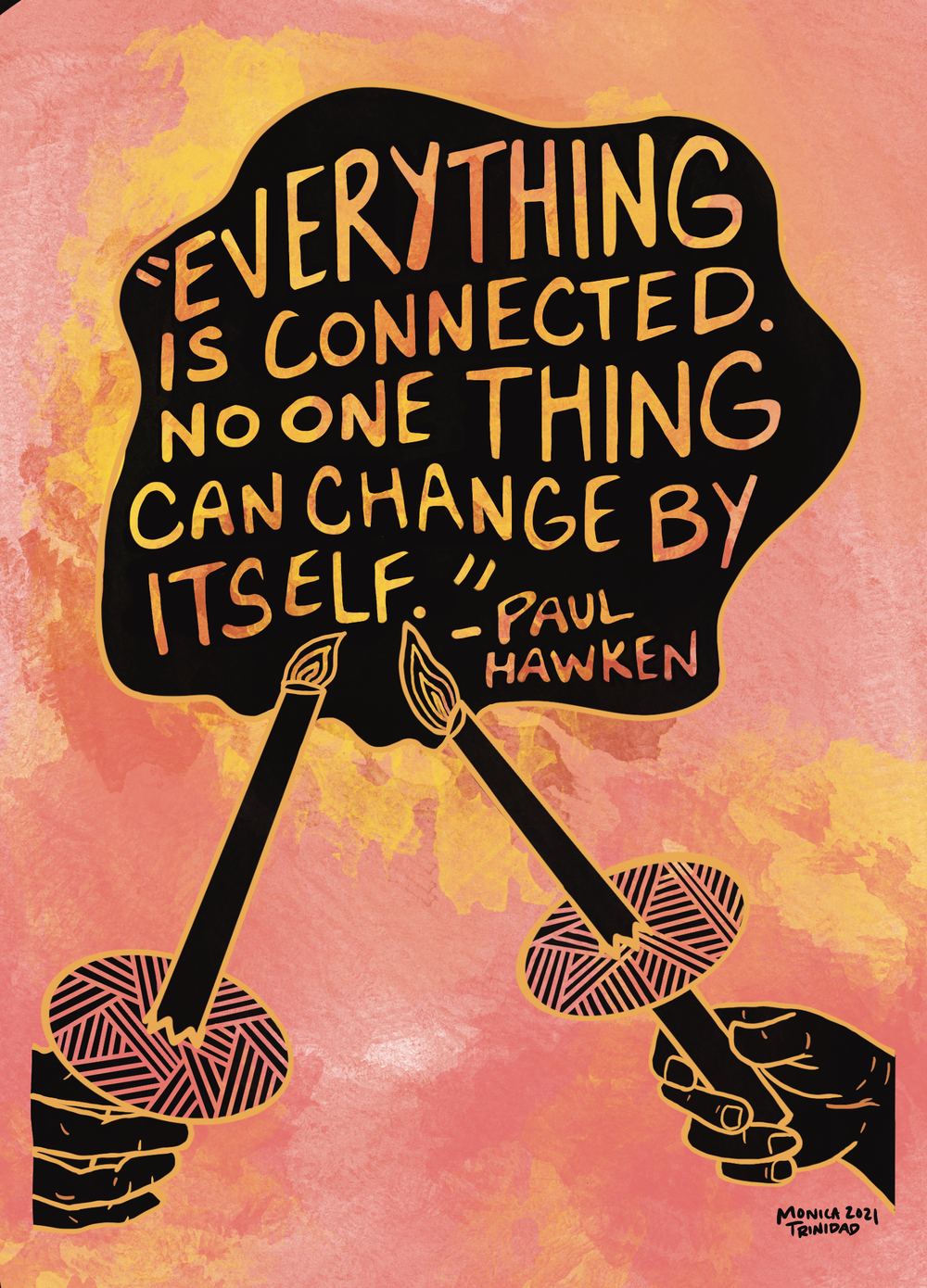
It takes a lot to program a human to hate, fear and dominate others, but several thousand years of internal and then external European colonization managed to do it, and now children in the settler colonies of North America on Turtle Island are raised with experiences that enforce those unnatural values on them from day one: blind obedience to authority, chronically ignoring our bodies, strict gender role enforcement. We are told, over and over, to ignore the signs our bodies are telling us in favour of external control: get up, eat what you’re given, sit still, listen, don’t whine, don’t cry, stop running so much, stop laughing so loud, don’t play with that, go to bed right now. You’re tired when it’s time to wake up? Too bad. You’re energetic when it’s time for bed? Too bad. You’re hungry or sad at the wrong time? The adults around you are too stressed to have space for that. And they are genuinely doing the absolute best that they can with the limited financial and/or emotional resources that they have.
“Men,” as in the flesh-and-blood human beings that are our brothers in the world, are not the problem. I will keep saying this until my dying breath, because we will not fix these problems until we start seeing them as systemic more than individual. If we change the system, and reconnect to ourselves and others, men—and all of us—will heal.
Our ancestors knew that systems were the danger, and knew the power and potential that humans have to harm and destroy, and had many different cultural strategies in place for managing it (many of which are explored in the excellent podcast The Emerald). Colonialism replaced collective ritual with authoritarian religions, schools, money, screens. There is a reason men are not okay.
I work with people to help them set up solo psychedelic healing journeys, and my clients are mostly men. It’s so jarring coming from sessions where men are pouring their hearts out, working so hard to heal for the sake of themselves and their loved ones, and then go online and see the discourse just dump shit all over them.
Generational trauma runs very, very deep. Things have been awry for a long time. We subject boys, literal children, to the most unimaginably dehumanizing conditions at a massive cultural scale in the imperial core, and then we participate in the same dehumanizing dynamics that are hurting us all by calling them pieces of shit for not fighting off structural forces when they were 7.
Men can and do heal, including men who’ve done severe harm. The rest of us (who all, in the imperial core, participate in harmful systems) can as well, and when we do, all of this becomes easier. It feels so much better in my body to practice loving everyone than it did to selectively fear, resent and hate people. It makes me a better organizer, a better teacher, a better parent, a better friend.
Decolonial animist spirituality, for the brave
Here, I am compelled to nudge us towards rediscovering the animist worldviews of our European (and African, and Asian) ancestors, and of almost all Indigenous cultures throughout history and still today. I don’t talk about this as much as I want to, especially considering how profoundly it’s changed my own well-being for the better, because I know a lot of people aren’t ready for it. But it is the missing piece that allows for a more holistic embrace of systems thinking at the level of the body, not just the mind.
Humans are fundamentally pro-social, but our actions and potential are shaped by spiritual forces (or systems if you’re nasty*). Once you understand this, it becomes much easier to blame the forces that are feeding off our disconnection and hatred, rather than individual humans, or lumped-together groups of people like men, themselves. (Important side note: you can absolutely view this as a metaphor if the idea of spirits makes you uncomfortable. I encourage you to free yourself from the objectivist trap of focusing on the materialist scientific “truth” of this worldview, and instead think about it as a framework through which to view social dynamics. I come from a deeply skeptical, evidence-based mindset, and animism is just as compatible with that as other philosophical frameworks, such as Marxist theory or feminism, that rely on material evidence but are not testable and universally replicable using the scientific method. The scientific method is an essential tool for many problems, but it is limited in its scope, and it cannot be the only tool in our collective toolbox. In sum, I use sage and have an altar, and I am also abundantly vaccinated.)

I will expand on decolonial animist spirituality in future writing and videos, but all I’ll say for now is: When you have 200,000+ years of our ancestors thriving and saying “this is how the world works and these are the things that must be done to ensure the well-being of our people and all living beings,” how are you gonna say “no actually, YOU’RE the ignorant morons” with a straight face as our environment collapses around us and everyone is miserable?
“All beings have an innate spiritual aliveness that connects us? Haha, no, I think me as a white lady from the most fucked up society that’s ever existed knows more than you, thank you very much.” – Me before plant medicines and serious engagement with Indigenous philosophy humbled my colonized ass.
Before I keep going, I just want to encourage you to share this article with someone else if it has felt insightful (maybe even keep it handy for the next time you see someone call men trash), because I’m an independent educator who lives at the whim of billionaire-funded algorithms and it’s hard to break through that shit, okay thank you I love you, on we go.
What to do?
So, what can we do about this situation we’re in?
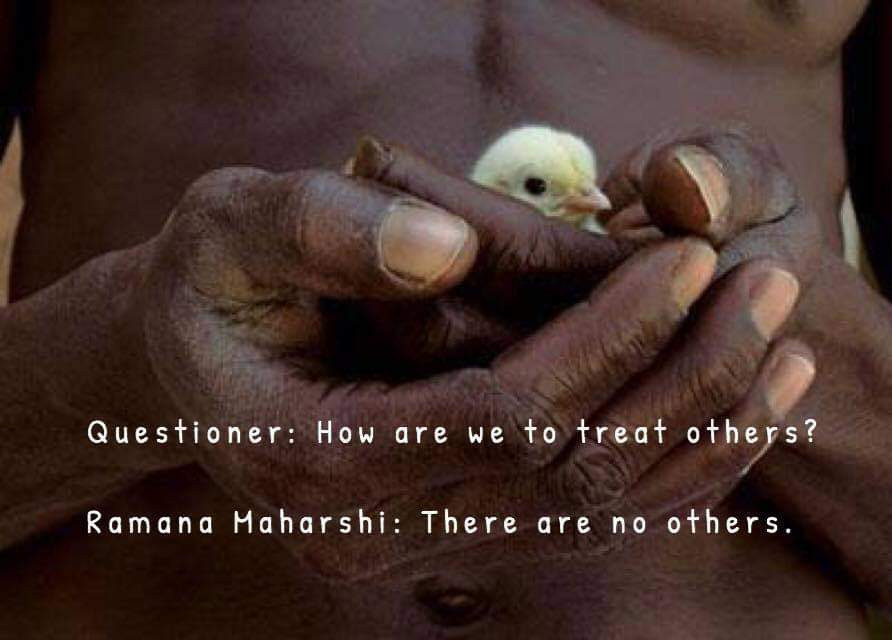
If you do feel ready to do this deep, difficult, rewarding work of movement-building without individualism and shaming, here are my suggestions. But first, I want to express my gratitude to you, because it’s really, really hard to push past the anger we’ve been trained to target at our fellow human beings enough to do this. Most people are not resourced enough for it. I struggle with it all the time!
Step one is to figure out which of your identities makes you best suited to talk to other people with that same identity. As much as it sucks, I have to accept that white people are more likely to listen to me than the Black and Indigenous people I have learned from, so I talk to them. It’s a responsibility, but also an opportunity. Men, talk to other men. Straight people, talk to other heteros. Religious people, talk to others in your faith. Non-Indigenous people, talk to other settlers. Most of all, working class people, talk to each other about class issues! (Class is generally the most productive place to focus your efforts in my opinion, because it’s the great uniter, and the reason we were divided against each other by capitalists in the first place. But it has to be grounded in decolonization as well.)
Encouraging men to start a men’s group, or starting one yourself, is a hugely beneficial thing to do. Make sure the stated and practiced values of the group are decolonial, feminist and anti-oppressive.
Here are five resources I suggest to start with to build these communication and organizing skills. None are perfect, all are just tools in a toolbox. Pick whichever interests you, leave anything you don’t feel aligned with.
1) Nonviolent communication training: an incredible resource for learning how to talk to and connect with people using a non-authoritarian approach. (This is where I learned to identify how often people interpret suggestions and requests as demands, a quick way to see how unresolved trauma functions to hamstring our movements.) The intro training is free on Spotify.
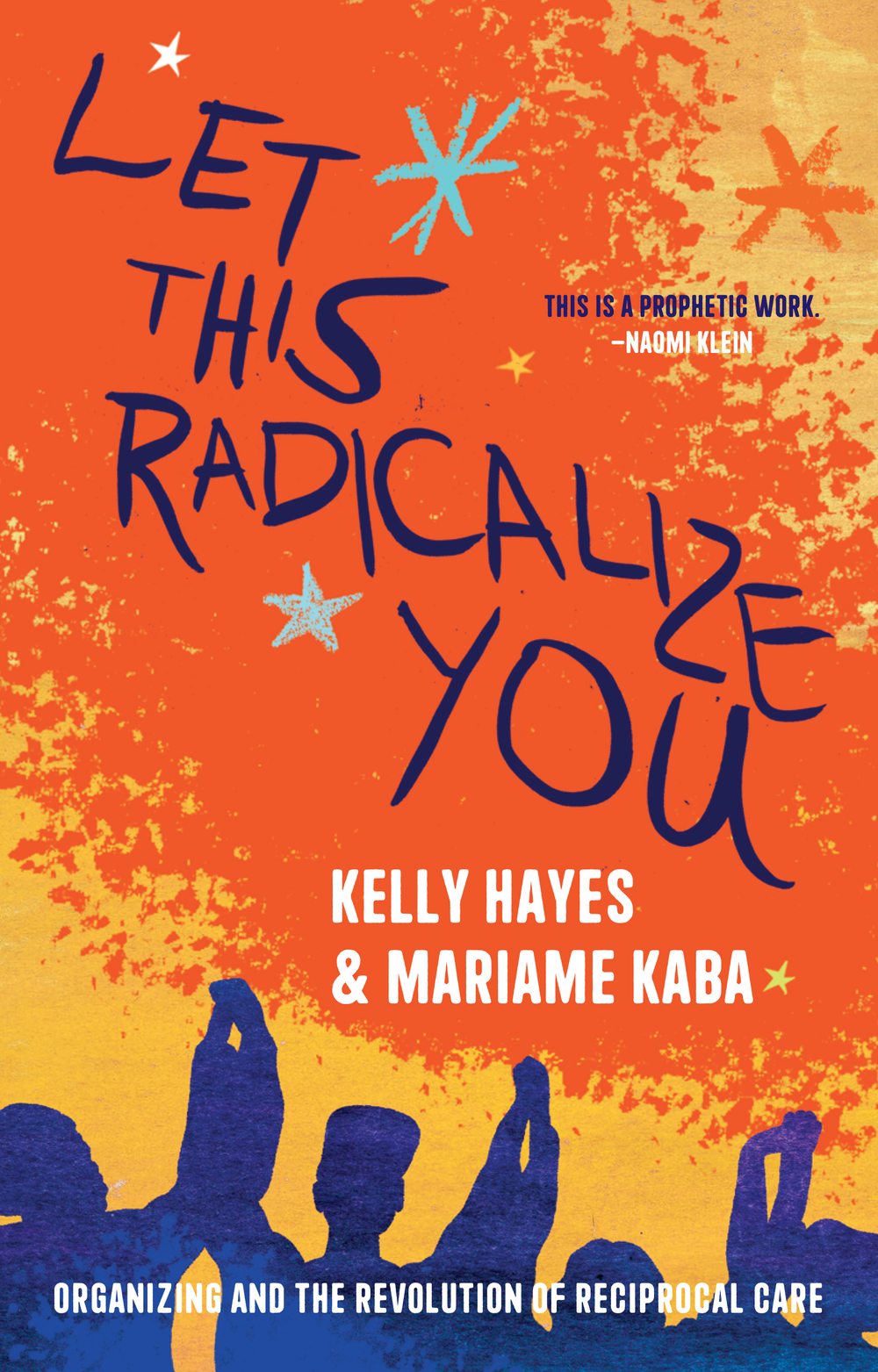
2) Let This Radicalize You by Kelly Hayes and Mariame Kaba: practical advice for organizing and activism, and how to make hope something that you build with others.
3) Maybe I’m cheating by calling this one a single resource, but it’s just too good! Interrupting Criminalization has got so much! Use it all, share it all! They are amazing!
4) There are many writers, artists and educators doing great work on positive masculinity. Healthy Gamer (Dr. Alok Kanojia) is a great resources, and Shaun does amazing work speaking to and about young white men from a critical but also humanizing perspective. Here’s another of his videos. I have also started making videos about this, such as Men Are Not Trash and Seven Ways Society is Unfair to Men.
5) If the stuff about animist spirituality above intrigued you and you’re ready to go deeper and see how spirituality is an essential component to integrate in order to combat the appeal of fundamentalist cults, then listen to The Emerald podcast. “Oh Justice” is a relevant episode, but listen to any that pique your interest. My favourite is “Snail Juice.”
Be well, keep up the good work, rest and find joy. I love you, we’re all in this together.
This article is also available as a video essay.
I quit academia to educate without gatekeeping. I’ve compiled a ton of free resources here. If you REALLY want to get down and dirty with that decolonial life, join my Patreοn to get access to exclusive patrons-only writing and videos, including my PhD dissertation, which was embargoed by my university for being too politically spicy. If you’re on a healing journey, you can consult with me about psychedelic use.
If you appreciate this article, please share it with others! Here are three ways to say thank you, and support me doing more of it:
💲 Send me a straight-up cash tip if you’re baller like that
👧 Buy my kids supplies like toothpaste and sunscreen!
Dr. Hilary Agro is an anthropologist, community organizer and mother of two young children.
*this is a queer culture joke, just disregard if it makes no sense lol
A note for skeptical women
In my outreach work, I often get women responding saying that they feel like they are expected to fix men, saying “it’s not my job to do that,” “I shouldn’t be expected to help men who’ve done nothing but hurt me,” things like that. Honestly, that’s extremely valid! I want to make it clear right now that it is absolutely not your job and no one expects you to do that. But it is my job! I’ve taken on this task willingly. When you read an article or watch a video of mine about men, you’re seeing me at work doing this on behalf of us. 😊
So I feel what you’re saying in my heart, and I think it’s very reasonable for you to focus on yourself and your healing, limit contact with people and conversations that hurt too much, and take all the space you need. Myself and other people can do this particular work for the collective, and you can contribute to the broader movement for liberation in whatever ways you’re able to, and trust us to carry the rest. ❤️
So don’t worry, I’m doing it for us as we speak so that you don’t have to! I’ve got this! Get some tea and enjoy some well deserved rest, beloved. The only thing I am asking women and enbies to do, if you’re not up for outreach work but do want to be supportive, is to please not make my job harder by venting your justified anger at men you don’t know online. In my work, I try to create a space for men to feel safe to talk about their experiences and work through some unlearning they’re doing around various oppressive structures. It makes my job harder when women and enbies come at those men in my comments sections for being a little bit confused about minor things when they overall mean well, and are on a journey. People can’t learn when they feel like making a small mistake will result in judgement, mockery and criticism. I want them to feel safe engaging with my work. When I taught at the university level, I can’t imagine how much harder it would have been for my students if they’d had someone jumping on every poorly articulated thought. Processing out loud, including in writing, is an essential part of learning.
My work is grounded in abolitionist ethics: approaches to conflict, crisis, violence and disagreement that reject punishment and coercion and instead centre collaboration, the transformation of conflict into opportunities for growth, and flexibility/experimentation. This is rooted in a deep engagement with Black and Indigenous feminists. I am interested, most of all, in material change. In all of my work, I ask the question: What actually works? What is effective?
I have not seen much evidence that shaming people works. But I have seen lots of evidence that offering compassion, understanding and respect is an effective way to create the human connection that is required for learning and growth to happen.
To maintain a safe environment, I have had to block a few particularly hostile people who were responding to multiple men on my videos lashing out at them, and I really don’t like doing that. So please help me out by keeping the venting to those spaces where it won’t be seen by men struggling to free themselves from the mental chains that have been imposed on them—ideally with your girlfriends in the group chat.
Why do I trust men to be able to change?
Because over my years of doing this work, I’ve heard from hundreds of men who’ve talked about the changes they’ve made and the gratitude they feel for the people who held space for them while they worked through things, including when they still had some propagandized beliefs. (I talk about this in the YouTube video I made on this topic, it actually made me emotional.) I also try to remember that bot farms whose entire purpose is to sow discontent are real. But mostly, through my own healing I have found that approaching everyone with compassion just feels best in my body, and as a point of personal and abolitionist values (and based on my education and personal experiences) I hold the belief that everyone is doing their best and the core of harmful behaviour is just fear. ❤️


 Dr. Hilary Agro, PhD