Today I have the honour of bringing you a guest post written by my colleague and good friend, Rima Dib. She is one of the most powerful and thoughtful community organizers I know. She leads practical anti-oppression workshops and workplace training. We have spent many nights talking into the early morning hours about children’s liberation, and her words are fully endorsed by me.I have added some of my thoughts at the end.
The Epstein Files have made one thing even clearer than it already was. The ultimate victims of all our failed systems and corrupt power is, and has always been, children. It’s well past time to change that. If you are someone who has ever uttered the words “I just don’t like children,” this message is especially for you. But it’s also for everyone, as in the imperial core we have all been raised with some amount of cultural programming that dehumanizes and sidelines kids.
Center the Children: A Manifesto for True Liberation
Every generation tells itself that it loves children, that they are the future, that they deserve better. Yet our actions tell another story. Across every movement that claims to fight for justice, children remain the most neglected constituency.
They are the ultimate victims of violence, exploitation, and neglect, because children are always the ultimate victims of every form of structural violence that exists. They are the most vulnerable, yet the least protected; the most valuable, yet the most expendable. Their lives are shaped by power they do not hold, by institutions they did not design, and by choices they cannot escape.
We are failing them in every imaginable way.
They are trafficked, shot in classrooms, and forced into labour. They are left hungry in rich countries and bombed in poor ones. We poison their bodies through contaminated food and air, and their minds through manipulative media and marketing. Corporations are permitted to profit from childhood itself, selling insecurity, extracting attention, and designing dependency. And we allow it.
Meanwhile, adults openly say things like “I just don’t like kids,” as though that isn’t a form of discrimination. Dehumanizing jokes about kids being “annoying” or a nuisance are made even in spaces where that would be unacceptable to say about any other group of people. But children absorb that disdain while watching a world destroy their safety, their dignity, and their future. Disdain for children becomes complicity in a world where adults are allowed to hit, shoot and bomb kids every day without consequence, and the environment they are inheriting from us—and their future on this planet—is fed into the profit machine.
If liberation movements are to mean anything, whether for climate, equity, race, gender, or disability justice, they must begin and end with children. You cannot create a sustainable society while exploiting its youngest inhabitants. You cannot claim progress while neglecting those who will inherit its consequences.
To center children is not sentimentality; it is systems change. It means crafting policy, economics, and community life through the lens of children’s well-being and agency. It means holding institutions accountable for outcomes that sustain, rather than sacrifice, their future. It is the moral reckoning we have avoided for too long.
A society that fails to protect children can never be just.
A movement that excludes their needs cannot call itself free.
And until we center children fully, fiercely, and without compromise, no liberation is complete.
Every policy, every system, every movement must begin with one question:
What does this mean for the children?
If children are our compass, we will find a just way forward.
A “yes, and!” from Dr. Agro
I believe that a lot of the reason that people block themselves from seeing the full humanity of children, and from letting in the incredible joy that they offer, is the same as why people block themselves from connecting with nature: when you open yourself up to that profound joy, it comes along with a deep sense of anxiety from the realization of what we have been collectively doing to the most beautiful parts of our existence as humans. It is easier to stay blocked off, so you don’t have to reckon with how much control, neglect and violence children are subject to, the role each of us play in perpetuating that, and our responsibility to help fix these problems.
I believe as well that because so many people were treated badly as children, it is physically painful for them to treat children better than they were treated, because to do so means opening yourself up to immense grief for what you deserved but didn’t get. And since that is a pretty serious undertaking, we have very few structures in place to support grief processing and healing, avoidance of these feelings manifests as downplaying and justification: “I went through that and I turned out fine,” “it’s not that big of a deal,” “they’ll get over it,” “kids need to learn that that’s how life is.”
If you’re willing, here are some questions you can ask yourself to begin to center child liberation in your praxis:
Further reading:
How often do I interact with children? If rarely or never, why is that?
What am I doing to work on my ability to tolerate and welcome the existence of children around me, as their full selves?
What can I do to make my social spaces more welcoming to children and their caregivers?
What can I do to make my organizing spaces more welcoming to children and their caregivers?
How can I factor in the well-being of the environment when making decisions about non-essential purchases?
If children in my community were being treated the way children in Palestine are, would my responses be different?
Because on the whole, leftists are mostly (and rightfully) not all that excited about AI as it exists today, we are often accused of being luddites or hating technology.* But no, I do like some technology. I’m not against it as a concept. We perfected textiles 4,000 years ago. Then we invented books, and vaccines, and those are great. But almost everything else has been based on increasingly ramped-up environmental destruction and labour exploitation, “solving” individual “problems” that only primarily exist because of colonialism in the first place and which thus cannot be solved through more of the same.
So no, I don’t like the robots. But I want you to understand why.
When we’re faced with accusations oh hating technology, I sometimes see people say “hey, we love technology! We love high speed rail and mRNA vaccines!” And sure, we can take their bait and remain always on the defense, having conversations on their terms. But we also absolutely do not have to fall over ourselves saying that we want to hug and kiss technological progress. The onus is on Tech Bros to explain to us why we should be excited about new technology while there are microplastics in every mother’s breast milk and our rivers are drying up. And that’s what we should be hammering home in all of these conversations: the material reality of electronic technology. (Colonizers answer the question of “what are you going to do with this mass produced product when its usable lifespan is up to ensure it doesn’t poison our children’s environment” challenge, difficulty level: impossible.)
However, this is a wedge subject that I don’t think leftists are having enough hard conversations about. I have close friends for whom so much of their comfort, even their creativity, is based in electronic tech that some don’t really seem able to take a sincere, hard look at the environmental and social consequences of a screen-based society at scale, or at what it might be doing to us to let our joy be mediated by products we’re being sold.
Adding even more discomfort to the situation, this issue connects directly with the other two major wedge issues that are deeply unresolved on the left, which are:
Land back: The return of all land to indigenous stewardship.
Child liberation: The prioritization of the well-being of children, those living now and those to come, in every aspect of society and our daily lives.
I for one, do not find it acceptable that in Canada we churn through plastic at an appalling rate because we’re dazzled by consumer advertising and too depressed to cook or sew, and then we send our garbage to choke the air and waters of children in Malaysia. I do not like that.
I don’t think that children in Vietnam deserve to bear the cost of the addiction to immediate gratification that we’ve been given as a trickle-down result of our overlords’ addiction to power and domination.
I don’t think it’s acceptable that we want new gaming systems, so they get poisoned.
I don’t think it’s acceptable to sidestep environmental concerns in discussions of AI. I think it’s vital to not budge one inch on the requirement that “progress” always be measured first through a sustainability lens, and refuse to have conversations about technological merits until those questions are answered to the satisfaction of those of us who want humanity’s great-grandchildren to survive.
Whenever I’m speaking with a tech-optimist liberal or leftist who is suggesting solutions that require the maintenance, or expansion, of personal devices or computer-based infrastructure (e.g., a new game that teaches people about empathy, or an app that helps people find better housing, or any pro-social use of AI), I cautiously ask some version of these questions: “If your solution requires more technology to be manufactured, what should we do with it when it breaks, to ensure it doesn’t poison the environment? Can we focus on building the recycling infrastructure first to handle more production, before we make new stuff? Whose lands will be mined for the resources? Whose water will be used?”
When I try to talk about this, some people shut down. They downplay and dismiss, and use thought-terminating cliches like “well we can’t just go back to living in caves.” And I don’t even blame them for not wanting to think about it. I’m not trying to shame anyone for having screen-based hobbies or hopes. I’m genuinely trying to have real conversations about this. Disconnected as we are from the Earth, from each other, from ritual and song and tradition and children and elders, we have so little that makes us happy. Capitalism gave us little emotion-regulation boxes made by slaves, and we were in too much generational pain to think about the consequences of outsourcing our emotional well-being to the slave boxes, so now the thought of losing our phones causes more distress in our bodies than a tree being cut down in our neighbourhood or a shipment of electronic waste heading for Indonesia. And as AI companies offer yet another “solution” to our collective alienation—don’t worry about why it’s so difficult to find someone who understands you, just become dependent on the robot, it’ll always be nice to you!—we are too ungrounded from the earth to see that AI is not revolutionary, it’s not a game changer, it’s just more of the same transmutation of the Earth’s resources into dissociation from centuries of colonial trauma. We are collectively making out with a gun to feel better. We are being sold more poison as a cure for the poison.
This is why all my organizing work comes back to healing. We are too traumatized to be in real solidarity with the global south. We cannot actually have rational debates about technology, because our ability to reason is compromised by the fantasy world we live in where the material consequences of our actions don’t exist where we don’t see them. We need to fix our inner shit for those conversations to even be possible. I simply don’t really trust any opinion about the value of technological “progress” that comes from someone addicted to the fruits of capitalist technological progress, any more than I trust a billionaire’s opinion about money or a gambler’s opinion about casinos. If you can’t imagine life without your computer, then you’d better start imagining life where electronics are not produced through exploitation and Congo has complete sovereignty over their mineral production, so we can bring that world into reality.**
As it stands, as long as we’re still clinging to mass-produced trinkets for our sense of stability, we will prioritize those coping mechanisms over the well-being of the world’s children. As long as we rely on screens rather than on forests and sunsets to soothe us, we will fight to defend the screens, not the forests. Whatever you get your comfort from, that is what you will fight to defend.
If AI is your friend and therapist, maintaining that “relationship” is what you are going to centre in these struggles. If screens are our ultimate solace, we’ll let the forests burn. We’re doing it right now. The machine is churning to feed us.
We have got to divest from these poisoned crutches, beloveds.
I am included in this as well. Screens have been my primary addiction for years. PC gaming got me through some very hard times in my youth, when I didn’t have the emotional resources I do now, and I still binge Dropout and Drag Race when I need to rest but don’t have the energy for the truly restorative shit (stretching, drinking tea, journalling, singing). But I know in my heart that screen-based coping mechanisms are a pause button for life, built on our own exploitation and sold back to us, and I feel secure enough now to confront that reality and slowly change through my actions.
Divesting from colonial comforts has been my main motivation and compass for healing over the last decade: to root my sense of self, the groundedness and love and compassion that all my activism and caregiving come from, within nature, the elements, and nature-based spirituality. Nature, the source that unites us all as living creatures on this earth, is the only thing that’s always there for us. Nature will not break up with you, nature will not call the cops on you. Nature will not leave you without entertainment when the wifi isn’t working, she will never lie to or gaslight or manipulate you. Mother Earth is pissed right now, but she will never abandon us, and she will not die before we do. She will be alive as long as you are, because your life depends on hers. She is the only truly safe attachment, the only comfort that is always, always there for us. Those of us who are settlers and immigrants and renters and workers have had our connection to the Earth, our secure attachment, severed, and we’ve been doing a Domination about it for centuries: suffering and looting and pillaging and fighting, trying to fill the void in our hearts that started with internal European colonization and separation from the animist spirituality and philosophies of our ancestors (the ones that lived sustainably with their environment, not the later ones that burned each other at the stake for saying the exact same things I’m saying right now. I know that much of what I’ve said here is probably deeply uncomfortable, so thanks for engaging with it instead of sending an inquisition after me, babes).
We can’t wait for revolution—or god forbid, corporations—to provide us with sustainable comforts. They exist right now, in nature and in our communities: song circles, mediation groups, forests, playgrounds, birdwatching collectives, plant medicines, festivals, witchcraft, community gardens.
The revolution we crave will not come until we reconnect with those basics of human flourishing, and with ourselves.
Be well, keep up the good work, rest and find joy. I love you, we’re all in this together.
I quit academia to educate without gatekeeping. I’ve compiled a ton of free resources here. If you REALLY want to get down and dirty with that decolonial life, join my Patreοn to get access to exclusive patrons-only writing and videos, including my PhD dissertation, which was embargoed by my university for being too politically spicy. If you’re on a healing journey, you can consult with me about psychedelic use.
If you appreciate this article, please share it with others! This topic is deeply important but it makes people very uncomfortable, so it never gets as much reach as my more palatable “screw billionaires” stuff. But we need to talk about it.
Here are three ways to say thank you, and support this work:
Dr. Hilary Agro is an anthropologist, community organizer and mother of two young munchkins who are currently both obsessed with fart jokes.
*In this article I am not going to give in to the temptation to do an Academia and focus on the definition(s) of technology (which is about as hard to define concretely as art), and how we in the global north tend to conflate “technology” with “electronics” when it actually means, anthropologically speaking, the application of conceptual knowledge to achieve practical goals, and the tools, instruments, machines, systems, processes, and environments developed by humans to accomplish tasks, which means that shoes and forks are as much technology as the Large Hadron Collider. I find that to be a fascinating subject, especially as someone who has developed a recent interest in textiles as technology and art and the ways textiles have been devalued due to their association with feminized labour. But I have to pick up my kids in a few hours and I cannot make this article my whole-ass day. Resist, I tell myself. Stay on target.
**If anyone has come across writing from a decolonial, non-anthropocentric, Indigenous-centered worldview about how solving “problems” (using this term loosely because most of the problems modern tech purports to solve are not real and/or are actually structural things like us not having enough time or enough emotional and healing support) with plastic and electronic tech is actually fine, please link it to me. I don’t see many leftist tech nerds fighting for, or even really talking about, divesting from our reliance on electronics, or creating a movement towards local electronics recycling and manufacturing, or any other solution that would mitigate the massive environmental concerns while letting us keep our screens. But I have to optimistically assume I’m just not exposed to it. I know the tech nerds don’t like my solution (rapidly phase out the use of all plastics and electronics that aren’t 100% sustainable and 90% locally produced), so let’s go comrades, what are yours?
Liberals—defined as people with progressive social beliefs who generally support capitalism implicitly because they don’t know what it is or because they have a poor understanding of it, ie. those who believe “sexism and homophobia are bad but land ownership is good”—are not going to save us. No movement against fascism will ever succeed if it’s not led by the left, because fascism is capitalism in crisis. Yes, it is our job on the left to help people see this. No, we cannot sit back and let liberals call the shots.
But, can we let liberals into the movement for liberation? The question itself, though I see it discussed a lot, is misleading: in the end, no one is in charge. There’s no lineup with a broad-chested trans masc аntifа supersoldier holding a velvet rope making sure no one who’s ever said “well people taking advantage of welfare is a problem” gets in (believe me, I wish it were that easy). This is a decentralized, often organic movement. Libs are finding their way into it by being radicalized by what they’re seeing in their communities, thanks to the repulsive buffoons that run the American Gеstapο. And that’s great! That’s what we want! We should be excited by all the newly energized soccer moms and Formula 1 dads taking to the streets. But wait… They’re bringing with them some beliefs and practices that are counterproductive to the fight for liberation. Some have questions about trans women in sports, some believe that certain settler colonies have a right to exist. Not great! But also, inevitable, because we were all raised in a shitty, settler colonial system that kept us hidden from the truth of our interconnectedness at all costs.
The tent should be big. It has to be, in order to build enough working class power to challenge capitalism. But we must use this big tent to shelter people while we help them see that all our struggles are connected. Liberalism cannot be anything more than a temporary stepping stone that people go through in their journey towards anti-capitalism, guided by those who understand class, race, gender, and other intersections of oppression.
There are many critiques of the rigid purity politics on the left, where we put extremely strict ideological demands on others in order to be willing to work with them, and are quick to label anyone who doesn’t live up to our standards as problematic, sexist, racist etc, and thus not welcome in our revolution. Some of those critiques are in bad faith, coming from loud centrist political pundits who actually just want to browbeat the left into submission to make us vote for capitalist political candidates who will perform civility and throw our most vulnerable neighbours under the bus to hold onto the crumbling fantasy of peace that our white supremacist nations are built on. However, just because some of the critiques are in bad faith does not make it a non-issue. Demanding ideological purity is a problem on the left. And it’s because we don’t want to take on the responsibility of teaching and helping propagandized but well-meaning people. It’s hard and we’re tired, so instead we want people to show up already educated. That’s not a path to winning.
We don’t have enough conversations about who is going to take on the work of deprogramming well-meaning working class people who’ve been conned into prejudice. We don’t even like to admit that that work is necessary, because it’s scary to confront how complex and imperfect your average fellow human is. People can be really kind, and believe in the value and dignity of other humans, and also believe that “if you work hard you’ll succeed” or “things were fine before Тrump, he’s the problem,” both obviously false statements. Very few people are actually fixed in their beliefs and committed to their bigotry, but since that category of people provides an easy out from doing the work of helping them, we broadly lump everyone who’s remotely frustrating into that category, call it a day, and go rot in doomerism.
I do understand why people respond to those Big Tent “purity politics” critiques with “oh so you want us to let racists/transphobes into the movement,” because for a lot of liberal pundits who specialize in punching left, that essentially is what they want. They want to think of themselves as progressive, they want to be seen as one of the cool kids who’s against the status quo, but they also want to keep their cushy positions within the status quo. They want to have their cake and eat it too. They don’t understand that the climate crisis is coming for all of us, and they are stuck in a constructed reality of denial where they believe America, or Canada, or England, or wherever state they’re from that’s built on a foundation of genocide and upheld by militarized borders and imperialism abroad, is fundamentally good and all we need is the right people at the top of this house of cards and we can all go back to brunch. They don’t realize that the only reason they have positions of influence at all is that they’re useful idiots for the people in power.
So fuck that, obviously. But at the same time, when we zoom out on the purity politics issue and stop using labels as a way to dehumanize people… A broad working class movement is going to necessarily include people who haven’t deprogrammed all their prejudices.
You and I haven’t deprogrammed all of ours! How can we expect more of others than ourselves?
You likely have some fatphobia rattling around in there. Maybe some drug user stigma, some sanism, prejudice against children, probably lots of ableism. Almost certainly, unless you’re Indigenous or have been working HARD at decolonizing, you’ve got anthropocentrism.
You’re also still whole and valued. You are as essential to the movement for liberation as every other working class person. You’re a good person who cares, who was harmed and misled by the systems that hid these issues and others’ experiences from you. Just like the Resist lib who reveres the founding fathers or thinks we need cοps.
As someone who has been working for nearly two decades on building coalitions among different liberation-minded groups, and who wrote my PhD dissertation on this exact topic, it always feels very ironic and frustrating to see the impatience leftists have for some forms of ignorance and prejudice, while openly displaying others themselves. Sometimes literally at the same time! “That politician must be crazy/smoking crack.” “Put that person in prison for life!” Like, come on man, you’re killing me here.
But I understand that people are always doing their best, and the propaganda system is more well-funded than we can even imagine. That’s how good people are at heart and how oriented we naturally are towards each other; it takes billions of dollars and a vast, massive system to try to convince us otherwise, and it still hasn’t fully worked!
So we could all benefit from practicing way, way more humility and grace in movement-building work, and seeing others as propagandized and in need of guidance, rather than bad and deserving punishment/ostracism. If they mean well, help them do better.
Also, it’s highkey super useful to have pussy hat libs walking around calling themselves antifa. It takes the heat off of us! We need them muddying the waters of who the target for suppression should be!
So, what can we do?
If you do feel ready to do this deep, difficult, rewarding work of movement-building, here are my suggestions. But first, I want to express my gratitude to you, because it’s honestly REALLY fucking hard to push past the anger enough to do this. Most people are not resourced enough for it. I struggle with it all the time!
Identify which of your identities makes you best suited to talk to other people with that same identity. As much as it sucks, I have to talk to white people because they are more likely to listen to me than the Black and Indigenous people I have learned from. It’s a responsibility, but also an opportunity. Men, talk to other men. Straight people, talk to other heteros. Religious people, talk to others in your faith. Non-Indigenous people, talk to other settlers. Most of all, working class people, talk to each other about class issues! (Class is generally the most productive place to focus your efforts in my opinion, because it’s the great uniter, and the reason we were divided against each other by capitalists in the first place.)
Here are five resources I suggest to start with to build these communication and organizing skills. None are perfect, all are just tools in a toolbox. Pick whichever interests you, leave anything you don’t feel aligned with.
1) Nonviolent communication training: an incredibly resource for learning how to talk to and connect with people using a non-authoritarian approach. (This is where I learned to identify how often people interpret suggestions and requests as demands, a quick way to see how unresolved trauma functions to hamstring our movements.)
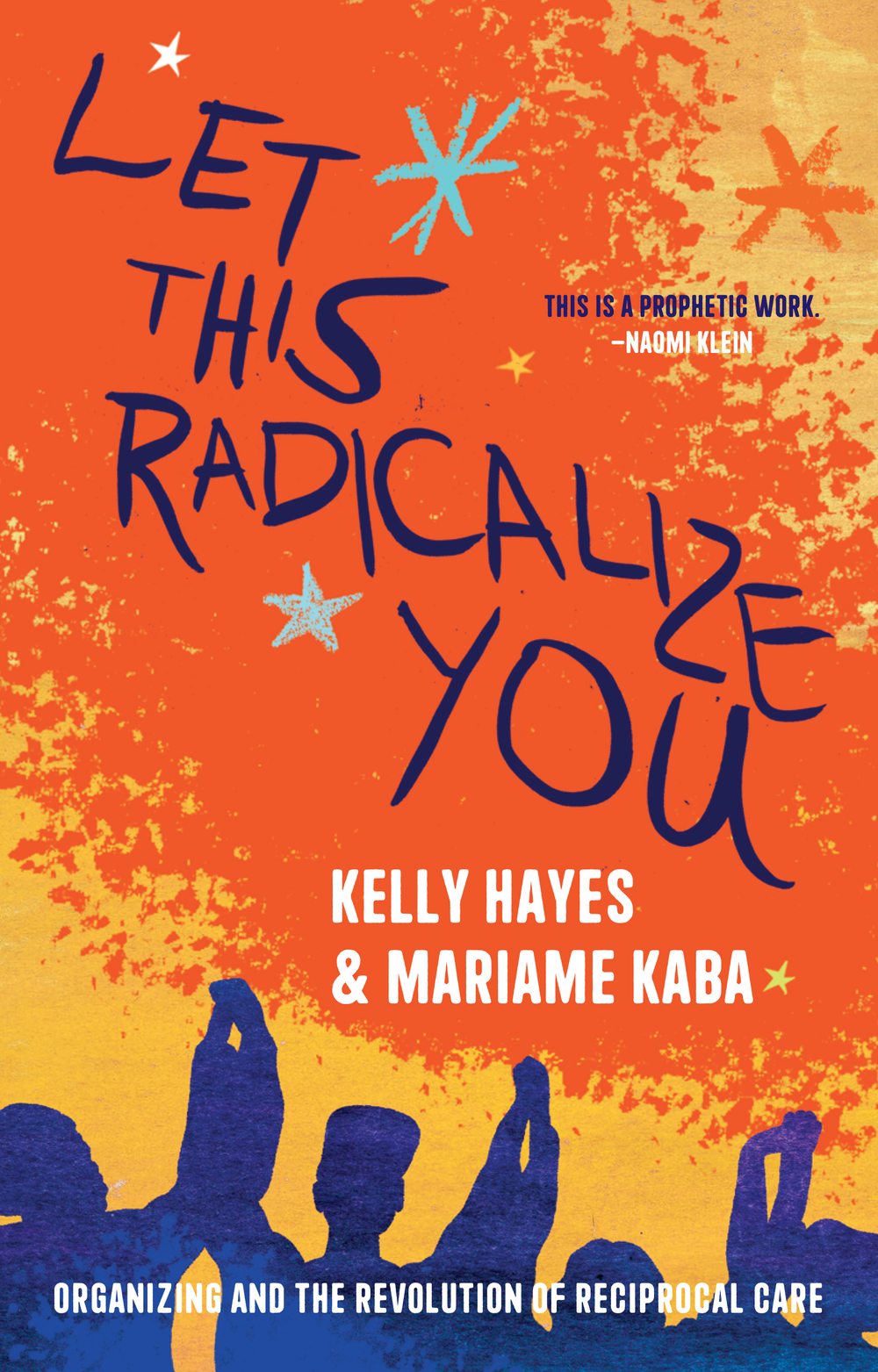
2) Let This Radicalize You by Kelly Hayes and Mariame Kaba: practical advice for organizing and activism, and how to make hope something that you build with others.
3) Maybe I’m cheating by calling this one a single resource, but it’s just too good! Interrupting Criminalization has got so much! Use it all, share it all! They are amazing!
4) Shaun does amazing work speaking to and about young white men from a critical but also humanizing perspective. Here’s another of his videos, and more resources I’ve compiled for fostering positive masculinity.
5) This one is a bit of a spicier recommendation, but if you’re ready to go even deeper and see how spirituality is an essential component we need to integrate in order to combat the appeal of fundamentalist cults, then listen to The Emerald podcast. “Oh Justice” is a relevant episode, but listen to any that pique your interest. My favourite is “Snail Juice.”
Be well, keep up the good work, rest and find joy. I love you, we’re all in this together.
Hi, I quit academia to educate without gatekeeping. It makes me very little money, but if I get enough supporters, I can do it full time. If you appreciate this article, please share it with others! Here are three ways to say thank you, and support me doing more of it:
I see a lot of rhetoric these days about how certain people in certain political cults–oh, you know the ones–are beyond saving. This is often applied extremely broadly, to anyone who has voted a certain way or espoused certain beliefs, even if they also hold other contradictory beliefs (which, like it or not, most people do). They’re lumped together and called “they” with no room for complexity or exceptions. They are like this, they are like that, they won’t listen, they are bad people.
When we say that people can’t change, that is not leftism. It implies one of two things: 1) a carceral approach, or 2) a doomerist approach. Because it essentially means either 1) we have to lock those people up (or worse) because they’re unfixable–ironically, the exact same authoritarian dehumanizing rhetoric They use about Us, except it’s fine because we’re good and correct. Or 2) there’s nothing we can do and we should just give up.
When we don’t make any space to allow for people to change and reintegrate into community, then we are guaranteeing that they will choose the more viable option for their social survival, which is to continue on the fаscist path that they’re going on, surrounded by other people who are doing that shit. We are also playing right into the hands of capitalists, who fucking love it when we see each other as Democrats, Republicans, Liberals and Conservatives rather than working class people. They’re roaring with laughter at us inside their skull-lined caverns full of gold coins, while we stand outside the castle yelling at each other instead of turning to face them.
There’s a weird situation on the left where people believe a lifelong gang member can be reformed, but not a conservative. (It’s possible I’m overestimating how many people are abolitionists who even believe the first one, but I like to hope we’re further along than that.) The reality is that there’s plenty of evidence for both: people who have done harm or believed harmful things can and do change.
This is an essential subject to talk about, because we badly need information from those who escaped right wing cults so we can understand how they draw people in, and intervene in that process. We need stories of people who were raised conservative coming around to realize that they’ve been lied to. We need to practice talking to people who have contradictory, misguided, propagandized beliefs in order to build a viable working class movement. If you appreciate the political work of literally any person who is white or a man, you can thank the people who helped them deconstruct the beliefs and behaviours they grew up with. When we foster an environment in which people are shamed and shunned for being honest about their deprogramming journey, we are depriving ourselves of an incredibly important resource.
It’s emotionally easier to believe that other people can’t change, because changing them is exhausting work and most of our experience with that is with family members, strangers online and other people who are seemingly irredeemably stubborn. But it’s also exhausting partly because we’re using the wrong tools for the job. We’re wildly under-resourced, and that’s been done to us on purpose: centuries of domination, forced competition, trauma, traditional lifeways and practices stolen and coerced and beaten out of us. But we still want to try, because we’re desperate. So we use the tools we were given by the same shitty society we’re trying to change: shame, judgement, berating, dominance, arguing, dehumanization, bad faith interpretations. We don’t first put the work in to build a trusting, mutually respectful relationship. We don’t try to really understand where another person is coming from, see their pain and struggle, and meet them where they’re at. That’s an uphill battle when we’re so starved for recognition ourselves. It feels unfair to have to be the one to offer empathy first. So instead of trying to bridge the gap and connect, we non-consensually shove facts and logic at them, call them bad people, tell them they’re wrong and problematic, vent our anger and disgust. We expect that to work, because we’re exhausted and we want it to. Then we get mad at them when they’re defensive and repulsed. They then go back to the people they feel safe with, the people who don’t challenge them in any way and have politics that are ecocidal but who also make them feel accepted and cared for in some way, and we throw up our hands and say “see? These people refuse to change!”
Parenting has been the most shocking, revolutionary experience I’ve had in a lifetime of learning. It’s like seeing into the Matrix: everything adults do that is annoying and dangerous is just something that wasn’t intervened in with empathy in childhood. For example: my 4-year-old does not want to wash her hands. It is the hill she is determined to die on, every single day, and it’s not an optional part of life. I am absolutely sick of it. It feels like I’ve tried everything, and I can feel the exhaustion taking over when I am tempted to just grab her hands and wash them for her while she screams. But force does not create healthy development. Just because I think she should know better, doesn’t make it so. Just because it would be easier for me if she just did what I told her to do, doesn’t make that actually happen. We spend a lot of time wishing reality were different, which stops us from seeing things as they are, and working with them. This is a form of healing that I’ve learned from plant medicines and Buddhism, and it’s made me a better parent and a better organizer. Instead, I strive to understand my 4-year-old’s aversion. She is probably also exhausted from a day spent being told what to do at school. She has sensory sensitivities and the soap is slimy. She is wired for play and novelty, and washing your hands sucks and is boring. If I understand where she’s coming from, I can help meet both our needs by turning handwashing into a game, or . Do I want to make a goddamn game out of handwashing when it’s 9 pm and I just want her to go to bed? Fuck no. Is it still good practice to try, whenever I can? Yes! Because when I push myself to do things that are tiring but align with my values, all sorts of benefits arise that I otherwise am blocking myself from. It feels better in my soul. I’m connecting with my kid, I’m connecting with my own joy. I never regret at least trying.
When we try using our same old tactics to change people, and fail, and decide that they must be unfixable, we are depriving ourselves of an opportunity to learn from the situation and better hone the most important tool of all—determining who is too far gone to be worth the energy vs. who can be brought around, and focusing on the latter group. We end up with a self-fulfilling prophesy of “nothing can be done,” retreating further and further into the safety of only engaging with people we deem to be Good who have our exact same politics. Which leaves everyone else, all the imperfect, lost, confused, lonely, well-meaning people who’ve been heavily propagandized and raised in a dysfunctional, racist and capitalist society, wide open to being scooped up by the people who are willing to or are paid to scoop them up.
It’s not working, fam. I want liberation and I’m willing to humble myself and try any tactic. I don’t want to look my kids in the eye as the ecosystem collapses and say “sorry, I was going to do everything I could but emotionally regulating myself enough to have frustrating conversations and choosing where to spend my energy wisely was too far.”
One of the problems, and it’s one I am complicit in, is that rather than focusing on fаscіstdogwhistles or racist microaggressions or sexist tropes or people who voted for X politician–specific behaviours that people engage in–we frequently use terms like right-winger or racist or misogynist. People are always more complex than whatever label we give them. This entire project becomes much easier if we see our fellow working-class people as people rather than as identities or labels. Labels can be useful as shorthand, and I’m certainly not against calling the most obvious and dangerous cases what they are–for example, JK Rowling is a transphobe. But labels are inherently flattening and dehumanizing, and dependence on them is dangerous. We risk eventually believing through repetition that the labels are reflective of objective reality, where reality is always more complex than any label can describe.
As always, by communicating all of this, I am not saying you personally have to do anything. You don’t have to personally fix your MAGA uncle or coddle Yahtzees. If that’s what you think I’m saying, then there’s a fundamental communication disconnect, so please feel free to go do whatever aligns with your values. What I am doing here is offering information and suggestions to better inform and hone our tactics on the left. This is for people who are committed to movement-building praxis and are interested in challenging themselves. Building a working-class movement requires us to engage with people who have all sorts of weird and incongruous beliefs; any seasoned organizer can tell you this. 100% of the people we need to talk to in order to grow the movement are not yet radicalized into liberationist politics. Most people are not hardcore white supremacists with a coherent worldview. They don’t realize that their weird misgivings about trans people or their reflexive defenses of Taylor Swift are a result of a colonial/capitalist project designed to turn them against their own interests. And personally, I don’t ever want to have so much confidence that I’m one of the Good and Correct ones that I support a system in which we have to lock the Bad and Wrong people up (or worse). The leopards will always come to eat our faces too.
So, what can we do about this situation we’re in?
If you do feel ready to do this deep, difficult, rewarding work of movement-building without individualism and shaming, here are my suggestions. But first, I want to express my gratitude to you, because it’s really, really hard to push past the anger we’ve been trained to target at our fellow human beings enough to do this. Most people are not resourced enough for it. I struggle with it all the time!
Step one is to figure out which of your identities makes you best suited to talk to other people with that same identity. As much as it sucks, I have to accept that white people are more likely to listen to me than the Black and Indigenous people I have learned from, so I talk to them. It’s a responsibility, but also an opportunity. Men, talk to other men. Straight people, talk to other heteros. Religious people, talk to others in your faith. Non-Indigenous people, talk to other settlers. Most of all, working class people, talk to each other about class issues! (Class is generally the most productive place to focus your efforts in my opinion, because it’s the great uniter, and the reason we were divided against each other by capitalists in the first place. But it has to be grounded in decolonization as well.)
Here are five resources I suggest to start with to build these communication and organizing skills. None are perfect, all are just tools in a toolbox. Pick whichever interests you, leave anything you don’t feel aligned with.
1) Nonviolent communication training: an incredible resource for learning how to talk to and connect with people using a non-authoritarian approach. (This is where I learned to identify how often people interpret suggestions and requests as demands, a quick way to see how unresolved trauma functions to hamstring our movements.) The intro training is free on Spotify.
2) Let This Radicalize You by Kelly Hayes and Mariame Kaba: practical advice for organizing and activism, and how to make hope something that you build with others.
3) Maybe I’m cheating by calling this one a single resource, but it’s just too good! Interrupting Criminalization has got so much! Use it all, share it all! They are amazing!
4) Shaun does amazing work speaking to and about young white men from a critical but also humanizing perspective. Here’s another of his videos, and more resources I’ve compiled for fostering positive masculinity. I have also started making videos about this!
5) If the stuff about animist spirituality above intrigued you and you’re ready to go deeper and see how spirituality is an essential component to integrate in order to combat the appeal of fundamentalist cults, then listen to The Emerald podcast. “Oh Justice” is a relevant episode, but listen to any that pique your interest. My favourite is “Snail Juice.”
Be well, keep up the good work, rest and find joy. I love you, we’re all in this together.
I quit academia to educate without gatekeeping. I’ve compiled a ton of free resources here. If you REALLY want to get down and dirty with that decolonial life, join my Patreοn to get access to exclusive patrons-only writing and videos, including my PhD dissertation, which was embargoed by my university for being too politically spicy. If you’re on a healing journey, you can consult with me about psychedelic use.
If you appreciate this article, please share it with others! Here are three ways to say thank you, and support me doing more of it:
I am consumed by a difficult realization I’ve come to lately.
The care my children need to be as protected as possible under the conditions of capitalism outstrips my ability to provide it while also doing activism.
It’s hard to admit, but I didn’t put very much thought, before having kids, into how much doing so might take away from the activism that’s been the bedrock of my life for over a decade. Attempting to maintain the same level of productivity in my work and organizing while parenting two small children has so impacted my physical and mental health that I believe I have finally, just recently, hit extreme burnout.
My body aches at all times. My hips are in pain, possibly due to the double C-section scar that I have not given myself the time to properly heal, because who has time for that when there’s an overdose crisis and people are dying? My teeth grind at night, possibly because I have not let myself access the amount of rest I’d need to relax my body, because who has time for that when there are multiple genocides happening? The pain in my back starts at a 4 every morning and ramps up to an 8 by the end of the day, because who has time to do yoga when the oceans are acidifying and the forests are burning and leftists can’t stop angrily venting their trauma at their fellow working-class people for long enough to build a movement that can turn this ship around?
I turn this physical pain into empathy, by thinking about the parents and other workers who secretly use opioids to deal with the pain thrust upon them by the demands of capitalist (re)production. I finally get, on an embodied level, why they do it. I wish more people would understand that drug use is a rational response to a violent society, because if they did, we might stop throwing people who use drugs in prison and taking away their children. My pain turns into wisdom, and I feel compelled to share this wisdom with others, so I do. It feels so urgent. A more pressing demand than taking twenty minutes out of my day to massage my C-section scar and do physiotherapy for my diastasis recti. So the pain lingers in my body, like a poison made of urgency, of the screams of dying Palestinians and old growth forests.
I do not believe that parenting on its own is enough of a contribution to building a better world, as many people say it is. Just “raising the next generation with good values” is not enough when our land, air and water are under such dire, immediate threat that by the time my children are adults, they may not have anything left to survive with. The problems are too urgent for parents to do nothing but raise our children well. But how much labour is enough?
I made my decision to have kids before knowing that a dangerous virus would be threatening us for years on end. Before knowing how little I would be able to rely on the Canadian medical system, or any other system, or even my own community members, to protect us. I feel naive, but I see people still making the (to me, at the moment, somewhat baffling) decision to have children, so it would seem that either the gravity of the threats facing children right now are not actully as severe as they seem to be from my ostensibly well-informed perspective, or most people, even leftists, are in denial about the dangers and the weight of responsibility that comes with bringing children into the current world. Or perhaps, as a neurodivergent person in trauma recovery whose disabilities did not become so acutely obvious and pressing until after I had kids, I am simply far less equipped than most people to handle the stresses of parenting. But I’m not sure I’m so unique, as our society is disabling and trauma-creating on a scale wider than most people realize.
To keep my kids truly safe, I would need to join their school’s PTA and devote all my time to ensuring quality air filtration in their classrooms. I would need to spend the few spoons I have on teaching them to wear masks in indoor public spaces and convincing them to keep doing it, every day, even when it’s uncomfortable, even when no one else is doing it.
I would need to teach them how to garden, to build their connection to the land so they become naturalized citizens of this place, and learn to care for the land that cares for us, as well as survival skills for what may come.
I would need to prepare weekly activities that make them into good neighbours and citizens. Writing thank-you cards, preparing gifts for their friends, baking cookies to bring to parties.
I would need to expose them to Mother Earth, creatively teach them to understand and love trees so their ability to see and appreciate nature doesn’t wither under the ten-tonne weight of the cartoons and superheroes vying for their attention and filling their brains with cravings for plastic toys and refined sugar.
I have been doing some of this already. But the parts I’m able to do are already more than I have the capacity for. So where, in all of this, is there time to organize my community? How can I attend socialist meetings with an energetic three-year-old? How much of my limited supply of energy can I give to exposing myself to enough information about the various ongoing genocides that I am able to take action to stop them, without becoming incapacitated for the evening when my third labour shift of the day starts? How can I do all of this while also finishing my PhD, taking care of my relationships, and maintaining my physical and emotional health?
These are questions I have been struggling with, with no good answers. I am not currently striking a balance. Maybe when they’re older, I can more easily involve them in organizing activities. Does that mean that while they’re 3 and 5, I can take a full break from all of it? When do I start up again? Which aspects of my caregiving or my community organizing can I sacrifice?
Caring for two small children on my own, which I often do these days, means the built-in stress levels of my day-to-day are high. It requires large amounts of patience, recovery time, and practicing emotional regulation skills to parent with only sporadic community and family support. It’s easy to say “cook with your kids,” it’s harder to put that task into practice when half of your time and attention is spent intervening in messes, breaking up fights, rushing a toddler to the bathroom, and attempting to give two children 100% of your attention when at most they can each have 50%. In the evening, you have to try to do all of this while you’re already exhausted from a full day of labour, and facing down another endless bedtime (my 3-year-old Mila does not, and seemingly cannot, fall asleep until 10 pm).
And all the while, underneath, there is the gnawing tension of the knowledge that good participatory habits must be fostered early—if you wait until your kids are old enough that they’re better able to stir soup without spilling it or carry a carton of eggs without dropping it, by then they won’t want to cook with you at all, because the early flames of their desire to will have died out, tamped down by their cargivers’ exhausted impatience and redirected towards toys and screens.
Children can sense the neglect inherent to the nuclear family arrangement, and it upsets them. They need so much more than one or two caregivers can provide. My 5-year-old Eva is increasingly frustrated with my inability to read to her for as long as she would like because of the demands and interruptions of her younger sister. Meanwhile, Mila is the most extroverted human being I have ever met (you think I’m exaggerating, but I’m not) and is the easiest kid in the world if many people are around for her to interact with, but if you’re on your own with her, you do not get a break. I don’t have the energy or time for much creative play because I’m so busy meeting their basic needs and teaching them functional skills, and most of the time there are no other kids around to meet their very high need for play. It’s wonderful when they play with each other, but more often than not it ends in tears and rage as I cannot supervise closely enough to make sure Mila doesn’t grab Eva’s toys while I’m making their breakfast. Humans were not meant to live in isolation like this. It’s simply not possible to give children everything they need under these circumstances, and that’s without adding the extra pressure to stave off environmental collapse.
I do have friends who help me out, and they are lifesavers. The tiniest act—playing with my kids, washing a few dishes—fills me with overwhelming gratitude. I have especially noticed that my comrades who are the most accomodating and helpful are the ones who are the most embedded in liberationist politics, which is beautiful and, I suppose, unsurprising. The ways in which liberation-minded people are trying to live our values and build the communities we want to see gives me hope (though it also comes with complicated feelings—I cried with equal parts relief and deep guilt when my Palestinian friend offered to come vacuum my apartment when my vaccum broke, at a time when her people were and are being genocided). But these are also friends I’ve made largely through my activism—what happens if I give that up for several months, or a year, or two? Will they still show up for me if I’m burnt out and unable to reciprocate any community work? I need so much because my children need so much, and there’s so little I can offer in return right now. How much can I rely on my already overworked and burnt out friends, most of whom are BIPOC, queer, and/or disabled?
I can see, like I’m Neo at the end of the Matrix, exactly how all of these pressures create the desire to make more money. Money can solve many (though not all) of these problems, so buckling down and focusing on securing income for your own family feels like the only option. And once you do that, you’re hooked—the desire to make money in order to feel safe and afford the supports you need becomes its own self-sustaining capitalist illness. There but for the grace of my own neurodivergent stubbornness, and years of exposure to anarcho-communist principles and Indigenous ontologies, go I.
What to do, then? My bones are creaking. My mind is consumed with grief for the state of our world. It’s too much. I have recently decided to take a medical leave from my PhD to focus on getting my health back in order. I’ll be putting a pause on most of my activism as well, which will be the hardest part. But something has to change. I love myself, my kids and my comrades too much to not try to find balance. I cannot tell others that this is a marathon not a sprint, take care of yourself and all that, and not follow my own advice. I am going to reset, spend time with trees, and figure out what a sustainable work/life/activism balance looks like for me now.
Most parents in your community don’t have the ability to do this. They are drowning.
I know that many people, given how empathetic and kind my audience generally is, will want to soothe and reassure me that I’m doing the best I can. You may want to offer tips to improve my situation. I do appreciate and welcome this, but what would truly make me feel better would be if you commit to helping your comrades who have children, and talk about it publicly. You really can’t imagine how much stress they’re under. We have so normalized the idea that parenting is naturally exhausting, many parents don’t even realize that they should not have to suffer like this. Child care is mutual aid, and one of its most neglected and essential forms. I would probably cite Silvia Federici or Sophie Lewis here if any of their books existed on audiobook so I could read them, lol.
So, what can you do? Here are some suggestions:
It’s hard to get kids out the door to go to things, so go visit your friends with kids. Ask what help they need, and if they’re unsure, the kitchen or bathroom is a great place to start. Bring food.
The best thing for the whole family is playing with the kids themselves, as you can give parents a break while simultaneously providing something that kids badly need, which is socialization with people beyond their primary caregivers.
Many of us parents fall into the instinct to zone out on our phones when we get a second of reprieve. If you’re offering to take care of the kids for a bit, gently ask your friend to think about what they might want to use that time for. If it’s zoning out on their phone, that’s fine, but just a little orienting question to help them be intentional about it will help, and it may make them more likely to do something more restorative with their time.
Offer not only to go on outings with your friends and their kids, but offer to meet them at their place first to help get the kids out the door.
Hang out with your parent friends while they’re in the park so you can chat while they kids run around the playground. Host gatherings in kid-friendly spaces.
Talk to others in your leftist organization(s) about accomodations for parents. Can you provide engaged child care at meetings? Can you help parents get to meetings? If your group is small, can you commit to meeting at the homes of people with kids, if they’d prefer that? Can you bring snacks/food to family-friendly actions, and state that on social media so parents know they don’t have to do the added labour of packing snacks?
Wear masks in indoor public settings. Fight for better air filtration in these same settings, or bring your own air filters to events/gatherings. Open all the windows.
Thank you, beloveds, for reading all of this, and for thinking about what I’ve offered here. Please share this post on social media so it can start discussions about these issues. Do you have similar experiences or insights to share? Am I the only one going through this?
One thing, though–note that if your instinct when you share this is to talk about how all of this is why you decided not to have kids, that’s fine, but please temper it with a stated commitment to helping other peoples’ children survive, as it can otherwise come off as dismissing these common concerns as the fault of individual parents’ decisions to have kids, when doing so is the most normal impulse in existence and shouldn’t be shamed. If we want to build a better world, we need to support parents, as they are the primary caretakers of the next generation that will help us survive in old age, and will pass on our teachings. More than anything, because children deserve so much more love and care than they are being given under the current conditions. You do too. We all do.
No one wants to talk about this. We all hate it. We’re tired. Believe me, I feel that tiredness in my bones. And I know you’re busy and overwhelmed, so I’m taking on the labour of making this as straightforward as possible so you don’t have to figure it all out yourself. And I promise I’ll make your experience of reading this as joyful as possible, to show my gratitude for you reading it at all! (Skip to the goods here if you’re already sold and just want the best practices.)
Because as tired as we are, we can’t live with our heads in the sand. That’s some conservative, climate-denying shit that we’re not on. We’re building caring community, here. We love each other, and we want to keep each other safe so we can party til we’re old and hobbling around like sparkly cryptkeepers.
And the best part is, we already have deep traditions in our community around keeping one another as safe as possible while still being debaucherous hedonists. And there’s nothing I want more than to be able to facilitate all our various sins and perversions. We can just do it safer than we are now is all, and honestly without all that much effort!
I love keeping myself and others safe as a ‘fuck you’ to the systems trying to kill us all for profit
Drugs and sex come with risks, but harm reduction is so embedded in the culture (our niches, at least) now that we barely even notice the behaviours we have normalized to reduce those risks–indeed, taking care of each other is part of the fun. Here’s a clean straw for you, my love. Have you drank water yet tonight? Let me arrange these free condoms in a big goofy smiley face at the kink party.
I have embraced the role of rave mom. I have rave mom’d so hard I have become a rave elder, a rave grandma with little 30-year-old rave grandchildren, out there with GHB syringes and magnesium. I love you, I care about you, and I am a collector and sharer of information. So I will keep you as safe as you’re willing to consent to.
I am so passionate about rave safety and harm reduction that I’ve evolved beyond “drink water” and “don’t mix ketamine and alcohol” (though those are obviously important). If anyone doesn’t feel safe at the party, then the party needs work. That includes our Palestinian (an article for another day, though start here to learn more) and disabled/vulnerable comrades, and the children in our community that depend on us to keep them safe.
I need to get real for a second here, so please take a breath and open yourself up to the information I’m about to share. I offer it as a gift, because I care: covid is still very dangerous and it is still hurting people. I personally know three people now who are suffering from Long Covid, two of them from the rave scene in Toronto, one of whom aquired it in August 2023. None of them were disabled or immunocompromised before they got it, but their lives have been completely upended since.
As we’re all realizing in more ways every day, colonial and for-profit institutions are not built to help us, and the few protections that we have are failing as capitalism crumbles and neoliberals privatize everything. So it’s up to us to build a culture of community care, and keep each other safe. Vaccines help—please get an updated vaccine!—but they do not completely prevent Long Covid. Covid is airborne—it spreads through the air, not just through droplets. There are things we can do to lower the risk of giving or getting covid, while still partying as much as we like.
Make masking hot again
“I view COVID mitigations as part of a consent culture,” says my covid-safety collaborator Ryan Utter, who once lovingly but firmly dommed me into eating a plate of ribs at a festival because I was too high to deal with the bones but needed sustenance in my body before a night of dancing. “We want to go out, and we should be able to trust that buildings (and organizers) follow regulations and best practices for indoor air quality. We can’t consent to risks we don’t know about, so if a party isn’t upfront about the ventilation (or lack thereof), CO2 levels, presence of HEPA and their clean air delivery rate, people cannot consent to the risk.”
As longtime harm reductionist Alex Betsos pointed out to me, clean air precautions make the whole party experience better anyway. “I think we have this idea that covid precautions have to suck, and that’s really not true. Like, would you not rather be on a dancefloor with lots of space to dance, good ventilation & UV lighting than the inverse? The feeling of being drenched in sweat b/c you walked into a nightclub with shit ventilation is so visceral.”
Just like with any form of harm reduction, you don’t have to take an all-or-nothing approach if some of these aren’t practical for your parties at the moment—the more of these protocols you use and strive towards, the safer your events will be!
HOW TO MAKE YOUR PARTIES MORE COVID-SAFE
Open the windows. I can’t stress this enough. All of them, or as many windows as you can. Put signs on the windows saying “do not close.” Tell people in the event invite that you’ll be leaving windows open for covid safety, and that if they get chilly, to put their jacket on or bring a cozy blanket.
Invest in HEPA filters and/or Corsi-Rosenthal boxes. Plug-in HEPA air purifiers will filter out viruses from the air. Have one in every room, and 2-3 if the room is very large.* This is an investment (depending on the size of your parties, around $300-600 initially, then $150-300 a year for replacement filters), but it’s one that should become as standard as offering water and earplugs. Less expensive and often more-powerful options like Corsi-Rosenthal boxes (a box fan + MERV-13 furnace filters) can also be constructed easily and re-used over and over. Consider fundraising at the party to buy filters if your margins are super tight! I like Levoit, get in touch with me if you want help researching which filter to buy. HEPA filters and CR boxes should become standard party equipment in our scenes, as essential as speakers and decor. As a bonus, they work as fans to cool people down! Decorate them with lights and paint to add to the ambiance. For more on deciding which to use, see below.
Encourage people to wear masks. You do not have to make them mandatory, but simply writing in the event description and having signs saying “masks are encouraged, keep each other safe!” goes a long way.
Offer masks as people enter the party. N95/N99s are ideal, but these are of course expensive, so KN95s are a good next bet, and ASTM-3 surgical masks are much better than nothing. You don’t have to make them mandatory, but if people know they’re offered and normalized, more people will be likely to wear one.
Set up a testing table where people can test if they want to, and encourage people to. This can go a long way – it has worked to catch cases at parties before! If you feel that you can, you can also make testing at the door mandatory – this requires a bit of planning and volunteers, but it’s one of the best ways to keep everyone safe. Alternatively, for smaller parties, ask everyone to test in advance and post a photo of their negative test in the group chat or event page.
Venue ventilation: When you’re looking for venues, ask the venue owner if they have an HVAC system that will deliver fresh outdoor air, if it will be turned on during the party (some are set to automatically turn off at night) and if they have upgraded the HVAC filters to MERV-13. If they say yes, ask for specific details. Try to go with locations that do these things. Even if the location doesn’t have all elements and you end up having to choose that location, the more that organizers express that it’s a concern, the more we normalize the idea that it’s what we want.**
When weather permits, have your parties outside! Get creative, ask your community for recommendations. Ask people to help by bringing shade/rain structures if it’s looking like weather.
Stay home if you’re sick: Tell people to please not attend the party if they have any cold symptoms or are feeling unwell. Generally in our culture, we should be encouraging people stay at home any time you are sick, and test every day that you have cold symptoms (sometimes people test negative for a couple days, then get a positive!).
CO2 monitoring: People exhale CO2, so monitoring CO2 with a handheld device can give you an indication if the ventilation of the space is adequate. Outdoor air is around 450ppm, and if CO2 stays below 1000ppm, ventilation is generally considered adequate. But we’ve seen CO2 levels approach 4000ppm at some parties. 4000ppm means that 9.4% of the air in each breath you take was previously inside someone else’s lungs. Since COVID is spread by aerosols generated when people breathe, talk, shout, sing or sneeze, this level of CO2 indicates that aerosol-laden air is not being replaced by fresh air and the space has become high-risk. Opening windows, adjusting the HVAC system or adding air filtration are all valid responses to poor CO2 levels/poor ventilation.
UV disinfection: There is new air disinfection technology on the horizon – notably far-UV (UV light at 222nm which deactivates viruses but is safe for skin/eyes). Some members of the community are already experimenting with deploying these devices, so keep an open mind if they approach you with offers to use them at your parties. They are safe and they work! As a friend pointed out, they also look dope, like they were MEANT for raves.
Corsi-Rosenthal boxes made for a party collective
Thank you for reading this. This is disability justice – you’re doing it. As a party organizer, you occupy an important role in the community, and using it to keep people safe helps create a culture where we can withstand infrastructural collapse as we transition from colonialism/capitalism into systems that don’t suck.
If you’re in Toronto, I am absolutely willing to be the anti-covid fairy at your party, just ask. I’ll bring signs for the windows and make up a whole elaborate medieval bit where I’m jousting invisible viruses or something, whatever you need. Ryan Utter is also willing to consult about air cleaning and ventilation options.
With great thanks to my collaborators on this piece, Ryan Utter and Rine Vieth!
Additional info for superstar organizers who want more:
*Ideally “do the math” to ensure the combined clean air delivery rate (CADR) is appropriate for the size of the space and occupancy (we can help with this).
**Note that ventilation requirements are set out in the provincial building codes, but HVAC systems are often not run as designed (i.e. limiting outdoor air intake to save energy costs). Where adequate ventilation does not exist (like in a warehouse space) employing stand-alone air filters and opening windows becomes even more important.
If you REALLY want to go into detail, the ASHRAE 241 standards which go beyond just bare minimums for new builds and are about reducing virus transmission are here
How do I decide between Corsi-Rosenthal boxes, and HEPA filters?
The main factor is cost. CR boxes are less expensive, but a higher level of effort, and they are bulky and loud. But they DO delver more clean air, so that’s a big advantage, especially in large spaces. Someone also needs to spend a few hours building them and then replacing filters once a year. So HEPAs are great and much easier to use/move around if you have the money, or are short on volunteers to make CR boxes.











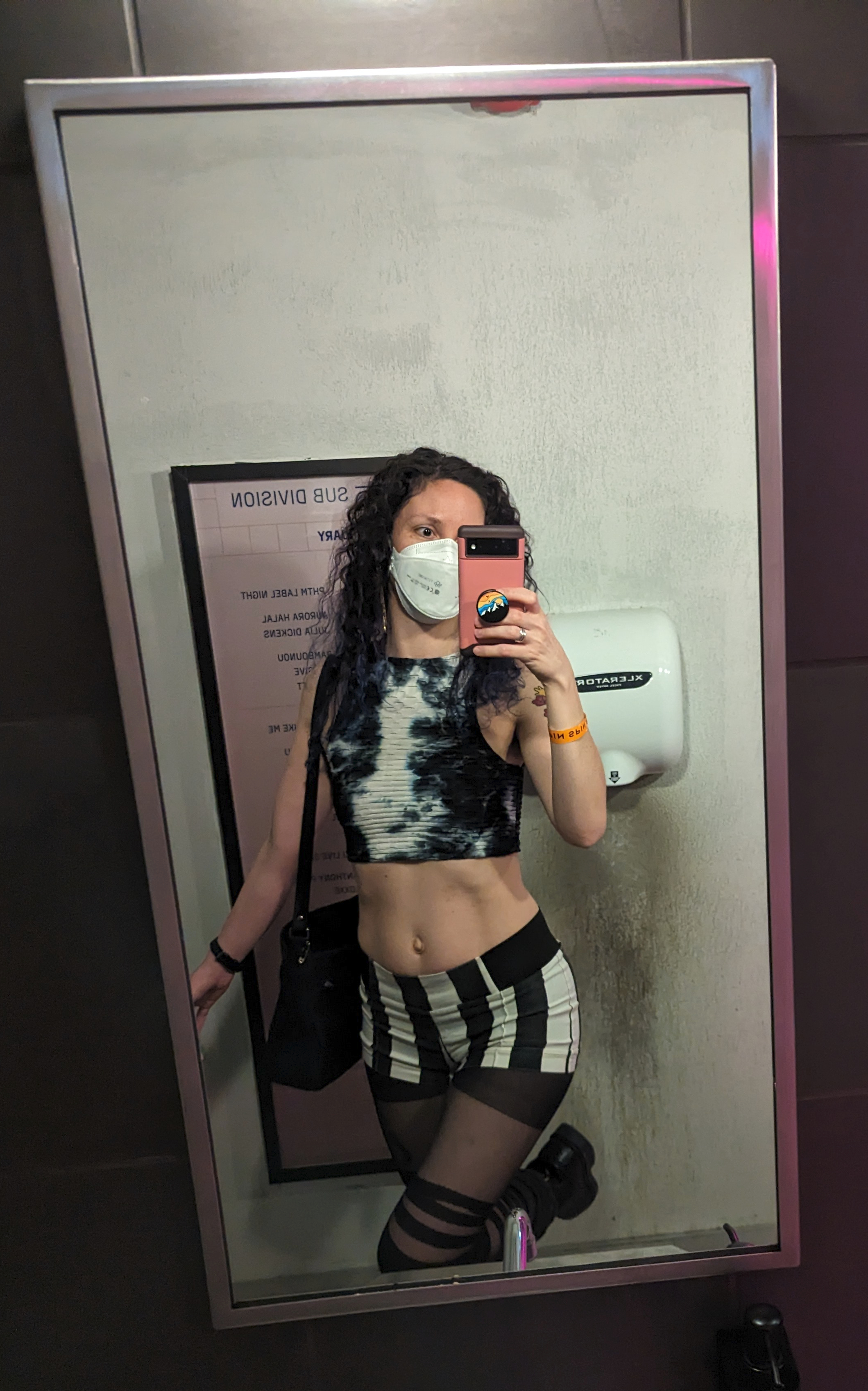

 Dr. Hilary Agro, PhD