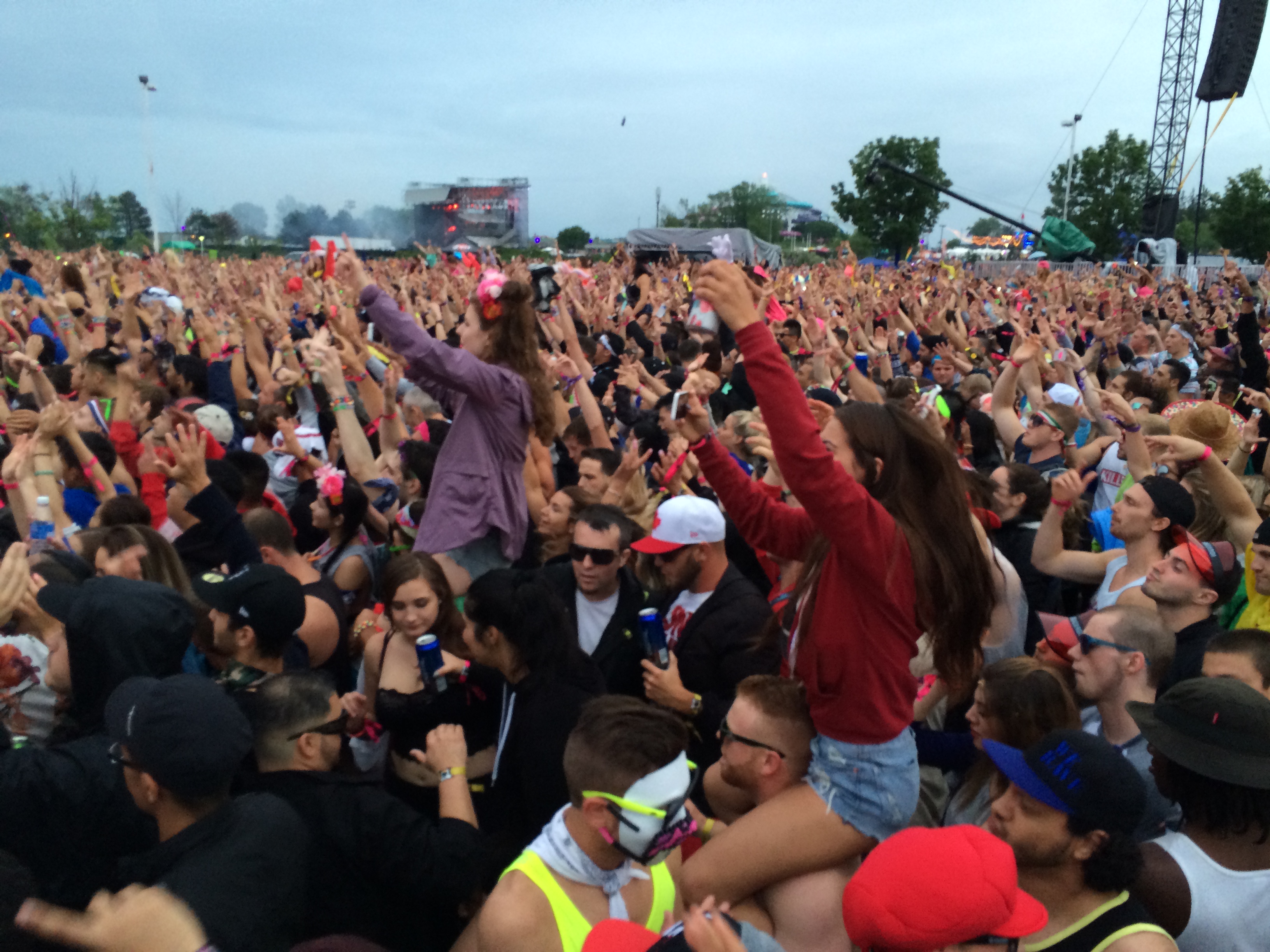
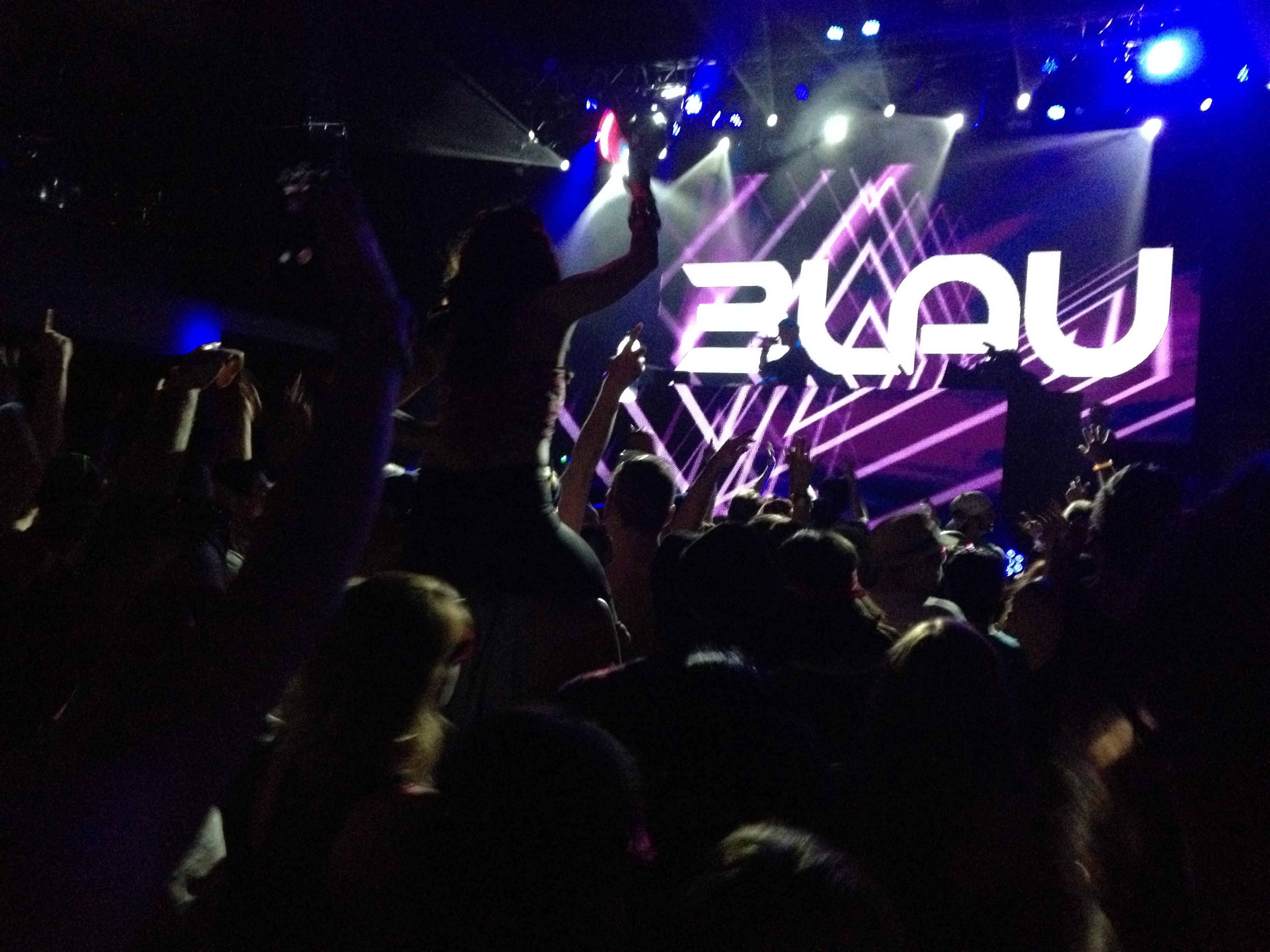
How to convince people that drugs need to be legalized: a guide for getting skeptics on board.

I’ve developed a really nerdy, but kickass, superpower. Give me twenty minutes of one-on-one conversation time with a person, any person, and they will come out of that conversation convinced that illicit drugs—not even just weed, but the ‘bad’ ones like cocaine and meth too—must be decriminalized. Give me forty minutes with them, and they’ll be down for full legalization. It doesn’t matter what opinions they had about drugs going into the conversation. I can get them on board.

This is a skill I’ve developed over the last five years of dedicated research on drug use and drug policy (on top of 15 or so years of, let’s say, thinking about drugs differently than your average person). This isn’t because I’m the worlds greatest rhetorician, or because I’m generally good at debating, although practice has helped a lot. It’s because legalization just makes sense. It’s because the War on Drugs is a spectacular failure. It’s because the time is ripe. People are ready. The normies, the squares, the teetotalers, the smokers-and-drinkers, the legal drug users, the potheads who claim cannabis cures cancer but hypocritically shit-talk other illicit drugs—they are all teed up and waiting to be putted into the hole of drug policy pragmatism with the right arguments, even by someone who sucks at sports metaphors but uses them anyway.

11012449_10153502860849245_3423341969182463811_nThey’ve been primed by The Wire and articles about MAPS research and (at least for the young ones) their own experiences with MDMA and weed not living up to the propaganda telling them ‘one toke and you’ll die.’ OxyContin has shown that legal drugs can addict and kill, and fentanyl has shown that illegal drugs’ purity is at the mercy of the unregulated black market. Overdoses kill more people than car crashes now in North America. Over a thousand people died of opiate overdoses in Vancouver last year alone. Shit is getting real, and drug prohibition is not helping. It’s at the heart of almost all of the problems.

People have heard about Portugal’s success with decriminalization. They’ve heard about the U.S. for-profit prison industrial complex that is fed by the War on Drugs, and they may have even connected the dots to police brutality and the school-to-prison pipeline for Black men. Odds are they don’t know about historical trajectories like the 13th Amendment in the U.S. or the racist origins of the first drug laws in Canada (which were opium laws used to oppress and terrorize Chinese labourers), but still. They’ve heard whispers of these topics, fragments of the yelling drug activists have been doing for decades finally getting amplified by social media, breaking the segregation of this information from the general public. And they can see with their own eyes how badly the War on Drugs has been lost. Drugs are winning, and they know it.

Still, completely legalizing drugs is a cognitive stretch for most non-users. It seems too radical. They don’t all see firsthand what prohibition is doing to drug users and to marginalized communities. Even those who do often still fail to see the structural forces at work, and end up falling into the ‘personal responsibility’ trap. They frown and balk as their affective instincts kick in, deep in the body, before their brain catches up to justify the feeling. Completely changing some of our most entrenched laws? That can’t possibly be the answer. They often instinctively defend the status quo just because, well, this is the way things are, so surely there must be a point to these laws—surely we haven’t fucked things up so incredibly badly as a society that we need to overhaul our entire approach to drugs?

Uh. Cough. Yeah, actually. We have. And we do.

So I’m here to help you get these people on board. Because, and this is the important part—we need these people. We can’t win this fight alone. Marriage equality didn’t happen until straight people marched alongside queer folks. People of colour will keep being subjected to oppression until white people get off their asses and form blockades. Feminism needs men taking Gender Studies classes and talking to their bros about catcalling and emotional labour. Movements don’t succeed until people who aren’t directly affected by the civil rights being demanded are on board, and this means that non-drug-users need to demand legalization from their politicians for the latter cowards to feel that it’s a politically safe move to make. The most important thing you can do to help change drug policy is to have a conversation about it with someone who currently thinks we should keep putting drug users and dealers in prison.

So, below are some tips on how to have those conversations successfully. It’s hard work, and it’s emotional work. People can be extremely heartless about the plight of human beings they think they can’t relate to. But you know what’s harder? Being in fucking prison, or losing your son in a cartel shootout, or being physically dependent on a drug that could kill you at any moment if it’s contaminated. So yes, it’s incredibly frustrating to hear someone coldly say that drug overdoses are Darwin at work—but swallow that anger, and do it for all of those people.growtheeconomy
Remember, too, that changes in opinion sometimes happen after the conversation is over and they’ve had a chance to think a bit. They may not seem to have budged while you were talking to them, but as long as you kept your cool and didn’t insult them personally, some of the things you shared will likely get through. You just might not get the joy of watching it happen, but no one ever said this work would be easy or immediately fulfilling. We’re playing the long game here.

How to convince people that the War on Drugs sucks and we need to legalize everything:

  • Ask them questions. The idea isn’t to tell them how to think, it’s to guide them towards figuring it out for themselves. The argument really makes itself, it’s so obvious. Asking them questions also engages with them and shows an interest in their thoughts, instead of just lecturing or talking at them.
    • “Do you think that prohibition is working to stop people from using drugs?” This is the most important question, because their answer will determine how you proceed. Sometimes even just asking the question does half the work; a lot of people just haven’t thought about it that way yet. If they admit that it’s not working, then you can start talking about alternatives. If they think it is working, then your job is to introduce them to reality: it’s not.
    • “Why do you think alcohol is legal but other drugs aren’t?”
    • “Does putting dealers in jail stop people from accessing drugs?”
  • Remember that this isn’t an argument about whether or not people should do drugs. It’s about getting the person to pragmatically accept that we will never be able to stop people from doing drugs. Once they accept that, then it’s a natural next step to get them to realize that prohibition, therefore, will literally never work.
  • Keep the focus on whether prohibition is working. Talking about whether illegal drugs are good or bad is not actually relevant to whether or not prohibition is good or bad, and can be distracting if they have zero experience with any drug except alcohol. Convincing them that many currently illegal drugs are not actually harmful is a bonus, but you don’t necessarily need to do that in order to focus on the fact that prohibition is what makes most illegal drugs dangerous in the first place, and is causing more human suffering through the prison system and the militarized, global War on Drugs than drug use itself ever could.
  • Still, though: ask them if they’ve heard of the medical studies being done on the benefits of MDMA and psychedelics, and if not, share the good news. Especially don’t forget to mention that these studies are helping veterans with PTSD, survivors of child abuse, and terminal cancer patients—people who are hard to dismiss as burnouts. Then ask why they think these drugs aren’t legal while cigarettes are.canada-america-poll-angus-reid-marijuana-legalization
  • Ask them if they think that getting addicts medical treatment and therapy would work better than arresting them and putting them in jail.
  • “Well okay, I think marijuana should be legal, but not harder stuff.” Ohhh, I love this old chestnut. See the above question. Try also asking them if they think prohibition is preventing people from accessing those “harder” drugs. You can also poke them on the definition of “hard” drugs versus “soft” ones. This might be a good time to talk about the negative effects of alcohol, which is legal and should be, and compare them to something like MDMA.
  • Demeanour is key! Be respectful and kind, and always ask questions with an air of gentle curiosity, not like you’re about to trap them in their own hypocritical stupidity (even when you are). They’re not bad people, even the jerks who think addicts deserve their overdose deaths—they’re just very misinformed. Dehumanizing anti-drug propaganda has done its job, and that sucks, but getting mad at a person for being ignorant isn’t going to help. If you find yourself wanting to swear at them for being a cruel moron, and you don’t think you can engage with them calmly anymore,  just stop and leave the conversation. Giving in to your anger and calling them an idiot might feel good, and you might be totally justified, but it is not helping in the long run. Do better.
  • Ask them if they think the government should be telling people what they can and can’t put in their bodies, and using physical force to enforce those dictates. Libertarians respond pretty well to this one, and feminists should too.
  • Ask them if they think that people who finish their sentences and come out of prison and back into society—as almost all prisoners who are jailed for drug offenses do—are more or less likely to be involved with drugs afterwards. Note that prison traumatizes people, and trauma often leads to drug abuse. Note also that having a criminal record makes finding legal employment more difficult, which makes it harder to avoid the drug trade as a means of subsistence.
  • If you’re talking with an incrementalist—someone who is turned off by the idea of rapid or drastic social change—first focus on decriminalization: let’s at least stop putting drug users in jail, because clearly that doesn’t help anything. cops-say-legalize
  • Next, see if you can get them to agree that we will never fully eradicate drug use in our society. Then, shift it towards legalization with arguments around how, that being the case, we are currently allowing cartels and diffuse groups of individuals to control the entire illicit drug supply, completely unregulated. We, as a society, are making that choice. We are choosing to let dealers, some (not all) of whom don’t care about the quality or safety of their drugs, control the drug supply. We’re letting them do that by not regulating the drugs ourselves. It’s a choice. Legalization is the other choice we can make.
  • Some points you can use:
    • Drugs are purer, stronger, cheaper, and more accessible today than they were when the Drug War was started by Nixon. So, uh… Yeah, the current approach is clearly not working.
    • In response to, “we’re just not hitting the dealers hard enough, or being tough enough with our borders”: We can’t even keep drugs out of prisons, the most heavily controlled and policed environments on earth. Why do we think heavier policing is going to work anywhere else?
    • Most opioid addicts get addicted initially through legal prescriptions. Drug addiction is a health issue, not a criminal issue.
  • In this fucked-up era, not only do facts not really mean anything anymore, words often don’t either. But that’s okay. (It’s actually not but whatever.) The facts are on your side anyway, so you can try using them. It might work. But what you really want to do is get the other person to feel something. To empathize with drug users, drug addicts, and their families. To understand how our drug laws are used to systematically oppress people of colour, and get angry about it. This is often the hardest part, because illicit drug users have been strategically dehumanized and stigmatized for decades, and that dehumanization runs deep. It can be helpful to talk about all the “regular” people who do drugs, as a way of showing that drug users are people too, and addiction can happen to anyone. (This tactic is problematic for other reasons, but in the short term, it’s still useful.) Some examples: Steve Jobs and LSD, indigenous South American communities and ayahuasca, literally everyone and weed, Freud and cocaine, blue collar labourers and opioids for pain. You can point them to the entire Master’s thesis that I wrote about regular, hardworking people—doctors, social workers, teachers—who use all sorts of illicit drugs and are completely fine (and in most cases, better off because of it).
  • If you’re a person who uses illicit drugs from time to time, and you’re feeling really bold, and the person you’re talking to knows you—come out of the closet as a drug user. If they already respect you, it’s the most effective way to change someone’s perception of all drug users as homeless or addicted or whatever other discriminatory way they view human beings who make different recreational choices from them.leap_billboard_350
  • If you’re Canadian, British or from another country with socialized medicine, you have a huge advantage! (Americans, I’m really sorry. I feel deeply for you, for real. Keep fighting for single payer.) Because our countries have decided that all people deserve medical treatment, that means we’ve socialized the costs of said treatment. Which means we don’t leave overdose victims to die, we try to save them. This costs huge amounts of money—more money than preventative care and treatment would cost—and when added to the costs of enforcing drug laws, it’s a crazy amount of money. And it’s all money we could be pouring into prevention and treatment (there’s Portugal again!). Furthermore, most of the overdoses that we’re sending ambulances and firemen to are a result of unregulated substances. No one dies because the alcohol they drink was unknowingly 100 times stronger than the person they bought it from said it was. This is because we regulate alcohol. If we did the same thing for opioids, fentanyl wouldn’t be such a problem, and we wouldn’t be spending nearly as much money on overdose response. (Note: If the person believes that we should stop helping overdose victims at all because it’s their fault: first, take a breath and try not to call them a sociopath. Try to steer them towards a more practical acceptance of the fact that with socialized medicine, we are going to help people regardless of how the person got hurt. That’s just how it is, and how it should be in any half-decent society. If they want to privatize medicine that’s a different conversation, but as things stand, the costs are a reality.)
  • Guns are literally designed specifically to kill things, but we still let people have them. We just train them first. So ask them if making guns illegal would work better than our current system of regulating them. (This argument probably only works outside of the U.S.)
  • People hurt themselves and others with cars, so our response as a society is to regulate when, how and under what conditions people can drive. Doesn’t this make more sense than banning something that many people enjoy and use?

Most people just don’t think about drug policy enough to have an informed opinion on it. They rely on instinct and the status quo without even knowing why. Be the person who informs them. And be proud of doing this hard work.

Please share this article with anyone you know who could benefit from it!

Any other tips to share for talking with people about drug policy? Please leave them in the comments! Anything else to add or correct? Let me know! (I wrote this while tired and drained and trying to proactively distract myself from all the hurricanes and forest fires and Nazis with something productive, and will be working to continually fine-tune and improve it over the coming weeks.)


If you like my writing, please consider supporting me on Patreon, or sending some diapers for my baby from my Amazon list 🙂 I’m a low-income grad student and new mom trying to fight against the devastation of the Drug War–every little bit helps.

Find me on Twitter ranting about drug policy, criminal justice reform, anti-capitalism, psychedelics and anthropology: @HilaryAgro
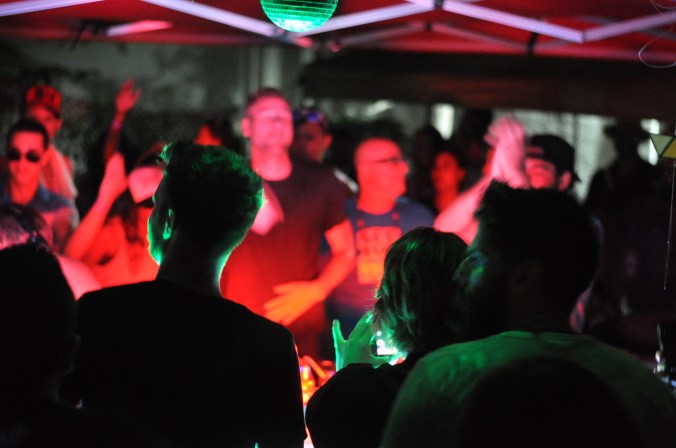
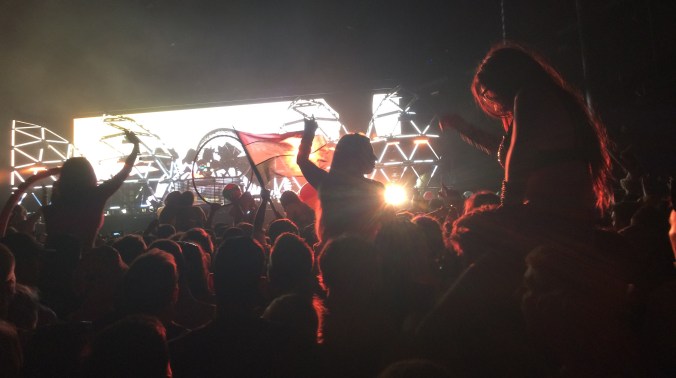
The intangible narcotic: What does ‘vibe’ mean, really?

There’s a term that comes up pretty frequently when talking about electronic music events. A search within my interviews (excepts from which are quoted here) and field notes found it mentioned 88 times. Everyone knows what it means, but no one knows exactly how to define it.

Daniel: Vibe is almost a different narcotic of its own. Vibe is… it’s intangible, you can’t touch it, you can only feel it, sense it.

It’s a word I found myself using and implicitly understanding long before I began to think about what it really means. The vibe of, or at, an event can be all levels and qualifiers of ‘great’ and ‘amazing’, or it can be chill, or it can be strange, aggressive, sketchy, even hostile. (Yeah I know. Describing this explicitly is awkward already. Bear with me, we’ll wince together.)

Sunnyside 2015-07-12_169

On the dance floor people move from one area to another, soaking up as many different sensations and feelings as they can. I say sensations because each area has its own vibe, or energy, that can be felt. Participants have described this vibe primarily as a subtle form of communication among people. It is both body language and an intangible energy that is given off by people and can be felt by others. – Brian Rill (2010)

As usual when I’m trying to unpack terms we all take for granted in the rave scene, I feel a little silly doing it. (Trying to define, in academic language, what exactly a ‘bro’ is was one of the funniest things I’ve had to do while writing up my research.) Pulling apart the concept of ‘vibe’ felt like deconstructing a joke – talking about it explicitly ruins what makes it special; its very existence is made of an implicit shared understanding of a subjective experience. The word started to lose all meaning, as it will soon for you if you keep reading this post.

But there was still something bugging me. Some important meaning hidden in the way people talk about it. It seems trivial, but it turns out that the vibe of an event indexes much more than it would appear.

Hilary: So you say the crowd is really important to you. Can you describe the kind of vibe that you enjoy?
Mandy: Um… Open-minded. Uh, I like weird people. [Laughs] Like, a diverse crowd, I think. I can tell when people are there for something other than the music. And then it kind of just ruins, like, the vibe.

Steven: All the frat boys were showing up and pissing on the trees, and it was just not the right community or vibe anymore.

Ali: You get a certain vibe when you go into places. Like, I don’t know, I’m a very intuitive person, I feel like I read people well, and I just know whether I’m like, in a safe place or not. [Laughs] It sounds so corny, but it’s true.

Veld 2015 (219)

What are the things that affect the vibe of an event? The décor, the lighting, the music, the attitude of the staff members (especially security), the size of the event, the theme (if any), the type of clothes people are wearing, the time of day or night, the type of drugs being consumed, and the age of attendees. But dwarfing all of these factors in its impact on the vibe is one key element. Pinpointing and exploring this element became an important focus of my research, as it underlies one of the main problems at raves, particularly the mainstream ones that young and inexperienced people are more likely to attend.

The first event I attended where the overall negative vibe began to stray into very uncomfortable territory due to this particular factor occurred late in July, and it’s a story which incidentally includes some good illustrations of harm reduction in practice. My partner Diego, our good friend Jake and I were at a techno event. Jake had taken three hits of acid, which had made him unusually chatty, though he was also feeling self-conscious and not fully able to articulate his thoughts.

“I’m going to rely on you guys tonight, ok? You’re my guides,” he told Diego and I. I told him he seemed to be keeping it together pretty well. “I have no baseline for what would be considered keeping it together right now,” he responded. I laughed and told him he was doing fine, trying to make sure he felt he had a basis of support for his trip.

The place was still pretty empty. Two girls were sitting on some flat leather seating around a low table in one of the corners. Since there was plenty of room, and my legs were still sore from an event the night before, I went to sit down. The girls whispered to each other and stared at me. I ignored them, but suspecting what was going on, gave them the courtesy of exaggeratedly rubbing my knees and back for effect. Finally one of them walked over.

“This is a private booth,” she said.2015-06-14 00.13.17

“Oh,” I responded, looking at the empty seats. I briefly considered playing dumb and making her spell it out even more for me, but decided on being straightforward. “Can I just sit here for a few minutes?”

She looked unhappy, but was too shocked at my shameless impertinence to argue. “I guess so.”

I could tell she wasn’t going to be able to enjoy herself until I left. Diego, highly unimpressed with her attitude, told me to take as much time as I needed. Her indignance made me think about the purely relative basis of wealth and status. How could she enjoy the exclusivity of having paid for a private booth if it was no longer private? A bottle-service booth so empty that non-VIPs could accidentally wander in and sit down throws the arbitrary and pretentious nature of these booths in their occupants’ face and devalues the experience completely. Despite feeling bad for the type of person whose feathers could become so ruffled at such an absurdist challenge to their power, my own distaste for being asked to leave an empty seat that could fit five people kept me in place. Wanting very different things from the same event, we were both clear examples of ruining the vibe for one another, for very different reasons.

After a few minutes—enough time to preserve my Marxist dignity without causing her glares of annoyance to turn into sad, sad rage—we went to dance. The music was excellent, but I could already tell that the general feeling of this event was not to my taste. I found that I could not face the DJ, as a blinding strobe light was positioned directly above his head. All I could hear was the incredibly loud bass, which is apparently an acquired taste, as I frequently disagree with my musical connoiseur friends Brad and Daniel on the value of being able to hear anything but said bass. The smoke machine was so intense and the venue so small that when I opened the door to the bathroom I actually wondered if there was a separate smoke machine in there as well. Regardless, none of these factors were all that bad, and the venue was unique, so it seemed worth staying.

2015-08-23 01.23.51

With all this stimulation, however, Jake began to feel somewhat overwhelmed. I took him outside for some air and gave him a water bottle that I’d been filling up in the bathroom. I went back inside and wrote down in my fieldnotes to “Google ‘smoke machine toxicity’” which made me laugh at how inadequate the conception of ‘risk’ in the rave scene really is, as I’m considered to be a risk taker. Soon, however, I felt a tap on my shoulder. Jake had returned, looking anxious. He asked me to come help him outside.

In the smoking area, I found out that two young men were accusing him of drugging their friend, who I’ll call Pale Sweat-Face. Seeing that Pale Sweat-Face looked sweaty and pale, Jake had offered him some of the water I’d given him, which they were convinced for some reason contained GHB as well. Apparently, Jake, in his acid-influenced reasoning that communication barriers were all that stood in the way of understanding, reconciliation and friendship, had tried to use meticulous honesty and tell them that since the water had been out of his possession for a few minutes while I filled it up in the bathroom, he couldn’t technically guarantee there was nothing in it, but that he trusted the person who filled it up. I swore to them that it was just water, and that of course none of us would give someone GHB without knowing. I could feel the eyes of the security guard watching us. Pale Sweat-Face had clearly taken something; he looked disoriented and woozy. I was more concerned about Jake, however; this type of conflict can easily set off a bad trip for a person on psychedelics. I knew Jake fairly well and had seen him handle LSD capably before, but three hits is a sizeable amount for anyone, and bad trips can be a terrifying experience.

2015-08-16 04.22.03

I couldn’t place something about the attitude of the young men, however. I couldn’t tell if they were accusing us because they actually thought we did it, or because they were choosing to be intentionally antagonistic and argumentative, something I’d rarely seen in the rave scene but have definitely witnessed from intoxicated men and women many times at ‘regular’ bars. When I realised the latter might be the case, I stopped trying to convince them we’d done nothing, grabbed Jake and went back inside.

We attempted to shake off the unpleasantness by dancing. We reassured a frazzled Jake, still peaking on LSD, that he’d done nothing wrong; he was just trying to be nice and share water with someone who looked like they needed it. He shook his head and gave me a hug. “Reality is so complicated right now,” he muttered.

We were just starting to enjoy ourselves again when a tall blonde man in his early twenties approached me. “Do you want to dance?” He placed his hand on the small of my back.

Being a woman in the rave scene, I had quickly become adept at conveying the body language of thanks, that’s enough, and that is all the interaction we will be having tonight. It is an essential skill and one that all women who participate in nightlife develop in some way. Fending off unwanted advances is unfortunately a standard part and parcel of the experience of women at many of these events. When body language fails, things get even more awkward and you’re forced to try words instead. Words are tough when you’re socialized to never be direct and assertive, though, so these little messy situations happen neverendingly, and they always suck.

2015-06-14 00.39.47

I began to run through the familiar rolodex of conflicting emotional responses to the blonde guy’s question. The heart of the conflict, which most women are intimately familiar with and which is being challenged in contemporary feminist activism, is the perceived need to be gentle in declining a man’s advances, and appreciative of their supposed inherently complimentary nature. How do I say no without being rude? It’s an exhausting and ridiculous question women find themselves asking over and over. We should be asking an entirely different one, but I won’t get into that right now.

“Sure, if you’re ok that my husband is right there,” is what I chose to respond to the blonde guy. The idea behind this approach was that, in the unlikely case that he still didn’t lose interest upon hearing this, it would indicate that he was genuinely just interested in dancing briefly and nothing more, which would be fine.

But Jake and Diego were already intervening on my behalf. Diego put his arm around me and Jake asked the man to back off. Knowing them, I am sure this kind of overprotectiveness would not have happened if we had not already felt an aggressive, unwelcome vibe from the event. I talk to strangers all the time at these things, I am doing research after all. But the whole situation, it seemed, just smelled wrong to them. We hadn’t been meeting friendly, smiling, open people at this place. Why should this person be any different?

Yet I felt no better for not being allowed to deal with the situation on my own. When I told them this, Jake mused reflectively about his instinctive drive to intervene. “Maybe I’m more protective of you because you’re like one of my herd.”

The whole thing felt gross. We eventually decided that the music was not good enough to make up for the aggressive vibe of the event, and decided to go to the after-hours club to keep dancing and attempt to salvage the night (and Jake’s trip). As we turned the corner outside on the street, we saw a group of four young men. One was the blonde who had asked me to dance. The other three were the same men with the ambiguously aloof and hostile attitudes who had sent Jake’s trip spiraling into a bad direction by accusing him of giving one of them GHB. Things clicked into place. I hadn’t even realised they were in the same group. They’d apparently been kicked out because of their friend’s drugged-out behaviour.

Despite having had more than enough of all four of them, I couldn’t fight the mama hen instinct in me to check on Pale Sweat-Face and make sure he’d be OK. I tried to convince them once more that I hadn’t put GHB in the water by showing them one of the business cards I made to give to people interested in my research. “I work in harm reduction, I’m the last person who would drug someone.”

One guy examined my card and looked up at me. “You’re not just being a bitch right now?”

We left.

2015-08-23 01.14.48-2

The real heart of the ‘vibe’ at an event isn’t the decor, or the venue, or the age of the attendees. Though of course it’s not the only factor (which I hope was made clear by the above narrative), by far the most important one seems to simply be the reason why the men are there. Are they there to dance and enjoy the music, or are they there for basically any other reason? If it’s the latter, it’s going to end up fucking up the night for some or all of the poor kiddos who just want to dance.

Vibe is basically summed up in how the men at an event behave. Towards each other, but particularly, of course (sigh) towards women. Either way, if people don’t feel safe, they won’t have fun. And the only real dangers at raves come not from something inherent in drug use, or from a risk of fires or some bullshit (looking at you, Toronto FD, couldja stop?), but from the unpredictable and self-reinforcing behaviour of some men.

There’s a dance version of Maslow’s hierarchy of needs (can we call it Agro’s hierarchy of rave needs? Cause I would totally love that to be my legacy), and not worrying about walking piles of aggression when you’re trying to party is right at the bottom. It’s foundational. Talking to people all along the gender spectrum, and digging into their thoughts about the vibe at their favourite (and least favourite) events, it became clear that the comfort and safety of women is the key factor that determines everything else. Right above safety is a lack of judgement from other people. We’re all at these things to get away from the constant social judgements we receive on a daily basis for being the weirdos we are, and play with the arbitrary rules and boundaries about what to wear, say and do that we’re forced to follow in everyday life. When people say, “the vibe of that place is awesome”, what they’re really saying is, “I’m a woman and nobody grinded their dick into my hip at that place even though I was wearing only my bra” and “I’m a guy and I felt like I could hug my male friends without getting hit by a stinky wave of judgemental testosterone from those unsmiling dudes in flat-brimmed hats in the corner”.

Ahhh, bros.

Happy International Women’s Day.

2015-08-23 04.32.12

As always, names have been changed and if you think I’m right, wrong or completely full of shit, feel free to let me know.


If you like my writing, please consider supporting me on Patreon, or sending some diapers for my baby from my Amazon list 🙂 I’m a low-income grad student and new mom trying to fight against the devastation of the Drug War—every little bit helps.

Find me on Twitter ranting about drug policy, criminal justice reform, anti-capitalism, psychedelics and anthropology: @HilaryAgro
Drugs are… good? No, that can’t be right. Can it?

Like most academics, I’m obsessive. I spend a lot of my free time doing searches for new research on recreational drug use. I do this partly because there’s a big gap in drug use and policy research that I’m waiting for someone to fill, and I can’t just let it go. I keep checking to see if someone’s addressed it yet, unable to seriously consider that I might have to be the one to fill it. Surely I’m just not looking hard enough. It must be hiding under some ethnographic couch cushion that I just haven’t lifted up yet.

You see, the perspectives and opinions that I have found in the field of social science drug research vary. There are different people coming from different backgrounds believing and arguing for different things. But almost all of the existing literature, both popular and academic, on illegal drug use is in agreement about one key assumption. It’s an unquestioned assumption which drives almost all research on drug users, yet drug users themselves laugh at it for its simplicity and ignorance:

The assumption that illegal drugs are inherently bad. All of them.

Can't it be both true and not true?

Can’t it be both true and not true?

Bad for individuals, bad for society. They are a scourge on humanity, they destroy lives and, boiled down to the essentials, are just a (complicated) problem to be solved. Some say we desperately need to find a way to get rid of all drugs. Some advocate for harm reduction, saying, well, drugs suck but we’re not going to get rid of them, so let’s at least reduce the harm they cause (while we figure out how to get rid of them). Some tout their potential medical benefits—man, have you been reading the news? Marijuana cures EVERYTHING!—but in doing so they maintain subservience to a strictly controlled biomedical framework as the only acceptable place for drugs that aren’t alcohol.

Probably thanks to where funding comes from, there just aren’t many researchers raising their hands from the back of the class to timidly propose that maybe, just maybe, we should question that assumption before we run around trying to solve problems. Because if our assumption is wrong, well, shit. Then the problem might be entirely different from what we think it is. There may not even be a problem.

Now, if you’ve ever actually worked with drug addicts, or been one, you may be about to angrily call me a naive idiot for implying that there’s no problem. Yes, some illegal drugs definitely cause problems. Huge ones.1 We’re all pretty aware of that. On the other hand, if you’ve ever been around responsible drug users, or been one yourself2, you may feel relieved to see this issue even acknowledged. Because the difference between problematic use or addiction and truly unproblematic recreational drug use, as muddled and complicated as the Venn diagram between the two may be, is what’s missing from most conversations about illegal drug users. The fact that its very existence is in question is what is wrong with the conversation on drug policy. The consistent denial of shades of grey is unforgivably ignorant after so many years.

Where are the social scientists critiquing the ‘all drugs are bad’ assumption?
They took drugs, they hugged, they laughed, they went home to their jobs and nothing bad happened. Why do researchers pretend these people don't exist?

They took drugs, they hugged, they laughed, they went home to their jobs and nothing bad happened. Why do researchers pretend these people don’t exist?

I have struggled to find existing research that really reflects the kind of work I’m currently doing. Everything comes from a problem-based orientation. That was my focus at the start, having drank the social-epidemiology Kool-Aid, but in keeping with the tradition of ethnographic research, I maintained no particular attachment to my original orientation and spent much of my time in the field questioning my own assumptions. Thus the conclusions I’m starting to reach from my fieldwork are somewhat unexpected, which is fairly common in anthropology. But because of it I’m at a loss to find many other researchers who think about drug use in the same way. Laymen, oh sure, plenty. But published research, not so much. (One can assume that this is heavily due to preexisting and self-perpetuating biases in funding sources. Paradigms don’t go down without a fight, especially those that are so usefully attached to marginalizing certain handy scapegoat populations.)

Some researchers have come close. Geoffrey Hunt, David Moore and others remind us to not leave out the concept of pleasure from analyses of drug use, but this is still a recommendation in service of the goal of use-reduction. I’ve also, of course, found research that challenges the mainstream status quo in other ways; Philippe Bourgois and Michael Agar are two obvious big names who’ve had incredibly profound effects on the study of addicted populations: “You can’t understand and explain an intoxicated corner of a society without a critique of the larger society that produced the historical conditions that make that corner the place that it is,” said Agar in his unbelievably entertaining memoir of a lifetime of drug policy research.

The goal I set out with in my research on ‘party drugs’ in the rave scene was based on that important idea, to figure out solutions through a holistic understanding of a drug-abusing population. But Bourgois and Agar study populations of drug users that generally, when it comes down to it, really hate the drugs that they use. They have good reason to. The difference in my research is that the underlying assumption that drug use is always a social problem is flawed when it comes to groups that may actually be using, and even benefiting from, recreational drugs in ways that don’t negatively affect them or the people around them.

What if non-addicted drug users really, just… kinda want their drug use to be left alone?

What if the problems stemming directly from their drug use are fairly minimal, and the benefits significant? What if most of the dangers are actually caused by the laws put in place to supposedly protect them?

If my guiding question is “Gee, why are all these people doing such a bad thing as consuming party drugs” (which, without the explicit value judgment, was indeed one of my research questions3), I’m asking the wrong question—if I’m asking it because I want to get them to stop, not because I really want to know the answer and am open to whatever it is. Taking for granted the same assumptions underlying most of the preexisting research, and asking “Why are these particular people using drugs?” only as a means of understanding enough to further the specific goal of a particular agenda—such as harm reduction or use prevention—my ears might not be open to hearing the actual answer, rather than an answer that confirms those same original assumptions. The actual answer might challenge those assumptions. The actual answer could be, for some people: Because there are few downsides and tons of upsides, and they know it.

I probably just haven’t looked hard enough for someone else who’s talked about this though. So does anyone know of published social science research on drug use that isn’t grounded in problem-based assumptions? Arriving at an answer that challenges the status quo is both exhilarating and terrifying, but since I’m only a grad student, and it’s a topic absolutely riddled with stigma, it leans more towards terrifying. So someone please point out the couch cushion that I’m overlooking so I can flip it over and see if there are any crumbs I can sweep up and cling onto to help prove I’m not crazy.

EDIT: I found one! It was published this year.

Notes

1Note that they are actually, in turn, only symptoms of deeper structural problems, usually socioeconomic in origin.

2And chances are you are one, because—surprise!—if you drink alcohol, you are a drug user. But fine, we’ll stick to illegal drugs.

3Even while I disagreed with the value judgement—I’ve always been a proponent of the positive aspects of illegal drug use—I got the sense that a subtext of detached Mr. Mackey-ness was necessary to appeal to those in charge of funding decisions and am only now realising that I’m going to have to openly challenge it, as career-destroying as it might be.


If you like my writing, please consider supporting me on Patreon, or sending some diapers for my baby from my Amazon list 🙂 I’m a low-income grad student and new mom trying to fight against the devastation of the Drug War—every little bit helps.

Find me on Twitter ranting about drug policy, criminal justice reform, anti-capitalism, psychedelics and anthropology: @HilaryAgro

“Drugs are bad,” he said, sipping his beer: Legality vs. social acceptability

I’ve found it highly interesting to hear drug users trash talk other drugs, even while they’re high on their own preferred substance. Gina* thinks that alcohol is the worst drug around, and only smokes pot. Albert drinks, and takes MDMA or coke whenever it’s offered, but he shakes his head when he sees his friends smoking cigarettes. They both think GHB is for idiots, and neither of them, of course, thinks that a drug’s legality has anything to do with its acceptability.

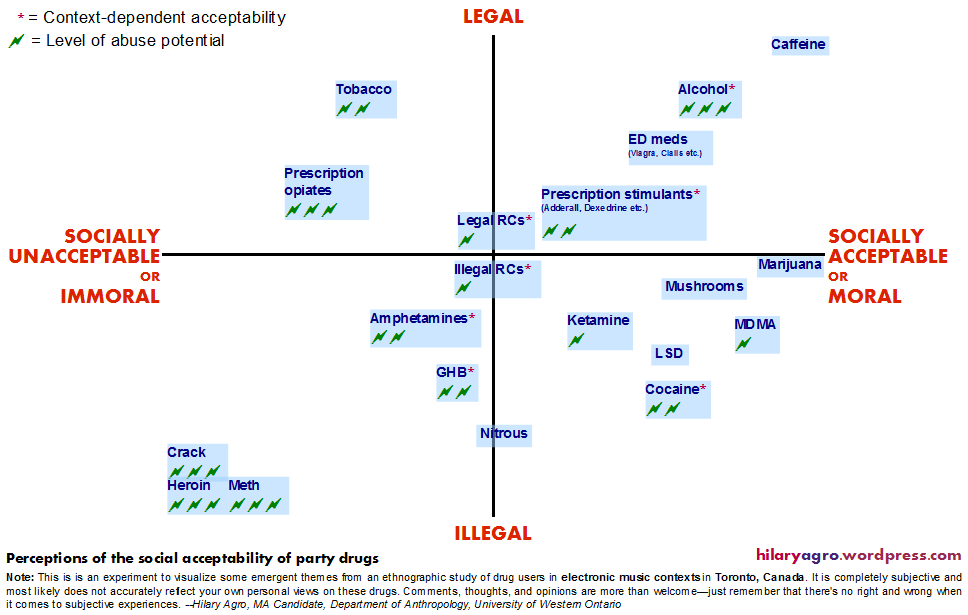
Judging other users doesn’t inherently make you a hypocrite, because not all drugs are created equal–I myself think crack is incredibly destructive and that weed is practically harmless, even though I don’t use either. But the opinions are just so strong on all sides that, just for fun (oh yes, this is indeed my idea of fun), I created a visual expression of the general spectrum of legal/illegal, acceptable/unacceptable drugs based on my interviews and fieldwork in the Toronto rave scene:

Perceptions of the social acceptability of party drugs versus their legality

Subjective perceptions of the social acceptability of party drugs versus their legality. (Click to embiggen.)

Having ecstasy, LSD, marijuana (for now), or cocaine on your person can get you thrown in jail. Alcohol, caffeine, and tobacco, you can consume to your little adult heart’s content. However, these drugs’ legal status doesn’t reflect how people view them in terms of their perceived morality.

There are ‘moral’, socially acceptable or legitimate, drugs, and there are immoral/unacceptable/illegitimate drugs. While many in the mainstream accept the status quo of conflating a drug’s legality with its acceptabilityI never get tired of hearing a drunk person say “I don’t use drugs!”, it kills me every timemost people and groups have their own personal categorizations of what substances are acceptable or unacceptable to consume. In particular, to those who choose to use both legal and illegal drugs, a drug’s morality by no means correlates with its legality. Just ask Gina and Albert.*

The reasons behind deeming a drug as socially or morally acceptable are complex, but they most often involve a combination of personal experience, family/peer group/media influence, perception of addictive potential, and cost/benefit analysis in terms of harms and pleasures. Right now I could still make a different graph for different age groups, levels of user experience, and what people say vs. what their behaviour actually indicates. I know that every single person has a different version of this in their own head, but I’m curious about what this graph would generally look like for where you live. Where would these drugs fall on the spectrum for your social group or city? Have you noticed differences based on music sub-genres?

Note: Check out the interesting discussion of this post on reddit, where I find out that I’m wrong about nitrous’ legal status, and also have to explain the concepts of subjectivity and perspective about fifty times.

Not my image. Google gave it to me. How duz I copyright law.Some notes:

  • This chart is a rough first version – it still needs some adjusting. (Well, it doesn’t need anything because it doesn’t even need to exist. But still.) But more importantly, my research is ethnographic, not scientific; this is all very unofficial, I just did it for fun and to help visualize a theme I’m working on.
  • Corrections: The “level of abuse potential” should say perceived level of abuse potential. Also, nitrous is not illegal in Canada.
  • The bottom left I have affectionately termed the “Boogeyman Corner” because those drugs are ironically still subject to the same stigma that, in the mainstream, equally affects these ravers’ preferred drugs.
  • Obviously, everything in existence has abuse potential, including all of these drugs. I took that fact as given when assigning levels of abuse potential as it would be pointless for every single one to have a lightning bolt.
  • The “legal” axis is less strictly defined. I sort of put things there based not only on whether or not they’re legal (which is a yes or no question) but on how restricted their use is, how close they are to potentially being legalized in the future, the degree of care I see people using to hide their use of each drug, the fear of potential law enforcement from users of each one, etc. Things like prescription drugs are hard to place because they’re technically legal but used recreationally (and thus illegally) by people at events. They should probably be on the illegal side but whatever.
  • So many different drugs fit into the Reseach Chemicals (RCs) category that it’s just a can of worms I didn’t feel like opening. Hence the generalized categorizations.
  • Most ravers have little or no experience with opiates, since they’re the least compatible with the main point of electronic music events, which is dancing.
  • The social acceptability of many of these (note the ones with a *) is context-dependent and very ambiguous (which makes them extra interesting!):
    • Alcohol, for example, tends to be the one that people both criticize and consume most frequently. It’s especially criticized in comparison to other recreational drugs, but still used more frequently than any other, mainly due to a) its wide availability and legal status, and b) the ability to easily and progressively manage dosage.
    • Cocaine is similarly badmouthed by some and loved by others (sometimes both at once from the same person). I could maybe even switch its place with ketamine.
    • GHB is very context-dependent in that it’s the drug that causes the most frequent overdoses, so people use the derogatory term “G’ed out” a lot, but using it responsibly is acceptable.
    • Mushrooms are considered perfectly acceptable in general, but most people say they wouldn’t feel comfortable using them at crowded music events.

*Gina and Albert are aggregate people I just invented to make a point. But they definitely represent the opinions of real people I’ve met.


If you like my writing, please consider supporting me on Patreon, or sending some diapers for my baby from my Amazon list 🙂 I’m a low-income grad student and new mom trying to fight against the devastation of the Drug War—every little bit helps.

Find me on Twitter ranting about drug policy, criminal justice reform, anti-capitalism, psychedelics and anthropology: @HilaryAgro
A state of trance: Inner peace rising from chaos

The experience of getting inside Sound Academy for Armin van Buuren was the low point of the night.

After an evening of rain and dancing at the electronic music festival Digital Dreams in Toronto, we’d somehow made it across town to finally experience the king of trance live. While waiting in line, I learned something interesting: the reason the bouncers take their sweet time checking IDs is because they have incentive to keep people waiting. The bribe to get inside without waiting is called a “line bypass” and that night they were charging $40 per person. What really shocked me, though, was that the people in line behind us were actually considering paying it.

Armin.

Armin.

When we finally got past the first step, the bag-searching girls were seriously pissed off at life. They were lined up in two rows of three, with a seventh girl ushering people forward from the lineup. “Next! Next! …NEEEEXT!” one of them yelled angrily. “Hey, nicely!” the usher in front called back, looking just as annoyed. The woman who searched my bag almost didn’t let me in with my own medication. “This can’t come in,” she said, squinting at the orange bottle. “It’s my own medication, with my name on it… My legal prescription,” I emphasized to her incredulously, when she still didn’t give it back. She looked at me, examined it, then tossed it back into my bag. She took my sealed bag of cookies and a half empty bag of cashews. “Does anyone want any cashews?” I called back to the line. Big mistake. The ladies were pissed. “We don’t have time for this shit!” one said. When she realised that I had not one, but two (very small) bags to search, she let out a noise indicating her thorough disgust for how difficult I was apparently making her job. She stuck her hands underneath my bra through my shirt, and I was glad I had stashed my single precious electrolye tablet in my pants. (They’re called Nuuns, like portable, bottle-cap-sized Gatorade tablets. I’d only brought one inside a ziploc, but my suspicion that they would have taken it away was confirmed by this thorough shake-down.) My partner Diego said they made him dump out his Platypus and gave his junk a good squeeze. To their credit, at least they were getting people in as quickly as possible. I suppose this efficient, grabby circus is still better than waiting even longer.

It was 1 am by the time we got in. But it was worth it. Oh my, was it ever worth it.

At Digital Dreams, a few hours earlier.

At Digital Dreams, a few hours earlier.

Armin was incredible. That was the first thing I noticed as my eyes adjusted to the flashing lights. I could feel the music shaking the floor and my brain. I was surprised at how gigantic Sound Academy was inside. The light show was a nonstop onslaught in time with the beat; the strobes were even a bit too bright for my tastes.

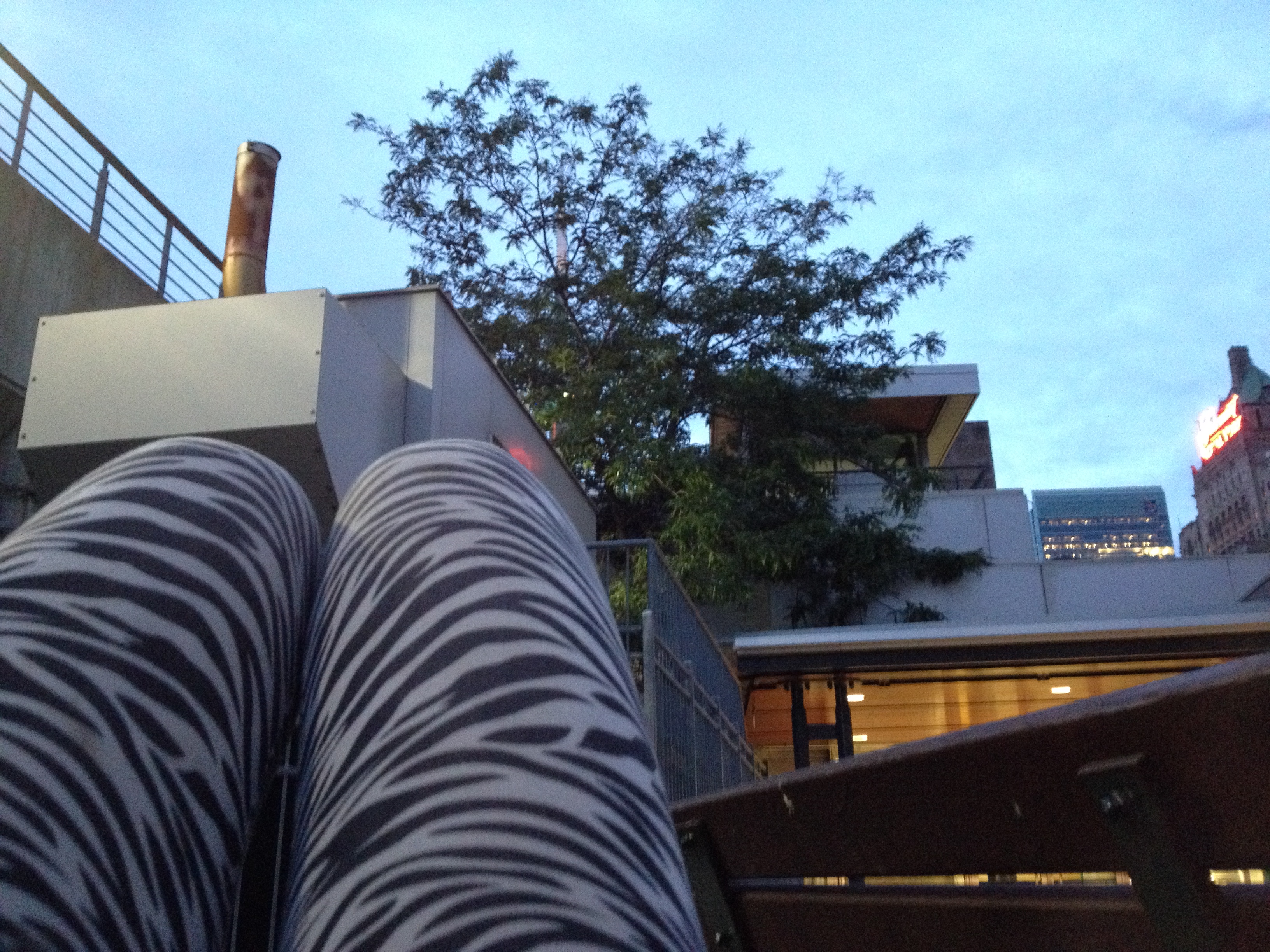
It was very, very hot in there, especially once we started dancing. I eventually took my shirt off and danced in just my bra and zebra tights, joining the hundreds of other men and women who’d done the same. It’s a beautiful thing, being in a place where a girl can take her top off and nobody bats an eye, aside from maybe a concurring high-five or two from the also-shirtless around her. The PLUR ethos notwithstanding, slut-shaming and misogyny is rampant in some darker parts of the electronic music scene, especially online. Every single woman I’ve talked to has shared negative experiences about their comfort, and sometimes safety, at some point. There are some events at which I would never consider taking my shirt off, even if it felt like we were dancing on the surface of the sun (which it often does). Even just dancing on my own sometimes draws uncomfortable attention from leering, droopy-lidded eyes, though I should note that happens significantly less in electronic music-focused environments than in regular clubs. But here, it didn’t matter. The connections with the real world of social cues and self-consciousness were cut and forgotten inside a sea of sound.

I became lost in the music. I’d been dying to see Armin for years and it was every bit as beautiful as any set I’d heard by him, multiplied by the inimitable sensation of being able to see and feel it and experience it with other people who felt the same way. Later I would find out that this was his second show that same day, the other one being in Ottawa. Which means that he closed out a festival 450km away, got on a plane, flew to Toronto, and went straight to Sound Academy to play. Knowing that, the energy and feeling he put into the show was even more impressive.

Dance 'til you literally need to tape your legs together to keep going.

Dance ’til you literally need to tape your legs together to keep going.

By 2:30 am, three straight days of dancing were screaming from my lower back. I went to sit down against the wall, joining a few others who’d set up camp there. I found a poncho and spread it out on the floor to cover the miscellaneous liquid spills.

“Hi, I’m Karen,” said the girl beside me. She was sitting for the exact same reason. We had one of those great chats where later, you can’t remember exactly what you talked about, just that it was lovely. I do remember that her best friend, who came to sit with us at one point, had blown out her knees—from raving too much. Which is as unbelievably badass as it is shitty. She used something called KT tape to “keep her knees from falling apart”, which I made a note to look into, thinking about how all of my favourite activities are terrible for my knees (hiking, snowboarding, dancing). They already hurt sometimes the morning after a long night.

A guy that turned out to be Karen’s boyfriend came up to her. “Are you alright?” he asked. “Yeah I’m fine,” she reassured him. “My back hurts, I’m just chilling.” He gave her a kiss and walked away. Karen explained that they’d made a check-in plan, where he would come find her at 3 am. She showed me her phone. It was 2:55. The mix of sweetness and responible raving genuinely warmed my heart. (The More You Rave!™)

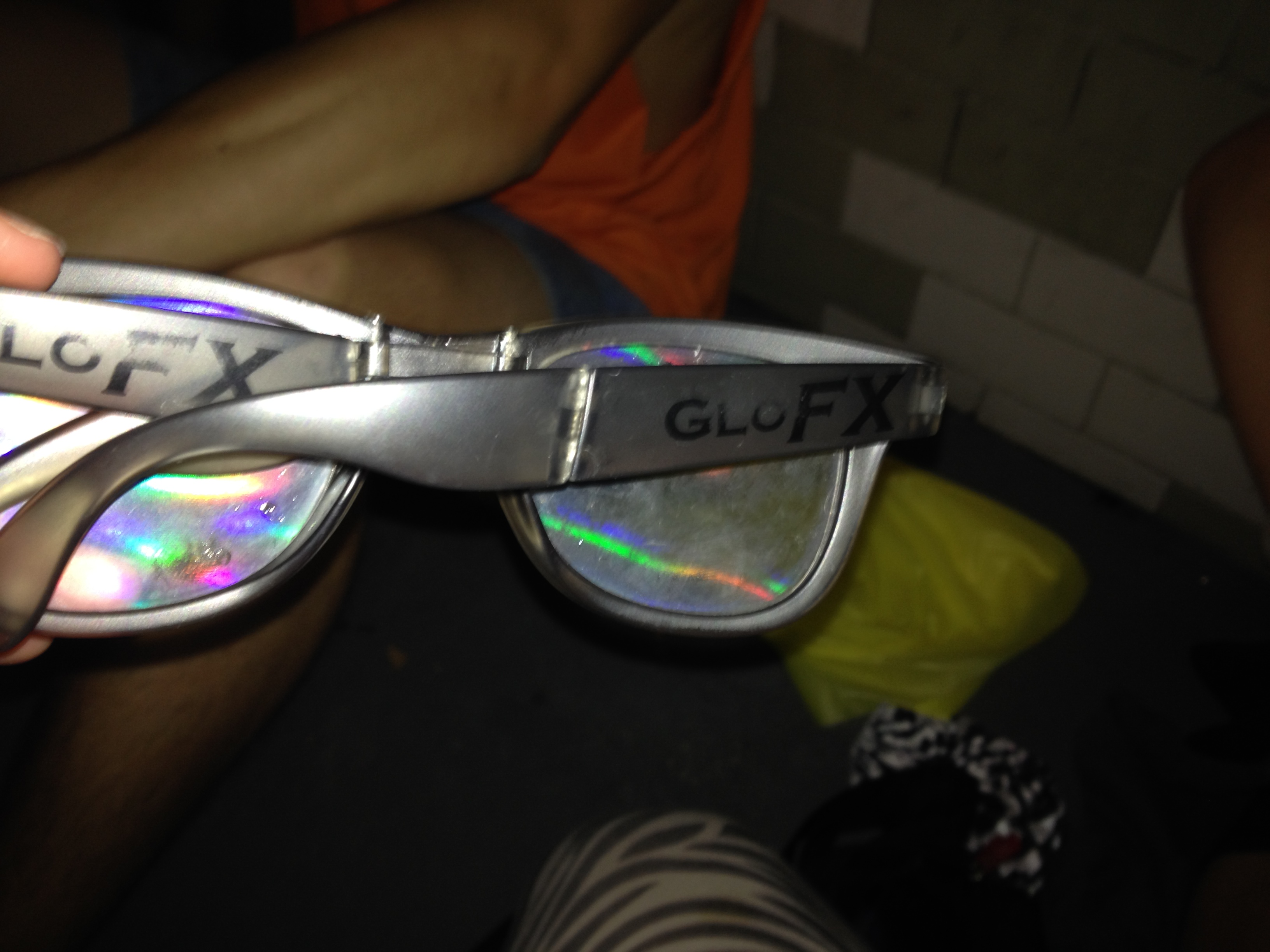
Karen's diffraction glasses.

Karen’s diffraction glasses.

As I stood up to dance, Karen lent me her diffraction glasses, which turned the lights into an overwhelming kaleidoscope of colours. Now, I’m no good at meditation. I want to be, I really do. But until I get better at it, or my knees give out, there is another way to calm the nonstop onslaught of thoughts and memories and emotions and analysis that cycles from the first drawn breath in the morning until sleep overtakes at night. For myself and many others, the only way to quiet the mental noise is to be immersed in sensory overload, rather than sensory deprivaton. Your eyes are flooded with colour and light, your entire body is an extension of the music that’s being sculpted in real time all around you, and with every person you lock eyes with, you know they’re feeling the exact same thing. There’s an untouchable inner peace that rises out of the chaos, and connects you to others. It’s raw and it’s real, no matter how often it’s dismissed by those who don’t understand it.

* * *

A state of trance.

Toronto Trance Family, representing in the front.

I met Matt, a skinny guy with a very calming presence, in the same spot where I’d met Karen. “So what kind of music do you like?” he asked me. I looked up at Armin from our vantage point on the floor, across a sea of faces, visible through white and pink flashes. He had just mixed “We’re All We Need” by Above & Beyond into his set, officially melting me into a mushy pile of joy. “…Apparently I like trance!” I replied. The smiling, knowing look on his face—eyes closed, hands raised, yet another trance convert—reminded me of a young woman I’d interviewed. She’d told me about going through various different genres of EDM before realising that trance was the one that resonated with her the most. I still don’t have a single favourite genre, but I now have a top three.

Matt was sober that night. “I drew the short straw. I’m DD tonight. But as long as I have trance,” he said as he spread his arms wide to the world of ceaseless movement in front of us, “I’m good.”

Matt’s friends were upstairs. “There’s an upstairs?” I asked. “There is. Grab your husband and I’ll show you.” There were only a hundred or so people up there. Deep Dish, who was almost invisible, was buried in the darkness with people dancing on all sides of him, making him seem like a part of the crowd.

We went outside for some cold air. The view of the Toronto skyline, lit up in the dark sky, was beautiful. The slightest hint of a sunrise was warming the deep blue atmosphere. I didn’t bother to take a photo, figuring stupidly that I’d be back some other time to take it. I wish I had. Some other time will not be that time.

2015-06-29 02.34.18

I would get much better photos if they’d let me bring my damn DSLR into events. But this blurry mess actually captures the essence pretty well.

Back downstairs, a new song came on, and Diego froze and listened for about two seconds. He then ran so fast to the front he left a dusty trail like a cartoon roadrunner. Armin had started remixing the Game of Thrones theme song.

* * *

I tried to keep dancing through my exhaustion, savouring every second of the music. Armin slowed it down, and spoke.

“Many people ask me, what is trance for you,” he said. The lights surrounding him were blue and vibrant.

“Let me show you. If I can.”

A gently rising piano cushioned his words.

“Trance is a feeling.”

Every eye was on him. Even the cheers had died down. I felt Diego’s hand clasp mine.

“Now if you will, please. Raise your hands, and close your eyes.”

A State Of Trance

The music grew stronger as we all raised our hands high. Armin did too. I closed my eyes. A second later, the beat dropped. It was Ferry Corsten/Gouryella’s Anahera.

“Do you feel that?”

Cheers were erupting. I opened my eyes. The guy beside me had tears in his.

“I said Toronto, do you feel that?” LED stars shot from Armin where he stood. Thousands of hands were up in the air, and he was right. This wasn’t something you just heard. You could feel it.

“This… is a state of trance, ladies and gentlemen.”

* * *

It was 4:15 am. We hugged Matt goodbye outside, and talked about interviewing him for my research. “I definitely have lots of stories. Lots of good stories, lots of…” he paused. “Well actually, no bad stories.” I was surprised. “No bad stories?” Matt shook his head and smiled. “They were all learning experiences. Not bad stories.”

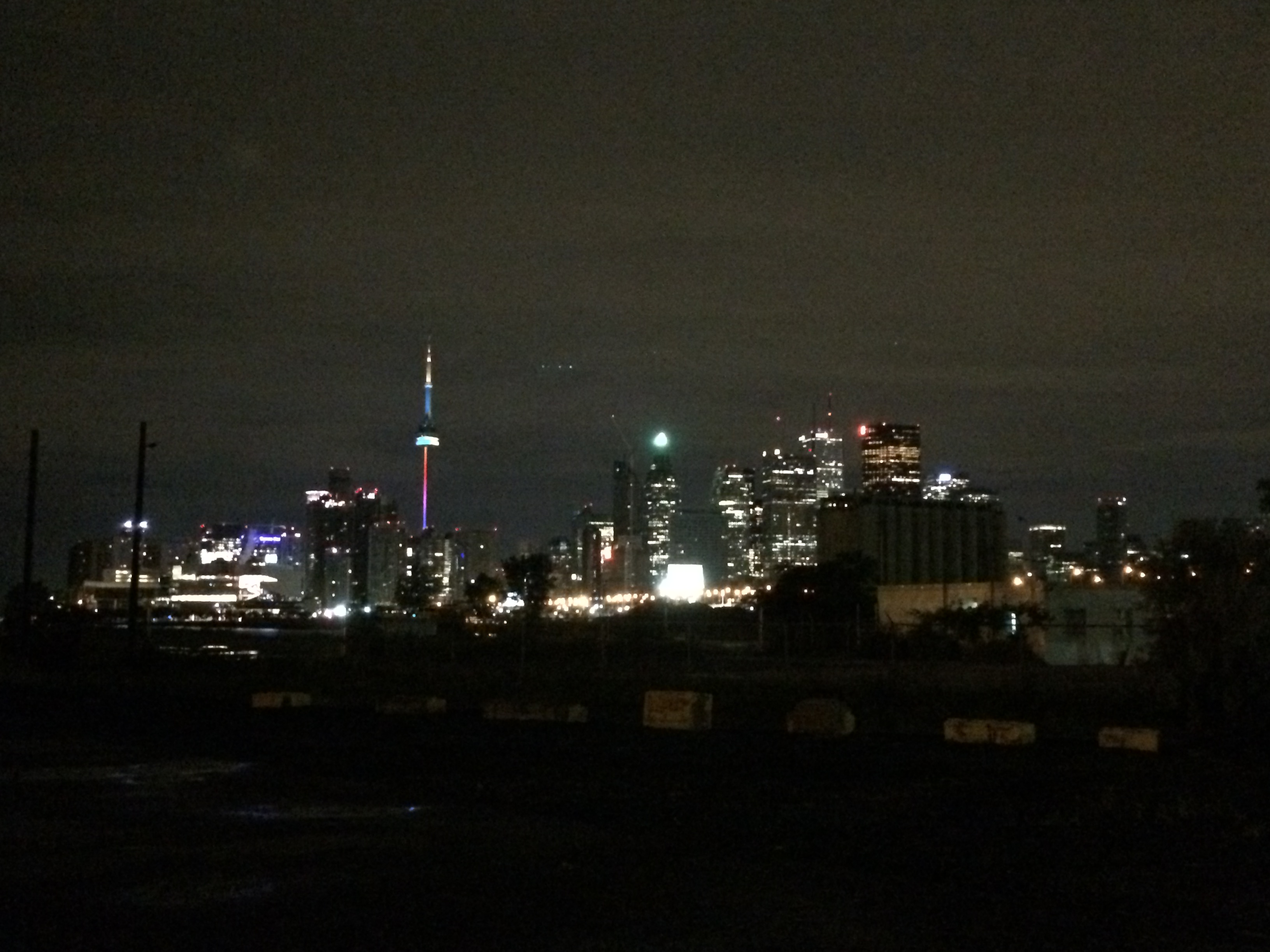
The photo I did end up getting of the skyline, on the walk home. Using my shitty, shitty iPhone 4S.

The photo I did end up getting of the skyline, on the walk home. Using my shitty, shitty iPhone 4S.

We walked the muddy 3.5 km to Union Station, refusing to be party to the disgusting system of late-night Toronto cab extortion—they wanted $50 to take us, and would roll up their windows if we asked about putting the meter on. Apparently most of them won’t even take you unless you’re going somewhere well outside of the Toronto core, like Mississauga or Richmond Hill. As we started walking, we watched a couple of guys trying to flag down cabs that would drive right by them. I had a flashback to scenes I’d seen in shows of black guys in New York not being able to get cabs. It was eerily familiar, though I’m pretty sure these cabbies didn’t care that they were black—they just knew that if these two guys were willing to walk away from the club, they weren’t willing to pay the outrageous fees.

It took us an hour to walk to Union. We got directions from a guy on the side of the road who looked like he had no good reason for loitering underneath the Gardiner at 5 am on a Monday. It was a rough walk. We were thirsty, hungry and exhausted. It felt like being on a hiking trip, at the end of a long day when you’re still not close to your campsite and have no choice but to keep going. My brain was full of happiness, but my body was hanging by a thread. A few other people were walking home too. We walked for a bit with another couple, all of us too tired to say very much, but feeling the same glow.

As I waited by the bus stop at Union Station for my partner, who went to find us some food, I lay down on a low concrete wall behind a bench, drinking water and watching a building slowly turn pink with reflected sunrise. The windows were wiggling and the walls were bending. I could still hear music in my head. The sight of ­Diego walking back from his long journey to the train part of Union was like a bolt of sunrise warming my face. It might have been the worst bagel I’ve ever had, but it was food. Seagulls crowded around to grab at our fallen crumbs.

Off camera: The pink building.

Off camera: The pink building.

The bus left at 5:50 am. As soon as it pulled up, I was hit with a strong need to pee, but it was too late. We spent the whole ride reminiscing, snuggling, and talking nonstop. We were glad that we’d taken our chatty selves all the way to the back of the bus, away from the silent and tired early-morning commuters. Diego told me about how he’d run into a group of guys inside Union while he was getting us food. They’d also been at Sound Academy, but didn’t enjoy it as much as the rest of us because “there were no girls!” The idea of boner-blinders strong enough to make a person oblivious to the magic happening between Armin and the crowd was astounding. Not to mention, they could have chosen a less expensive event if they were just trying to pick up.

A terrible shot of an amazing sunrise on the bus ride home.

An amazing sunrise on the bus ride home frames an amazing billboard.

At 6:30, the bus dropped us off and I immediately ran down a hill to pee behind a tree. The people from the bus could probably see me, about which I gave absolutely zero fucks. My bladder hurt. Twenty minutes later, home and exhausted, I stuffed a bunch of chips and tzatziki in my mouth and fell asleep with my clothes still on.

I didn’t wake up until 7 pm. But I woke up smiling.

Note: All names have been changed. These are experiences and reflections based on my current field work. My ideas and assumptions are quite possibly totally wrong, so I happily invite you to comment and change my perspective.

Thanks to Saruj Patres, who posted a video of Armin’s speech on Toronto Trance Family facebook page. I went on there the next day, hoping that someone had captured it, and he did.


If you like my writing, please consider supporting me on Patreon, or sending some diapers for my baby from my Amazon list 🙂 I’m a low-income grad student and new mom trying to fight against the devastation of the Drug War—every little bit helps.

Find me on Twitter ranting about drug policy, criminal justice reform, anti-capitalism, psychedelics and anthropology: @HilaryAgro

A happy ending for 30,000 mollyed-out kids running around Toronto.

My heart dropped into my stomach when I first saw the announcement.

Fireworks during the finale

Fireworks and junk during Zedd’s finale. “You’re welcome for this 3-second photo op,” thought the cleanup crew as they swept up 300 trillion tiny pieces of paper for the rest of their lives.

Day 1 of Digital Dreams was cancelled, one hour before the doors were scheduled to open, due to a surprise winter hurricane (in June! How adorably anachronistic!) bringing rain and high winds. I was already getting ready to go, I had my fanny pack on and everything. I was supposed to see Armin van Buuren that night. Gramatik. Haywyre. Porter Robinson. I was going to do some participant-observation for a while, but then allow myself to just fully dance and enjoy the music for once. Despite my scene-savvy friends’ utter underground disdain for the festival—”more like digital nightmares,” they’d joke, over and over—and my own distaste for many things about corporate-sponsored events, this was supposed to be my night, damnit.

I spent the next four hours obsessively checking social media, taking notes on the collective outrage. I successfully fought the urge to join in by reminding myself that if this was the worst thing that had happened to me all month, life was pretty fantastic. Which gave me some much-needed perspective. However, Facebook and Twitter imploded into a trainwreck of 30,000 frantic ravers, many of whom were already drunk and high and ready to party, as they tried to find tickets to one of the afterparties at clubs that were heavily rumoured to be picking up the artists who were supposed to play that day.

I gave up on buying re-sold afterparty tickets for my partner and I when they hit the $100 mark. I focused on the positive side: the cancellation meant that we could go to a house party we’d been invited to that night by a friend I’d made through my research. We’d joked that this would be my opportunity to prove that I wasn’t a narc (a common theme when talking to people that I’ve yet to find a solution to—everything I think of to reassure them that I’m not a narc is probably something a narc would say, so… I got nothin’).

It ended up being one of the best parties I’ve ever been to. So, thanks, Hurricane Shitwind. But that’s a story for another time.

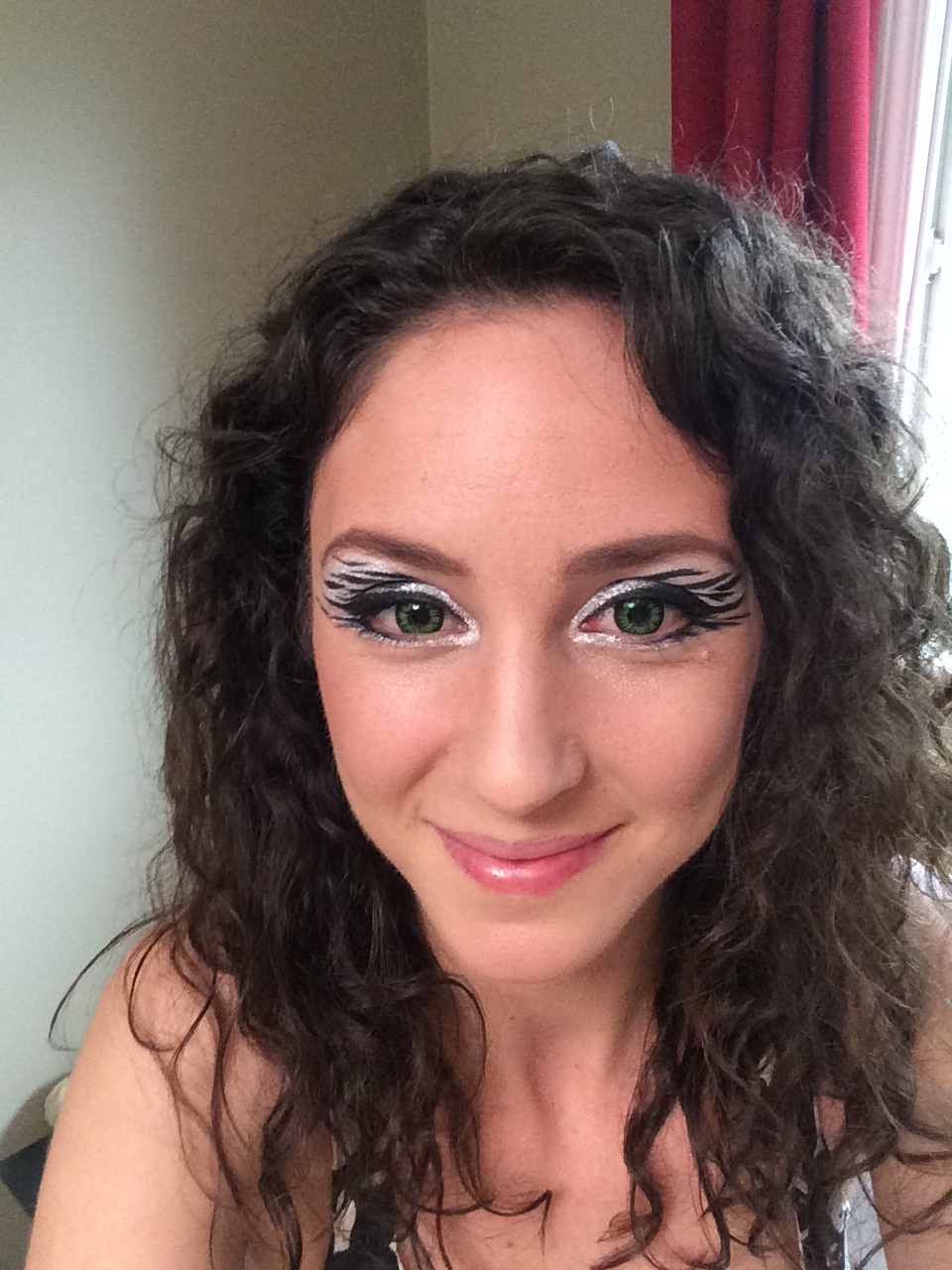
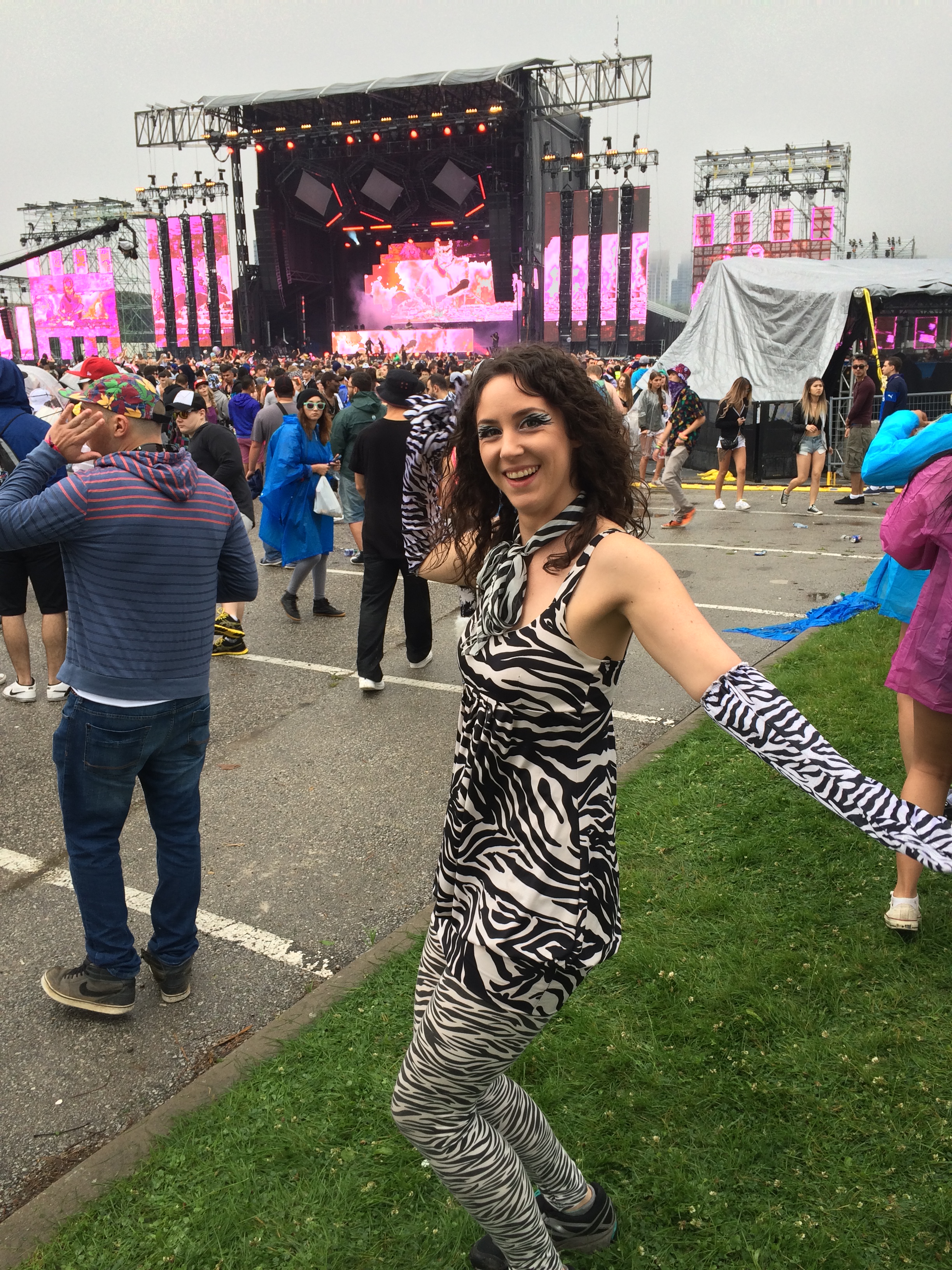
It was still pouring rain when we woke up the next afternoon. We listened to some Zedd tracks as we got ready for our only day at Digital Dreams: Camelbak, electrolyte tabs, portable phone charger, test kit, snacks, fanny pack, hand sanitizer. I turned myself into a zebra because why not, and we hopped on the GO bus to Toronto.

It's a festival. You've gotta blend in and stuff.

It’s a festival. You’ve gotta blend in and stuff.

“I like your makeup!” said a boisterous young woman as we sat down on the bus. “Thanks!” I replied. “It’s for Digital Dreams, we’re on our way there.” “Ahh,” she nodded. “Got your molly ready?” she added with a grin. I thought back to the Digital Dreampocalypse on social media the day before.

MDMA use is so normalized at these events. The idea that festivals can pretend their superficial efforts to keep drugs out have the slightest effect is ludicrous. Yet people still think having harm reduction outreach is going to make more people use. That’s not true, but it’s also barely even possible when everyone is already high.

We joined the collectively building excitement the moment we walked into Union Station to get our train. Young people in shorts and rain jackets flitted around trying to figure out schedules, drinking from spiked lemonade bottles. When we got off the train near Exhibition Place, I asked a group walking with us if anyone had any water. One girl gave me a bottle and said I could keep it, and her friend jovially offered us some vodka-Gatorade too. It would have felt wrong to say no, given the spirit of the whole thing; sharing and reciprocity is a big part of festivals, and rave culture in general. But also I enjoy free alcohol so I said yes.

Can you spot the sombrero?

Can you spot the sombrero?

Security was much less stringent than they probably would have been if everything had been going as planned that weekend. As it was, they’d opened up two hours late that day on top of Day 1 being cancelled, so it felt like they were just trying to get people in as quickly as possible. “Last year they were making people take off their shoes,” one guy told me. The security guard did make me lift up my bra and shake it underneath my shirt to see if any drugs fell out. Though it was sort of pointless, I noted, because if something had fallen out, it would have fallen into my shirt and he still wouldn’t have seen it.

* * *

We watched seagulls fighting over pizza crusts as we ate the cheapest food we could find ($5 a slice). A couple of cops tried to buy pizza but were denied because of the wristband-only payment system. “I got you,” a raver behind them said. They gave him the cash and high-fives before walking away with their slices. I’m mentally developing an “everything is awesome in rave-land!” logo, in the style of “The More You Know!”, that pops up in my head when I see a heartwarming moment like this happen.

If someone could make one of these saying

If someone could make one of these that says “The More You Rave!” I would love you forever.

We wandered around, people-watching and taking notes. A tall girl wearing kandi-clad arms and furry rainbow boots (and not much else) was walking in circles, mouth open, muttering incomprehensible lyrics to herself. Acid? DMT, maybe? “I hope that if I ever get that high, it’s somewhere where I didn’t spend $200 to get in,” said a guy beside us, watching her with one raised eyebrow.

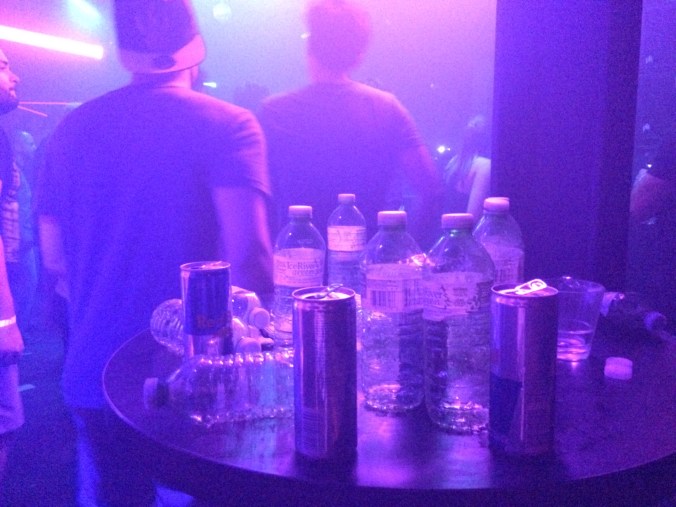
Wading through a sea of crushed Bud Light and Red Bull cans, we went to check out Adventure Club, who I’d been looking forward to. But the crowd seemed sort of bored. They were mixing in a lot of pop music. I squinted at them as they played the same track twice in a row, trying to figure out why their set sounded so weak when all the songs I’ve heard by them are fantastic. Later I found out from a friend that apparently Adventure Club are great producers, but shitty DJs. “It’s a running joke with my friends and I,” he explained. “Every time they come to Toronto we’re like, goddamnit, go away. You guys suck, stop coming here.”

ZEBRA!

Have I mentioned that I love my thesis topic?

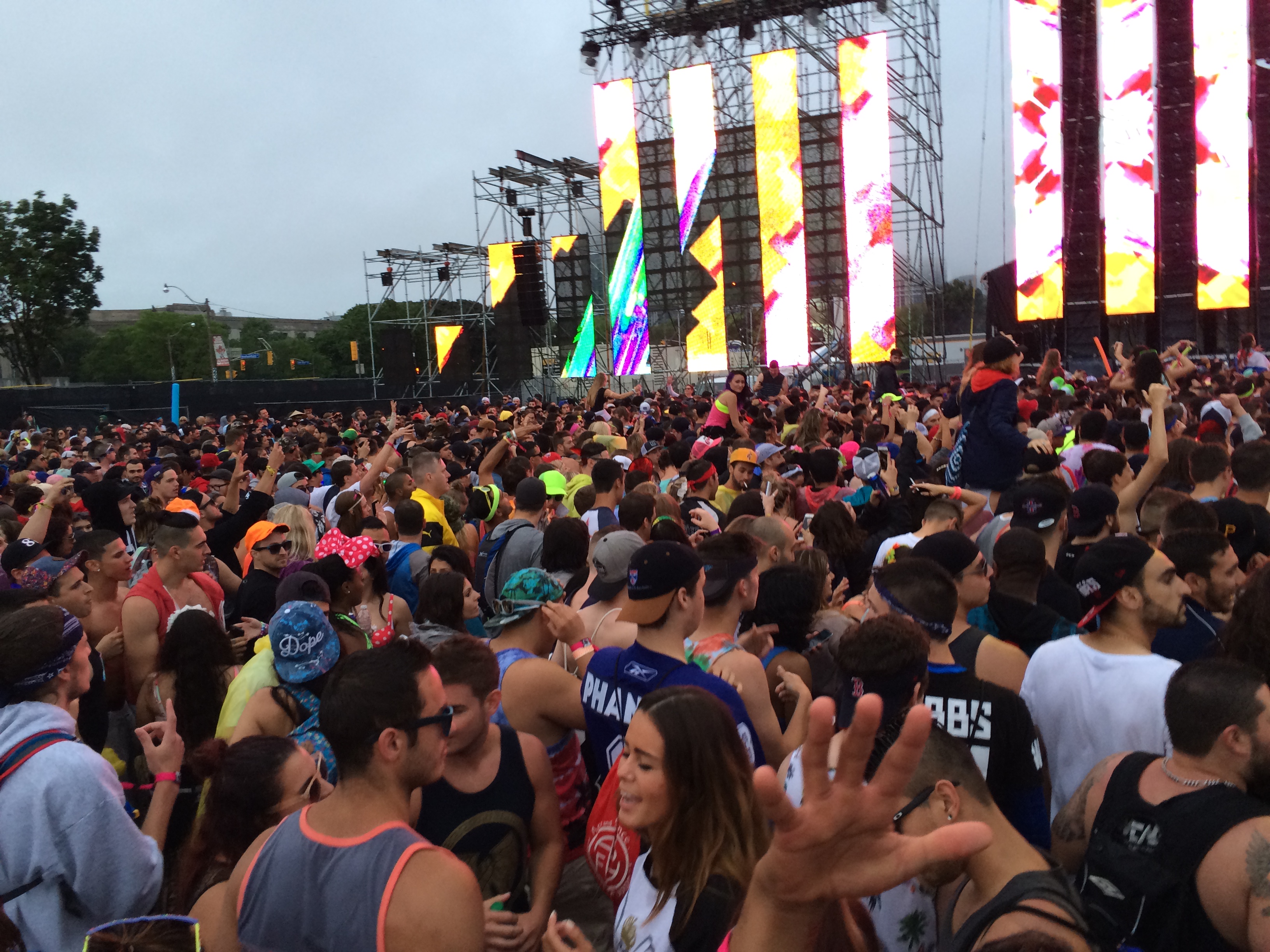
The mood changed as Martin Garrix finally showed up. I was picky about finding a spot in the crowd around people with “good energy”. (This is about as hippie-ish as I get with that word, but what I meant was people who were smiling and dancing.) We found a spot that was pure Goldilocks and melted into the music and the crowd. Garrix was good. Really good. We exchanged gleeful, dancing smiles with a guy named Gordon. He was just a terrific human being and ended up being one of our temporary dance-floor buddies, a phenomenon which is hard to describe but which ravers know about instinctively, and which occurs at 100% of dance music events. “That’s awesome that you’re married and that you’re still raving together!” he said when we told him about our recent wedding.

2015-06-28 20.40.39

It’s nothing but tank tops, all the way down

Martin Garrix was having a ball onstage. So apparently now DJs mix by standing on top of their decks and fist pumping. Technology advances are incredible these days, I texted to a friend.

A guy walked by with a Mexican flag tied onto his back like a cape. “Heyyyy! Mexicoooo!” I called out. He shook his head. He obviously didn’t understand me. “But, yes! Mexico!” I insisted, pointing at his flag-cape. He walked away and I got a better look at it.

…Oh shit. That’s definitely Iran.

Well, my contacts aren’t the right prescription anyway.

2015-06-28 21.13.15

This is my “so that definitely wasn’t Mexico” face

As Zedd replaced Martin Garrix, crowdsurfers and shoulder-sitters were breaching the lower level of the crowd with varying success. Either way, the crowd was always willing to help out. One girl was fully standing up on a guy’s shoulders, gracefully gripping with only her feet and smiling serenely. A few feet away, a large, extremely drunk guy was attempting to crowdsurf, but couldn’t get enough people to lift him up by his flailing limbs. Myself and a guy I’d been chatting with tried telling him that it probably wasn’t a good idea, but he was too wasted to hear us. Every time he fell with a thud, we rolled our eyes. I kept thinking each crash would be the end of his attempts, but it wasn’t until the people around him gave up that he wandered away.

Zedd played the theme from Zelda, with matching LED visuals. A couple of different people asked my partner if they could go on his shoulders, and he obliged. The view from up there is good, but I’m not a huge fan of it for very long. It always feels somewhat disconnected and distant from the rest of the crowd.

My partner and our buddy Gordon, bonding over Zedd

My partner and our buddy Gordon, bonding over Zedd

Given how strict about scheduling and noise bylaws these events usually are, every minute after 11:00 that Zedd played felt like a gift. Our buddy Gordon left before the show ended. “Next year,” he told us as he said goodbye, “When I’m the one playing at DD, you have to come and support me!” We heartily agreed.

* * *

My body immediately started to cool down after the show came to an end and we slowly surged with the crowd towards the exit. I wrapped myself up in every layer I’d brought, feeling sorry for the girls in bikini tops. Later I spoke with some of the EMS and medical staff, who said that their biggest rush of the day was exactly when the festival ended—the collective body temperatures of thousands of people dropped at once, and for some the crash was too much.

We tried to get the train before realising why Gordon left early—we’d missed it by five minutes. “Well, I guess we’re walking.” A few blocks away, we managed to push our way onto an extremely packed sardine can streetcar along with a mob of people.

But the night was only half over. The day before, I’d impulsively bought tickets to see Armin van Buuren at an “official afterparty” for Day 2. My partner and I have been fans of Armin for years now and have never seen him live, so not seeing him on Cancelled Effing Day 1 was first-world-problem devastation of the highest degree. So we were going to do whatever it took to see him that night.

That’s where things got messy. And really, really awesome.

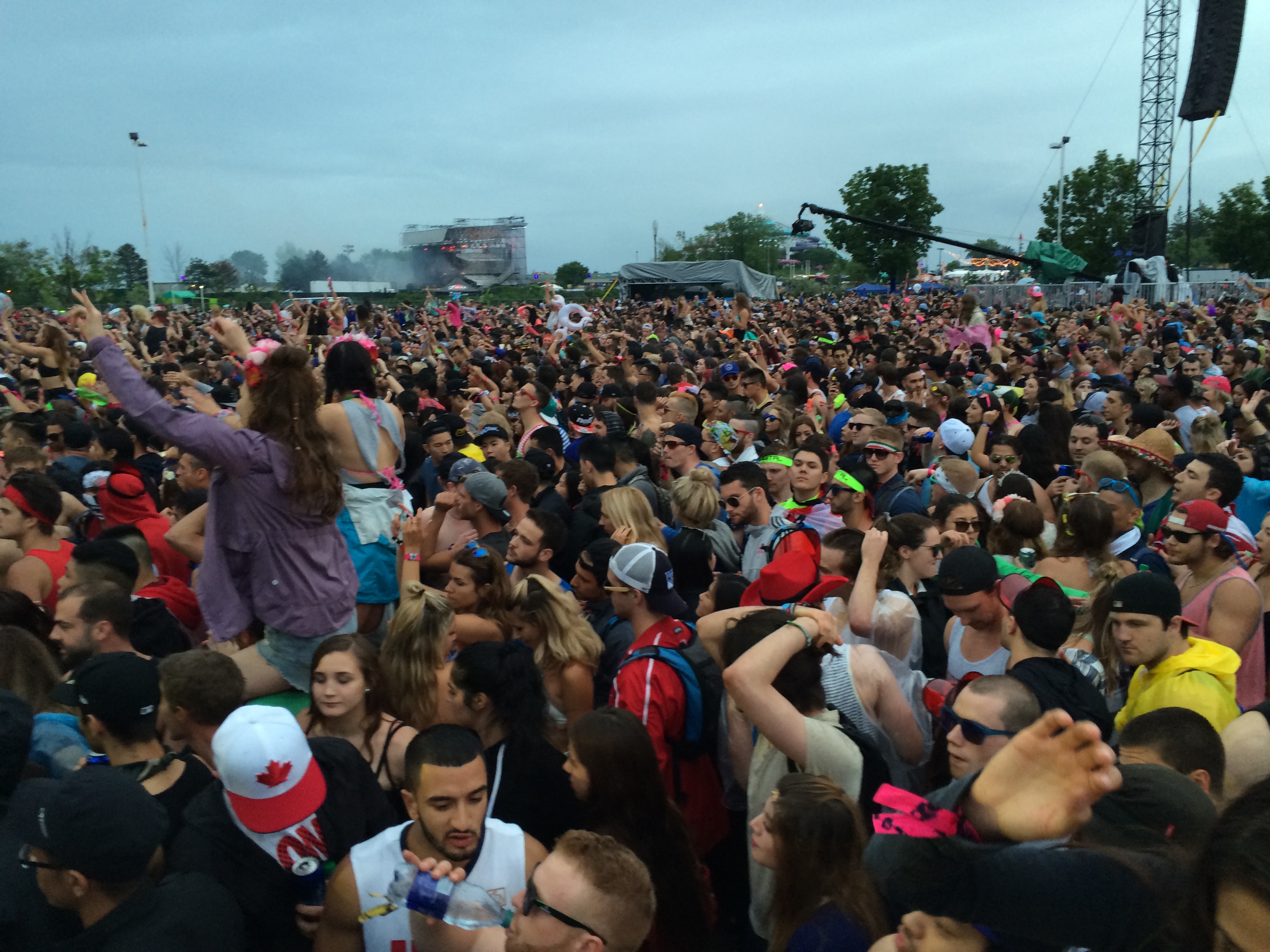
This many people were on the streetcar with us.

This many people were on the streetcar with us.

[The whole story including Armin ended up being over 3,500 words, and ain’t nobody got time for that. So I’m gonna post about Armin in a couple days.]

Note: All names have been changed. These are experiences and reflections based on my current field work. My ideas and assumptions are quite possibly totally wrong, so I happily invite you to comment and change my perspective.


If you like my writing, please consider supporting me on Patreon, or sending some diapers for my baby from my Amazon list 🙂 I’m a low-income grad student and new mom trying to fight against the devastation of the Drug War—every little bit helps.

Find me on Twitter ranting about drug policy, criminal justice reform, anti-capitalism, psychedelics and anthropology: @HilaryAgro
Psytrance, a world unto itself

Most of what I knew about psytrance (psychedelic trance) raves before I actually went to one came from this article in Vice:

Psytrance really is a counter-culture in the truest sense. The music is harsh, the clothes are weird, the drugs are strong, the best parties are illegal. This isn’t a scene you can enter half-heartedly; nobody is having their birthday drinks at places like this – it’s too intense, too esoteric for the casual partygoer.

It’s a piece that has always stuck with me since I first read it. I have loved “ethnography for the masses” journalism since before I knew what anthropology was; that fish-out-of-water, Gonzo style, with authors who are able to successfully suspend their WASPy disbelief and experience a new and strange environment with a more-or-less open mind, broadening their view of how life can be lived. Though at one point the above article devolves somewhat into gawkish weirdo-porn—”Look at all the funny clothing! Are these kids nuts or what!”—it hints at something unique about psytrance that I was curious to see for myself.

File 2015-07-01, 1 13 07 AMMy partner and I showed up around 11, dressed in shorts for the beach theme. Blow-up sharks and beach umbrellas hung around the dance floor, which was sparsely populated by a core group of around ten people, mostly men, already dancing hard. Leaning into the intensity of the music, arms pumping and flailing. More people stood chatting and dancing throughout the rest of the club. Everyone looked happy, even if some were too focused on dancing to be smiling. It was a relatively older crowd in here (mid- to late-twenties) than at some other events I’d been to. Some were in classic raver outfits—fur boots, kandi, huge baggy pants, stuffed-animal backpacks, that same sort of neon-sexualised childlike look, like laser-show camoflauge.

“I have no idea what kinda drugs that guy must be on.” My partner pointed to a man who was swaying from side to side with a vacant look and half-open mouth. My guess, a dissociative of some kind. Ketamine, or GHB maybe. A bit too much, either way. But most people seemed clear-headed, if not exactly sober.

A beach ball went flying past my head as I went to buy a beer. The music was good, already stirring up a pretty strong desire in me to dance. We went upstairs to a second level overlooking the dance floor and sipped our beers. A man wearing an “I Believe” alien shirt walked past us and pulled out a small baggie of blue pills. It was done so blatantly out in the open, my partner figured he wouldn’t mind if he asked the guy what he was going to take. They exchanged words I couldn’t hear under the pumping music, and I saw my partner laugh. He came back.

Do a google search for

Thanks, disembodied tangle of arms! (Source)

“They’re not pills. They’re earplugs,” he grinned.

I ended up having a great chat with Derek about the rave scene, after I complimented him on his decision to wear earplugs. He’d been going to dance music events since the birth of acid house in the late 80’s. We watched the crowd stomp around from our second-floor vantage point. Everyone looked a little different, a little unique. Though most of the crowd was white, there were people of all shapes and sizes and configurations of dreadlocks. There were no binary gender categories in charge here. Visually, this was a very different crowd from folks at more popular EDM events. It was the misfit table in your high school cafeteria, all grown up and not giving a fuck. I liked it. I felt at home. These weirdos knew how to party.

“Everything’s changed,” said Derek, as we continued to chat about the dance music scene. “It used to be about the people—the DJ wasn’t the centre of attention, now it’s all about ego…” This wasn’t the case at the events hosted by the organizers of this one, though, he said. He liked events held by these guys. But his words made perfect sense in what has become an increasingly monetized and corporate electronic music scene. The fact that a formerly niche music genre like EDM (contested though the term is) has exploded in North America in the last three years is shaping a lot of how the scene functions today. The effects of this explosion are everywhere. DJs are the new rock stars. Huge EDM festivals are popping up overnight on the map like mushrooms after a rain, so much that talk about market oversaturation has already begun—young people only have so much money to spend on summer festivals, and most can only afford one or two a year (though social media and FOMO are affecting these decisions as well). Celebrity actors-turned-DJs are using their clout to cash in on EDM’s popularity—Hodor from Game of Thrones calls his bookings “Rave of Thrones”, Bryan Cranston made a surprise appearance at EDC a couple weeks ago, and Paris Hilton is slated to DJ at Cabana in Toronto soon—though most of the online buzz around this fact ranges from not taking her seriously, to outright hostility at her “buying her way into the scene” where talented DJs could play instead. (To his credit, Hodor (Kristian Nairn) is apparently pretty good.) Gigantic rave cruises are spawning knock-offs and the Full Moon Parties in Thailand get bigger by the thousands every year. And Superbowl-sized LED screens blast the names of DJs in multicoloured glory as they pose for that iconic shot in front of the ecstatic crowd, arms wide, godlike, drinking in the adulation.

I'M YOUR GOD NOW

I’M YOUR GOD NOW.

Back at the beach-themed psytrance rave however, it was 12:30 am, the dance floor was filling up and a pink-haired DJ who turned out to be my favourite of the night was taking over. No LED screens, no antics, no huge crowd. The dancers cheered him on after a particularly complex bit of mixing. He shook his head and bowed to them, arms out, palms down, as if in worship.

There was an unique kind of unity in the dancing style I saw at this event, different from that seen at more mainstream EDM events. This was very… Well, what you’d have to call ‘frenzied’. It matched the music perfectly. Everyone is in their own little world; there’s less dancing together in tight pairs or groups, more space to move around and be creative. But you can still feel that it’s a collective activity. We’re all still in this together as a group, united by the music and the freedom to just be weird and dance however we want. Interestingly, there was a noticeable lack of sexuality about the dancing here. I wasn’t sure why, but I got the feeling that someone trying to dance provocatively, or any sort of sexual attention-seeking, would be frowned upon and probably mocked. It would be out of place, an unwanted break-in from the mainstream world of bros and Kanye’s “drunk-and-hot girls” that these people are trying to escape. Where they don’t fit in and don’t know the rules, don’t know how to fake it and have rejected the idea that they should have to.

1:50 am.

1:50 am.

However, just as I was thinking to myself, “Everyone is dancing so damn hard, it would be pretty difficult to hit on someone here anyway,” my partner pointed out a hip-humper (a guy dancing crotch-first against a girl) at the front. Turns out she was into it, though. Later on in the night, my partner ended up accidentally interrupting them upstairs outside the bathroom, his hand up her skirt.

At 2:35 am, we hugged Derek goodbye and began our journey home. We weren’t sure exactly what we’d just experienced, but we knew that we liked it. We’d be back for more.

Note: Real names have been changed. These are experiences and reflections based on my current field work. My ideas and assumptions are quite possibly totally wrong, so I happily invite you to comment and change my perspective.


If you like my writing, please consider supporting me on Patreon, or sending some diapers for my baby from my Amazon list 🙂 I’m a low-income grad student and new mom trying to fight against the devastation of the Drug War—every little bit helps.

Find me on Twitter ranting about drug policy, criminal justice reform, anti-capitalism, psychedelics and anthropology: @HilaryAgro
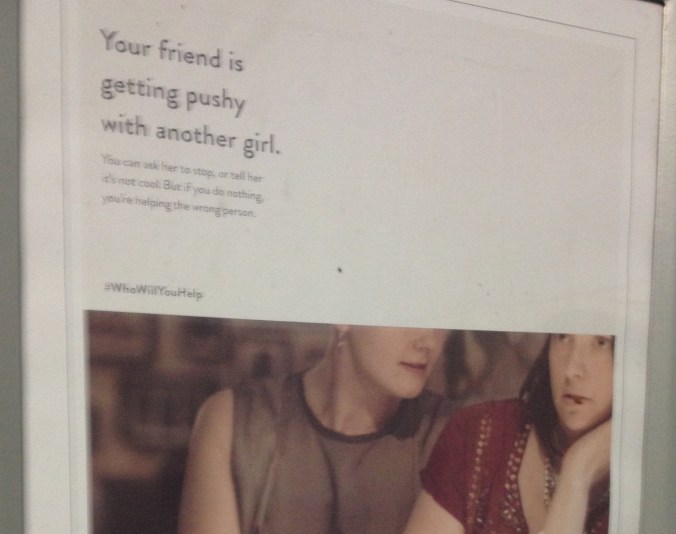
Field Notes: This data collection is interfering with my dancing.

The following is a selection of some of the more entertaining notes from my first official field research night. (The last post was a preliminary getting-a-feel-for-things outing.) I took out a lot of the reflections and will be putting those into a separate post. If any real anthropologists are reading this… Forgive the crude and candid nature of these notes. I have never been able to maintain the illusion that I am above using words like “clusterfuck”. I see no point in censoring my notes before the real analysis has begun in earnest. I’m sure that buried deep somewhere in Margaret Mead’s field notes, she talks about sick beats and squashing everyone’s buzz. She just didn’t have social media outlets to gloriously rip down the curtain that obscures the raw unfiltered human idiocy from which eventually crawls coherent insight.

Whether or not it’s a good idea, it’s happening.

For the same reason that motivates most of my decisions. Because it amuses me.

* * *

Hey, it wasn't me who said it.

Neo-tribalism in action.

Arrival: 12:30 am. After a clusterfuck of ridiculousness involving forgetting my ID. They wouldn’t let me in. I had to go back to the house to get my passport. I should be happy that they’re being strict about IDs, but right now it’s just a pain in the ass.

Bathroom attendant is a black Caribbean woman. Again. What is up with this town? It makes me super uncomfortable since 90% of the partiers are white. A girl came up and asked her, “can I sneak a piece of that gum?”

“Tip,” she said flatly.

“Ahhh…” The raver walked away. I made eye contact with the bathroom attendant and she rolled her eyes. “I guess she didn’t want it that bad,” I said.

I can already tell that the bathroom is gonna be a gold mine for overheard conversations. If I’m only listening it’s not unethical right? I’m peeing, I can’t close my ears.

Coat check guy liked my shirt. Friendly. Though a guy once told me that any time a guy compliments your shirt, he’s actually complimenting your tits. He was really nice though so it didn’t seem offside.

The Uniform: Girls in short shorts. Guys in tanks or shirtless. Lots of hats. Reminds me of Thailand.

I’m more worried about my bag than I should be considering everyone in here is probably wealthier than I am.

Holy shit this DJ is really good! Frank Walker?

Dude with LED finger gloves! Ha haaaaa! I love his face, his enthusiasm!

I really will need better ear plugs. Fuck it’s loud in here. It also reeks of weed which is always oddly comforting, even though I don’t smoke anymore.

Second finger glover. This one is definitely high. He’s really working one girl. Do they use these things to get laid?

3LAU!

3LAU kills it.

1:00 am

I can literally feel the heat emanating from the guys beside me. It’s like standing next to an oven.

More men than women here for sure. There’s a group of shirtless dudes dancing together. Gay? Bros? Who knows?

Guy in a giraffe mask. Love it. He is loving it too. I feel like a douche not dancing right now and writing things on my phone.

There’s a guy trying to catch my eye. I guess he didn’t notice my engagement ring. I just want to talk to him about my topic. …Ethical? Can I smile at him on to make contact, even though I know he’s trying to flirt? Use my female-ness to my advantage, since it’s not my goddamn fault that so many men have zero interest in making a genuine connection with another human being unless she’s DTF? I didn’t make the system and I don’t like it, but can I still work within it?

Ohhhhh 3lau. It’s really fucking hot in here. But 3LAU. Amazing beats. “London… I have a lot of Canadian friends who tell me that you guys party the hardest!” (He could say that everywhere, but London, ON is actually pretty well known as a party town.)

SERIOUSLY THIS DATA COLLECTION IS INTERFERING WITH MY DANCING. …OK that double shot kicked in pretty quick. That’s enough for tonight.

Sweaty muscley beef guy just sold some drugs behind me. I want to ask what but for several reasons I won’t.

How the fuck does everyone know and agree when a particularly sick beat is happening? I was getting so pumped up because it was awesome. And somehow everyone else’s tastes were the same. How much influence do we have on each other?

It’s so hot in here and I’m not even on MDMA. I can’t imagine how brutal it feels for everyone who is. This has to be… [interrupted by a guy telling me to get off my phone] I am squashing everyone’s buzz with my seeming phone obsession. Should have brought my shirt.

Research uniform. It's come in handy.

My t-shirt brings all the participants to the yard.

1:37 am

Made friends! Lewis*, who was the one to tell me to get off my phone, introduced me to everyone as “This is Hilary! She’s here on her own!” Which made me very popular. They all seem to just absolutely love how badass I apparently am for coming on my own at the last minute. Girls probably don’t do that too often. But because of it they’ve welcomed me into their group. Really friendly of them.

There’s a guy walking around with a folding fan, cooling people down with a big smile. This man is a best friend machine. I love him.

Guy says to me: “I know a guy who did that (mushrooms all the time) and now he’s retarded.” …..OK

Random people are still getting mad at me for using my phone. The night is supposed to be about getting away from the tech-obsessed, alienated world – me on my phone is like an affront to the rave ideals, it’s almost rude, indicating that I’m not as into the music and the atmosphere as everyone else. I might have to keep my phone usage on the floor to a minimum, and move to the side to take notes. Though Lewis decided that my research was an acceptable excuse.

Offered MDMA a couple times by guys in the group I’m hanging out with. Being offered in this context is really a nice gesture, truly – reminds me of the joke saying, “if a stranger offers you drugs, say thank you – drugs are expensive.”

“I’m gonna have to drink a Culligan jug tomorrow” – Lewis. He is indeed sweating so much he looks like he just climbed out of a lake.

A girl bumped into a guy and knocked his beer all over him. She started to apologize, but he smiled and said “no worries” and offered it to her! I’ve found Rave Jesus.

To break the ice, it always goes:
First question: “Are you having a good night?”
Second question: “What’s your name?”
Guys shake hands, girls hug – though this might be me taking the lead on the second one. I like hugs.

“Are you studying me right now?” Asked sort of jokingly but also hard to answer because, well, yes. Surely this is a question encountered by lots of anthropologists – need to get feedback on how to answer it.

Girl in the bathroom: “I’m never wearing jeans to a rave again!”

Accepted a paper towel from the bathroom lady. Awkwaarrrrdddd. I put a dollar in her jar.

2:25 am

I need a dancing break. Geez, I’m not even taking my own advice. I need electrolytes!

Gotta get in touch with those Colombian girls! Rave scene in Colombia? Anywhere else in Latin America?

I really need to work on my courage. I feel too shy to talk to bartenders or the bathroom attendant but they’d have lots of great insights.

3LAU: “For stealing my London virginity, this was awesome!” I love it when DJs are just as into the vibe as the crowd is.

After telling a guy that I’m an anthropologist: “Oh yeah, I went to see that T. rex in Alberta!” What I thought: …Sigh. Yeah I study dinosaur bones. At raves. Man, not all anthropologists are archaeologists, but archaeologists don’t even study dinosaur fossils, that’s palaeontologists! What I actually said: “Oh awesome!”

I should ask my optometrist if all these lasers are bad for my eyes. Lol.

Light finger guys who gave me a show… Wanted to ask more about it, why they do it etc. (pretty sure I have some ideas but still), but it felt like it would ruin the spontaneous experience to start digging into it, to bring the implicit shared bond out into the open. Once again this applies to so many little social situations… Saying it out loud changes everything, like explaining a joke, or pointing out that someone’s flirting.

4 am

When the music was over I went around looking at the garbage to see what kinds of leftover drug baggies were littered around. One of the guys cleaning up got excited when I told him about my project. “You looking for drugs? There’s lots! I’ll help you find them!” We swept the place for tiny ziplocs. He got an idea when I told him I had a test kit, and ran away and came back with some white powder crumpled up in tinfoil. “It’s a prescription drug from Russia we got online!” he said. We chatted about ‘cocoa puffs’ and how dealers put cocaine in weed to get you ‘hooked’. I’m not sure I believe it. Need to ask around.

I called out to the crowd leaving: “If anyone lives off Richmond, I have two spots in my car, I’m sober, I can drive you home.” No takers. One guy yelled out “STRANGER DANGER!” Hah. I’m both affronted and strangely proud of their reaction. Good little ravers, dont accept rides from strangers! Except when its a clearly sober woman. Enjoy your $30 taxi.

Drove Lewis and his friend home. He tried to invite me in. Lol no. “Nah I’m good.”

Going home. So tired. This research is really gonna mess with my sleep schedule. It’s also gonna be really fucking expensive. Gotta plan ahead so I can email events beforehand and tell them I’m researching harm reduction, maybe get in free. Maybe.

*Not his real name.


If you like my writing, please consider supporting me on Patreon, or sending some diapers for my baby from my Amazon list 🙂 I’m a low-income grad student and new mom trying to fight against the devastation of the Drug War—every little bit helps.

Find me on Twitter ranting about drug policy, criminal justice reform, anti-capitalism, psychedelics and anthropology: @HilaryAgro
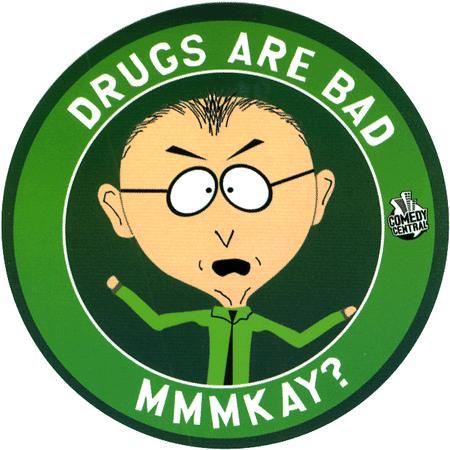
Eat, sleep, anth, repeat: It begins

Sunglasses in the darkness. White shorts, no shirt. Perspiration shining on his skin in the wild, flashing lights. A familiar-looking backpack on his shoulders, strapped over his muscular chest. I used to sell those backpacks. I worked at an outdoor gear store for a year and a half—tents, sleeping bags, hiking poles, boots. And Platypus backpacks. They come with water bladders and an attached tube that sits on your shoulder so you can stay hydrated while you’re hiking. “They’re amazing,” I used to tell customers, and I meant it. “You don’t have to keep stopping to get out your water bottle.”
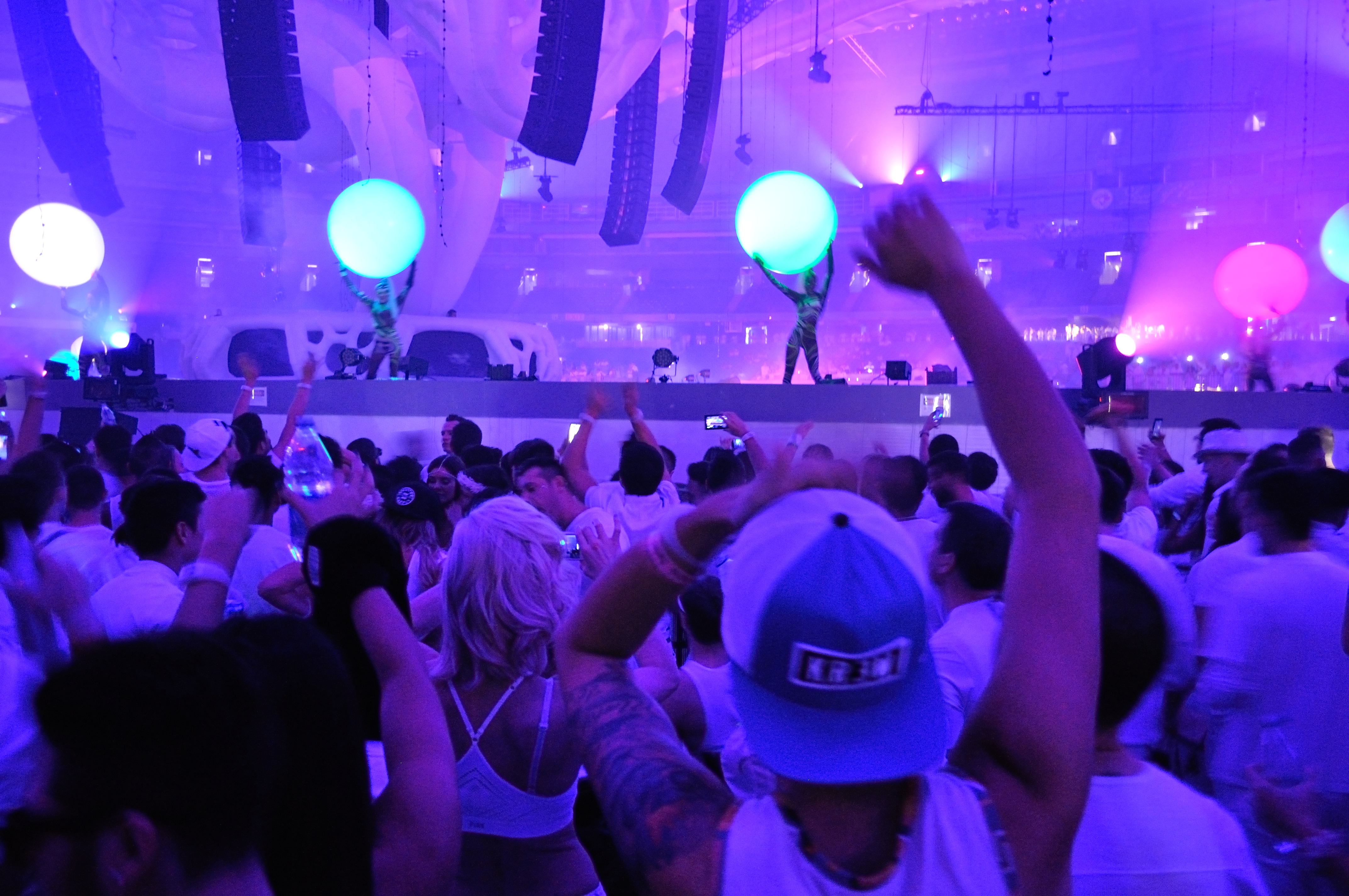
The dancing man in front of me took a sip from his pack. “Check it out,” I grabbed my partner and pointed. His eyes widened. He was as delighted as I was. “A Platypus?” We both looked at the water bottles we were holding. Six bucks and they throw away the cap so you can’t easily re-use the same one all night. You have to hold onto it while you dance. Big pain in the ass.

Baggi Begovic was rotating in a circle on the stage in front of us. My ears were drowning in “Call of the Wild”. The bright orange earplugs hidden by my mop of long, sweaty hair were doing a passable job at keeping out the highest amplitudes. But the bass was vibrating my bones. I fist-pumped up to the shirtless raver.

Bangarang.

Dancers come out to wave giant glowing balls around for some reason during Sensation in Toronto.

“That is amazing. So smart,” I yelled into his ear. He gave me a huge smile and a thumbs up.

“I know right?!” he yelled back. “I don’t get why everyone doesn’t do this!”

“How did you get it in here?” asked my partner as he joined us. They were searching everyone’s bags at the entrance to the Rogers Centre. Not that well, judging by the pupils of everyone around us. But they were more concerned about liquids, anyway. The event was sponsored by Bud Light. They only sell one kind of drug.

“Just walked right in,” said our new friend, like worrying about security’s sometimes overzealous zero-tolerance policy was naïve of us. “No big deal.” His joyous grin grew even wider as his movements rode the wave of sound washing over us. The beat dropped and he became a one-man riot.

Jackpot. This guy was a pro. My last-minute decision to go casually check out harm-reduction activities at a rave in Toronto was shaping up beautifully.

* * *

This summer I’m doing ethnographic field work and interviews for my Master’s on the subject of drug use, harm reduction and EDM (electronic dance music) culture in Toronto. Techniques that ravers use to minimize the potential harm stemming from drug use are varied and inconsistently applied. But they can be found everywhere, in sometimes subtle ways, embedded in behavioural quirks.

From what I’ve learned so far, there seems to be a hierarchy of harm-reduction priorities for party drug users, personalized based on their individual cost-benefit calculation, the norms perpetuated by the people around them, their access to accurate information, and which drugs they use. Since, when it comes to MDMA (and its cathinone variants), dehydration is the main enemy—an equal-opportunity destroyer of one’s precious verticality—water is the key to success. Water is the source of all solutions to the most dangerous potential disasters that lurk behind every too-strong dose. MDMA raises your body temperature on its own while simultaneously making you want to do things to worsen the impact even more, such as dance for hours without a break. At some point, we’re not sure if it was before or after a few sad and media-hystericalized cases of deaths from dilutional hyponatremia (water poisoning), someone figured out that H2O alone wasn’t enough. And as fast as you can say, “Look at those marathoners, do as they do!”—electrolytes got thrown in the mix. Later came vitamin supplements, testing kits, tums, magnesium, 5-HTP, pre- and post-loading, a haphazard mix of urban legends, old wives’ tales and scientific research. Everyone’s trying to make life easier for the noble raver. But let’s not get too crazy. Just getting these adorable bug-eyed dance machines to drink enough water is step one. It’s still the holy grail of MDMA safe practice in the land of harm reduction advocates.

And here, at my first preliminary outing, was a man who was beautifully exemplifying that practice. His scant clothing ensured that he kept as cool as possible. His sunglasses protected him from both the intense laser lights and the scrutinizing gaze of police officers at the event. And having a constant source of water allowed him to stay hydrated and keep dancing for however long he was there at this eight-hour-long event. These techniques to mitigate the negative effects that the drugs he was on (he told me later, MDMA and “a few bumps” of cocaine) could cause was not only about about minimizing harm, but about not letting anything stand in the way of dancing more, dancing harder, and dancing longer.

* * *

Note: These are experiences and reflections based on my current field work. Real names and specifically identifying features have been changed. My ideas and conclusions are quite possibly totally wrong, so I happily invite you to comment and change my perspective. 


If you like my writing, please consider supporting me on Patreon, or sending some diapers for my baby from my Amazon list 🙂 I’m a low-income grad student and new mom trying to fight against the devastation of the Drug War—every little bit helps.

Find me on Twitter ranting about drug policy, criminal justice reform, anti-capitalism, psychedelics and anthropology: @HilaryAgro