Can you be a parent and an activist?

I am consumed by a difficult realization I’ve come to lately.

The care my children need to be as protected as possible under the conditions of capitalism outstrips my ability to provide it while also doing activism.

It’s hard to admit, but I didn’t put very much thought, before having kids, into how much doing so might take away from the activism that’s been the bedrock of my life for over a decade. Attempting to maintain the same level of productivity in my work and organizing while parenting two small children has so impacted my physical and mental health that I believe I have finally, just recently, hit extreme burnout.

My body aches at all times. My hips are in pain, possibly due to the double C-section scar that I have not given myself the time to properly heal, because who has time for that when there’s an overdose crisis and people are dying? My teeth grind at night, possibly because I have not let myself access the amount of rest I’d need to relax my body, because who has time for that when there are multiple genocides happening? The pain in my back starts at a 4 every morning and ramps up to an 8 by the end of the day, because who has time to do yoga when the oceans are acidifying and the forests are burning and leftists can’t stop angrily venting their trauma at their fellow working-class people for long enough to build a movement that can turn this ship around?

I turn this physical pain into empathy, by thinking about the parents and other workers who secretly use opioids to deal with the pain thrust upon them by the demands of capitalist (re)production. I finally get, on an embodied level, why they do it. I wish more people would understand that drug use is a rational response to a violent society, because if they did, we might stop throwing people who use drugs in prison and taking away their children. My pain turns into wisdom, and I feel compelled to share this wisdom with others, so I do. It feels so urgent. A more pressing demand than taking twenty minutes out of my day to massage my C-section scar and do physiotherapy for my diastasis recti. So the pain lingers in my body, like a poison made of urgency, of the screams of dying Palestinians and old growth forests.

I do not believe that parenting on its own is enough of a contribution to building a better world, as many people say it is. Just “raising the next generation with good values” is not enough when our land, air and water are under such dire, immediate threat that by the time my children are adults, they may not have anything left to survive with. The problems are too urgent for parents to do nothing but raise our children well. But how much labour is enough?

I made my decision to have kids before knowing that a dangerous virus would be threatening us for years on end. Before knowing how little I would be able to rely on the Canadian medical system, or any other system, or even my own community members, to protect us. I feel naive, but I see people still making the (to me, at the moment, somewhat baffling) decision to have children, so it would seem that either the gravity of the threats facing children right now are not actully as severe as they seem to be from my ostensibly well-informed perspective, or most people, even leftists, are in denial about the dangers and the weight of responsibility that comes with bringing children into the current world. Or perhaps, as a neurodivergent person in trauma recovery whose disabilities did not become so acutely obvious and pressing until after I had kids, I am simply far less equipped than most people to handle the stresses of parenting. But I’m not sure I’m so unique, as our society is disabling and trauma-creating on a scale wider than most people realize.

To keep my kids truly safe, I would need to join their school’s PTA and devote all my time to ensuring quality air filtration in their classrooms. I would need to spend the few spoons I have on teaching them to wear masks in indoor public spaces and convincing them to keep doing it, every day, even when it’s uncomfortable, even when no one else is doing it.

I would need to teach them how to garden, to build their connection to the land so they become naturalized citizens of this place, and learn to care for the land that cares for us, as well as survival skills for what may come.

I would need to prepare weekly activities that make them into good neighbours and citizens. Writing thank-you cards, preparing gifts for their friends, baking cookies to bring to parties.

I would need to expose them to Mother Earth, creatively teach them to understand and love trees so their ability to see and appreciate nature doesn’t wither under the ten-tonne weight of the cartoons and superheroes vying for their attention and filling their brains with cravings for plastic toys and refined sugar.

I have been doing some of this already. But the parts I’m able to do are already more than I have the capacity for. So where, in all of this, is there time to organize my community? How can I attend socialist meetings with an energetic three-year-old? How much of my limited supply of energy can I give to exposing myself to enough information about the various ongoing genocides that I am able to take action to stop them, without becoming incapacitated for the evening when my third labour shift of the day starts? How can I do all of this while also finishing my PhD, taking care of my relationships, and maintaining my physical and emotional health?

These are questions I have been struggling with, with no good answers. I am not currently striking a balance. Maybe when they’re older, I can more easily involve them in organizing activities. Does that mean that while they’re 3 and 5, I can take a full break from all of it? When do I start up again? Which aspects of my caregiving or my community organizing can I sacrifice?

Caring for two small children on my own, which I often do these days, means the built-in stress levels of my day-to-day are high. It requires large amounts of patience, recovery time, and practicing emotional regulation skills to parent with only sporadic community and family support. It’s easy to say “cook with your kids,” it’s harder to put that task into practice when half of your time and attention is spent intervening in messes, breaking up fights, rushing a toddler to the bathroom, and attempting to give two children 100% of your attention when at most they can each have 50%. In the evening, you have to try to do all of this while you’re already exhausted from a full day of labour, and facing down another endless bedtime (my 3-year-old Mila does not, and seemingly cannot, fall asleep until 10 pm).

And all the while, underneath, there is the gnawing tension of the knowledge that good participatory habits must be fostered early—if you wait until your kids are old enough that they’re better able to stir soup without spilling it or carry a carton of eggs without dropping it, by then they won’t want to cook with you at all, because the early flames of their desire to will have died out, tamped down by their cargivers’ exhausted impatience and redirected towards toys and screens.

Children can sense the neglect inherent to the nuclear family arrangement, and it upsets them. They need so much more than one or two caregivers can provide. My 5-year-old Eva is increasingly frustrated with my inability to read to her for as long as she would like because of the demands and interruptions of her younger sister. Meanwhile, Mila is the most extroverted human being I have ever met (you think I’m exaggerating, but I’m not) and is the easiest kid in the world if many people are around for her to interact with, but if you’re on your own with her, you do not get a break. I don’t have the energy or time for much creative play because I’m so busy meeting their basic needs and teaching them functional skills, and most of the time there are no other kids around to meet their very high need for play. It’s wonderful when they play with each other, but more often than not it ends in tears and rage as I cannot supervise closely enough to make sure Mila doesn’t grab Eva’s toys while I’m making their breakfast. Humans were not meant to live in isolation like this. It’s simply not possible to give children everything they need under these circumstances, and that’s without adding the extra pressure to stave off environmental collapse.

I do have friends who help me out, and they are lifesavers. The tiniest act—playing with my kids, washing a few dishes—fills me with overwhelming gratitude. I have especially noticed that my comrades who are the most accomodating and helpful are the ones who are the most embedded in liberationist politics, which is beautiful and, I suppose, unsurprising. The ways in which liberation-minded people are trying to live our values and build the communities we want to see gives me hope (though it also comes with complicated feelings—I cried with equal parts relief and deep guilt when my Palestinian friend offered to come vacuum my apartment when my vaccum broke, at a time when her people were and are being genocided). But these are also friends I’ve made largely through my activism—what happens if I give that up for several months, or a year, or two? Will they still show up for me if I’m burnt out and unable to reciprocate any community work? I need so much because my children need so much, and there’s so little I can offer in return right now. How much can I rely on my already overworked and burnt out friends, most of whom are BIPOC, queer, and/or disabled?

I can see, like I’m Neo at the end of the Matrix, exactly how all of these pressures create the desire to make more money. Money can solve many (though not all) of these problems, so buckling down and focusing on securing income for your own family feels like the only option. And once you do that, you’re hooked—the desire to make money in order to feel safe and afford the supports you need becomes its own self-sustaining capitalist illness. There but for the grace of my own neurodivergent stubbornness, and years of exposure to anarcho-communist principles and Indigenous ontologies, go I.

What to do, then? My bones are creaking. My mind is consumed with grief for the state of our world. It’s too much. I have recently decided to take a medical leave from my PhD to focus on getting my health back in order. I’ll be putting a pause on most of my activism as well, which will be the hardest part. But something has to change. I love myself, my kids and my comrades too much to not try to find balance. I cannot tell others that this is a marathon not a sprint, take care of yourself and all that, and not follow my own advice. I am going to reset, spend time with trees, and figure out what a sustainable work/life/activism balance looks like for me now.

Most parents in your community don’t have the ability to do this. They are drowning.

I know that many people, given how empathetic and kind my audience generally is, will want to soothe and reassure me that I’m doing the best I can. You may want to offer tips to improve my situation. I do appreciate and welcome this, but what would truly make me feel better would be if you commit to helping your comrades who have children, and talk about it publicly. You really can’t imagine how much stress they’re under. We have so normalized the idea that parenting is naturally exhausting, many parents don’t even realize that they should not have to suffer like this. Child care is mutual aid, and one of its most neglected and essential forms. I would probably cite Silvia Federici or Sophie Lewis here if any of their books existed on audiobook so I could read them, lol.

So, what can you do? Here are some suggestions:

  • It’s hard to get kids out the door to go to things, so go visit your friends with kids. Ask what help they need, and if they’re unsure, the kitchen or bathroom is a great place to start. Bring food.
  • The best thing for the whole family is playing with the kids themselves, as you can give parents a break while simultaneously providing something that kids badly need, which is socialization with people beyond their primary caregivers.
  • Many of us parents fall into the instinct to zone out on our phones when we get a second of reprieve. If you’re offering to take care of the kids for a bit, gently ask your friend to think about what they might want to use that time for. If it’s zoning out on their phone, that’s fine, but just a little orienting question to help them be intentional about it will help, and it may make them more likely to do something more restorative with their time.
  • Offer not only to go on outings with your friends and their kids, but offer to meet them at their place first to help get the kids out the door.
  • Hang out with your parent friends while they’re in the park so you can chat while they kids run around the playground. Host gatherings in kid-friendly spaces.
  • Talk to others in your leftist organization(s) about accomodations for parents. Can you provide engaged child care at meetings? Can you help parents get to meetings? If your group is small, can you commit to meeting at the homes of people with kids, if they’d prefer that? Can you bring snacks/food to family-friendly actions, and state that on social media so parents know they don’t have to do the added labour of packing snacks?
  • Wear masks in indoor public settings. Fight for better air filtration in these same settings, or bring your own air filters to events/gatherings. Open all the windows.

Thank you, beloveds, for reading all of this, and for thinking about what I’ve offered here. Please share this post on social media so it can start discussions about these issues. Do you have similar experiences or insights to share? Am I the only one going through this?

One thing, though–note that if your instinct when you share this is to talk about how all of this is why you decided not to have kids, that’s fine, but please temper it with a stated commitment to helping other peoples’ children survive, as it can otherwise come off as dismissing these common concerns as the fault of individual parents’ decisions to have kids, when doing so is the most normal impulse in existence and shouldn’t be shamed. If we want to build a better world, we need to support parents, as they are the primary caretakers of the next generation that will help us survive in old age, and will pass on our teachings. More than anything, because children deserve so much more love and care than they are being given under the current conditions. You do too. We all do.

Hilary Agro is a community organizer, low-income PhD student & mother of two young children. If you appreciate the labour that went into this article, consider sending me and my kids some masks, HEPA filters, diapers or books, or just a cash tip

How to convince people that drugs need to be legalized: a guide for getting skeptics on board.

I’ve developed a really nerdy, but kickass, superpower. Give me twenty minutes of one-on-one conversation time with a person, any person, and they will come out of that conversation convinced that illicit drugs—not even just weed, but the ‘bad’ ones like cocaine and meth too—must be decriminalized. Give me forty minutes with them, and they’ll be down for full legalization. It doesn’t matter what opinions they had about drugs going into the conversation. I can get them on board.

This is a skill I’ve developed over the last five years of dedicated research on drug use and drug policy (on top of 15 or so years of, let’s say, thinking about drugs differently than your average person). This isn’t because I’m the worlds greatest rhetorician, or because I’m generally good at debating, although practice has helped a lot. It’s because legalization just makes sense. It’s because the War on Drugs is a spectacular failure. It’s because the time is ripe. People are ready. The normies, the squares, the teetotalers, the smokers-and-drinkers, the legal drug users, the potheads who claim cannabis cures cancer but hypocritically shit-talk other illicit drugs—they are all teed up and waiting to be putted into the hole of drug policy pragmatism with the right arguments, even by someone who sucks at sports metaphors but uses them anyway.

11012449_10153502860849245_3423341969182463811_nThey’ve been primed by The Wire and articles about MAPS research and (at least for the young ones) their own experiences with MDMA and weed not living up to the propaganda telling them ‘one toke and you’ll die.’ OxyContin has shown that legal drugs can addict and kill, and fentanyl has shown that illegal drugs’ purity is at the mercy of the unregulated black market. Overdoses kill more people than car crashes now in North America. Over a thousand people died of opiate overdoses in Vancouver last year alone. Shit is getting real, and drug prohibition is not helping. It’s at the heart of almost all of the problems.
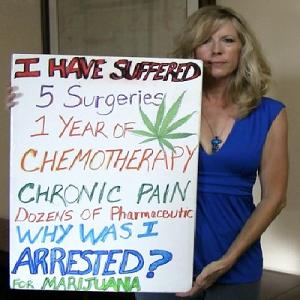
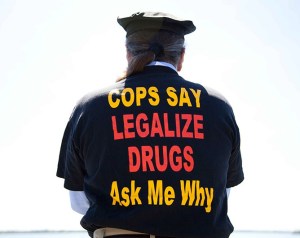
People have heard about Portugal’s success with decriminalization. They’ve heard about the U.S. for-profit prison industrial complex that is fed by the War on Drugs, and they may have even connected the dots to police brutality and the school-to-prison pipeline for Black men. Odds are they don’t know about historical trajectories like the 13th Amendment in the U.S. or the racist origins of the first drug laws in Canada (which were opium laws used to oppress and terrorize Chinese labourers), but still. They’ve heard whispers of these topics, fragments of the yelling drug activists have been doing for decades finally getting amplified by social media, breaking the segregation of this information from the general public. And they can see with their own eyes how badly the War on Drugs has been lost. Drugs are winning, and they know it.

Still, completely legalizing drugs is a cognitive stretch for most non-users. It seems too radical. They don’t all see firsthand what prohibition is doing to drug users and to marginalized communities. Even those who do often still fail to see the structural forces at work, and end up falling into the ‘personal responsibility’ trap. They frown and balk as their affective instincts kick in, deep in the body, before their brain catches up to justify the feeling. Completely changing some of our most entrenched laws? That can’t possibly be the answer. They often instinctively defend the status quo just because, well, this is the way things are, so surely there must be a point to these laws—surely we haven’t fucked things up so incredibly badly as a society that we need to overhaul our entire approach to drugs?

Uh. Cough. Yeah, actually. We have. And we do.

So I’m here to help you get these people on board. Because, and this is the important part—we need these people. We can’t win this fight alone. Marriage equality didn’t happen until straight people marched alongside queer folks. People of colour will keep being subjected to oppression until white people get off their asses and form blockades. Feminism needs men taking Gender Studies classes and talking to their bros about catcalling and emotional labour. Movements don’t succeed until people who aren’t directly affected by the civil rights being demanded are on board, and this means that non-drug-users need to demand legalization from their politicians for the latter cowards to feel that it’s a politically safe move to make. The most important thing you can do to help change drug policy is to have a conversation about it with someone who currently thinks we should keep putting drug users and dealers in prison.

So, below are some tips on how to have those conversations successfully. It’s hard work, and it’s emotional work. People can be extremely heartless about the plight of human beings they think they can’t relate to. But you know what’s harder? Being in fucking prison, or losing your son in a cartel shootout, or being physically dependent on a drug that could kill you at any moment if it’s contaminated. So yes, it’s incredibly frustrating to hear someone coldly say that drug overdoses are Darwin at work—but swallow that anger, and do it for all of those people.growtheeconomy

Remember, too, that changes in opinion sometimes happen after the conversation is over and they’ve had a chance to think a bit. They may not seem to have budged while you were talking to them, but as long as you kept your cool and didn’t insult them personally, some of the things you shared will likely get through. You just might not get the joy of watching it happen, but no one ever said this work would be easy or immediately fulfilling. We’re playing the long game here.

How to convince people that the War on Drugs sucks and we need to legalize everything:

  • Ask them questions. The idea isn’t to tell them how to think, it’s to guide them towards figuring it out for themselves. The argument really makes itself, it’s so obvious. Asking them questions also engages with them and shows an interest in their thoughts, instead of just lecturing or talking at them.
    • “Do you think that prohibition is working to stop people from using drugs?” This is the most important question, because their answer will determine how you proceed. Sometimes even just asking the question does half the work; a lot of people just haven’t thought about it that way yet. If they admit that it’s not working, then you can start talking about alternatives. If they think it is working, then your job is to introduce them to reality: it’s not.
    • “Why do you think alcohol is legal but other drugs aren’t?”
    • “Does putting dealers in jail stop people from accessing drugs?”
  • Remember that this isn’t an argument about whether or not people should do drugs. It’s about getting the person to pragmatically accept that we will never be able to stop people from doing drugs. Once they accept that, then it’s a natural next step to get them to realize that prohibition, therefore, will literally never work.
  • Keep the focus on whether prohibition is working. Talking about whether illegal drugs are good or bad is not actually relevant to whether or not prohibition is good or bad, and can be distracting if they have zero experience with any drug except alcohol. Convincing them that many currently illegal drugs are not actually harmful is a bonus, but you don’t necessarily need to do that in order to focus on the fact that prohibition is what makes most illegal drugs dangerous in the first place, and is causing more human suffering through the prison system and the militarized, global War on Drugs than drug use itself ever could.
  • Still, though: ask them if they’ve heard of the medical studies being done on the benefits of MDMA and psychedelics, and if not, share the good news. Especially don’t forget to mention that these studies are helping veterans with PTSD, survivors of child abuse, and terminal cancer patients—people who are hard to dismiss as burnouts. Then ask why they think these drugs aren’t legal while cigarettes are.canada-america-poll-angus-reid-marijuana-legalization
  • Ask them if they think that getting addicts medical treatment and therapy would work better than arresting them and putting them in jail.
  • “Well okay, I think marijuana should be legal, but not harder stuff.” Ohhh, I love this old chestnut. See the above question. Try also asking them if they think prohibition is preventing people from accessing those “harder” drugs. You can also poke them on the definition of “hard” drugs versus “soft” ones. This might be a good time to talk about the negative effects of alcohol, which is legal and should be, and compare them to something like MDMA.
  • Demeanour is key! Be respectful and kind, and always ask questions with an air of gentle curiosity, not like you’re about to trap them in their own hypocritical stupidity (even when you are). They’re not bad people, even the jerks who think addicts deserve their overdose deaths—they’re just very misinformed. Dehumanizing anti-drug propaganda has done its job, and that sucks, but getting mad at a person for being ignorant isn’t going to help. If you find yourself wanting to swear at them for being a cruel moron, and you don’t think you can engage with them calmly anymore,  just stop and leave the conversation. Giving in to your anger and calling them an idiot might feel good, and you might be totally justified, but it is not helping in the long run. Do better.
  • Ask them if they think the government should be telling people what they can and can’t put in their bodies, and using physical force to enforce those dictates. Libertarians respond pretty well to this one, and feminists should too.
  • Ask them if they think that people who finish their sentences and come out of prison and back into society—as almost all prisoners who are jailed for drug offenses do—are more or less likely to be involved with drugs afterwards. Note that prison traumatizes people, and trauma often leads to drug abuse. Note also that having a criminal record makes finding legal employment more difficult, which makes it harder to avoid the drug trade as a means of subsistence.
  • If you’re talking with an incrementalist—someone who is turned off by the idea of rapid or drastic social change—first focus on decriminalization: let’s at least stop putting drug users in jail, because clearly that doesn’t help anything. cops-say-legalize
  • Next, see if you can get them to agree that we will never fully eradicate drug use in our society. Then, shift it towards legalization with arguments around how, that being the case, we are currently allowing cartels and diffuse groups of individuals to control the entire illicit drug supply, completely unregulated. We, as a society, are making that choice. We are choosing to let dealers, some (not all) of whom don’t care about the quality or safety of their drugs, control the drug supply. We’re letting them do that by not regulating the drugs ourselves. It’s a choice. Legalization is the other choice we can make.
  • Some points you can use:
    • Drugs are purer, stronger, cheaper, and more accessible today than they were when the Drug War was started by Nixon. So, uh… Yeah, the current approach is clearly not working.
    • In response to, “we’re just not hitting the dealers hard enough, or being tough enough with our borders”: We can’t even keep drugs out of prisons, the most heavily controlled and policed environments on earth. Why do we think heavier policing is going to work anywhere else?
    • Most opioid addicts get addicted initially through legal prescriptions. Drug addiction is a health issue, not a criminal issue.
  • In this fucked-up era, not only do facts not really mean anything anymore, words often don’t either. But that’s okay. (It’s actually not but whatever.) The facts are on your side anyway, so you can try using them. It might work. But what you really want to do is get the other person to feel something. To empathize with drug users, drug addicts, and their families. To understand how our drug laws are used to systematically oppress people of colour, and get angry about it. This is often the hardest part, because illicit drug users have been strategically dehumanized and stigmatized for decades, and that dehumanization runs deep. It can be helpful to talk about all the “regular” people who do drugs, as a way of showing that drug users are people too, and addiction can happen to anyone. (This tactic is problematic for other reasons, but in the short term, it’s still useful.) Some examples: Steve Jobs and LSD, indigenous South American communities and ayahuasca, literally everyone and weed, Freud and cocaine, blue collar labourers and opioids for pain. You can point them to the entire Master’s thesis that I wrote about regular, hardworking people—doctors, social workers, teachers—who use all sorts of illicit drugs and are completely fine (and in most cases, better off because of it).
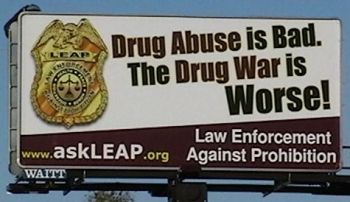
  • If you’re a person who uses illicit drugs from time to time, and you’re feeling really bold, and the person you’re talking to knows you—come out of the closet as a drug user. If they already respect you, it’s the most effective way to change someone’s perception of all drug users as homeless or addicted or whatever other discriminatory way they view human beings who make different recreational choices from them.leap_billboard_350
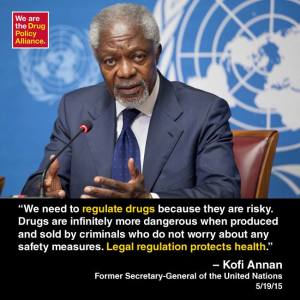
  • If you’re Canadian, British or from another country with socialized medicine, you have a huge advantage! (Americans, I’m really sorry. I feel deeply for you, for real. Keep fighting for single payer.) Because our countries have decided that all people deserve medical treatment, that means we’ve socialized the costs of said treatment. Which means we don’t leave overdose victims to die, we try to save them. This costs huge amounts of money—more money than preventative care and treatment would cost—and when added to the costs of enforcing drug laws, it’s a crazy amount of money. And it’s all money we could be pouring into prevention and treatment (there’s Portugal again!). Furthermore, most of the overdoses that we’re sending ambulances and firemen to are a result of unregulated substances. No one dies because the alcohol they drink was unknowingly 100 times stronger than the person they bought it from said it was. This is because we regulate alcohol. If we did the same thing for opioids, fentanyl wouldn’t be such a problem, and we wouldn’t be spending nearly as much money on overdose response. (Note: If the person believes that we should stop helping overdose victims at all because it’s their fault: first, take a breath and try not to call them a sociopath. Try to steer them towards a more practical acceptance of the fact that with socialized medicine, we are going to help people regardless of how the person got hurt. That’s just how it is, and how it should be in any half-decent society. If they want to privatize medicine that’s a different conversation, but as things stand, the costs are a reality.)
  • Guns are literally designed specifically to kill things, but we still let people have them. We just train them first. So ask them if making guns illegal would work better than our current system of regulating them. (This argument probably only works outside of the U.S.)
  • People hurt themselves and others with cars, so our response as a society is to regulate when, how and under what conditions people can drive. Doesn’t this make more sense than banning something that many people enjoy and use?

Most people just don’t think about drug policy enough to have an informed opinion on it. They rely on instinct and the status quo without even knowing why. Be the person who informs them. And be proud of doing this hard work.

Please share this article with anyone you know who could benefit from it!

Any other tips to share for talking with people about drug policy? Please leave them in the comments! Anything else to add or correct? Let me know! (I wrote this while tired and drained and trying to proactively distract myself from all the hurricanes and forest fires and Nazis with something productive, and will be working to continually fine-tune and improve it over the coming weeks.)


If you like my writing, please consider supporting me on Patreon, or sending some diapers for my baby from my Amazon list 🙂 I’m a low-income grad student and new mom trying to fight against the devastation of the Drug War–every little bit helps.

Find me on Twitter ranting about drug policy, criminal justice reform, anti-capitalism, psychedelics and anthropology: @HilaryAgro

Why abstinence-only drug education doesn’t work—in fact, it backfires spectacularly.

I talked to a lot of middle-class recreational drug users for my research. None of them had any idea when they were younger that they’d end up dropping acid on a regular basis when they became successful adults. Very few of them grew up in explicitly drug-positive environments, or even around healthy drug using behaviours. Some, in fact, experienced trauma caused by family alcoholism. (One person, Brad, who did grow up with parents who used recreational drugs, actually ended up adopting a teetotalling stance until age 30 as his form of rebellion1: “My parents were really disappointed. They genuinely were like, ‘Brad we’re really worried about you, you’re not gonna try drugs?'”)

Everyone I talked to remembered being taught anti-drug messages in school, and many were staunchly against drug use themselves as teenagers and young adults.

Dave: I had basically not even smoked weed at that point in my life. The only thing I’d ever done was drink alcohol. I was like, OK, I’ll have a drink, but like, I will not do drugs. I’m not going to throw my life away.

Adam: I was one of those people who years ago, I would have told you, no, I would never do those drugs, drugs are bad, drugs kill people.

So why, then, did they change their minds and start experimenting with consciousness alteration?

2016-03-20 20.37.00

Everything is fair game for an anthropologist’s office. You should see my hilarious collection of Far Side comics.

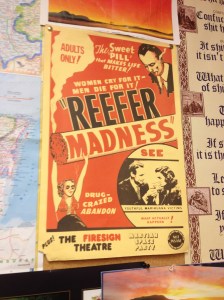
There was a really interesting pattern that came up in discussions of this topic. Without exception, every time I asked a person if they remembered anti-drug education in school, I would be met with the same reaction: a smile and a laugh. They would reminisce on how ridiculous scare tactics are as an educational strategy, chuckling as they remembered advertisements cracking brain-eggs into a frying pan or portraying the average drug user as a person with, as Ella put it, “your teeth falling out, skin all scaly and whatnot”. (“I actually watch those ads on YouTube sometimes because I just think they’re funny,” said Mandy.) They really are pretty funny. I have a “Reefer Madness” poster in my office, partly as a reminder of the messed-up, racist origins of North American drug policy and how that “Danger Will Robinson” paradigm continues today, and partly because it’s hilarious. When drug users laugh at this kind of scare tactic, the laughter comes not only from the ironic awareness that anti-drug education clearly did not work for them, but from the knowledge of how incredibly sensationalized and counterproductive it is in general.

The funniest part is this: Often, drug users talk about how, after being bombarded by frightening images of the worst possible effects of drug use, those internalized messages would actually backfire and have the exact opposite effect of their intention when they ended up trying illegal drugs for the first time. When none of the doomsday predictions come true after their first few times, users are left questioning the accuracy of all of the narratives they’d been given about drugs—including important ones about actual potential dangers.

Eleanor: They do all these anti-drug campaigns, and then you like, smoke weed for the first time. And then you’re like, oh it wasn’t even bad, and you’re like, OK now they’re lying.

Ad-2

Because “You’ll probably dance a lot, hug all your friends and then maybe have a light headache in the morning” isn’t going to terrify the youth.

The only narratives about drug use offered in an educational context are negative and completely over-the-top. When these narratives fail to prevent use, they’re promptly rejected as incongruent with the actual, real experience of being high. A lot of people are underwhelmed, even, after all the drama and hype around illegal drugs. (Fun fact: Your odds of seeing flying purple elephants on a starter dose of magic mushrooms are pretty low.)

Bobby is a 30-year-old raver from Toronto with an impeccable memory and a sweet disposition. He told me about how, when he was just starting to explore the scene, the stigma he had associated with drug users due to educational scare tactics was challenged when he found out that a good friend of his used illegal drugs. This change in perspective in turn caused him to decide to try them himself.

Bobby: I thought about it for a while before I decided to actually do it. And really the main reason I did it was, my best friend at the time—who I went to high school with and spent most of my time around at that time—him and I started going out, he kind of pulled me into the club scene with him. And then, I didn’t even realize it at the time until after a few months, I somehow found out that he’d been doing ecstasy the whole time and I never even knew about it.

In coming to learn that, that’s when I realized, oh okay, maybe drugs aren’t so bad and evil like I was taught, you know. Like as a kid, that’s what we were all taught. I expected this big change in someone and they’d just turn into this person, you know, this evil person, and I didn’t see that, so I was actually kind of shocked and surprised, like really? I didn’t believe him, and he said ‘yeah, I’m on it right now’. And I said oh, okay, well, what does it feel like? And he started telling me more, and I guess gears started turning in my head, and I got curious about it.

And I did a bit of reading and stuff, you know, I Googled it, just to learn some more information, in order to make an informed decision, I guess. So then, yeah, on New Year’s I decided that would be the first time to do it, I waited long enough. So that was the first street drug that I took.

meth

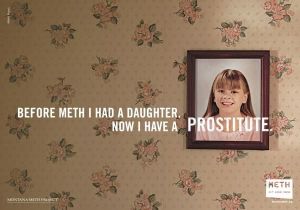
Drug negativity and sex negativity all in one fear-mongering package! Two stigmas for the price of one!

However, from I think age 14 or 15 I was medicated with Ritalin and then Concerta and then Dexedrine. So I guess I had already established some sort of ongoing drug usage.2

But then, what is there to replace those scary life-ruining narratives with? If they’re wrong about pot or ecstasy, what other lies have they told? What else is out there? Curious, bright-eyed little budding drug users are left with nothing to guide them except information from other users and their own personal experimentation. And that’s where problems start. Unchecked experimentation without informed guidelines and boundaries is the main source of bad drug experiences, especially when constrained by access only to unregulated substances (looking at you, prohibition. Man you are just the absolute worst).

Without being armed with any sort of accurate, balanced information about drugs, safe usage or harm reduction, inquisitive experimenters are left to find out for themselves about harms and benefits, relying on their peers and on their own process of trial-and-error to discover a more rounded picture of the world of psychoactive substances. And since not everyone knows about Erowid, you can imagine what kind of ridiculously preventable crap can happen when ‘figuring it out as you go along’ is how it’s done. “Oops, okay, so apparently you shouldn’t re-dose GHB if it’s been less than an hour since your first dose. Too bad I found that out the hard way, by puking on my friend’s shoes and passing out in the middle of a Bassnectar concert. Would have been nice to know beforehand.”

This trial-and-error is a process that often causes damages that could have been be easily avoided had they had access to balanced information about drugs in the first place, framed by a critical-thinking orientation and informed by attention paid to all aspects of drugs’ place in human life: good, bad and neutral. It also—this is where we get into the really controversial stuff—might be preventing a lot of people from experiencing significant benefits from some drugs, especially psychedelics and MDMA.

maxresdefault

Don’t do drugs, k gotcha. I can still get wasted on jager though, right? Alcohol’s not a drug.

Scare tactics might prevent some teenagers from trying psychoactive substances, but they leave those who do end up trying them woefully unprepared. Sound familiar? It’s because we’ve already accepted that abstinence-only education is a gigantic, steaming pile of failure when it comes to sex. Sex is an unavoidable part of life, teenagers included, despite what the puritans would like to believe. But guess what–today, right now, in our culture, drugs are an unavoidable part of life too. The odds are extremely good that you’re under the influence of a drug right now. My guess would be caffeine, especially if it’s morning when you’re reading this. Maybe it’s the evening, and you were sipping a glass of wine as you scrolled around Facebook and saw this post. Only you know what’s in your medicine cabinet. Drugs are such a normal part of life that we barely even remember the fact that most of us take them all the time.

Ignoring this fact is either a significant oversight in health education, or a conscious choice to leave those dirty, deviant experimenters who are curious about drugs to fend for themselves. This might make sense, in some cold, heartless neoliberal way, if human beings didn’t have a pretty clear universal desire to both alter our consciousness and experience pleasure. Either we find a way to get rid of that desire (HAH), or we need to acknowledge reality and have a conversation about what to do next.

“The reluctance to acknowledge research findings which show that experimental drug use is a normal part of adolescent development and that it may in fact improve psychological health, prevents genuine reform of abstinence-based drug education” (Keane 2003:229).

Is it time for education based on moderation and information, then, instead of prohibition and abstinence? This is the stance that public education in Canada takes on sex education, and we know it works far better than abstinence-only education. The idea of allowing young people to make their own, even informed, choices about their bodies is one that doesn’t sit well with many policymakers or parents. It makes them grimace and squirm and protest. However, the fact is that these choices are being made by young people regardless of the lack of information they have to making those choices with. The current strategy of leaving youth uninformed or even deliberately misinformed in the hopes that they abstain from drugs (many of which aren’t even harmful unless they’re consumed improperly) is, quite frankly, immoral.

Let’s treat teenagers with some respect, instead of thinking that lying to them is going to protect them from the world.

Please share this, or start a conversation, with anyone you know who is reasonable enough to accept that abstinence-only sex education doesn’t work, but might not have realized that about drug education too.


If you like my writing, please consider supporting me on Patreon, or sending some diapers for my baby from my Amazon list 🙂 I’m a low-income grad student and new mom trying to fight against the devastation of the Drug War—every little bit helps.

Find me on Twitter ranting about drug policy, criminal justice reform, anti-capitalism, psychedelics and anthropology: @HilaryAgro


1 A longer interview excerpt from that story, because it’s hilarious:

Brad: My parents were rock and rollers. My rebellion was spreadsheets, computers and math, and you know, getting a job.
Hilary: [Laughs]
Brad: I got a mortgage at 21, and I didn’t even have a beer until I was 30.
Hilary: Were your parents disappointed?
Brad: They were really disappointed. They genuinely were like, “Brad we’re really worried about you, you’re not gonna try drugs?”
Hilary: [Laughing] Seriously?
Brad: Yeah. And that’s because I was on the path to becoming a miserable square. Like, didn’t live. Didn’t party. Didn’t have fun. And that’s, I mean, I was a workaholic, through my twenties. That’s all I did. So I’m kind of going through my twenties now. Kind of backwards.

2 Note that Bobby’s last comment is a great example of the legal/illegal conflation of what is or is not considered a ‘drug’.