I am going to share a story with you. And then I am going to explain what was, for me, the most important part of my PhD research: what I have called psychedelic attachment theory. If you find it insightful, please share it with others, and help to support my work.
The below is an excerpt from Chapter 6 of my PhD dissertation, “Community medicine: Abolitionist worldbuilding among drug use liberation activists on Turtle Island.” The full dissertation is available by email request for students, academics and activists. For the public, I made it into a YouTube video, or you can purchase it here.
“The plants told us so”
The front of the medicine ceremony room was set up with instruments: drums, flutes, a harp, a handpan, a zither, shakers, singing bowls, chimes, charango guitar, an enormous gong. I found Elena, the main guide, to be somewhat intimidating. She is not warm and fuzzy, the way I realized I subconsciously expected her to be. She is kind, but I found her calm, straightforward, standoffish energy activating to my insecure, people-pleasing instincts. But she came highly recommended by two different people I trust deeply, so I trusted her. I felt embarrassed when I realized that I wanted her to like me.
Elena shared with us the highly labour-intensive process of preparing the medicine. She spoke about her relationship with the Indigenous teachers who showed her how to make it. She lived and studied with them full-time for a decade before beginning to guide others. She maintains an ongoing, reciprocal relationship to them still today.
“People ask my teachers, how did your people figure out how to make this medicine?” she said. The silence deepened as we listened. “They simply say, ‘the plants told us so.’”
Sage smoke hangs thick in the air, moving softly in the low light. Madre, the plant spirit, comes into us. Her arrival is an explosion of universal oneness in my body.
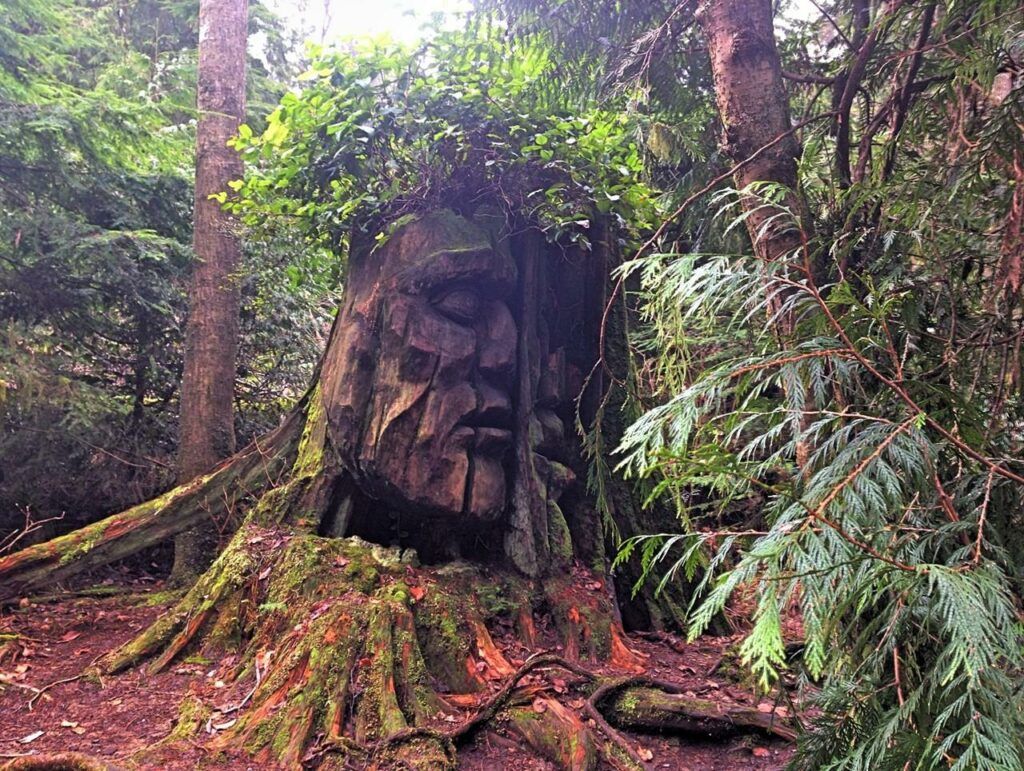
We journey. The icaros, the medicine songs, shift and change. Sometimes the guides are singing to the plant spirits, asking them to come help us, to cleanse us, to heal us. Sometimes they are singing about the sweet medicine, linda medicina. Sometimes they are prayers—to Grandmother Moon, to Grandfather Sun, to Madre, to water, to our mothers and grandmothers. They feel ancient. Soul music, passed down through how many hundreds or thousands of years, speaking to the connection between ourselves and the earth, a connection that is hanging by a thread, having been hacked at with steel swords and guns and greed like an old growth cedar. But it’s impossible to sever the connection entirely while we still exist as a species. We are of the earth, we need her. While we’re alive, the connection remains, because once it’s severed, we all die. We cannot eat steel. As the sound of the drums pulses through me, I linger on a memory of the words of John O’Donohue, Irish Celtic philosopher and poet:
“The first sound that every human hears is the sound of the mother’s heartbeat in the dark lake water of the womb. This is the reason for our ancient resonance with the drum as a musical instrument. The sound of the drum brings us consolation because it brings us back to that time when we were at one with the mother’s heartbeat. That was a time of complete belonging. No separation had yet opened; we were completely in unity with another person.” (O’Donohue 1997)
I feel like I’m being crushed by the sun. I am an animal when I am purging, no thoughts, no past, no future, only the present. Releasing blocks, releasing demons.
I grope around for my bucket. I can’t find it. “Have you seen my bucket?” I whisper to Joe, who is lying beside me. I’m handed a very heavy bucket, much heavier than I’d remembered. “Um, it’s our bucket now,” he says sheepishly through the dark. We both start giggling, then laughing, and are shushed by one of the guides.
I want to get back to the joyful, silly person I am when I’m thriving. I’ve been trapped in a dark storm of fear and resentment and frustration, chained in by my pain, by the ways I can see and feel systems of hierarchical power everywhere. Adding ethnographic training onto neurodivergent sensitivity was a hell of a life choice.
Suddenly, I am not thinking about pain—I am feeling it, with monstrous intensity. It’s like nothing I’ve ever experienced before. My whole body, wracked with it. Like my bones are being torn apart. I am writhing in my sleeping bag, I want to scream. Surrender to her, I think. The pain disappears, and all my molecules are scattered throughout the universe.
At one point, I sit bolt upright. I get on my hands and knees, shaking my body. I am moaning. Movement, I need movement. I’m always sitting, lying down, afraid, frozen, hiding, calcifying: the “disembodied subjugation” (Brunette-Debassige 2018:200) of colonial survival. I put my elbows to the floor and shake my hips like I’m in labour, the labour I never had the terrible, beautiful fortune of experiencing. Both my babies were C-section births. The doctors injected me with fentanyl for the operations, the same medicine others struggle to safely access to treat their own pain. So much violence is used to stop people from accessing pain relief.
I see death and destruction. Poison coursing through the whole world. The drive to accumulate more power and money, that most destructive of all addictions, is a sickness rooted in fear. It’s a sickness that’s covered the world, and it’s about to kill us all if we don’t heal and become a collective again. The collective includes nonhuman species, as well as more-than-human entities and spirits (Lutkajtis 2020; Williams et al. 2022). To decolonize is to rebuild relationality through practice, to understand and respect the role of each part of the spiritual and physical ecosystem in which we are embedded, including our own role as caretakers and stewards (Kimmerer 2013). Anthropologists are incredibly well-positioned to help with the work of knowledge translation between cultures with these traditions, and settler colonial cultures, yet as a whole we remain lost in a forest of Eurocentric theorizing (Todd 2016) and dissociative labour. Anthropologists know so many different ways of being human, we can speak to settlers, we have amassed a wealth of Indigenous knowledges (sometimes unethically, further behooving our duty to make amends)—we could be doulas for the birth of this new world, if we choose to be.
The storm I feel inside becomes visualized. Storms come with rain, and rain is what makes things grow—water is life (Estes 2024). Strong winds clear out older, weaker trees to make room for new growth. Stop fighting it and listen. Listen to your body. You were trained to ignore it, it’s time to listen.
At one point, Elena has us all sing. Our voices grow stronger as we find the rhythm, become the lyrics. The words etch themselves into my heart, carving the ethos on the tree of my soul: “Together, together, together, together. Together we go further, together we are one.”
* * *
In the morning, everyone shared gratitude to the group for each others’ stories and for co-creating the healing space, expressing how grateful they felt to be in a room where everyone could be open, honest and vulnerable. This vulnerability and reciprocal communal care emerged as an essential part of the healing process. Through it, the individual is contextualized as part of a gestalt, something larger, more humble, and more whole—more human.
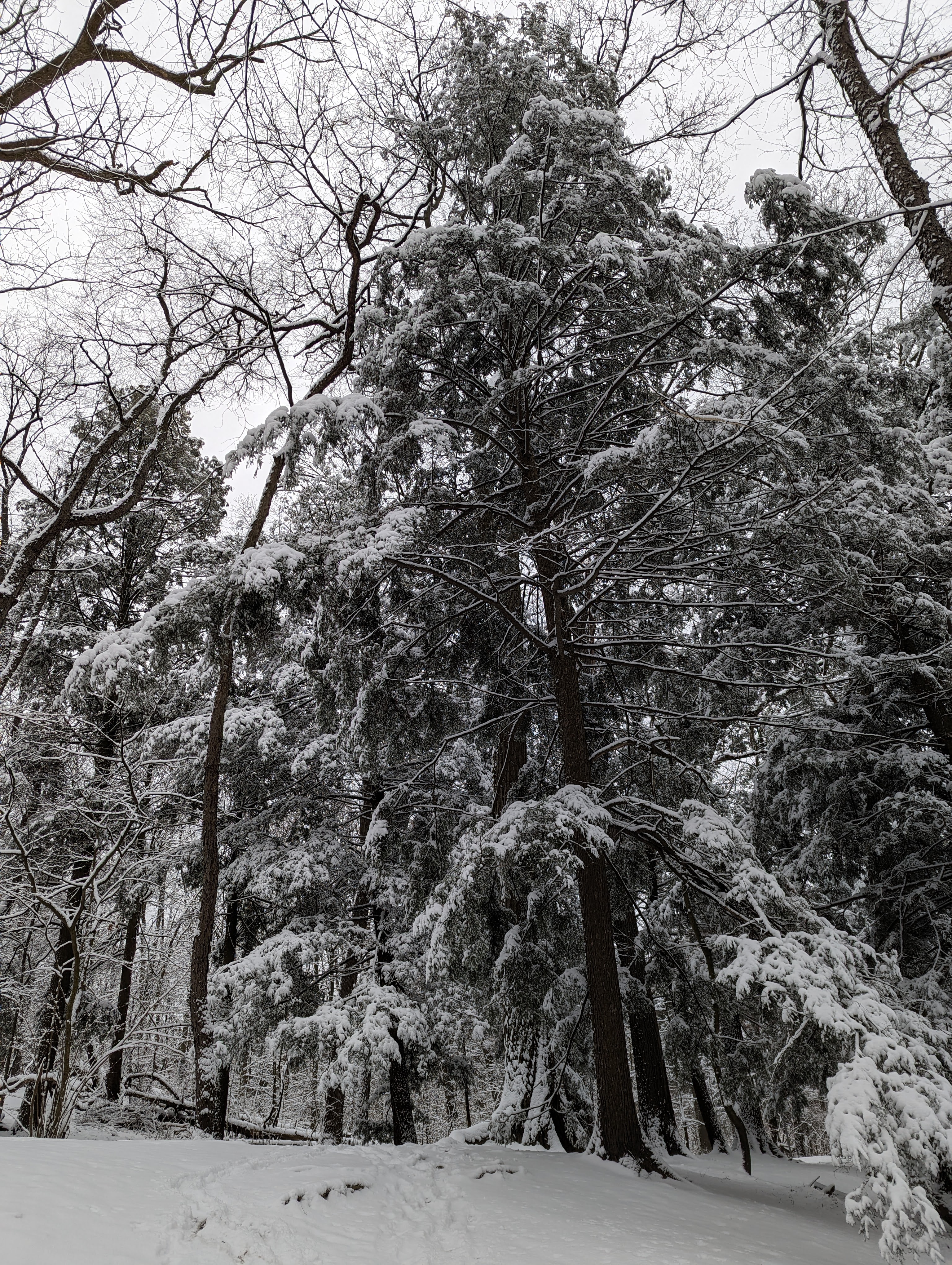
We closed the circle by singing one uniting note, and went to feast together. I spent the day napping, journalling, walking in the woods, and carefully avoiding my phone. I worried the long walk I took might leave my energy more drained for the evening’s work, but I felt rejuvenated by the snow, the trees, and the silence. I thought of Boris saying “silence is the medicine.” The affective porosity of the ceremony had allowed wisdom from him and everyone else to seep into my being.
Psychedelic attachment theory
We pack up to leave from the medicine retreat, sharing food and reflections and collectively helping to clean up the cabin. Thinking about relationality, in a moment of revelation, I suddenly understand so clearly why Elena is an excellent guide. The very same calm, standoffish—almost cold, if you’re insecure—demeanor that was so unexpected to me, is essential for an effective healing experience of this intensity. It’s not by accident that she maintains a respectful distance. There is deep healing work happening here in these ceremonies, and—to use a Western neuroscientific framing—psychedelics work on the brain in ways that create neural connections that do not exist naturally after childhood. They “reduce the stability and integrity of well-established brain networks … and simultaneously reduce the degree of separateness or segregation between them” (Carhart-Harris et al. 2016:4857). As such, Western scholars have suggested that the therapeutic value of psychedelics lies in “dismantling reinforced patterns of negative thought and behavior by breaking down the stable spatiotemporal patterns of brain activity on which they rest” (Carhart-Harris et al. 2014:14). Essentially, your brain is temporarily turned, functionally, into that of a child—open, curious, playful, vulnerable, a wide funnel for sensory input. The stories of psychedelic experiences that I collected often include descriptions of being in a child-like or even baby-like state. Psychedelics thus create an environment in the mind, body and spirit that can facilitate an incredible shortcut to healing, under the right conditions of intention, mindset, setting, dose, and guidance or co-journeying. “Ten years of therapy in a night,” is a common phrase people said about traditional plant medicine ceremonies during my fieldwork.
The other side of the coin, however, is that a person under the influence of psychedelic medicine is very vulnerable, and that can expose them to the potential for harm. Many people have been harmed within psychedelic therapy practices, especially when they are decontextualized from holistic ritual contexts, “not only by therapists, but also by the system that is failing to respond, much less account for their actions or assist those who have been abused” (Villeneuve and Prescott 2022). Despite whisper networks of women regularly sounding the alarms of abuse, harm has even happened within clinical research trials (Ross and Wright 2022), with those who have attempted to speak up about power dynamics and bad actors within the psychedelic movement being professionally and personally punished for it (Ross and Nickles 2021).
As unresolved trauma can interfere with the resilience, flexibility, and openness to interpersonal vulnerability so essential to movement-building, as well as the health, stability and well-being of activists, healing is a crucial component of this worldbuilding. This is the core of what I have termed psychedelic attachment theory. In self-aware contexts that are contained within holistic ritual, power imbalances between the guide and participant, the participant and nature/the spirit world, and the participant and their community, can be used to create a profound sense of healing when the vulnerable person is protected and cared for by the guide, spirits, and community throughout the entire experience (including the preparations and rituals before and after consumption of the medicine, such as the sharing circle), replicating the sense of safety that can be fostered through the parent-child relationship when the child is cared for. This is what I saw as a key part of healing within psychedelic contexts.[1] There is a power imbalance in the psychedelic guide/participant relationship, as the experience involves deep physical and emotional vulnerability. But in appropriately prepared and contextualized decolonial settings, that power imbalance is consented to ahead of time, contingent on attuned care, mitigated somewhat by the guide’s own participation in the vulnerable act of consumption and sharing, directed intentionally towards the goal of building healthy autonomy and relationality, and subject to community sanction if misused. In this environment, people with severe attachment trauma from experiences of violence and neglect find themselves opening up and being nurtured by the medicine, in an atmosphere of emotional, physical, and spiritual safety built and maintained by the guides. I spoke about this with the guide Dana:
To understand the increased vulnerability, for better or worse, of people who are under the influence of psychedelics, a brief overview of attachment theory—as a metaphor to aid understanding, not as a diagnostic tool—is helpful. Attachment theory is a framework developed within psychology which posits that early relationships with caregivers shape an individual’s emotional development and capacity for forming secure, stable relationships throughout life (O’Shaughnessy et al. 2023). Within this theory, different attachment styles are identified—secure, anxious, avoidant, and disorganized, with the latter three understood as insecure—which influence resilience and how people respond to intimacy, stress, and conflict. Secure attachments, formed through consistent and responsive caregiving from primary attachment figures, promote emotional resilience, while insecure attachments, formed through inconsistent, absent or abusive caregiving, can lead to trauma and difficulties in relationships and emotional self-regulation. Psychotherapist Jessica Fern (2020) expanded on this theory, challenging the disproportionate emphasis on parental figures (and romantic partners in adulthood) to create a “nested model of attachment and trauma” which includes attachment impacts at the levels of the home, local community and culture, society, and the global or collective, which is an important expansion towards politicizing the theory and resisting the neoliberal individualization tendencies of Western psychology.
Though, again, my use of attachment theory is not to make any judgements about its universal validity or specific therapeutic utility, it is a useful lens through which to communicate about and understand my ethnographic data and psychedelic healing experiences. That said: Within this theory, inherent to the attachment relationship in childhood is the vulnerability of being completely dependent for survival on one’s attachment figures. Especially in the normalized social context of the nuclear family, children are not able to leave attachment figures that are emotionally or physically neglectful or abusive, as they rely on the harmful figure for survival. This creates ‘disorganized attachment,’ where they simultaneously are drawn towards, and are afraid of, an attachment figure, with no way of reconciling this somatic contradiction (often leading to adaptations such as dissociation, fawning, or other survival strategies that involve denial of the embodied self). Similarly, when considering Fern’s nested model, dependence on a structure much larger and more powerful than oneself (such as carcerality, white supremacy, patriarchy, etc.), which is the only structural ‘home’ one knows, may be understood to create a type of ‘disorganized attachment’ in which one feels dependent on the very thing that is causing one harm. I suspect this may explain why it is so profoundly difficult to shake people out of prohibitionist or capitalist realism: attachment to the stability of and myths behind one’s social structures represents some amount of perceived safety, so challenges to those ideas are felt in the body as survival threats. As Jonathan Metzl (2019) has shown, some people are willingly ‘dying of whiteness,’ taking on bodily harm to avoid the terrifying foundational restructuring that divesting from attachment to racial resentments would require. Harm alone, even grievous capitalist harms in the form of denied coverage for cancer treatments, rising sea levels, police violence, mass shootings, etc., is not enough to cause a person to abandon a sinking ship—unless there is a life raft for them to swim to. In the face of this “kamikaze necropolitics” (Masco 2023:285), a life raft is exactly what abolitionist worldbuilders are trying to create.
H: It’s incredible, the amount of work that goes into creating that space of safety for people to be vulnerable.
Dana: Yeah, in any kind of healing work, creating a safe and trusted environment is key to having a successful outcome. You know, having your participant feel safe is one way to let one layer come down, so that other layers can be revealed, right? Because we have so many blocks in social situations that in order to get to the core of the matter, you have to be able to feel safe, to let go of a lot to get to that vulnerable place.
However, like with other positions of power such as parents and teachers, this safety and healing requires acknowledgement and understanding on the part of the guide of the power they hold in the relationship, and accounting for that by prioritizing the development of the person they hold power over towards autonomy, community membership, and relationality. In psychedelic healing contexts, facilitating the connection between the participant and the medicine itself—the plant spirit(s)—is crucial. By putting up boundaries, the self-aware guide keeps people focused on the work, the circle, the medicine, the songs, Madre, themselves, the whole experience—not on her. Otherwise, guides can easily take advantage of this power imbalance by emphasizing their own mystical power and leaning into the ‘guru’ potentiality. It could be intoxicating—perhaps even addictive—to have people relying on you, fawning over your glory instead of the earth’s, in tears with gratitude for your help. That kind of power, like any drug, could become its own object of desire. This may especially be the case for Western guides who have not grown up within holistic traditions and teachings that account for these attachment dangers—many ayahuasca and psilocybin mushroom traditions, for example, require abstinence from sexual activity for several days before and after ceremonies (Graham, Saucedo, and Politi 2023; Lutkajtis 2020); this would be a helpful buffer against attaching to a partner during a spiritually and emotionally vulnerable state of liminality. Amazonian shamans also “have to negotiate constantly in order to continue to be considered benevolent actors in the local social relations … Often they have no real power or more resources than anybody else in the community and when they do they are suspected of sorcery” (Fotiou 2016:163-164).
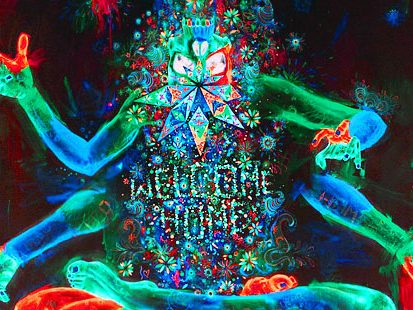
So while I expected Elena to be warm, welcoming, comforting, maternal—some strange, embarrassingly revealing combination of attachment wounds, hopes and assumptions on my part about what characteristics a highly-respected trauma healing guide might embody—a guide who carelessly (or, if their aims are malicious, intentionally) leans into those characteristics is also potentially more at risk of placing themselves in the way of psychedelic attachment healing that is dangerously powerful. This can happen by complete accident, be done purposefully in the misguided and egoistic but well-meaning belief that it’s helpful for healing work, or be done intentionally to facilitate abuse. If a person in a psychedelic ceremony ends up associating their healing with the guide instead of the plant spirits and the community, they risk attaching to the guide. Rather than feeling strength, security and confidence in their own inner self and their sacred embeddedness within the collective ecosystem, they can end up feeling like the guide, not the medicine and their own work, is the source of their healing and wholeness. This is especially risky for people with childhood attachment trauma who have never experienced a truly safe, caring parental figure. It creates a vulnerability that can, and has, led to forms of abuse, sometimes extreme (Ross and Wright 2022; Villeneuve and Prescott 2022).
I knew about some of the risks of unscrupulous guides and guidance practices before attending the ceremony in that snow-swept cabin—indeed, years ago, Katie was the first person to warn me about them. Which is why, along with many concerns about cultural appropriation (Fotiou 2016), I was so choosy about finding a guide. But not everyone has the contacts, the knowledge, or the time to be this careful. People are traumatized, and many are desperate to find relief. Psychedelic use has exploded, and along with it, so has commodification, monetization, grifting, exploitation, carelessness, and stripping away of Indigenous context and stewardship (Davies, Pace, and Devenot 2023; Devenot, Conner, and Doyle 2022; Fotiou 2016; Gearin and Devenot 2021; Lutkajtis 2020; Pace and Devenot 2021; Ross and Wright 2022; Villeneuve and Prescott 2022; Williams et al. 2022). This is an unsurprising, but heartbreaking and deeply frustrating, result of psychedelics re-entering the Western mainstream in an era of widespread trauma and hyper-capitalism. In response, “the inclusion of Indigenous Peoples in the propagation and cultivation of plant medicines is a moral imperative” (McCleave et al. 2024:944).
Beyond drugs: Community medicine
I never heard the word ‘drug’ used to refer to psychedelic medicine at any of the retreats that were guided using traditional Indigenous frameworks. And though my radar for psychedelic exceptionalism remains acute, after this first retreat, I understood this better. The word “medicine” does not refer only to the substance itself, but everything about the healing experience as a whole—the ceremony, the connection, the group, the rituals, the music, the songs, the spirits, the relationality, the guidance: it’s all medicine—community medicine.
Working with our inherent porosity by practicing vulnerability is necessary in order to create and shape atmospheres and affects to collectively change the matrix of domination, and psychedelics can turbo-charge collective healing when used in the right environment with the right guidance. Decolonized attachment trauma healing involves connecting to relationality by rebuilding an attachment to the self, to the body, to community, and to the earth. An explicit relationship between decolonization and healing has been seen in many Indigenous psychedelic traditions. Some anthropologists have argued that ayahuasca shamanism in the Amazon has changed to reflect an increased focus on healing in the post-colonial era, in response to the horrors of prolonged suffering from colonizers bent on Christian and rubber extraction (Fotiou 2016; Gow 1994). Iboga, a word deriving from the word boghaga in the Tsogo language meaning “to take care of” (Kohek et al. 2020), has similarly been entwined in the last few centuries since French colonization with cultural responses to West Africans’ “experience of placelessness, of being uprooted, and of being alien in their own land” (Fernandez and Fernandez 2001):
“In the colonial era Bwiti became a context of collective psychological resistance to the anomie and demoralization related to the strain on indigenous community and family institutions. Bwiti offered a dignified realm of spiritual endeavor, ‘the work of the ancestors’ and social cohesion.” (Alper, Lotsof, and Kaplan 2008:10)
Communal healing is thus a crucial component of worldbuilding in this era of Onslaught, and though it does not need to be facilitated with psychedelics, practices must be politicized and decolonized to be effective: engaging with traditional knowledges and medicine-keepers, working against hierarchy, having difficult conversations, experimenting and trying, acknowledging and accounting for power imbalances, fostering healthy autonomy and relationality rather than dependence, a deep engagement with consent—all practices of abolitionist worldbuilding.
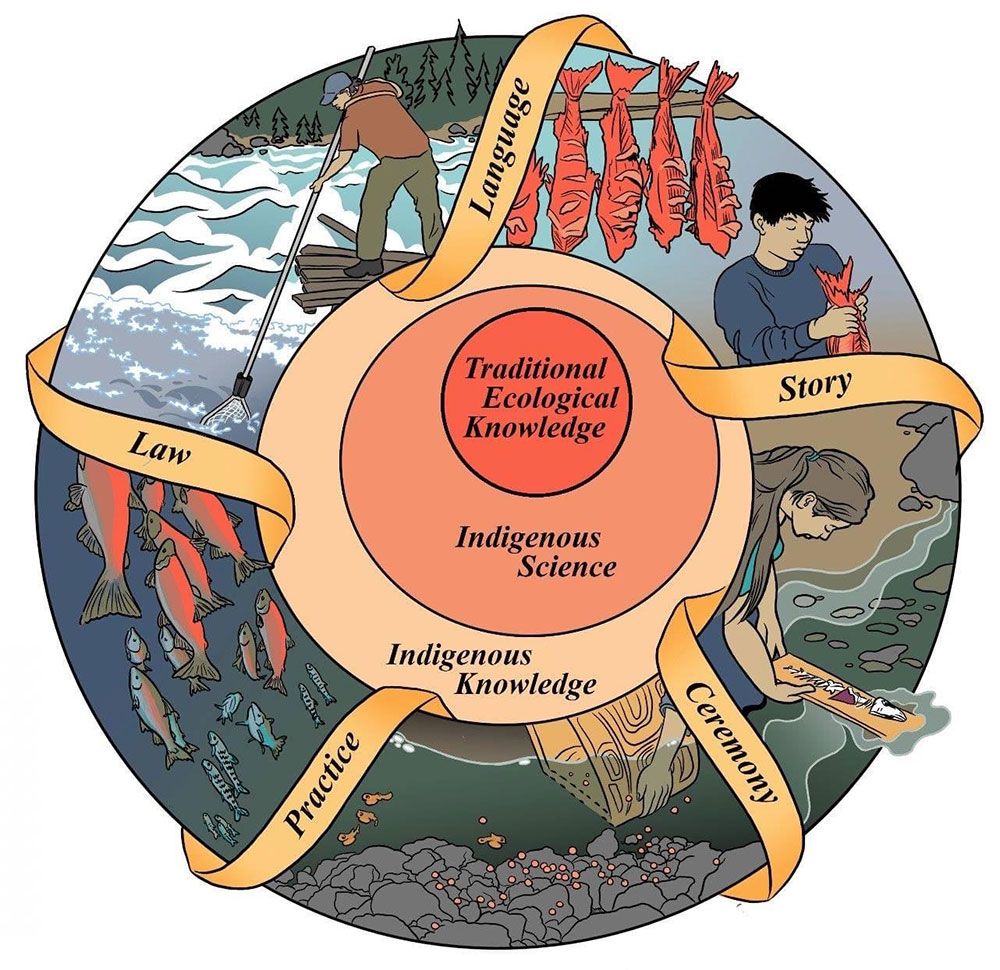
Just like humans, the process of healing is messy, and often incomplete. That is part of its beauty. The ritual, guidance, and communal healing involved in decommodified psychedelic use rooted in traditional wisdom can be seen as embodying a contained loss of control, in contrast with the disciplined pleasure of commodified drug use. The ‘container’ for the chaos, created through the rituals, allows for the porous dissolution of the self that is needed for relational healing. It is a testament to the power of these plant medicines that many people have benefited from them even when used outside of traditional or guided contexts, such as at raves and festivals (Agro 2016; Lehigh 2023). However, even non-traditional countercultural use is still usually embedded within cultural and often ritual context (Devenot et al. 2022), as forms of knowledge and practices are shared in communities of drug users and bolstered by particular practitioners in those groups who engage more deeply with writings, practices and teachings about the medicines; as well, raves and festivals involve collective trance states and the guidance of music (Hutson 2000; Jaimangal-Jones, Pritchard, and Morgan 2010). But as powerful as psychedelic medicines are, they cannot reshape society on their own. They cannot make your boss stop sexually harassing you, or keep strangers from calling you racist slurs, or bring your brother back from prison. How can we truly heal when the harm is ongoing?
The limits of individual healing
“When an individual or family in a healthy community experiences trauma, the community can hold the space for healing. But when the trauma happens to the whole community, who holds the space then?” (McCleave et al. 2024:941)
We are living in a constant state of besiegement by pandemics and genocides and overdose crises and lead and microplastics and sexual violence and failing health care systems and the commodification of everything sacred and the reactive lashings out of our panicky, terrified fellow humans: the Onslaught. Under these conditions, collective healing is complicated, but still possible. Childhood wounds can be made whole, stones turned to gold; we can gain incredible strength from community medicine through a connection to the earth and the embodied experience of feeling safe and accepted. Feeling that in one’s body even for a short time can change everything about what seems possible to a person, and how they relate to others, as it is how the fearful body can learn that safety can exist. This is a crucial part of the foundational worldbuilding work of imagining otherwise. But new wounds are constantly created by the day-to-day experience of Mother Earth’s gifts being stolen, commodified, and sold back to us (Kimmerer 2013); being forced to compete with others in order for our basic needs to be met; being alienated from each other; feeling constantly afraid of abandonment and harm if we don’t pay our rent on time or say the right things in our social group or placate people in power. We can feel in our bodies that something is deeply wrong.

However, the primary modes of healing we have access to in the West—the modes which are subsidized and sanctioned by settler colonial governments, and culturally normalized—are highly individualized and medicalized forms of psychiatry and psychotherapy. This is reflected in the current Western trend towards medicalization, both in rhetoric and in practice, of psychedelics, which
“promotes neoliberal, individualised treatments for distress, which distracts from collective efforts to address root causes of suffering through systemic change. [This discourse] subjects socially-determined distress to psychotropic intervention through the mechanisms of depoliticisation, productivisation, pathologisation, commodification, and de-collectivisation” (Davies et al. 2023:1)
The neoliberal “privatization of stress” (Fisher 2009:19) under capitalism puts the onus on the individual to deal with one’s problems, which is antithetical to the communal set and setting that supports healing through traditional medicines and rituals, and not just of the individual body but of the collective body. “The chemico-biologization of mental illness is of course strictly commensurate with its de-politicization” (Fisher 2009:37), a de-politicization which forecloses on political solutions to mental health problems (and indeed, locates these problems solely within the realm of the mind, reifying their separation from the body, spirit, collective, and ecosystem). Fisher argues that poor mental health is a paradigm of how capitalist realism operates: it’s assumed to be a natural fact of existence, but it’s actually a product of the conditions being hidden by the naturalization itself. This creates a situation in which surface-level solutions to treat the symptoms of capitalism and colonialism—including harm reduction, and policy-level interventions like voting reform and police body cams—are presented as cures to the only problems that actually exist. Vanessa spoke to how frustrating it was to be a part of this system:
Vanessa: When I was working as a counselor, it would be like, you help one person. You help them get an apartment. You help them get stabilized, all the rest of it. And then there’s another person with very similar sets of circumstances. We can help individuals. But if the structures aren’t changing, we’re just going to get caught in this continuous loop of doing the same thing over and over again. And so that was frustrating to me.
Thus, though individual and small-group healing is essential, in the context of capitalism and colonialism it can only ever be a patch-kit solution. If the legal commodification of drug production is seen as an acceptable end goal of anti-prohibition efforts, as it is by psychedelic capitalists (Davies et al. 2023; Devenot et al. 2022), the same colonial violence that underlies prohibition will continue, especially as regards labour and environmental exploitation in the Global South. If the people praising and making careers out of the “new psychedelic renaissance” were to engage with decolonial scholarship and praxis, and build solidarity with people who use non-psychedelic medicines and other anti-oppression activists who have been doing this work for decades, they would hopefully feel compelled to take a hard look at the root causes of the trauma that people are seeking to heal with psychedelics in the first place: the matrix of domination (Collins 1990). Reforms and patch-kit solutions “leave the existing colonial power-over structures in place and unchallenged, but they also leave unchallenged the entire history of genocide, theft, betrayal, oppression, and every manner of cruelty and injustice that had become the painful legacy that every Indigenous person, community, and nation now inherit” (McCaslin and Breton 2014:512).
Despite the wishful thinking of many in the world of psychedelics (Davies et al. 2023; Devenot et al. 2022), psychedelics are unfortunately not magic bullets towards universal oneness outside of cultural contexts which explicitly encourage relational values, and they fundamentally change very little about the status quo when they are disseminated and used in a colonial, hierarchical context. We know this because even neo-Nazis are using psychedelics now, and they remain neo-Nazis (Pace and Devenot 2021). “Psychedelia is no antagonist to late capitalism” (Keel 2022:415): Billionaire venture capitalist and surveillance tech mogul Peter Thiel has praised the “virgin market of for-profit psychedelics” (Brodwin 2018), promising to turn psilocybin mushroom rituals into franchised therapy centres.
Given the cultural context of a deeply alienated, white supremacist, and individualistic Western society, it is no surprise that the lack of engagement with the wisdoms of traditional Indigenous and/or counterculturally established spiritual and cultural contexts in Western medicalized psychedelic practice is one of the major red flags that critics of the current corporatized psychedelic ‘renaissance’ have been urgently pointing to (Davies et al. 2023; Devenot et al. 2022; Lutkajtis 2020; Ross and Wright 2022; Villeneuve and Prescott 2022). Currently, the miraculous potential to treat veterans for PTSD is being publicized by psychedelic colonizers with very little discussion of ending the military imperialism that creates the conditions of veterans’ trauma in the first place. There is not much profit in preventative medicine as opposed to remedial medicine because profiteering is antithetical to human and non-human health, but prevention should be the foundation of a holistic approach to healing, as is the way of transformative justice: preventing trauma in the first place is always more effective than treating it. Much like the continued dominance of abstinence-only approaches to drug education despite evidence of their inefficacy (Ennett et al. 1994; Lee and O’Malley 2018; Rosenbaum and Hanson 1998) is based in a kind of denialism—the approach of ‘don’t teach youth about drugs, lest it encourage them to use’ is a denial of the reality that youth are naturally drawn towards consciousness alteration, especially when their lives are difficult and unfulfilling—the remedial approach being taken towards trauma treatment is founded in a denial of the material and resolvable sources of the trauma. I add my voice to a growing number of scholars (e.g. Devenot et al. 2022; Falcon 2021b; Fotiou 2019; Lutkajtis 2020; McCleave et al. 2024; Williams et al. 2022) to argue that researchers have an ethical obligation to contextualize and challenge Western psychedelic scholarship that is conducted without a material engagement with decolonization while sacred Indigenous ecologies are being commodified and exploited, and so many of our siblings are sitting in prison, locked away for producing, selling and consuming the very same medicines (cannabis, mushrooms, etc.) whose potential are currently being praised.
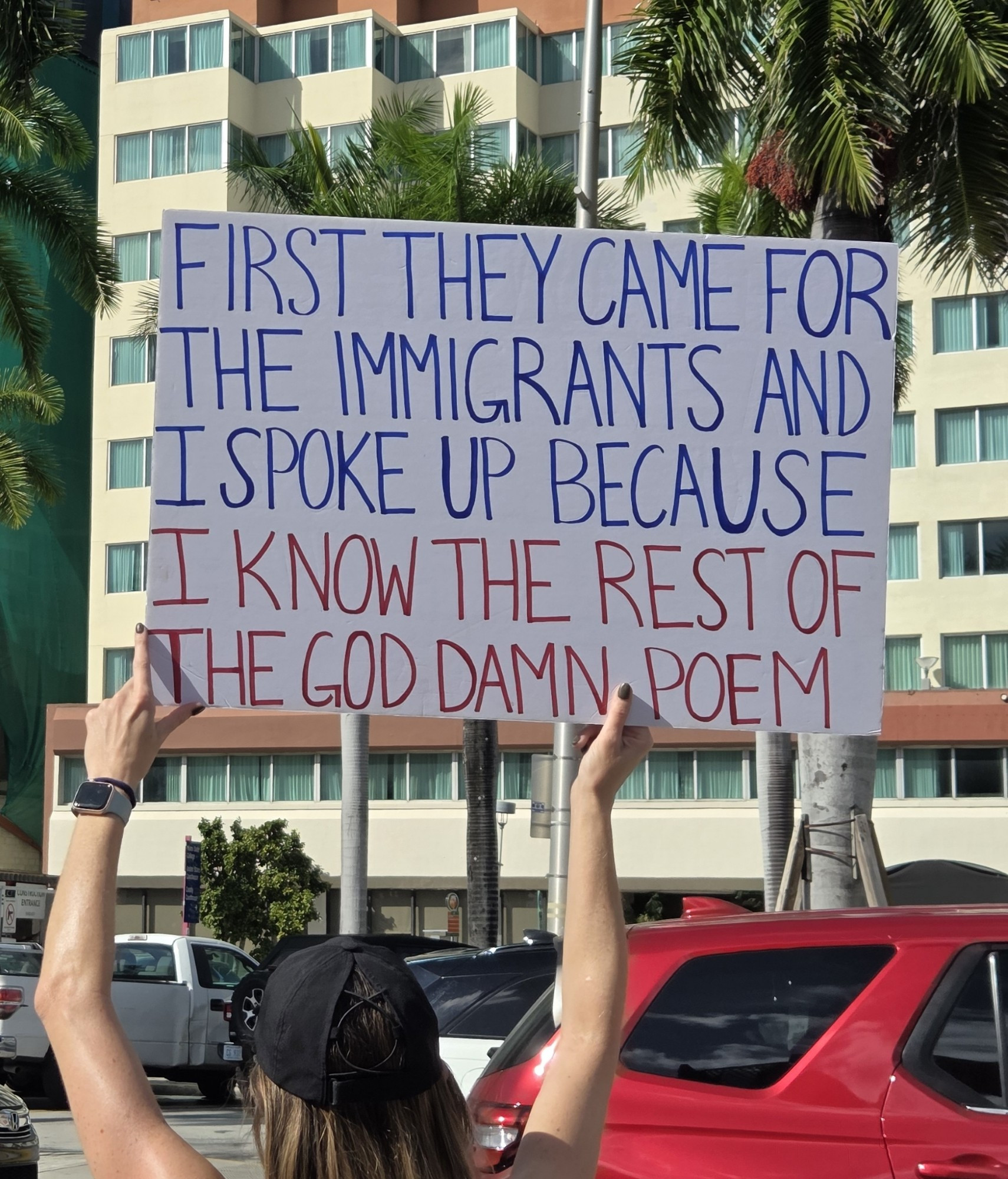
Addressing the root causes of trauma thus requires going deeper than the level of the individual or small groups, and instead looking at the systems of violence themselves. The people who need the most healing might actually be those perpetuating the most harm; people who have self-medicated their fears through the addictive accumulation of power over others. To this end, psychedelic medicines can potentially “serve as decolonial tools for designing consciousness, and thereby assist in reorienting human social and environmental relations toward ontologies of relatedness and interconnectedness” (Falcon 2021:144). This is only possible, however, if Indigenous needs and worldviews are prioritized in scholarship, policy and praxis, including emphasizing the material stakes of decolonization through support of Land Back movements (Tuck and Yang 2012; Williams et al. 2022). “Western worldviews hold that plants are objects to be owned, modified, and patented, versus Indigenous worldviews where plants are our living relatives and cannot be owned because they are interconnected with us all” (McCleave et al. 2024:944).
Tuck and Yang warn against uncritically subsuming decolonization into other organizing concerns, turning anti-colonialism into a metaphor or secondary concern. Decolonization is material—it’s about land: “decolonization specifically requires the repatriation of Indigenous land and life” (Tuck and Yang 2012:17). Arguably, the most effective forms of activism will attempt to resist multiple forms of oppression simultaneously. I can’t help but wonder what might happen if we understood all human and civil rights projects to be impossible without Land Back as a foundational tenet.
The land is alive, and it is not ours. It can and should be stewarded, but it cannot and should not be owned any more than a human can or should be owned. Attempts at controlling, dominating and owning the land that gives us life have mutated into the Onslaught, a void demon of our own colonial making, here to show us that we reap what we sow.
“True listening is worship. With the sense of hearing, we listen to creation. One of the great thresholds in reality is the threshold between sound and silence. All good sounds have silence near, behind and within them” (O’Donohue 1997:70).
If you appreciate this essay, please share it with others! This topic is deeply important but it makes people very uncomfortable, so it never gets as much reach as my more palatable “screw billionaires” stuff. But we need to talk about it.
I quit academia to educate without gatekeeping. I’ve compiled a ton of free resources here. If you REALLY want to get down and dirty with that decolonial life, join my Patreοn to get access to exclusive patrons-only writing and videos, including my PhD dissertation, which was embargoed by my university for being too politically spicy. If you’re on a healing journey, you can consult with me about psychedelic use.
Here are three ways to say thank you, and support this work:
💲 Send me a straight-up cash tip if you’re baller like that
👧 Buy my kids supplies like toothpaste and sunscreen!
Dr. Hilary Agro is an anthropologist, community organizer and mother of two young munchkins who are currently both obsessed with fart jokes.
References
- Abu-Lughod, Lila. 1990. “The Romance of Resistance: Tracing Transformations of Power Through Bedouin Women.” American Ethnologist 17(1):41–55.
- Agro, Hilary. 2016. “Prohibited Practice: Drug Use, Harm Reduction and Benefit Enhancement in Toronto Rave Culture.” University of Western Ontario.
- Alper, Kenneth R., Howard S. Lotsof, and Charles D. Kaplan. 2008. “The Ibogaine Medical Subculture.” Journal of Ethnopharmacology 115(1):9–24.
- Brodwin, Erin. 2018. “A Peter Thiel-Backed Startup Has Raised $25 Million to Unleash a ‘Virgin Market of For-Profit Psychedelic Research.’” Business Insider, October.
- Brunette-Debassige, Candace. 2018. “From Subjugation to Embodied Self-in-Relation: An Indigenous Pedagogy for Decolonization.” Pp. 199–228 in Sharing Breath: Embodied Learning and Decolonization, edited by S. Batacharya and Y.-L. R. Wong. Edmonton, AB: Athabasca University Press.
- Carhart-Harris, Robin L., Robert Leech, Peter J. Hellyer, Murray Shanahan, Amanda Feilding, Enzo Tagliazucchi, Dante R. Chialvo, and David Nutt. 2014. “The Entropic Brain: A Theory of Conscious States Informed by Neuroimaging Research with Psychedelic Drugs.” Frontiers in Human Neuroscience 8:1–22.
- Carhart-Harris, Robin L., Suresh Muthukumaraswamy, Leor Roseman, Mendel Kaelen, Wouter Droog, Kevin Murphy, Enzo Tagliazucchi, Eduardo E. Schenberg, Timothy Nest, Csaba Orban, Robert Leech, Luke T. Williams, Tim M. Williams, Mark Bolstridge, Ben Sessa, John McGonigle, Martin I. Sereno, David Nichols, Peter J. Hellyer, Peter Hobden, John Evans, Krish D. Singh, Richard G. Wise, H. Valerie Curran, Amanda Feilding, and David J. Nutt. 2016. “Neural Correlates of the LSD Experience Revealed by Multimodal Neuroimaging.” Proceedings of the National Academy of Sciences of the United States of America 113(17):4853–58.
- Collins, Patricia Hill. 1990. “Black Feminist Thought in the Matrix of Domination.” Pp. 541–52 in Black Feminist Thought: Knowledge, Consciousness, and the Politics of Empowerment. Boston: Unwin Hyman.
- Coulthard, Glen Sean. 2020. “Once Were Maoists: Third World Currents in Fourth World Anti-Colonialism, Vancouver, 1967–1975.” Pp. 378–391 in Routledge Handbook of Critical Indigenous Studies, edited by B. Hokowhitu, A. Moreton-Robinson, L. Tuhiwai-Smith, C. Andersen, and S. Larkin. London: Routledge.
- Davies, James, Brian A. Pace, and Neşe Devenot. 2023. “Beyond the Psychedelic Hype: Exploring the Persistence of the Neoliberal Paradigm.” Journal of Psychedelic Studies 7:1–13.
- Devenot, Neşe, Trey Conner, and Richard Doyle. 2022. “Dark Side of the Shroom: Erasing Indigenous and Counterculture Wisdoms with Psychedelic Capitalism, and the Open Source Alternative, or, A Manifesto for Psychonauts.” Anthropology of Consciousness 33(2):476–505.
- Ennett, S. T., N. S. Tobler, C. L. Ringwalt, and R. L. Flewelling. 1994. “How Effective Is Drug Abuse Resistance Education? A Meta-Analysis of Project DARE Outcome Evaluations.” American Journal of Public Health 84(9):1394–1401.
- Estes, Nick. 2024. Our History Is the Future: Standing Rock Versus the Dakota Access Pipeline, and the Long Tradition of Indigenous Resistance. Chicago: Haymarket Books.
- Falcon, Joshua. 2021a. “Designing Consciousness: Psychedelics as Ontological Design Tools for Decolonizing Consciousness.” Design and Culture 13(2):143–63.
- Falcon, Joshua. 2021b. “Situating Psychedelics and the War on Drugs Within the Decolonization of Consciousness.” Acme 20(2):151–70.
- Fern, Jessica. 2020. Polysecure: Attachment, Trauma, and Consensual Nonmonogamy. Portland, OR: Thorntree Press.
- Fernandez, James W. and Renate L. Fernandez. 2001. “‘Returning to the Path’: The Use of Iboga(Ine) in an Equatorial African Ritual Context and the Binding of Time, Space, and Social Relationships.” Alkaloids: Chemistry and Biology 56:235–47.
- Fisher, Mark. 2009. Capitalist Realism. Winchester, UK: Zero Books.
- Fotiou, Evgenia. 2016. “The Globalization of Ayahuasca Shamanism and the Erasure of Indigenous Shamanism.” Anthropology of Consciousness 27(2):151–79.
- Fotiou, Evgenia. 2019. “The Role of Indigenous Knowledges in Psychedelic Science.” Journal of Psychedelic Studies 4(1):16–23.
- Gearin, Alex K. and Neşe Devenot. 2021. “Psychedelic Medicalization, Public Discourse, and the Morality of Ego Dissolution.” International Journal of Cultural Studies 24(6):917–35.
- Gow, Peter. 1994. “River People: Shamanism and History in Western Amazonia.” Pp. 90–113 in Shamanism, History, and the State, edited by N. Thomas and C. Humphrey. Ann Arbor: University of Michigan Press.
- Graham, Owain J., Gary Rojas Saucedo, and Matteo Politi. 2023. “Experiences of Listening to Icaros during Ayahuasca Ceremonies at Centro Takiwasi: An Interpretive Phenomenological Analysis.” Anthropology of Consciousness 34(1):35–67.
- Hutson, S. R. 2000. “The Rave: Spiritual Healing in Modern Western Subcultures.” Anthropological Quarterly 73(1):35–49.
- Jaimangal-Jones, Dewi, Annette Pritchard, and Nigel Morgan. 2010. “Going the Distance: Locating Journey, Liminality and Rites of Passage in Dance Music Experiences.” Leisure Studies 29(3):253–68.
- Keel, Mat. 2022. “Neuro-Plastic Shamanism? Towards a Political Ontology of Whiteness and the Psychedelic Zeitgeist.” Anthropology of Consciousness 33(2):412–42.
- Kimmerer, Robin Wall. 2013. Braiding Sweetgrass. Minneapolis, MN: Milkweed Editions.
- Kohek, Maja, Maurice Ohren, Paul Hornby, Miguel Ángel Alcázar-Córcoles, and José Carlos Bouso. 2020. “The Ibogaine Experience: A Qualitative Study on the Acute Subjective Effects of Ibogaine.” Anthropology of Consciousness 31(1):91–119.
- Kopnina, Helen. 2019. “Anthropocentrism and Post‐Humanism.” Pp. 1–8 in The International Encyclopedia of Anthropology, edited by H. Callan. Hoboken, NJ: Wiley.
- Lee, Heather Sophia and Denalee O’Malley. 2018. “Abstinence-Only: Are You Not Working the Program or Is the Program Not Working for You?” Journal of Social Work Practice in the Addictions 18(3):289–304.
- Lehigh, Gabrielle R. 2023. “Transformative Psychedelic Experiences at Music Events: Using Subjective Experience to Explore Chemosocial Assemblages of Culture.”
- Lutkajtis, Anna. 2020. “Lost Saints: Desacralization, Spiritual Abuse and Magic Mushrooms.” Fieldwork in Religion 14(2):118–39.
- Masco, Joseph. 2023. “The Condition of Our Condition.” Pp. 277–96 in Sovereignty Unhinged: An Illustrated Primer for the Study of Present Intensities, Disavowals, and Temporal Derangements, edited by D. A. Thomas and J. Masco. Durham, NC: Duke University Press.
- McCaslin, Wanda D. and Denise C. Breton. 2014. “Justice as Healing: Going Outside the Colonizers’ Cage.” Pp. 511–31 in Handbook of Critical and Indigenous Methodologies, edited by N. K. Denzin, Y. S. Lincoln, and L. T. Smith. Thousand Oaks, CA: SAGE Publications.
- McCleave, Christine Diindiisi, Susan Beaulieu, Rainbow Lopez, and Joseph Tafur. 2024. “Traditional and Indigenous Perspectives on Healing Trauma With Psychedelic Plant Medicines.” International Journal of Mental Health and Addiction 22(2):938–50.
- Metzl, Jonathan. 2019. Dying of Whiteness: How the Politics of Racial Resentment Is Killing America’s Heartland. New York: Basic Books.
- O’Donohue, John. 1997. Anam Cara: A Book of Celtic Wisdom. New York, NY: Harper Perennial.
- O’Shaughnessy, Ruth, Katherine Berry, Rudi Dallos, and Karen Bateson. 2023. Attachment Theory: The Basics. New York: Routledge.
- Pace, Brian A. and Neşe Devenot. 2021. “Right-Wing Psychedelia: Case Studies in Cultural Plasticity and Political Pluripotency.” Frontiers in Psychology 12:733185.
- Rosenbaum, Dennis P. and Gordon S. Hanson. 1998. “Assessing the Effects of School-Based Drug Education: A Six-Year Multilevel Analysis of Project D.A.R.E.” Journal of Research in Crime and Delinquency 35(4):381–412.
- Ross, Lily Kay and David Nickles. 2021. “The Trials of Rick Doblin.”
- Ross, Lily Kay and iO Tillett Wright. 2022. “Cover Story: Power Trip.”
- Todd, Zoe. 2016. “An Indigenous Feminist’s Take On The Ontological Turn: ‘Ontology’ Is Just Another Word For Colonialism.” Journal of Historical Sociology 29(1):4–22.
- Tuck, Eve and K. Wayne Yang. 2012. “Decolonization Is Not a Metaphor.” Decolonization: Indigeneity, Education & Society 1(1):1–40.
- Villeneuve, Natalie and D. Prescott. 2022. “Examining the Dark Sides of Psychedelic Therapy.” Association For The Treatment Of Sexual Abusers 34(3):1–12.
- Williams, Keith, Osiris Sinuhé González Romero, Michelle Braunstein, and Suzanne Brant. 2022. “Indigenous Philosophies and the ‘Psychedelic Renaissance.’” Anthropology of Consciousness 33(2):506–27.
[1] This could be seen in less structured contexts as well such as festivals and small-group ‘trips,’ in which the nature and community aspects, remain. Festival environments also facilitate the healing experience through the structuring aspects of dance and music.





 I was saved by the people at the conference, hundreds of tiny lights in a landscape of confused darkness. Activists, scholars, authors, health care workers, psychonauts, researchers, patients, libertarians, socialists. All of us bound together by the knowledge that drug prohibition is the modern day Jim Crow and the driving force behind death and destruction in the Americas. We clung to each other for sanity, sharing our successes and failures, our experiences, our self-care rituals. Every victory was tainted by the knowledge that while capitalism stands, its vultures will always find a way to profit and oppress. Marijuana is being legalized—great! But anyone with a felony record is barred from working in the legal market, meaning all the people of colour who were selling it before—shit. Companies who make ankle GPS trackers, video call systems for prisons, and opioid medications pour billions of dollars into lobbying to maintain the system the way it is, while Black and Latinx communities have their young men stolen from them and their women and children surveilled by the state through the welfare system.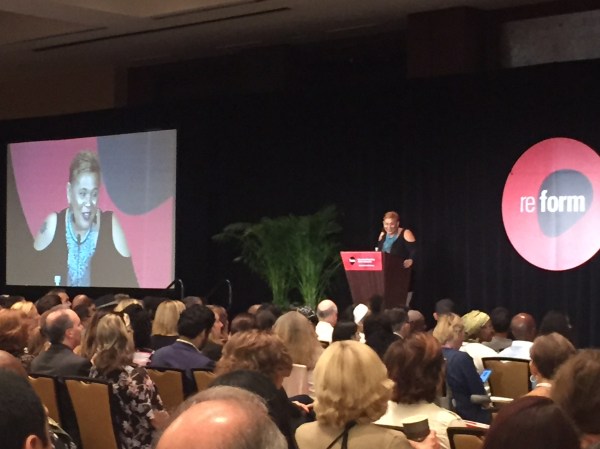
 Sometimes, among drug policy activists, it feels like we’re the band playing on the Titanic. Sometimes it feels like maybe we can make a difference, like we’ll win. Like there’s no way we can’t win when all the evidence, and all the empathy, is on our side. But it doesn’t matter either way. We have to try. There’s just no other option.
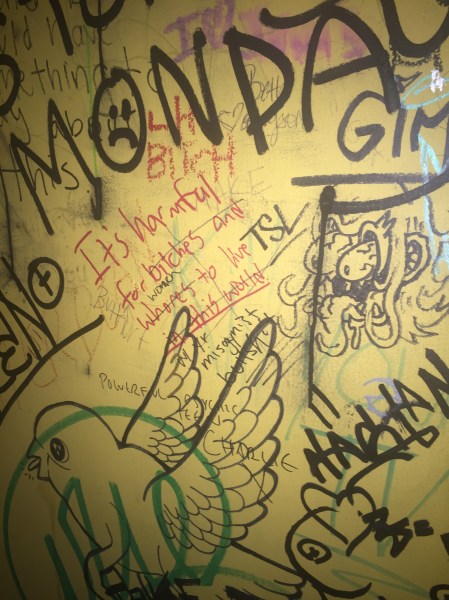 I’m not naïve: I knew all of this existed. I’ve been obsessed with American politics, how similar our two cultures seem until you scratch beneath the surface, for years. It’s not possible to be a hip-hop fan from a young age, or study the War on Drugs for a living, and avoid the global vortex of injustice and power that centres on the US. But knowing about it, and coming face to face with the sheer day-to-day mundanity of it all, are two different things. I’ve been all over the West and Northeast, where the cracks in the cultural pavement are more subtle, but touching and seeing and smelling a Southern American city for the first time, while listening to first-hand stories from around the country, poured gasoline on my deep belief that to accept conditions like this as “just the way things are” is the most dangerous possible reaction. The normalization of structural violence, white supremacy and drug prohibition allows all of it to continue, at a scale that boggles the mind. I don’t want to become complacent. I don’t want to get used to it. I don’t want to accept it.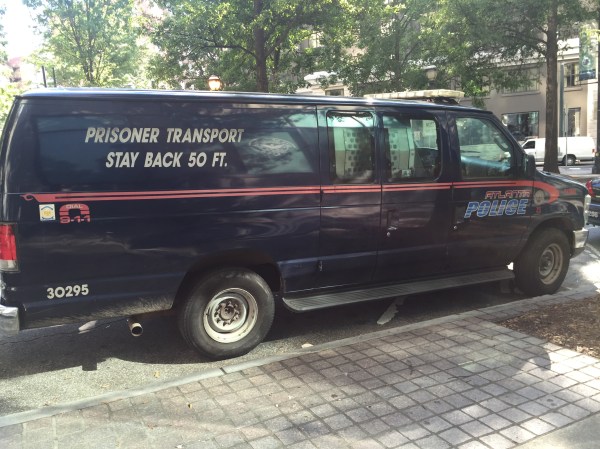
 I’ve been texting with Mark regularly since I got back. We supported each other through our re-entry. “I was in a weird fugue state for a week when I got home,” he told me. “It felt like everything was going in slow motion.”
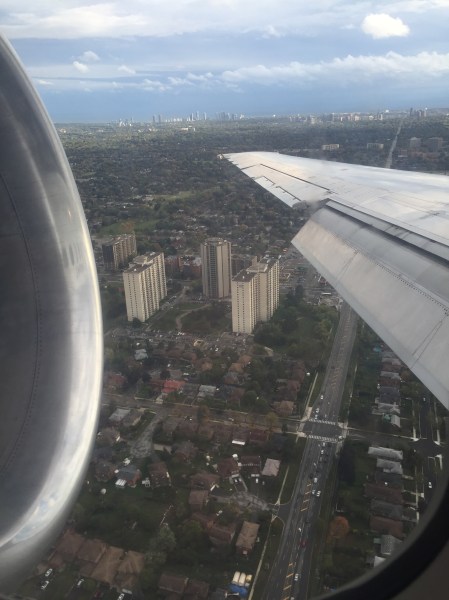 On the plane, I listened to Kendrick and let every word cut into me like wounds I never want to heal, wounds my soft, safe body will never actually have.

 Dr. Hilary Agro, PhD