This article is also available as a YouTube video.
Because on the whole, leftists are mostly (and rightfully) not all that excited about AI as it exists today, we are often accused of being luddites or hating technology.* But no, I do like some technology. I’m not against it as a concept. We perfected textiles 4,000 years ago. Then we invented books, and vaccines, and those are great. But almost everything else has been based on increasingly ramped-up environmental destruction and labour exploitation, “solving” individual “problems” that only primarily exist because of colonialism in the first place and which thus cannot be solved through more of the same.
So no, I don’t like the robots. But I want you to understand why.
When those of us who are skeptical of AI or other modern tech are faced with accusations of hating technology, I sometimes see people say “hey, we love technology! We love high speed rail and mRNA vaccines!” And sure, we can take their bait and remain always on the defense, having conversations only on their terms. But we also absolutely do not have to fall over ourselves saying that we want to hug and kiss technological progress. The onus is on the Tech Bros to explain to us why we should be excited about new technology while there are microplastics in every mother’s breast milk and our rivers are drying up. And that’s what we should be hammering home in all of these conversations: the material reality of electronic technology. (Colonizers answer the question of “what are you going to do with this mass produced product when its usable lifespan is up to ensure it doesn’t poison our children’s environment” challenge, difficulty level: impossible.)
However, this is a wedge subject that I don’t think leftists are having enough hard conversations about. I have close friends for whom so much of their comfort, even their creativity, is based in electronic tech that some don’t really seem able to take a sincere, hard look at the environmental and social consequences of a screen-based society at scale, or at what it might be doing to us to let our joy be mediated by products we’re being sold.
Adding even more discomfort to the situation, this issue connects directly with the other two major wedge issues that are deeply unresolved on the left, which are:
- Land back: The return of all land to indigenous stewardship.
- Child liberation: The prioritization of the well-being of children, those living now and those to come, in every aspect of society and our daily lives.
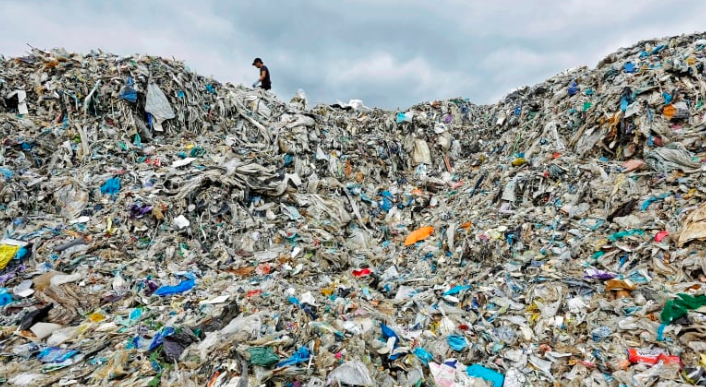
I for one, do not find it acceptable that in Canada we churn through plastic at an appalling rate because we’re dazzled by consumer advertising and too depressed to cook or sew, and then we send our garbage to choke the air and waters of children in Malaysia. I do not like that.
I don’t think that children in Vietnam deserve to bear the cost of the addiction to immediate gratification that we’ve been given as a trickle-down result of our overlords’ addiction to power and domination.
I don’t think it’s acceptable that we want new gaming systems, so they get poisoned.
I don’t think it’s acceptable to sidestep environmental concerns in discussions of AI. I think it’s vital to not budge one inch on the requirement that “progress” always be measured first through a sustainability lens, and refuse to have conversations about technological merits until those questions are answered to the satisfaction of those of us who want humanity’s great-grandchildren to survive.
Whenever I’m speaking with a tech-optimist liberal or leftist who is suggesting solutions that require the maintenance, or expansion, of personal devices or computer-based infrastructure (e.g., a new game that teaches people about empathy, or an app that helps people find better housing, or any pro-social use of AI), I cautiously ask some version of these questions: “If your solution requires more technology to be manufactured, what should we do with it when it breaks, to ensure it doesn’t poison the environment? Can we focus on building the recycling infrastructure first to handle more production, before we make new stuff? Whose lands will be mined for the resources? Whose water will be used?”

When I try to talk about this, some people shut down. They downplay and dismiss, and use thought-terminating cliches like “well we can’t just go back to living in caves.” And I don’t even blame them for not wanting to think about it. I’m not trying to shame anyone for having screen-based hobbies or hopes. I’m genuinely trying to have real conversations about this. Disconnected as we are from the Earth, from each other, from ritual and song and tradition and children and elders, we have so little that makes us happy. Capitalism gave us little emotion-regulation boxes made by slaves, and we were in too much generational pain to think about the consequences of outsourcing our emotional well-being to the slave boxes, so now the thought of losing our phones causes more distress in our bodies than a tree being cut down in our neighbourhood or a shipment of electronic waste heading for Indonesia. And as AI companies offer yet another “solution” to our collective alienation—don’t worry about why it’s so difficult to find someone who understands you, just become dependent on the robot, it’ll always be nice to you!—we are too ungrounded from the earth to see that AI is not revolutionary, it’s not a game changer, it’s just more of the same transmutation of the Earth’s resources into dissociation from centuries of colonial trauma. We are collectively making out with a gun to feel better. We are being sold more poison as a cure for the poison.
This is why all my organizing work comes back to healing. We are too traumatized to be in real solidarity with the global south. We cannot actually have rational debates about technology, because our ability to reason is compromised by the fantasy world we live in where the material consequences of our actions don’t exist where we don’t see them. We need to fix our inner shit for those conversations to even be possible. I simply don’t really trust any opinion about the value of technological “progress” that comes from someone addicted to the fruits of capitalist technological progress, any more than I trust a billionaire’s opinion about money or a gambler’s opinion about casinos. If you can’t imagine life without your computer, then you’d better start imagining life where electronics are not produced through exploitation and Congo has complete sovereignty over their mineral production, so we can bring that world into reality.**
As it stands, as long as we’re still clinging to mass-produced trinkets for our sense of stability, we will prioritize those coping mechanisms over the well-being of the world’s children. As long as we rely on screens rather than on forests and sunsets to soothe us, we will fight to defend the screens, not the forests. Whatever you get your comfort from, that is what you will fight to defend.

If AI is your friend and therapist, maintaining that “relationship” is what you are going to centre in these struggles. If screens are our ultimate solace, we’ll let the forests burn. We’re doing it right now. The machine is churning to feed us.
We have got to divest from these poisoned crutches, beloveds.
I am included in this as well. Screens have been my primary addiction for years. PC gaming got me through some very hard times in my youth, when I didn’t have the emotional resources I do now, and I still binge Dropout and Drag Race when I need to rest but don’t have the energy for the truly restorative shit (stretching, drinking tea, journalling, singing). But I know in my heart that screen-based coping mechanisms are a pause button for life, built on our own exploitation and sold back to us, and I feel secure enough now to confront that reality and slowly change through my actions.
Divesting from colonial comforts has been my main motivation and compass for healing over the last decade: to root my sense of self, the groundedness and love and compassion that all my activism and caregiving come from, within nature, the elements, and nature-based spirituality. Nature, the source that unites us all as living creatures on this earth, is the only thing that’s always there for us. Nature will not break up with you, nature will not call the cops on you. Nature will not leave you without entertainment when the wifi isn’t working, she will never lie to or gaslight or manipulate you. Mother Earth is pissed right now, but she will never abandon us, and she will not die before we do. She will be alive as long as you are, because your life depends on hers. She is the only truly safe attachment, the only comfort that is always, always there for us. Those of us who are settlers and immigrants and renters and workers have had our connection to the Earth, our secure attachment, severed, and we’ve been doing a Domination about it for centuries: suffering and looting and pillaging and fighting, trying to fill the void in our hearts that started with internal European colonization and separation from the animist spirituality and philosophies of our ancestors (the ones that lived sustainably with their environment, not the later ones that burned each other at the stake for saying the exact same things I’m saying right now. I know that much of what I’ve said here is probably deeply uncomfortable, so thanks for engaging with it instead of sending an inquisition after me, babes).
We can’t wait for revolution—or god forbid, corporations—to provide us with sustainable comforts. They exist right now, in nature and in our communities: song circles, mediation groups, forests, playgrounds, birdwatching collectives, plant medicines, festivals, witchcraft, community gardens.
The revolution we crave will not come until we reconnect with those basics of human flourishing, and with ourselves.
Be well, keep up the good work, rest and find joy. I love you, we’re all in this together.
If you appreciate this article, please share it with others! No algorithms are out here pushing anti-capitalist work in front of people—we’re all we have. This topic is deeply important but it makes people very uncomfortable, so it also never gets as much reach as my more palatable “screw billionaires” stuff. But we need to talk about it.
I quit academia to educate without gatekeeping. I’ve compiled a ton of free resources here. If you REALLY want to get down and dirty with that decolonial life, join my Patreοn to get access to exclusive patrons-only writing and videos, including my PhD dissertation, which was embargoed by my university for being too politically spicy. If you’re on a healing journey, you can consult with me about psychedelic use.
Here are three ways to say thank you, and support this work:
💲 Send me a straight-up cash tip if you’re baller like that
👧 Buy my kids supplies like toothpaste and sunscreen!
Dr. Hilary Agro is an anthropologist, community organizer and mother of two young munchkins who are currently both obsessed with fart jokes.
*In this article I am not going to give in to the temptation to do an Academia and focus on the definition(s) of technology (which is about as hard to define concretely as art), and how we in the global north tend to conflate “technology” with “electronics” when it actually means, anthropologically speaking, the application of conceptual knowledge to achieve practical goals, and the tools, instruments, machines, systems, processes, and environments developed by humans to accomplish tasks, which means that shoes and forks are as much technology as the Large Hadron Collider. I find that to be a fascinating subject, especially as someone who has developed a recent interest in textiles as technology and art and the ways textiles have been devalued due to their association with feminized labour. But I have to pick up my kids in a few hours and I cannot make this article my whole-ass day. Resist, I tell myself. Stay on target.
**If anyone has come across writing from a decolonial, non-anthropocentric, Indigenous-centered worldview about how solving “problems” (using this term loosely because most of the problems modern tech purports to solve are not real and/or are actually structural things like us not having enough time or enough emotional and healing support) with plastic and electronic tech is actually fine, please link it to me. I don’t see many leftist tech nerds fighting for, or even really talking about, divesting from our reliance on electronics, or creating a movement towards local electronics recycling and manufacturing, or any other solution that would mitigate the massive environmental concerns while letting us keep our screens. But I have to optimistically assume I’m just not exposed to it. I know the tech nerds don’t like my solution (rapidly phase out the use of all plastics and electronics that aren’t 100% sustainable and 90% locally produced), so let’s go comrades, what are yours?



How do you know the Earth will never abandon us?
I mean, the following is just quibbling, I get it. But this metaphor of the Earth as a mother who loves us is not really something I can grok* in the same way that animists do. The indigenous animist traditions that have survived genocide, at least from my limited perspective, came up in a time of climatic stability in the ten or so millennia since the last ice age, with (probably) the extreme limit of their oral memory being the megafloods of the melting ice sheets. That interglacial stability was not only the cradle of agriculture and civilization (meaning any sendetary society based on cities), but also the great abundance and regular climate that caused the whole idea of a loving Mother and a circular wheel of seasonal time to exist. In effect – their wisdom, great as its vintage and utility has been, is still rooted in its time, and that time may be coming to an end.
It’s an era that would have persisted for at least another fifty thousand years (till the next projected glacial maximum), but now industrial civilization has so upset the atmospheric balance that we are moving into a radically new climatic regime – one which, if we’re not careful to reduce emissions and environmental damage now, will result in centuries (at least) of radical environmental disruption, in which there will be no recurring patterns. No natural bounty. If it gets bad enough, if civilization fails because agriculture itself is no longer dependable, and if biodiversity collapses enough that there is no more natural bounty for the survivors of the worst human die-off since Mount Toba:
Would they still then say the Earth has not abandoned us?
I feel like if we who make the destruction don’t stop it, our progeny may lose even that idea – and it would be a terrible idea to lose. They may walk a wasteland in which the summer heat alone can kill, and say that the Earth was abused so much that she finally turned on us and decided to devour most of her children, leaving only some survivors to help nurse her wounds. But even then, it will be a long time before she’ll be ready to truly love us again.
Again, I get it – that’s my (hopefully) science-fictional digression from your point.** But it’s part of my skepticism at animism’s general idea that reality has a story, or stories that exist independently of and prior to the minds of those who have told them. Reality, to me, seems storyless – intelligent creatures like us*** impose meaning on a universe without it, but some meanings work better than others. I will grant that the meanings of low-energy, land-based indigeneity have had a much better track record ecologically, even though I don’t really know that I’d enjoy living in such a society (wouldn’t be able to make or listen to electronic music, for one). But your belief that Nature (with a capital N!) is better than anything we can create to find meaning is bordering on the religious. Liberation and leftism, as it has been told by you (and so many others I’ve seen online since my Tumblr days) feels more like a religion to me now than anything. And it’s not a bad one to have per se!
But I guess I’m burnt out or traumatized or whatever enough that I see no personal hope in anything that sounds religious. I need something real.
As for the article’s main point – yeah, I wanted a Star Trek future, and not one that’s lower tech. I grant that I may only get the latter, and that only the latter may be just. But we as a species aren’t gonna give up computers and electricity cold turkey – I imagine we’ll find ways to fab slower (and far more durable) models locally, then share them, and make local internets. The metal may be recycled, or we may figure out how to genetically engineer fungi to grow the connections for us, or do with light instead of electrons, and so on. I know there’s at least a few dozen people I the world who have worked on this (Google “Permacomputing”, as well as “Low Tech Magazine”). Smartphones we can probably live without (although I can’t really imagine my life without portable music listening), and mobile phones by themselves don’t have to be mobile supercomputers – we landed the Apollo LM on the moon with a glorified pocket calculator. There’s a spectrum of what we can afford to lose before life really becomes intolerable, and I think on the heavier end of that are MRIs, sanitation, vaccines (as you mention), insulin for type A diabetics (who universally died young in ALL medicines prior to our own), birth control that doesn’t involve gruesomely painful abortions or infanticide (which was and is a sad norm in many indigenous cultures), and some kind of HRT for my trans friends that wouldn’t involve getting a whole bunch of horses pregnant and drinking their urine.
*In the Robert Heinlein sense, NOT the Elon Musk sense. The novel was shit, but the concept was interesting.
**I personally think we’ll avoid the climate doomsday scenario – but we have already postponed the next ice age by at least fifty millennia or so. The carbon emitted up to now ensures that the next few hundred years are not gonna be pretty, even if it may not be absolutely fucked, and the stabilization that comes after that will be a much warmer, probably ice free planet that hasn’t been seen for millions of years, long before our species evolved.
***We’re obviously not the ONLY ones on this planet capable of making meaning – I think the other big-brained mammals, octopi, maybe even social insects all have an inner life and worldview. But I have seen no evidence to suggest that we can truly dialogue with other creatures (and be sure that we’re not just fooling ourselves into hearing them; despite that friend I once had who seemed to be able to talk to the trees in the woods near her childhood home). Would be nice to be proven wrong tho.
LikeLike
How do you know the Earth will never abandon us?
I mean, the following is just quibbling, I get it. But this metaphor of the Earth as a mother who loves us is not really something I can grok* in the same way that animists do. The indigenous animist traditions that have survived genocide, at least from my limited perspective, came up in a time of climatic stability in the ten or so millennia since the last ice age, with (probably) the extreme limit of their oral memory being the megafloods of the melting ice sheets. That interglacial stability was not only the cradle of agriculture and civilization (meaning any sendetary society based on cities), but also the great abundance and regular climate that caused the whole idea of a loving Mother and a circular wheel of seasonal time to exist. In effect – their wisdom, great as its vintage and utility has been, is still rooted in its time, and that time may be coming to an end.
It’s an era that would have persisted for at least another fifty thousand years (till the next projected glacial maximum), but now industrial civilization has so upset the atmospheric balance that we are moving into a radically new climatic regime – one which, if we’re not careful to reduce emissions and environmental damage now, will result in centuries (at least) of radical environmental disruption, in which there will be no recurring patterns. No natural bounty. If it gets bad enough, if civilization fails because agriculture itself is no longer dependable, and if biodiversity collapses enough that there is no more natural bounty for the survivors of the worst human die-off since Mount Toba:
Would they still then say the Earth has not abandoned us?
I feel like if we who make the destruction don’t stop it, our progeny may lose even that idea – and it would be a terrible idea to lose. They may walk a wasteland in which the summer heat alone can kill, and say that the Earth was abused so much that she finally turned on us and decided to devour most of her children, leaving only some survivors to help nurse her wounds. But even then, it will be a long time before she’ll be ready to truly love us again.
Again, I get it – that’s my (hopefully) science-fictional digression from your point.** But it’s part of my skepticism at animism’s general idea that reality has a story, or stories that exist independently of and prior to the minds of those who have told them. Reality, to me, seems storyless – intelligent creatures like us*** impose meaning on a universe without it, but some meanings work better than others. I will grant that the meanings of low-energy, land-based indigeneity have had a much better track record ecologically, even though I don’t really know that I’d enjoy living in such a society (wouldn’t be able to make or listen to electronic music, for one). But your belief that Nature (with a capital N!) is better than anything we can create to find meaning is bordering on the religious. Liberation and leftism, as it has been told by you (and so many others I’ve seen online since my Tumblr days) feels more like a religion to me now than anything. And it’s not a bad one to have per se!
But I guess I’m burnt out or traumatized or whatever enough that I see no personal hope in anything that sounds religious. I need something real.
As for the article’s main point – yeah, I wanted a Star Trek future, and not one that’s lower tech. I grant that I may only get the latter, and that only the latter may be just. But we as a species aren’t gonna give up computers and electricity cold turkey – I imagine we’ll find ways to fab slower (and far more durable) models locally, then share them, and make local internets. The metal may be recycled, or we may figure out how to genetically engineer fungi to grow the connections for us, or do with light instead of electrons, and so on. I know there’s at least a few dozen people I the world who have worked on this (Google “Permacomputing”, as well as “Low Tech Magazine”). Smartphones we can probably live without (although I can’t really imagine my life without portable music listening), and mobile phones by themselves don’t have to be mobile supercomputers – we landed the Apollo LM on the moon with a glorified pocket calculator. There’s a spectrum of what we can afford to lose before life really becomes intolerable, and I think on the heavier end of that are MRIs, sanitation, vaccines (as you mention), insulin for type A diabetics (who universally died young in ALL medicines prior to our own), birth control that doesn’t involve gruesomely painful abortions or infanticide (which was and is a sad norm in many indigenous cultures), and some kind of HRT for my trans friends that wouldn’t involve getting a whole bunch of horses pregnant and drinking their urine.
*In the Robert Heinlein sense, NOT the Elon Musk sense. The novel was shit, but the concept was interesting.**I personally think we’ll avoid the climate doomsday scenario – but we have already postponed the next ice age by at least fifty millennia or so. The carbon emitted up to now ensures that the next few hundred years are not gonna be pretty, even if it may not be absolutely fucked, and the stabilization that comes after that will be a much warmer, probably ice free planet that hasn’t been seen for millions of years, long before our species evolved.***We’re obviously not the ONLY ones on this planet capable of making meaning – I think the other big-brained mammals, octopi, maybe even social insects all have an inner life and worldview. But I have seen no evidence to suggest that we can truly dialogue with other creatures (and be sure that we’re not just fooling ourselves into hearing them; despite that friend I once had who seemed to be able to talk to the trees in the woods near her childhood home). Would be nice to be proven wrong tho.
LikeLike
Something the techbros either fail to understand or like to pretend doesn’t exist is there are those who are so tech-literate that we are over it. It’s difficult to be impressed with “new tech” when the only thing with a microchip that is truly new in the last 20 years is the marketing. If the average consumer actually knew how little they were getting for their money with each “upgrade” they would be less inclined to fall for the scam.
Most tech doesn’t really need to be replaced in terms of hardware unless it literally stops working. But marketing fads, dropped model support (the software equivalent of planned obsolescence), and anti-repair policies are predatory business practices that lack any care for the necessity of safe and sustainable end-of-life solutions for the devices they sell.
The idea that tech is happily “easy come easy go” is actually not the attitude of the tech aficionado that treats their aging devices more akin to a classic car owner and often codes or builds their own sympathetic repair solutions and upgrades.
This isn’t a back-pat to a specific group, but it is vital we recognise the mechanisms of healthy behavior such as learned contentment – to paraphrase a riddle: “What the poor have and the rich require is nothing.” Because as we know “money cannot buy happiness.” And it’s a huge problem that people are led to believe they can.
We live in a world where people buy things they don’t need and call it “retail therapy” in the same problematic way that people with depression “comfort eat” to try and fill a void in their lives but end up making themselves sicker in the process.
Because most consumers are stuck “in the chain” of this system the most effective change will have to come from the top in environmental and manufacturing legislation, but that won’t happen without substantial grassroots movement to apply that political pressure.
At the moment I don’t think we are doing enough overall (in general) to demand strict control of toxic waste either in mining the resources for manufacture in the first place or at disposal sites. This we absolutely must do not only because “batteries contain lithium” but the pervasive micro plastics are also full of toxic Bisphenols.
So regarding “rapidly phase out the use of all plastics and electronics that aren’t 100% sustainable and 90% locally produced” well this tech nerd agrees actually.
We need to ban manufacture of products that don’t have a transparent pre-planned and ready to go end of life solution that is both accessible and sustainable; We need refocus on efforts to “Reduce, Re-use, Recycle” as a primary policy, not a well intended but too often non-actionable afterthought. And ditch plastics for natural rubber, and glass instead which actually is recyclable.
There should be no recycle-center wastelands where not only are millions of surrounding households not allowed to put any PET number higher than 1 in the “recycling” but the “recycling” collection still goes to landfill or incineration anyway. (https://www.earthday.org/plastic-recycling-is-a-lie/)
As for links, I’m not sure of US sources, but recently I have seen these regarding Australia, and Sapmi (in the Nordic countries), if that’s the sort of thing you’re looking for:
https://nit.com.au/04-03-2026/22983/first-nations-scientists-recognised-for-tackling-climate-and-food-security-challenges
https://static1.squarespace.com/static/5dfb35a66f00d54ab0729b75/t/6392e3f3069dea6ddeed9638/1670570996486/Va%CC%81htjer+declaration.pdf
(forgive me if the proper terminology fails me or is lost in translation at this unsociable hour)
LikeLike
We’ve just listened to your interview with Greg Stoker, and enjoyed it. We moved to the land with our young children – to regenerate and nourish back to tree cover, deep rich soil, water retention, and abundance and variety of life (permaculture style), a small plot of decades neglected, and agrichemical poisoned farmland/dessert – for many of the same reasons you talk about in the interview with Greg. My wife and I have struggled with the rage and also grief of the life that has been stolen from us by neoliberalism and its slightly lesser evil predecessor industrial capitalism.
We are saddened to read that you still believe that vaccines are a step forward, as we have discovered that the so-called science behind them is fraudulent to say the least. Have you come across the work of endocrinologist Ray Peat? Since discovering his ideas, now carried on by people like Jay Feldman, our health and immunity have greatly rebounded from many years of low-carbohydrate fad diets and general undernourishment and misinformation (from both mainstream and alternative health perspectives). We’ve since discovered that the so-called life-threatening infectious diseases really stem from lack of replete nutrition along with the negative health impacts of various industrial pollutions, including now a number of new forms of electrical pollution.
Also, regarding technology, we don’t see smartphones as technological advancements, rather empire tools of destabilization and disconnection. We find that it is far easier to remain grounded and connected to mother earth and to each other, when the office remains in the office (a wired desktop PC with an Ethernet cable to a non wifi modem). We find we never really have any reason or desire to attend to online matters outside of the hour or two per day that we are in the office, or on the landline telephone making a pre-arranged call. Our children have also never known the “little screen”, and we’re continually surprised with their imagination and creativity. They spend most the day outdoors and we read books every evening from mostly pre-1950 books, largely books that reflect and also describe in detail some of the traditions of connectedness to land and life and soil that we are slowly learning to regain – i.e. Thomas Hardy, Richard Adams, Tolstoy, etc.
In terms of technology, we think that a certain level of central infrastructure is necessary (rails, docks, energy, telephone lines, roads, etc) but that so much of production and agriculture can also remain de-centralized/localized (E. F. Schumacher “Small is Beautiful” style). Our favourite MMT informed, Thomas Fazi (“Reclaiming the State – An Antidote to Neoliberalism”), talks about some of the ways this could be achieved.
LikeLike