What do we do with people who’ve done SA?

I’ve been thinking through a lot since the Cornell news broke. The heinous nature of the crime, the existence of millions of lesser-known atrocities that lie under the surface of the culture that produces such crimes. But there’s a piece of the conversation that is missing.

The potential backlash has made me hesitate to talk about it much in public. Speaking on this topic, although it feels vitally important, is an absolute minefield. It’s the white-hot frayed wire that most people don’t dare touch, but we will keep going in circles until we address it. So I will try, as imperfect as it will be. I am very anxious about doing so, as I know it touches on some extremely strong emotions and embedded carceral orientations. Deeply anxious. But I still feel called to do it.

I offer this as unfinished, unpolished act of becoming. I love you, and I love us, and I love this planet we share. I am grateful to you to be walking this path together.

Big, big content warning for this piece: sexual assault (SA). If you are a victim of SA, please deeply consider whether you have the capacity to engage with this. Your own well-being is the most important consideration.

Note also that this is not a conversation about rich and powerful abusers. This is about your friends, neighbours and co-workers. This is about us.

The white-hot frayed wire

All of my clients (for mentorship and psychedelic-supported healing) are people who have been harmed in some way by our society and those around them. But some of them are also men who have done harm. This includes SA.

They reach out to me because my base foundational mode of interacting with others is from a place of non-judgment, as it is the natural extension of understanding the world not through a moral lens of good vs. bad people, but through the social systems that shape human behaviour. And to be honest, there aren’t enough people on the left who practice non-judgment as a matter of strategy. I do, so people who feel deep shame but want to get better are drawn to me. I take on this work as a sacred calling.

What keeps coming up for me, as we go through yet another discourse cycle about The Problems With Men (see my article and video on this subject), is what a terrible job we are doing as a society to create an environment where people who’ve harmed others feel safe enough to talk about what they’ve done. If they can’t talk about it, they can’t address the wounds that led to the harm, help with the development of cultural prevention strategies, and reach out to others like them who are drowning in shame. Many of them want to, especially as they have done so much work to understand why they made the choices they did at that time, and do the deep, difficult labour of personal change, which is incredibly valuable experience to share. But it’s very high risk for pretty much nothing in return but hatred, and we cannot expect people to do it under those circumstances. That is just not how human behaviour works.

Wanting perpetrators to be honest while also wanting them to simply deal with whatever severe, often life-ruining levels of vengeance and punishment anyone might want to level at them is to deny reality. It’s wishful thinking, and it’s perpetuating the cycles we’re stuck in. Focusing on what they “deserve” rather than thinking systemically about what can actually prevent future harm just enables more harm through a culture of silence and punishment. In my experience, people who’ve done harm are often stuck in spirals of shame and self-loathing that do not support their ability to transmute the darkness into lessons and enact positive change in the world. Many of them are victims of abuse themselves, and all of them have trauma in their past. Some of them turn their shame in on themselves, which harms them endlessly. For others—mostly not the ones brave enough to work with me as a client—the shame cycle causes them to harm others continually.

I don’t know exactly what can be done about this. I can and do offer my services to support people’s healing, but I’m only one person. We have to figure out how to at least have these conversations, with the goal of creating support structures for integration. I know how difficult and scary that is, because the entirely justified wrath of a public full of traumatized victims of SA will inevitably pounce on anything that sounds like empathizing with perpetrators. This is understandable, because their voices and experiences have gone so ignored for so long, humanizing a group of people they see as the source of their pain can feel to some of them like yet more harm. In a society where we are raised to believe that everyone is entirely and individually responsible for their own actions and the only just course of action for someone who has done harm is punishment, any approach that doesn’t centre punishment can feel like injustice. But that doesn’t make it so.

Abandonment and shame do not end cycles of violence. People who’ve done harm deserve care and dignity, because they are still human, and all human beings deserve care and dignity. I wish the people who have harmed me had been cared for before they could have harmed me. I wish they had been held in their fullness, loved, healed, integrated. We cannot undo the past, but we can shape the future. We can prevent more harm from happening, and heal the collective body. I don’t want us to let blind rage and vengeance continue to motivate how we deal with harm.

Transformative justice does not mean “no accountability”

In the many medicine circles I’ve been a part of during my PhD research on plant medicine healing, I noticed a trend. Women were often there to figure out how to deal with the men in their lives, or harm done to them by men. Men were often there to figure out how to be better partners to the women in their lives, and better fathers. At one retreat, one man said, rather vaguely, that he was there because his family wanted him to be there, so he could learn to be better to them. I remember thinking that he sounded reluctant, like he wasn’t truly ready to go within, to be confronted with the darker parts inside him. He ended up leaving after the first night.

Over and over throughout my research, I saw how change simply cannot happen under conditions of coercion or pressure (see Chapter 5 of my dissertation). People have to want it for themselves. And most often, in a cultural environment that centres shame and judgement for those who’ve done harm, people have everything to lose by being honest–even with themselves–and very little to gain. For those of us in healing spaces, it may feel obvious how much there is to gain from going deep and facing one’s demons. But it is not so obvious to the average person, and it is a lot of work. And we are not making it any easier by continuing to feed into a culture of rage and judgement.

Accountability is essential, of course. But real accountability is only possible under non-coercive conditions. There is a tendency in much of the discourse around these sensitive topics to treat “accountability” as a cudgel. It’s a term people often use when what they mean is punishment, but they don’t want to say that. The layers of power dynamics involved in many current approaches to “accountability” are antithetical to the autonomy that people need to be able to seek help effectively on their own terms. Autonomy is paramount for working class people in settler colonies who have already felt a lifetime of the traumatizing effects of so much coercion and control over their bodies and lives. And given the inherently coercive nature of being commodified and exploited under capitalism, there are limits to, and even harms from, the carceral, control-based approaches to “accountability” that are so pervasive in settler colonial society (Cullors 2019; Gilmore 2022; Maynard 2017), which even leak into individuals, environments and communities—those of us grappling with these issues—that are struggling to move beyond them. Though these approaches are often used with good intentions, they do not effectively support community-building, nor are they a sustainable way to effect lasting changes in a person.

As one of my research participants, who was coerced into an intervention for his meth use, said to me, such a control-based approach is “predicated on the continuing presence and attention of the thing that’s instilling fear.” In James C. Scott’s work on hidden transcripts within subordinated populations, he writes about how forced compliance, such as that which my research participant experienced when coerced into treatment, takes a heavy psychological toll: “forced compliance not only fails to produce attitudes that would sustain that compliance in the absence of domination, but produces a reaction against such attitudes. … Coercion, it would seem, can produce compliance but it virtually inoculates the complier against willing compliance” (Scott 1990:109). Approaches to harm which are organized without an awareness of these issues are likely to reproduce the coercion and forced compliance inherent to settler colonial society, making them ineffective at best and harmful at worst.

Abolitionist principles

When accountability is focused entirely on the individual, we are neglecting to look at the full picture of the conditions that make harm more likely to happen. Transformational justice requires an entirely different approach to how we understand lasting repair, and that is difficult because many people don’t have the resources they would need to be able to start to make that shift. But we also won’t escape this cycle of shame, violence and punishment we’re all trapped in without finding ways to make that shift. Abolitionist principles offer a potential guide for how to move forward.

Abolitionists are not advocating to simply abolish prisons and keep everything else intact. The systemic changes that we need (decommodification, decolonization, land back etc.) can go an enormously long way towards preventing most abuses from happening in the first place. But even right now, it’s important to talk about abolition, because most abusers aren’t being arrested and convicted anyway, and our violent system keeps making more of them. That system is propped up by the cops and prisons in our minds: the way we continue to deal with interpersonal and societal problems by asserting force and control instead of practicing non-authoritarian methods of problem solving. That is something that we can all change.

Abolitionist principles describe approaches to conflict, crisis, violence or disagreement that reject punishment and coercion and instead centre collaboration, the transformation of conflict into opportunities for growth, and flexibility/experimentation.

Emerging out of Black and Indigenous feminist traditions, this approach stands in explicit contrast to colonial approaches, as “the very essence of colonialism and its criminal justice system is rule by force” (McCaslin and Breton 2014:512).

Abolitionist writer, activist, and Black Lives Matter co-founder Patrisse Cullors describes abolition as “a praxis that roots itself in the following principles: people’s power; love, healing, and transformative justice; Black liberation; internationalism; anti-imperialism; dismantling structures; and practice, practice, practice” (Cullors 2019:1685). A great deal of abolitionist writing practices what it preaches by focusing on values and open-ended potentials rather than fixed and prescriptive pedagogy; instead of attempting to capture what abolitionist principles ‘are,’ Cullors describes her own abolitionist journey as “embod[ying] the following twelve principles:

(1) have courageous conversations; (2) commit to response versus reaction; (3) experiment: nothing is fixed; (4) say yes to one’s imagination; (5) forgive actively versus passively; (6) allow oneself to feel; (7) commit to not harming or abusing others; (8) practice accountability for harm caused; (9) embrace non-reformist reforms; (10) build community; (11) value interpersonal relationships; (12) fight the U.S. state and do not make it stronger” (Cullors 2019:1687).

adrienne maree brown posits that in transformative justice, “rather than punishing people for surface-level behavior, or restoring conditions to where they were before the harm happened, we need to find the roots of the harm, together, and make the harm impossible in the future” (brown 2019:11). Queer theory scholar and abolitionist Sarah Lamble (2021:148) describes ‘everyday abolition’ as “a means to connect efforts toward structural change with our everyday cultures and practices. Everyday abolition means undoing the cultural norms and mindsets that trap us within punitive habits and logics.” Lamble (2021:149-159) describes four key strategies:

1) Undo carceral cultures: Identify and challenge punitive logics in everyday contexts
2) Shift our everyday responses to harm: We need to stop responding to harm with punishment and isolation and instead offer support, safety, healing and connection – even when it’s hard.
3) Build our collective skills and capacity to prevent harm and to foster everyday accountability and reparation.
4) Connect the everyday to the big picture.

Note that in all the above descriptions, practice is key—not achievement, not success, not winning or training for one big moment or endlessly thinking and planning, but trying, experimenting, repeating, doing, practicing. The worldbuilders I work with practice these abolitionist principles through mutual aid and refusal to abandon (Hayes and Kaba 2023). None of these attempts are implemented perfectly, and often people are unable to live up to their ideals, but aspirations towards it form a regular practice, which is the only way to get better at anything. Abolitionists are thus becoming by doing—dedicatedly trying, stumbling, trying again.

With all of this in mind, what could we imagine? What resources could be created to heal and integrate those who’ve done harm? How can we make it safer for people to change?

When thinking and imagining about this topic I like to try to keep in mind two things:

  1. There exists a whole bunch of experts on what it feels like to be at the receiving end of various forms of punishment, accountability, love, healing, coercion, etc., as a response to their acts of violence: people who committed violence themselves and re-integrated into a non-violent life. We should be talking to and listening to them (in addition to survivors, abolitionists and other experts), and take their experiences and opinions seriously (not valued above any other, but deeply considered). What worked best for them? What helped? What didn’t? And try to not unthinkingly pick and choose which accounts we listen to more closely, as we may let our deeply ingrained carceral/fearful bias cause us to only hear the “punishment was helpful for me” accounts over others.
  2. An imagination experiment: If I, due to whatever pressures, committed harm, and even kept doing it for a long time because it felt like the only option or it seemed to work, how would I want to be treated by others? What would help me to leave those cycles?

What if I’m a man who’s done harm?

The more you transmute shame into grief, and your grief into action to help your most abandoned and shunned brothers, the more empowered you will feel. The most powerful thing we can do as humans caught in cycles of trauma, shame and oppression is to turn our experiences and growth into empathy for those around us still stuck in the place we once were, and change the future by preventing more harm from happening by reaching out to those people.

It requires a LOT of bravery because actually looking at our own actions, understanding them, and finding compassion and forgiveness for ourselves even when it’s not offered by others can be really difficult and painful. But on the other side of it lies peace. And Mother Earth is here to help us through it.

For more on shame, listen here.

What if I’m a woman who is too angry to have compassion?

In my outreach work with men, I often get women responding by saying that they feel like they are expected to fix men, saying “it’s not my job to do that,” “I shouldn’t be expected to help men who’ve done nothing but hurt me,” things like that. Perfectly valid responses. I want to make it clear right now that it is absolutely not your job, and no one expects you to do that. But it is my job. I’ve taken on this task willingly. When you read an article or watch a video of mine about men, you’re seeing me at work doing this on behalf of us.

So I feel what you’re saying in my heart, and I think it’s very reasonable for you to focus on yourself and your healing, limit contact with people and conversations that hurt too much, and take all the space you need. Myself and other people can do this particular work for the collective, and you can contribute to the broader movement for liberation in whatever ways you’re able to, and trust us to carry the rest.

The only thing I ask women, enbies and other people who’ve been deeply traumatized by patriarchal violence to do, if you’re not up for outreach work or compassion-oriented conversations but you do want to be supportive, is to just not make my job harder by venting your justified anger in spaces where these conversations are being held. In my work, I try to create a space for men to feel safe to talk about their experiences and work through some unlearning they’re doing around various oppressive structures. I’m doing this for us, because I want the cycles to stop. It makes my job harder when women and enbies come at those men, in my comments sections for example, for being confused or emotional when they overall mean well, and are on a journey. People can’t learn when they feel like making a mistake will result in judgement, mockery and criticism. I want them to feel safe engaging with my work. When I taught at the university level, I can’t imagine how much harder it would have been for my students if they’d had someone jumping on every poorly articulated thought. Processing out loud, including in writing, is an essential part of learning.

So please help me out by keeping the venting to those spaces where it won’t be seen by men struggling to free themselves from the mental chains that have been imposed on them—ideally with your girlfriends in the group chat. ❤


If you appreciate this essay, please share it with others! This topic is deeply important but it makes people very uncomfortable, so it never gets as much reach as my more palatable “screw billionaires” stuff. But we need to talk about it.

I quit academia to educate without gatekeeping. I don’t use any AI in my work and it is 100% funded by my fellow human beings. I’ve compiled a ton of free resources here. If you think this work is important, join my Patreοn to support it, and get access to exclusive patrons-only writing and videos, including my PhD dissertation. If you’re on a healing journey, you can consult with me about psychedelic use.

Here are three ways to say thank you, and support this work:

❤️ Join my Patreon

💲 Send me a straight-up cash tip if you’re baller like that

👧 Buy my kids supplies like toothpaste and sunscreen!

Dr. Hilary Agro is an anthropologist, community organizer and mother of two young munchkins who are currently both obsessed with fart jokes.
Shaming fascists: Not enough, or too much?

I can’t stop thinking about anthropologist Michael Taussig’s book Shamanism, Colonialism and the Wild Man about the terror of the rubber trade in Colombia. In it, he describes how colonizers wantonly tortured Putumayo workers, with violence becoming a culture in itself, for its own sake. Like it was a sunk cost they couldn’t escape.

Every violent step they took trapped them in a cycle where stopping would mean they’d have to reckon with what they’d done, and the shame was too great, so they’d dig deeper, go even darker.

I think about this all the time when I think about Ӏsraeӏ. And about ӀCE. I often see people saying that capitalists and colonizers, and their footsoldiers of state violence, have no shame. But an anthropological analysis of the situation shows us that it’s exactly the opposite.

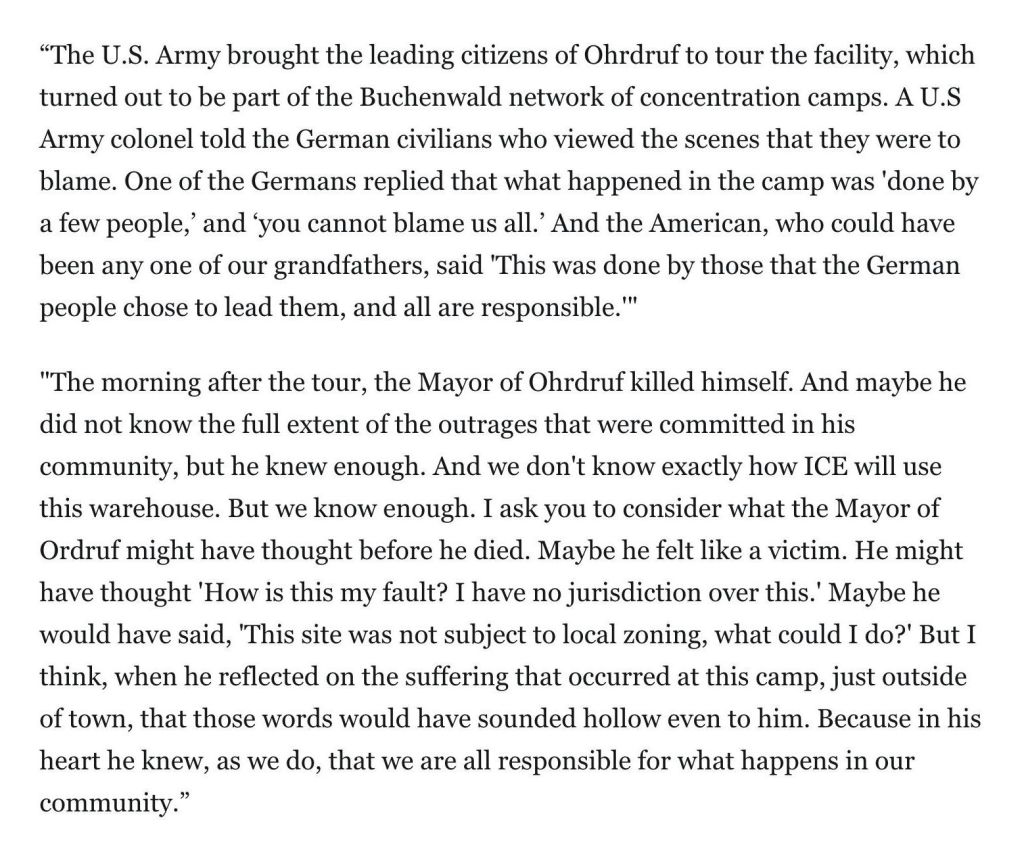
The mayor of a Nazi concentration camp town killed himself when he could no longer run away from the reality he’d contributed to. That is overpowering shame in action. (Source)

Fascists and violent colonizers spend every waking second pushing an ocean of shame down. It drives everything they do. We know this about how narcissism, which is entirely a product of early childhood trauma, functions. Shame is the feeling that something is fundamentally wrong with you, that you are irreparably broken as a human. Dehumanizing others, as fascists do, goes against our prosocial human nature, the mechanisms we evolved to thrive as a species that can only survive in groups. Despite our attempts to dehumanize the fascists right back (a supremely understandable but ultimately unhelpful response), they are still human, and the core of their very being, way deep down, knows that harming others is wrong. That leads to shame, which, in the absence of support for healing and contextualizing their trauma (including the trauma accumulated in the body from harming others), eats people from the inside out. Shame is an important human emotion to keep us from hurting one another, but it’s an incredibly powerful one that is meant to be used extremely sparingly to align people to the collective good. In worldbuilding work, shame is like intensely spicy seasoning: keep it away from small children, and use it only as part of a complex balance of different flavours, not the whole-ass meal. Love is the vegetables, the carbs, the protein. We’re so deeply malnourished.

Organized Christianity, for all its well-meaning aspects and the good deeds of many of its more humble adherents, turned shame into a whole lifestyle, teaching people that we’re fundamentally broken and bad. This is the foundational approach of settler colonial societies and the carceral, punitive orientation we take towards harm and justice. “What’s wrong with you?” is thrown around like confetti in our culture. When you start seeing it, you can’t unsee it. Patriarchal power brokers in the early days of co-opting pagan spirituality towards monotheistic control did not have, or did not make use of, the collective spiritual technologies that would have allowed them to deal with the shame of owning slaves and treating women and children as property (as they were themselves destroying those technologies). So they took the culturally existing pan-Indigenous animist beliefs in everyone as fundamentally beautiful manifestations of the Earth or of spirit (good, helpful) and twisted that into “everyone is fundamentally saveable, but only if you submit to the will of this one angry god, as defined by us, and the power structures that we’re in charge of.”

Maybe fascists have no remorse, or some other word that describes their willingness to confront their own wrongdoing on a surface level. But I think, at their deepest core, they’re so full of shame that it leaks out of them like acid. They loathe themselves more than anyone around them ever could, so much that they’re barely alive. They are disconnected from what love would even feel like, because they don’t think they deserve it. Their bodies learned that in childhood, from parents passing down generational trauma through neglect and abuse, and/or from a patriarchal colonizer culture that cut them off from the aliveness of nature around them, from spirit, from joy, from kinship, from connection, from their own humanity. And most people around them today, including all of us, continue to tell them that they deserve nothing but pain and punishment. There are very few people saying to them “you’re human, you’re doing your best to fit in and survive in a fucked-up society that taught you that violence and domination are how to do that, and you have the capacity to heal, change and be happier, and we can help you with that.”

This is why I feel like something is deeply missing from our understanding of fascist violence, the larger structures that create and support it, and especially from conversations about what to do about it. How do we move forward if dehumanizing our oppressors in turn is the only move we have space for? If vengeance is all we can think about?

Many of us are exposed, and contribute, to social media discourse wherein the average conversation doesn’t go farther than “those guys are bad people who need to be punished.” I crave more than this common type of in-group soothing of ourselves as being the Good Guys. In the offline organizing spaces I participate in, I do get deeper conversations about what we should actually, practically do about all this, and I strongly encourage people to join organizations in your community to be exposed to that kind of genuine worldbuilding. I just want to believe we can do better in online spaces as well, because it’s where so many people get all their information.

Obviously, there needs to be accountability and justice as part of the healing process to forward from the atrocities of colonialism. I am not, nor am I ever, arguing that we should do nothing. But people seem to forget that to be real and effective, perpetrators of violence (who, again, are almost always victims of some kind themselves) need to be participating in the accountability process willingly and consensually. That doesn’t happen by force. “Accountability” without willing participation is just manipulation and punishment. And the current approach to “justice” that we take in settler colonial societies, the drive towards vengeance and punishment that we’ve grown up with, has very little evidence for it producing lasting positive changes in anyone—usually, it’s quite the opposite. (See the writings of Kai Cheng Thom and Clementine Morrigan for a deeper dive into issues around how “accountability” is weaponized on the left to hide carceral approaches.)

Colonizers, especially those attracted to positions of power and violence like certain frosty agents of the state, are acting from deep generational trauma and disconnection from nature and relationality that goes back centuries, and we won’t stop the cycle until we truly reckon with that. (Read the conclusion section of my dissertation for a thorough discussion of this issue, or watch the video version.)

So, what can we do about this situation?

First, share this article with others, and begin to talk to people about the reality of shame and its role in human behaviour. If you do feel ready to do this deep, difficult, rewarding work of movement-building without shame, here are my suggestions. But first, I want to express my gratitude to you, because it’s really, really hard to push past the anger enough to do this. Most people are not resourced enough for it. I struggle with it all the time!

Step one is to identify which of your identities makes you best suited to talk to other people with that same identity. As much as it sucks, I have to accept that white people are more likely to listen to me than the Black and Indigenous people I have learned from, so I talk to them. It’s a responsibility, but also an opportunity. Men, talk to other men. Straight people, talk to other heteros. Religious people, talk to others in your faith. Non-Indigenous people, talk to other settlers. Most of all, working class people, talk to each other about class issues! (Class is generally the most productive place to focus your efforts in my opinion, because it’s the great uniter, and the reason we were divided against each other by capitalists in the first place. But it has to be grounded in decolonization as the primary goal, or it will not lead to lasting liberation.)

Collective organizing is key! We need to make space for newcomers, and have people in roles to receive those who’ve been indoctrinated and are learning. We also need to keep POC and trans people safe from them while the deprogramming happens. All of us must seek out healing for the wounded self, as compassion for oneself will radiate outwards. We must reconnect with our ancestors, and with our humanity.

Here are five resources I suggest to start with to build these communication and organizing skills. None are perfect, all are just tools in a toolbox. Pick whichever interests you, leave anything you don’t feel aligned with.

1) Nonviolent communication training: an incredibly resource for learning how to talk to and connect with people using a non-authoritarian approach. (This is where I learned to identify how often people interpret suggestions and requests as demands, a quick way to see how unresolved trauma functions to hamstring our movements.)

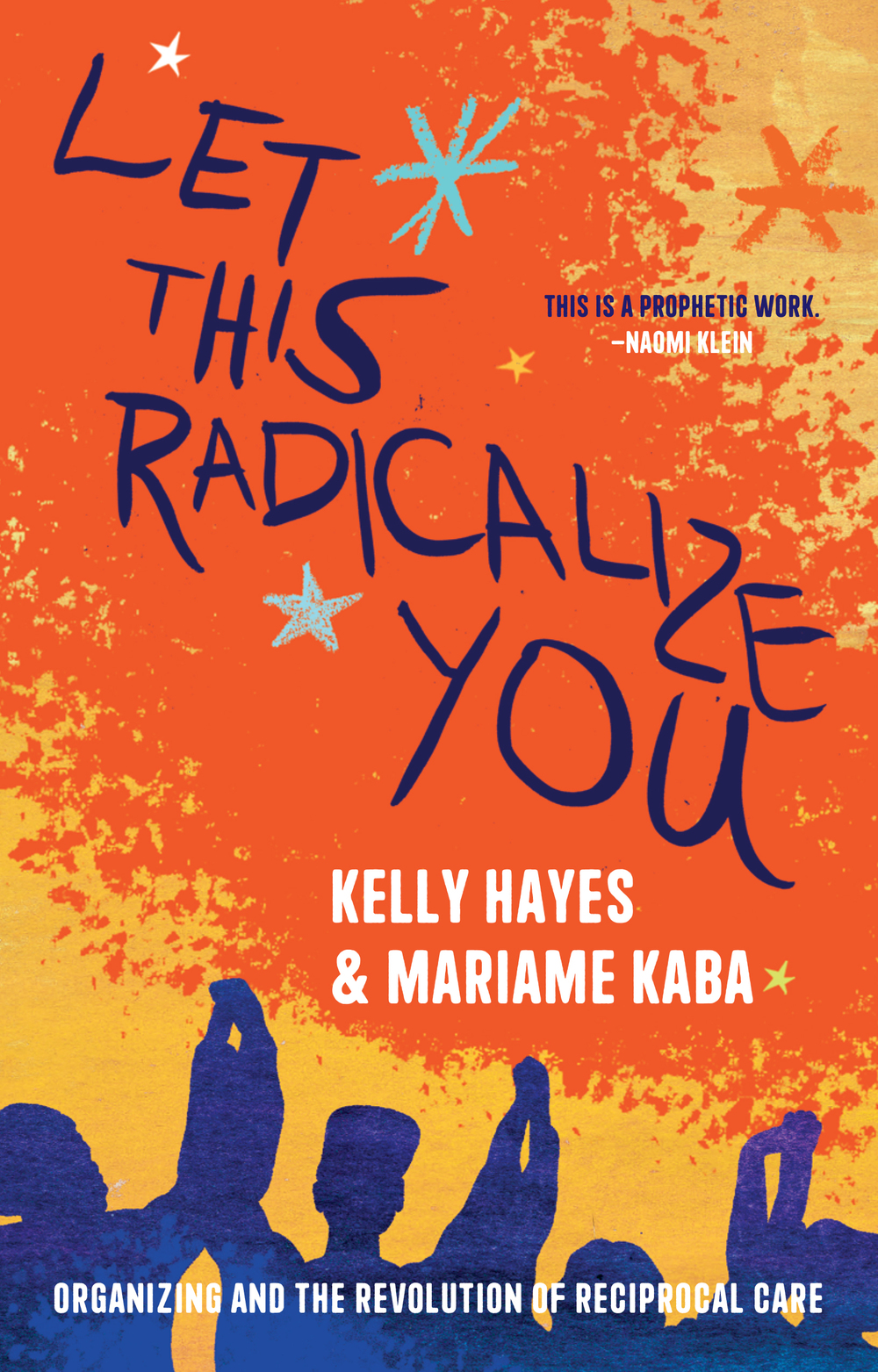
2) Let This Radicalize You by Kelly Hayes and Mariame Kaba: practical advice for organizing and activism, and how to make hope something that you build with others.

3) Maybe I’m cheating by calling this one a single resource, but it’s just too good! Interrupting Criminalization has got so much! Use it all, share it all! They are amazing!

4) Shaun does amazing work speaking to and about young white men from a critical but also humanizing perspective. Here’s another of his videos, and more resources I’ve compiled for fostering positive masculinity.

5) This one is a bit of a spicier recommendation, but if you’re ready to go even deeper and see how spirituality is an essential component we need to integrate in order to combat the appeal of fundamentalist cults, then listen to The Emerald podcast. “Oh Justice” is a relevant episode, but listen to any that pique your interest. My favourite is “Snail Juice.”

Be well, keep up the good work, rest and find joy. I love you, we’re all in this together.

I quit academia to educate without gatekeeping. I’ve compiled a ton of free resources here. If you REALLY want to get down and dirty with that decolonial life, join my Patreοn to get access to exclusive patrons-only writing and videos, including my PhD dissertation, which was embargoed by my university for being too politically spicy. If you’re on a healing journey, you can consult with me about psychedelic use.

If you appreciate this article, please share it with others! Here are three ways to say thank you, and support me doing more of it:

❤️ Join my Patreon 

💲 Send me some cash I can use to pay rent

👧 Buy my kids supplies like toothpaste and sunscreen!

Dr. Hilary Agro is an anthropologist, community organizer and mother of two young children.

The last free words of a cannabis prisoner

My friend Daniel Muessig went to prison today.

A former criminal defense attorney himself, he sold cannabis in Pennsylvania, a state where it’s legal. But it’s still illegal federally, and now he’s spending the next 5 years of his life in a cage, torn from his family. He left me the letter below to share with you. They are his parting words. Share them with anyone who still doesn’t understand how the War on Drugs is destroying lives.

To hear the whole story of what happened to him, listen to my interview with Dan, or read one of the articles linked below the letter.

To all free people,

By the time you read this I’ll be inside a federal prison for the first day of my five year sentence for cannabis trafficking.

The last few weeks have been a dystopic and sickening blur as I sought to wind down what was left of my life as a nominally free man.

Tonight will be the last night I sleep next to my wife in several years and tomorrow will be the last time we kiss, touch, or hold one another until I’m free or COVID restrictions cease, an unlikely prospect given the rapacious and adaptable nature of the virus and the utter recalcitrance of the staff to be properly vaccinated. My prison is in “Let’s Go Brandon” country and little as I like Biden I at least agree people should be vaccinated.

This small digression was to provide context for why I will most likely pass my first few weeks to a month inside in quarantine, unable to leave my dorm, obtain commissary, or interact with my new environment. I probably won’t have access to much else save a bunk and a few rancid meals a day until such time as I’m deemed fit to enter the compound and begin my prison life in earnest. The fact I’m vaxxed and double boosted is meaningless although it may keep me alive through the inevitable multiple COVID cases I will be infected with during my sojurn in the human petri dish sans medical care that is prison in America.

My release date will be almost 5 years to the day I walk in, whenever they bother to update it.

Now my personal space will be truncated to a bunk. I will answer largely to a number, stand to be counted, wear only a uniform, and have my day subject to the whim and will of staff, guards, and counselors.

My life in any sense one would want to live it is over for quite a while.

Some people find meaning in this suffering. They rise above it and forge an architecture of righteousness and purpose. Others, poisoned by the assaultive nature of confinement and its incessant aggressions, humiliations, depredations, and losses oscillate between depression and rage, their souls brittle and unable to ever embark any meaningful joys or salutory impulses like patience or peace. The former exit emboldened with a mission to do good. The latter with a wish to die.

I don’t know which I’ll be. I know which I aspire to. But any prediction smacks of the premature.

I can only do what every convict with a release date can do: take it day by day.

For how many days? I do not know.

I don’t know the future. I do know pain.

I’ve experienced agony behind this process that I cannot adequately describe. My abilities fall so short to convey the terror, rage, helplessness, loss, and stultifying, suicidal depression that takes hold of one when a Damoclean sword hangs over one’s head for years on end.

My wife and I strove so mightily to create a new life for ourselves. Away from the risk and pain of my previous life and line of work.

There were some beautiful moments inside of that interstitial fever dream of a life.

We tried to adopt a child. We stood in the high desert Mesa near Taos and hugged narrow mountain passes to siesta at Alpine lakes.

We smoked chopper joints at the rocky Maine coast and watched the spray break on the gray ziggaraut of rock that jutted like an alien edifice or battlement, crenelated and speckled with tidal pools suspended at heights far above the rolling floor of green glassed thunder that leapt at impact.

We saw seals roost at the coves in La Jolla and watched a technicolor sun paint the palms each night.

We sat on a loamy berm above Algiers Point New Orleans with colorful overpainted Queen Anne’s and shotgun bungalows lifted four feet off the dusty ground and watched Oil Tankers and and barges wend their way down the placid, muddied, riverine highway of the Mississippi.

The copper adobe azure sky with Pueblo Terra Cotta of an Indian village outside of Santa Fe and the black glass glacis of the stratotowers of Midtown Manhattan.

We went everywhere COVID would let us post Vax because we knew on some base, elemental level that our world was fragile. One phone call would end it like the Death Star’s laser pulverizing Alderaan.

And one humid night after a mundane day in what would going to be a beautiful life that call came.

We lost our child to be, our sanity, peace, hope, and future.

My refusal to cooperate is well documented. We don’t have to masticate that morsel again.

Instead I want you to know that my mother felt frail when I hugged her goodbye and she shook when she wept. She felt leaflike in my arms. Her 300lb son hugging her 90lb frame while we both sobbed.

My father cried in a way I’d never seen him do in my entire 40 years. His grief so raw and seismic that it almost separated my feet from the ground when it pulsed like orange magma from steaming crater.

I didn’t want to cry after I left them. I wanted to die. I never wanted to see that again and know I caused it. But I did. This did.

My wife and I passed our last night in loving embrace. Whispering our dreams to each other. Things many of you take for granted. Peace. Freedom. Hope. A chance to be together again. I haven’t left her side since 2003 for more than a few months on tour and now I will be gone years.

The gods gave Odysseus and Penelope an eternal night at one point. But no delphic deities touched here. Ours ends at dawn.

She’s my world. And I’m leaving her.

She should have my presence and protection. My love and attention. Instead I leave her with a tear spattered kiss and depart.

I met some of the fellas and said goodbye.

We hugged and slapped backs.

Til the next time, we said. We joked about past travails… the bum deals and the near misses. The fast money and the teeth cracking Ls.

I on boarded a rapid fire stream of advice about prison life as they imparted their wisdom and my friend called from Otisville.

Get your Pax # he said.

112# gets you on the payphone. You’ll be quarantined. Stay level.

He said one day we’d be cracking lobsters next to our wives and eating babka for dessert.

I won’t see or hear from him for years. We’d spoken nearly every day since 2019. He’s been in since 2020.

Before I left one friend said:

Thank you. Thank you for keeping me free. You know what you did. And it’s appreciated.

I said it was my pleasure. And it is.

I didn’t do what I did to buck authority.

I didn’t do it to be a gangster or want to be one.

I didn’t do it to burnish a rep.

I did it for love.

I’m not a hero. I’m a crook. Your parents are heroes. Doctors are heroes. People who house the homeless are heroes. Democracy activists and community organizers are heroes. Not me. .

What I did is the baseline of what a decent human being should do.

I didn’t emmiserate the next person so as to diminish my own fear or pain.

I could never do to another person what was done to me here.

No one else’s wife or mother or father or brother should have to feel like this.

No one else should be sitting in the bedroom in these scant predawn hours so wracked with grief and stress that sleep is a fantastic myth for the nth night running writing their farewell missive to the world, physically ill from sadness, loss, and trepidation.

I look at our wall art, our pillows, and most of all her and I know that I won’t be here for YEARS and I die inside. Each heartbeat is poison pain.

But I could never make anyone trade with me. So I will go. My fate is sealed.

I love the people I saved. Those whom I’m close with and those I never will speak to again. I can one day sleep again knowing that they are free no matter what happened to me.

And although all I want is to be with my wife again for just one more night I also understand I could never be with her at peace knowing my freedom was purchased by the incarceration of others.

Love of humanity. Love of good. Love of my family. Love of an ideal that should be followed even if others break it.

To inform was based in fear. It’s opposite was always based in love.

Remember me well,

I will miss the world fiercely,

But most of all I’ll miss my wife, she is my world.

When I ran away from that raid lurching to freedom I just wanted to see her one more time.

And now as I say goodbye to her and depart for captivity my wish is unaltered.

“Just let me see her one more time….just one more time….I have to make it….one more time.”

Till that time,

Daniel Muessig
61770-509
FCI Morgantown
60 months
No cooperation

Dan has asked people to do just one thing, which is to sign this pledge: No Pardons, No Votes. http://pardonsnow.com Agitate your elected officials. Tell them to legalize cannabis (and all drugs) and pardon cannabis (and all drug) prisoners.

Note: I do this abolitionist/anti-prohibition work in my spare time, and it costs a lot in child care money. If you want to help me keep doing it, please consider sending a tip on PayPal, supporting me on Patreon, or sending some diapers for my baby from my Amazon registry. I’m a grad student and mother of two trying to fight against the devastation of the Drug War—every little bit helps.

Other places to find me on the internet ranting about drug policy, criminal justice reform, capitalism, psychedelics and anthropology:

⇨ YouTube
⇨ Twitter
⇨ TikTok
⇨ Bread & Poppies Podcast
⇨ Facebook
⇨ Twitch

More on Dan:

https://truthout.org/articles/im-facing-60-months-in-prison-cannabis-prohibition-has-destroyed-my-life/

https://www.forbes.com/sites/andrewdeangelo/2022/02/03/meet-one-of-the-last-cannabis-prisoners-daniel-muessig/

The ad that made Dan famous: https://www.youtube.com/watch?v=i_iaugcJW7Q