I’ve been thinking through a lot since the Cornell news broke. The heinous nature of the crime, the existence of millions of lesser-known atrocities that lie under the surface of the culture that produces such crimes. But there’s a piece of the conversation that is missing.
The potential backlash has made me hesitate to talk about it much in public. Speaking on this topic, although it feels vitally important, is an absolute minefield. It’s the white-hot frayed wire that most people don’t dare touch, but we will keep going in circles until we address it. So I will try, as imperfect as it will be. I am very anxious about doing so, as I know it touches on some extremely strong emotions and embedded carceral orientations. Deeply anxious. But I still feel called to do it.
I offer this as unfinished, unpolished act of becoming. I love you, and I love us, and I love this planet we share. I am grateful to you to be walking this path together.
Big, big content warning for this piece: sexual assault (SA). If you are a victim of SA, please deeply consider whether you have the capacity to engage with this. Your own well-being is the most important consideration.
Note also that this is not a conversation about rich and powerful abusers. This is about your friends, neighbours and co-workers. This is about us.
The white-hot frayed wire
All of my clients (for mentorship and psychedelic-supported healing) are people who have been harmed in some way by our society and those around them. But some of them are also men who have done harm. This includes SA.
They reach out to me because my base foundational mode of interacting with others is from a place of non-judgment, as it is the natural extension of understanding the world not through a moral lens of good vs. bad people, but through the social systems that shape human behaviour. And to be honest, there aren’t enough people on the left who practice non-judgment as a matter of strategy. I do, so people who feel deep shame but want to get better are drawn to me. I take on this work as a sacred calling.
What keeps coming up for me, as we go through yet another discourse cycle about The Problems With Men (see my article and video on this subject), is what a terrible job we are doing as a society to create an environment where people who’ve harmed others feel safe enough to talk about what they’ve done. If they can’t talk about it, they can’t address the wounds that led to the harm, help with the development of cultural prevention strategies, and reach out to others like them who are drowning in shame. Many of them want to, especially as they have done so much work to understand why they made the choices they did at that time, and do the deep, difficult labour of personal change, which is incredibly valuable experience to share. But it’s very high risk for pretty much nothing in return but hatred, and we cannot expect people to do it under those circumstances. That is just not how human behaviour works.
Wanting perpetrators to be honest while also wanting them to simply deal with whatever severe, often life-ruining levels of vengeance and punishment anyone might want to level at them is to deny reality. It’s wishful thinking, and it’s perpetuating the cycles we’re stuck in. Focusing on what they “deserve” rather than thinking systemically about what can actually prevent future harm just enables more harm through a culture of silence and punishment. In my experience, people who’ve done harm are often stuck in spirals of shame and self-loathing that do not support their ability to transmute the darkness into lessons and enact positive change in the world. Many of them are victims of abuse themselves, and all of them have trauma in their past. Some of them turn their shame in on themselves, which harms them endlessly. For others—mostly not the ones brave enough to work with me as a client—the shame cycle causes them to harm others continually.
I don’t know exactly what can be done about this. I can and do offer my services to support people’s healing, but I’m only one person. We have to figure out how to at least have these conversations, with the goal of creating support structures for integration. I know how difficult and scary that is, because the entirely justified wrath of a public full of traumatized victims of SA will inevitably pounce on anything that sounds like empathizing with perpetrators. This is understandable, because their voices and experiences have gone so ignored for so long, humanizing a group of people they see as the source of their pain can feel to some of them like yet more harm. In a society where we are raised to believe that everyone is entirely and individually responsible for their own actions and the only just course of action for someone who has done harm is punishment, any approach that doesn’t centre punishment can feel like injustice. But that doesn’t make it so.
Abandonment and shame do not end cycles of violence. People who’ve done harm deserve care and dignity, because they are still human, and all human beings deserve care and dignity. I wish the people who have harmed me had been cared for before they could have harmed me. I wish they had been held in their fullness, loved, healed, integrated. We cannot undo the past, but we can shape the future. We can prevent more harm from happening, and heal the collective body. I don’t want us to let blind rage and vengeance continue to motivate how we deal with harm.
Transformative justice does not mean “no accountability”
In the many medicine circles I’ve been a part of during my PhD research on plant medicine healing, I noticed a trend. Women were often there to figure out how to deal with the men in their lives, or harm done to them by men. Men were often there to figure out how to be better partners to the women in their lives, and better fathers. At one retreat, one man said, rather vaguely, that he was there because his family wanted him to be there, so he could learn to be better to them. I remember thinking that he sounded reluctant, like he wasn’t truly ready to go within, to be confronted with the darker parts inside him. He ended up leaving after the first night.
Over and over throughout my research, I saw how change simply cannot happen under conditions of coercion or pressure (see Chapter 5 of my dissertation). People have to want it for themselves. And most often, in a cultural environment that centres shame and judgement for those who’ve done harm, people have everything to lose by being honest–even with themselves–and very little to gain. For those of us in healing spaces, it may feel obvious how much there is to gain from going deep and facing one’s demons. But it is not so obvious to the average person, and it is a lot of work. And we are not making it any easier by continuing to feed into a culture of rage and judgement.
Accountability is essential, of course. But realaccountability is only possible under non-coercive conditions. There is a tendency in much of the discourse around these sensitive topics to treat “accountability” as a cudgel. It’s a term people often use when what they mean is punishment, but they don’t want to say that. The layers of power dynamics involved in many current approaches to “accountability” are antithetical to the autonomy that people need to be able to seek help effectively on their own terms. Autonomy is paramount for working class people in settler colonies who have already felt a lifetime of the traumatizing effects of so much coercion and control over their bodies and lives. And given the inherently coercive nature of being commodified and exploited under capitalism, there are limits to, and even harms from, the carceral, control-based approaches to “accountability” that are so pervasive in settler colonial society (Cullors 2019; Gilmore 2022; Maynard 2017), which even leak into individuals, environments and communities—those of us grappling with these issues—that are struggling to move beyond them. Though these approaches are often used with good intentions, they do not effectively support community-building, nor are they a sustainable way to effect lasting changes in a person.
As one of my research participants, who was coerced into an intervention for his meth use, said to me, such a control-based approach is “predicated on the continuing presence and attention of the thing that’s instilling fear.” In James C. Scott’s work on hidden transcripts within subordinated populations, he writes about how forced compliance, such as that which my research participant experienced when coerced into treatment, takes a heavy psychological toll: “forced compliance not only fails to produce attitudes that would sustain that compliance in the absence of domination, but produces a reaction against such attitudes. … Coercion, it would seem, can produce compliance but it virtually inoculates the complier against willing compliance” (Scott 1990:109). Approaches to harm which are organized without an awareness of these issues are likely to reproduce the coercion and forced compliance inherent to settler colonial society, making them ineffective at best and harmful at worst.
Abolitionist principles
When accountability is focused entirely on the individual, we are neglecting to look at the full picture of the conditions that make harm more likely to happen. Transformational justice requires an entirely different approach to how we understand lasting repair, and that is difficult because many people don’t have the resources they would need to be able to start to make that shift. But we also won’t escape this cycle of shame, violence and punishment we’re all trapped in without finding ways to make that shift. Abolitionist principles offer a potential guide for how to move forward.
Abolitionists are not advocating to simply abolish prisons and keep everything else intact. The systemic changes that we need (decommodification, decolonization, land back etc.) can go an enormously long way towards preventing most abuses from happening in the first place. But even right now, it’s important to talk about abolition, because most abusers aren’t being arrested and convicted anyway, and our violent system keeps making more of them. That system is propped up by the cops and prisons in our minds: the way we continue to deal with interpersonal and societal problems by asserting force and control instead of practicing non-authoritarian methods of problem solving. That is something that we can all change.
Abolitionist principles describe approaches to conflict, crisis, violence or disagreement that reject punishment and coercion and instead centre collaboration, the transformation of conflict into opportunities for growth, and flexibility/experimentation.
Emerging out of Black and Indigenous feminist traditions, this approach stands in explicit contrast to colonial approaches, as “the very essence of colonialism and its criminal justice system is rule by force” (McCaslin and Breton 2014:512).
Abolitionist writer, activist, and Black Lives Matter co-founder Patrisse Cullors describes abolition as “a praxis that roots itself in the following principles: people’s power; love, healing, and transformative justice; Black liberation; internationalism; anti-imperialism; dismantling structures; and practice, practice, practice” (Cullors 2019:1685). A great deal of abolitionist writing practices what it preaches by focusing on values and open-ended potentials rather than fixed and prescriptive pedagogy; instead of attempting to capture what abolitionist principles ‘are,’ Cullors describes her own abolitionist journey as “embod[ying] the following twelve principles:
(1) have courageous conversations; (2) commit to response versus reaction; (3) experiment: nothing is fixed; (4) say yes to one’s imagination; (5) forgive actively versus passively; (6) allow oneself to feel; (7) commit to not harming or abusing others; (8) practice accountability for harm caused; (9) embrace non-reformist reforms; (10) build community; (11) value interpersonal relationships; (12) fight the U.S. state and do not make it stronger” (Cullors 2019:1687).
adrienne maree brown posits that in transformative justice, “rather than punishing people for surface-level behavior, or restoring conditions to where they were before the harm happened, we need to find the roots of the harm, together, and make the harm impossible in the future” (brown 2019:11). Queer theory scholar and abolitionist Sarah Lamble (2021:148) describes ‘everyday abolition’ as “a means to connect efforts toward structural change with our everyday cultures and practices. Everyday abolition means undoing the cultural norms and mindsets that trap us within punitive habits and logics.” Lamble (2021:149-159) describes four key strategies:
1) Undo carceral cultures: Identify and challenge punitive logics in everyday contexts 2) Shift our everyday responses to harm: We need to stop responding to harm with punishment and isolation and instead offer support, safety, healing and connection – even when it’s hard. 3) Build our collective skills and capacity to prevent harm and to foster everyday accountability and reparation. 4) Connect the everyday to the big picture.
Note that in all the above descriptions, practice is key—not achievement, not success, not winning or training for one big moment or endlessly thinking and planning, but trying, experimenting, repeating, doing, practicing. The worldbuilders I work with practice these abolitionist principles through mutual aid and refusal to abandon (Hayes and Kaba 2023). None of these attempts are implemented perfectly, and often people are unable to live up to their ideals, but aspirations towards it form a regular practice, which is the only way to get better at anything. Abolitionists are thus becoming by doing—dedicatedly trying, stumbling, trying again.
With all of this in mind, what could we imagine? What resources could be created to heal and integrate those who’ve done harm? How can we make it safer for people to change?
When thinking and imagining about this topic I like to try to keep in mind two things:
There exists a whole bunch of experts on what it feels like to be at the receiving end of various forms of punishment, accountability, love, healing, coercion, etc., as a response to their acts of violence: people who committed violence themselves and re-integrated into a non-violent life. We should be talking to and listening to them (in addition to survivors, abolitionists and other experts), and take their experiences and opinions seriously (not valued above any other, but deeply considered). What worked best for them? What helped? What didn’t? And try to not unthinkingly pick and choose which accounts we listen to more closely, as we may let our deeply ingrained carceral/fearful bias cause us to only hear the “punishment was helpful for me” accounts over others.
An imagination experiment: If I, due to whatever pressures, committed harm, and even kept doing it for a long time because it felt like the only option or it seemed to work, how would I want to be treated by others? What would help me to leave those cycles?
What if I’m a man who’s done harm?
The more you transmute shame into grief, and your grief into action to help your most abandoned and shunned brothers, the more empowered you will feel. The most powerful thing we can do as humans caught in cycles of trauma, shame and oppression is to turn our experiences and growth into empathy for those around us still stuck in the place we once were, and change the future by preventing more harm from happening by reaching out to those people.
It requires a LOT of bravery because actually looking at our own actions, understanding them, and finding compassion and forgiveness for ourselves even when it’s not offered by others can be really difficult and painful. But on the other side of it lies peace. And Mother Earth is here to help us through it.
What if I’m a woman who is too angry to have compassion?
In my outreach work with men, I often get women responding by saying that they feel like they are expected to fix men, saying “it’s not my job to do that,” “I shouldn’t be expected to help men who’ve done nothing but hurt me,” things like that. Perfectly valid responses. I want to make it clear right now that it is absolutely not your job, and no one expects you to do that. But it is my job. I’ve taken on this task willingly. When you read an article or watch a video of mine about men, you’re seeing me at work doing this on behalf of us.
So I feel what you’re saying in my heart, and I think it’s very reasonable for you to focus on yourself and your healing, limit contact with people and conversations that hurt too much, and take all the space you need. Myself and other people can do this particular work for the collective, and you can contribute to the broader movement for liberation in whatever ways you’re able to, and trust us to carry the rest.
The only thing I ask women, enbies and other people who’ve been deeply traumatized by patriarchal violence to do, if you’re not up for outreach work or compassion-oriented conversations but you do want to be supportive, is to just not make my job harder by venting your justified anger in spaces where these conversations are being held. In my work, I try to create a space for men to feel safe to talk about their experiences and work through some unlearning they’re doing around various oppressive structures. I’m doing this for us, because I want the cycles to stop. It makes my job harder when women and enbies come at those men, in my comments sections for example, for being confused or emotional when they overall mean well, and are on a journey. People can’t learn when they feel like making a mistake will result in judgement, mockery and criticism. I want them to feel safe engaging with my work. When I taught at the university level, I can’t imagine how much harder it would have been for my students if they’d had someone jumping on every poorly articulated thought. Processing out loud, including in writing, is an essential part of learning.
So please help me out by keeping the venting to those spaces where it won’t be seen by men struggling to free themselves from the mental chains that have been imposed on them—ideally with your girlfriends in the group chat. ❤
If you appreciate this essay, please share it with others! This topic is deeply important but it makes people very uncomfortable, so it never gets as much reach as my more palatable “screw billionaires” stuff. But we need to talk about it.
I quit academia to educate without gatekeeping. I don’t use any AI in my work and it is 100% funded by my fellow human beings. I’ve compiled a ton of free resources here. If you think this work is important, join my Patreοn to support it, and get access to exclusive patrons-only writing and videos, including my PhD dissertation. If you’re on a healing journey, you can consult with me about psychedelic use.
Here are three ways to say thank you, and support this work:
I am going to share a story with you. And then I am going to explain what was, for me, the most important part of my PhD research: what I have called psychedelic attachment theory. If you find it insightful, please share it with others, and help to support my work.
The below is an excerpt from Chapter 6 of my PhD dissertation, “Community medicine: Abolitionist worldbuilding among drug use liberation activists on Turtle Island.” The full dissertation is available by email request for students, academics and activists. For the public, I made it into a YouTube video, or you can purchase it here.
“The plants told us so”
The front of the medicine ceremony room was set up with instruments: drums, flutes, a harp, a handpan, a zither, shakers, singing bowls, chimes, charango guitar, an enormous gong. I found Elena, the main guide, to be somewhat intimidating. She is not warm and fuzzy, the way I realized I subconsciously expected her to be. She is kind, but I found her calm, straightforward, standoffish energy activating to my insecure, people-pleasing instincts. But she came highly recommended by two different people I trust deeply, so I trusted her. I felt embarrassed when I realized that I wanted her to like me.
Elena shared with us the highly labour-intensive process of preparing the medicine. She spoke about her relationship with the Indigenous teachers who showed her how to make it. She lived and studied with them full-time for a decade before beginning to guide others. She maintains an ongoing, reciprocal relationship to them still today.
“People ask my teachers, how did your people figure out how to make this medicine?” she said. The silence deepened as we listened. “They simply say, ‘the plants told us so.’”
Sage smoke hangs thick in the air, moving softly in the low light. Madre, the plant spirit, comes into us. Her arrival is an explosion of universal oneness in my body.
We journey. The icaros, the medicine songs, shift and change. Sometimes the guides are singing to the plant spirits, asking them to come help us, to cleanse us, to heal us. Sometimes they are singing about the sweet medicine, linda medicina. Sometimes they are prayers—to Grandmother Moon, to Grandfather Sun, to Madre, to water, to our mothers and grandmothers. They feel ancient. Soul music, passed down through how many hundreds or thousands of years, speaking to the connection between ourselves and the earth, a connection that is hanging by a thread, having been hacked at with steel swords and guns and greed like an old growth cedar. But it’s impossible to sever the connection entirely while we still exist as a species. We are of the earth, we need her. While we’re alive, the connection remains, because once it’s severed, we all die. We cannot eat steel. As the sound of the drums pulses through me, I linger on a memory of the words of John O’Donohue, Irish Celtic philosopher and poet:
“The first sound that every human hears is the sound of the mother’s heartbeat in the dark lake water of the womb. This is the reason for our ancient resonance with the drum as a musical instrument. The sound of the drum brings us consolation because it brings us back to that time when we were at one with the mother’s heartbeat. That was a time of complete belonging. No separation had yet opened; we were completely in unity with another person.” (O’Donohue 1997)
I feel like I’m being crushed by the sun. I am an animal when I am purging, no thoughts, no past, no future, only the present. Releasing blocks, releasing demons.
I grope around for my bucket. I can’t find it. “Have you seen my bucket?” I whisper to Joe, who is lying beside me. I’m handed a very heavy bucket, much heavier than I’d remembered. “Um, it’s our bucket now,” he says sheepishly through the dark. We both start giggling, then laughing, and are shushed by one of the guides.
I want to get back to the joyful, silly person I am when I’m thriving. I’ve been trapped in a dark storm of fear and resentment and frustration, chained in by my pain, by the ways I can see and feel systems of hierarchical power everywhere. Adding ethnographic training onto neurodivergent sensitivity was a hell of a life choice.
Suddenly, I am not thinking about pain—I am feeling it, with monstrous intensity. It’s like nothing I’ve ever experienced before. My whole body, wracked with it. Like my bones are being torn apart. I am writhing in my sleeping bag, I want to scream. Surrender to her, I think. The pain disappears, and all my molecules are scattered throughout the universe.
At one point, I sit bolt upright. I get on my hands and knees, shaking my body. I am moaning. Movement, I need movement. I’m always sitting, lying down, afraid, frozen, hiding, calcifying: the “disembodied subjugation” (Brunette-Debassige 2018:200) of colonial survival. I put my elbows to the floor and shake my hips like I’m in labour, the labour I never had the terrible, beautiful fortune of experiencing. Both my babies were C-section births. The doctors injected me with fentanyl for the operations, the same medicine others struggle to safely access to treat their own pain. So much violence is used to stop people from accessing pain relief.
I see death and destruction. Poison coursing through the whole world. The drive to accumulate more power and money, that most destructive of all addictions, is a sickness rooted in fear. It’s a sickness that’s covered the world, and it’s about to kill us all if we don’t heal and become a collective again. The collective includes nonhuman species, as well as more-than-human entities and spirits (Lutkajtis 2020; Williams et al. 2022). To decolonize is to rebuild relationality through practice, to understand and respect the role of each part of the spiritual and physical ecosystem in which we are embedded, including our own role as caretakers and stewards (Kimmerer 2013). Anthropologists are incredibly well-positioned to help with the work of knowledge translation between cultures with these traditions, and settler colonial cultures, yet as a whole we remain lost in a forest of Eurocentric theorizing (Todd 2016) and dissociative labour. Anthropologists know so many different ways of being human, we can speak to settlers, we have amassed a wealth of Indigenous knowledges (sometimes unethically, further behooving our duty to make amends)—we could be doulas for the birth of this new world, if we choose to be.
The storm I feel inside becomes visualized. Storms come with rain, and rain is what makes things grow—water is life (Estes 2024). Strong winds clear out older, weaker trees to make room for new growth. Stop fighting it and listen. Listen to your body. You were trained to ignore it, it’s time to listen.
At one point, Elena has us all sing. Our voices grow stronger as we find the rhythm, become the lyrics. The words etch themselves into my heart, carving the ethos on the tree of my soul: “Together, together, together, together. Together we go further, together we are one.”
* * *
In the morning, everyone shared gratitude to the group for each others’ stories and for co-creating the healing space, expressing how grateful they felt to be in a room where everyone could be open, honest and vulnerable. This vulnerability and reciprocal communal care emerged as an essential part of the healing process. Through it, the individual is contextualized as part of a gestalt, something larger, more humble, and more whole—more human.
We closed the circle by singing one uniting note, and went to feast together. I spent the day napping, journalling, walking in the woods, and carefully avoiding my phone. I worried the long walk I took might leave my energy more drained for the evening’s work, but I felt rejuvenated by the snow, the trees, and the silence. I thought of Boris saying “silence is the medicine.” The affective porosity of the ceremony had allowed wisdom from him and everyone else to seep into my being.
Psychedelic attachment theory
We pack up to leave from the medicine retreat, sharing food and reflections and collectively helping to clean up the cabin. Thinking about relationality, in a moment of revelation, I suddenly understand so clearly why Elena is an excellent guide. The very same calm, standoffish—almost cold, if you’re insecure—demeanor that was so unexpected to me, is essential for an effective healing experience of this intensity. It’s not by accident that she maintains a respectful distance. There is deep healing work happening here in these ceremonies, and—to use a Western neuroscientific framing—psychedelics work on the brain in ways that create neural connections that do not exist naturally after childhood. They “reduce the stability and integrity of well-established brain networks … and simultaneously reduce the degree of separateness or segregation between them” (Carhart-Harris et al. 2016:4857). As such, Western scholars have suggested that the therapeutic value of psychedelics lies in “dismantling reinforced patterns of negative thought and behavior by breaking down the stable spatiotemporal patterns of brain activity on which they rest” (Carhart-Harris et al. 2014:14). Essentially, your brain is temporarily turned, functionally, into that of a child—open, curious, playful, vulnerable, a wide funnel for sensory input. The stories of psychedelic experiences that I collected often include descriptions of being in a child-like or even baby-like state. Psychedelics thus create an environment in the mind, body and spirit that can facilitate an incredible shortcut to healing, under the right conditions of intention, mindset, setting, dose, and guidance or co-journeying. “Ten years of therapy in a night,” is a common phrase people said about traditional plant medicine ceremonies during my fieldwork.
The other side of the coin, however, is that a person under the influence of psychedelic medicine is very vulnerable, and that can expose them to the potential for harm. Many people have been harmed within psychedelic therapy practices, especially when they are decontextualized from holistic ritual contexts, “not only by therapists, but also by the system that is failing to respond, much less account for their actions or assist those who have been abused” (Villeneuve and Prescott 2022). Despite whisper networks of women regularly sounding the alarms of abuse, harm has even happened within clinical research trials (Ross and Wright 2022), with those who have attempted to speak up about power dynamics and bad actors within the psychedelic movement being professionally and personally punished for it (Ross and Nickles 2021).
As unresolved trauma can interfere with the resilience, flexibility, and openness to interpersonal vulnerability so essential to movement-building, as well as the health, stability and well-being of activists, healing is a crucial component of this worldbuilding. This is the core of what I have termed psychedelic attachment theory. In self-aware contexts that are contained within holistic ritual, power imbalances between the guide and participant, the participant and nature/the spirit world, and the participant and their community, can be used to create a profound sense of healing when the vulnerable person is protected and cared for by the guide, spirits, and community throughout the entire experience (including the preparations and rituals before and after consumption of the medicine, such as the sharing circle), replicating the sense of safety that can be fostered through the parent-child relationship when the child is cared for. This is what I saw as a key part of healing within psychedelic contexts.[1] There is a power imbalance in the psychedelic guide/participant relationship, as the experience involves deep physical and emotional vulnerability. But in appropriately prepared and contextualized decolonial settings, that power imbalance is consented to ahead of time, contingent on attuned care, mitigated somewhat by the guide’s own participation in the vulnerable act of consumption and sharing, directed intentionally towards the goal of building healthy autonomy and relationality, and subject to community sanction if misused. In this environment, people with severe attachment trauma from experiences of violence and neglect find themselves opening up and being nurtured by the medicine, in an atmosphere of emotional, physical, and spiritual safety built and maintained by the guides. I spoke about this with the guide Dana:
To understand the increased vulnerability, for better or worse, of people who are under the influence of psychedelics, a brief overview of attachment theory—as a metaphor to aid understanding, not as a diagnostic tool—is helpful. Attachment theory is a framework developed within psychology which posits that early relationships with caregivers shape an individual’s emotional development and capacity for forming secure, stable relationships throughout life (O’Shaughnessy et al. 2023). Within this theory, different attachment styles are identified—secure, anxious, avoidant, and disorganized, with the latter three understood as insecure—which influence resilience and how people respond to intimacy, stress, and conflict. Secure attachments, formed through consistent and responsive caregiving from primary attachment figures, promote emotional resilience, while insecure attachments, formed through inconsistent, absent or abusive caregiving, can lead to trauma and difficulties in relationships and emotional self-regulation. Psychotherapist Jessica Fern (2020) expanded on this theory, challenging the disproportionate emphasis on parental figures (and romantic partners in adulthood) to create a “nested model of attachment and trauma” which includes attachment impacts at the levels of the home, local community and culture, society, and the global or collective, which is an important expansion towards politicizing the theory and resisting the neoliberal individualization tendencies of Western psychology.
Though, again, my use of attachment theory is not to make any judgements about its universal validity or specific therapeutic utility, it is a useful lens through which to communicate about and understand my ethnographic data and psychedelic healing experiences. That said: Within this theory, inherent to the attachment relationship in childhood is the vulnerability of being completely dependent for survival on one’s attachment figures. Especially in the normalized social context of the nuclear family, children are not able to leave attachment figures that are emotionally or physically neglectful or abusive, as they rely on the harmful figure for survival. This creates ‘disorganized attachment,’ where they simultaneously are drawn towards, and are afraid of, an attachment figure, with no way of reconciling this somatic contradiction (often leading to adaptations such as dissociation, fawning, or other survival strategies that involve denial of the embodied self). Similarly, when considering Fern’s nested model, dependence on a structure much larger and more powerful than oneself (such as carcerality, white supremacy, patriarchy, etc.), which is the only structural ‘home’ one knows, may be understood to create a type of ‘disorganized attachment’ in which one feels dependent on the very thing that is causing one harm. I suspect this may explain why it is so profoundly difficult to shake people out of prohibitionist or capitalist realism: attachment to the stability of and myths behind one’s social structures represents some amount of perceived safety, so challenges to those ideas are felt in the body as survival threats. As Jonathan Metzl (2019) has shown, some people are willingly ‘dying of whiteness,’ taking on bodily harm to avoid the terrifying foundational restructuring that divesting from attachment to racial resentments would require. Harm alone, even grievous capitalist harms in the form of denied coverage for cancer treatments, rising sea levels, police violence, mass shootings, etc., is not enough to cause a person to abandon a sinking ship—unless there is a life raft for them to swim to. In the face of this “kamikaze necropolitics” (Masco 2023:285), a life raft is exactly what abolitionist worldbuilders are trying to create.
H: It’s incredible, the amount of work that goes into creating that space of safety for people to be vulnerable.
Dana: Yeah, in any kind of healing work, creating a safe and trusted environment is key to having a successful outcome. You know, having your participant feel safe is one way to let one layer come down, so that other layers can be revealed, right? Because we have so many blocks in social situations that in order to get to the core of the matter, you have to be able to feel safe, to let go of a lot to get to that vulnerable place.
However, like with other positions of power such as parents and teachers, this safety and healing requires acknowledgement and understanding on the part of the guide of the power they hold in the relationship, and accounting for that by prioritizing the development of the person they hold power over towards autonomy, community membership, and relationality. In psychedelic healing contexts, facilitating the connection between the participant and the medicine itself—the plant spirit(s)—is crucial. By putting up boundaries, the self-aware guide keeps people focused on the work, the circle, the medicine, the songs, Madre, themselves, the whole experience—not on her. Otherwise, guides can easily take advantage of this power imbalance by emphasizing their own mystical power and leaning into the ‘guru’ potentiality. It could be intoxicating—perhaps even addictive—to have people relying on you, fawning over your glory instead of the earth’s, in tears with gratitude for your help. That kind of power, like any drug, could become its own object of desire. This may especially be the case for Western guides who have not grown up within holistic traditions and teachings that account for these attachment dangers—many ayahuasca and psilocybin mushroom traditions, for example, require abstinence from sexual activity for several days before and after ceremonies (Graham, Saucedo, and Politi 2023; Lutkajtis 2020); this would be a helpful buffer against attaching to a partner during a spiritually and emotionally vulnerable state of liminality. Amazonian shamans also “have to negotiate constantly in order to continue to be considered benevolent actors in the local social relations … Often they have no real power or more resources than anybody else in the community and when they do they are suspected of sorcery” (Fotiou 2016:163-164).
So while I expected Elena to be warm, welcoming, comforting, maternal—some strange, embarrassingly revealing combination of attachment wounds, hopes and assumptions on my part about what characteristics a highly-respected trauma healing guide might embody—a guide who carelessly (or, if their aims are malicious, intentionally) leans into those characteristics is also potentially more at risk of placing themselves in the way of psychedelic attachment healing that is dangerously powerful. This can happen by complete accident, be done purposefully in the misguided and egoistic but well-meaning belief that it’s helpful for healing work, or be done intentionally to facilitate abuse. If a person in a psychedelic ceremony ends up associating their healing with the guide instead of the plant spirits and the community, they risk attaching to the guide. Rather than feeling strength, security and confidence in their own inner self and their sacred embeddedness within the collective ecosystem, they can end up feeling like the guide, not the medicine and their own work, is the source of their healing and wholeness. This is especially risky for people with childhood attachment trauma who have never experienced a truly safe, caring parental figure. It creates a vulnerability that can, and has, led to forms of abuse, sometimes extreme (Ross and Wright 2022; Villeneuve and Prescott 2022).
I knew about some of the risks of unscrupulous guides and guidance practices before attending the ceremony in that snow-swept cabin—indeed, years ago, Katie was the first person to warn me about them. Which is why, along with many concerns about cultural appropriation (Fotiou 2016), I was so choosy about finding a guide. But not everyone has the contacts, the knowledge, or the time to be this careful. People are traumatized, and many are desperate to find relief. Psychedelic use has exploded, and along with it, so has commodification, monetization, grifting, exploitation, carelessness, and stripping away of Indigenous context and stewardship (Davies, Pace, and Devenot 2023; Devenot, Conner, and Doyle 2022; Fotiou 2016; Gearin and Devenot 2021; Lutkajtis 2020; Pace and Devenot 2021; Ross and Wright 2022; Villeneuve and Prescott 2022; Williams et al. 2022). This is an unsurprising, but heartbreaking and deeply frustrating, result of psychedelics re-entering the Western mainstream in an era of widespread trauma and hyper-capitalism. In response, “the inclusion of Indigenous Peoples in the propagation and cultivation of plant medicines is a moral imperative” (McCleave et al. 2024:944).
Beyond drugs: Community medicine
I never heard the word ‘drug’ used to refer to psychedelic medicine at any of the retreats that were guided using traditional Indigenous frameworks. And though my radar for psychedelic exceptionalism remains acute, after this first retreat, I understood this better. The word “medicine” does not refer only to the substance itself, but everything about the healing experience as a whole—the ceremony, the connection, the group, the rituals, the music, the songs, the spirits, the relationality, the guidance: it’s all medicine—community medicine.
Working with our inherent porosity by practicing vulnerability is necessary in order to create and shape atmospheres and affects to collectively change the matrix of domination, and psychedelics can turbo-charge collective healing when used in the right environment with the right guidance. Decolonized attachment trauma healing involves connecting to relationality by rebuilding an attachment to the self, to the body, to community, and to the earth. An explicit relationship between decolonization and healing has been seen in many Indigenous psychedelic traditions. Some anthropologists have argued that ayahuasca shamanism in the Amazon has changed to reflect an increased focus on healing in the post-colonial era, in response to the horrors of prolonged suffering from colonizers bent on Christian and rubber extraction (Fotiou 2016; Gow 1994). Iboga, a word deriving from the word boghaga in the Tsogo language meaning “to take care of” (Kohek et al. 2020), has similarly been entwined in the last few centuries since French colonization with cultural responses to West Africans’ “experience of placelessness, of being uprooted, and of being alien in their own land” (Fernandez and Fernandez 2001):
“In the colonial era Bwiti became a context of collective psychological resistance to the anomie and demoralization related to the strain on indigenous community and family institutions. Bwiti offered a dignified realm of spiritual endeavor, ‘the work of the ancestors’ and social cohesion.” (Alper, Lotsof, and Kaplan 2008:10)
Communal healing is thus a crucial component of worldbuilding in this era of Onslaught, and though it does not need to be facilitated with psychedelics, practices must be politicized and decolonized to be effective: engaging with traditional knowledges and medicine-keepers, working against hierarchy, having difficult conversations, experimenting and trying, acknowledging and accounting for power imbalances, fostering healthy autonomy and relationality rather than dependence, a deep engagement with consent—all practices of abolitionist worldbuilding.
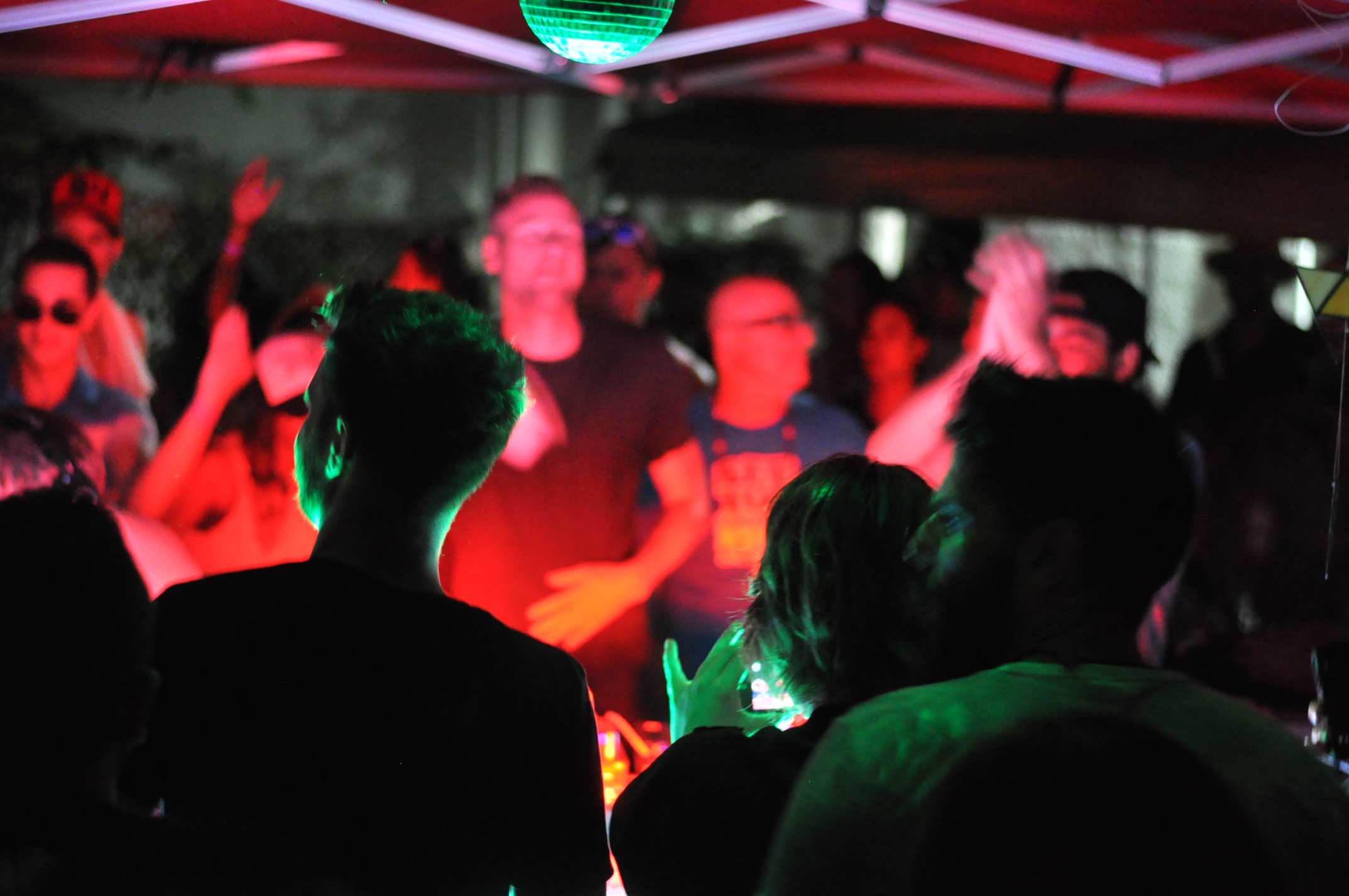
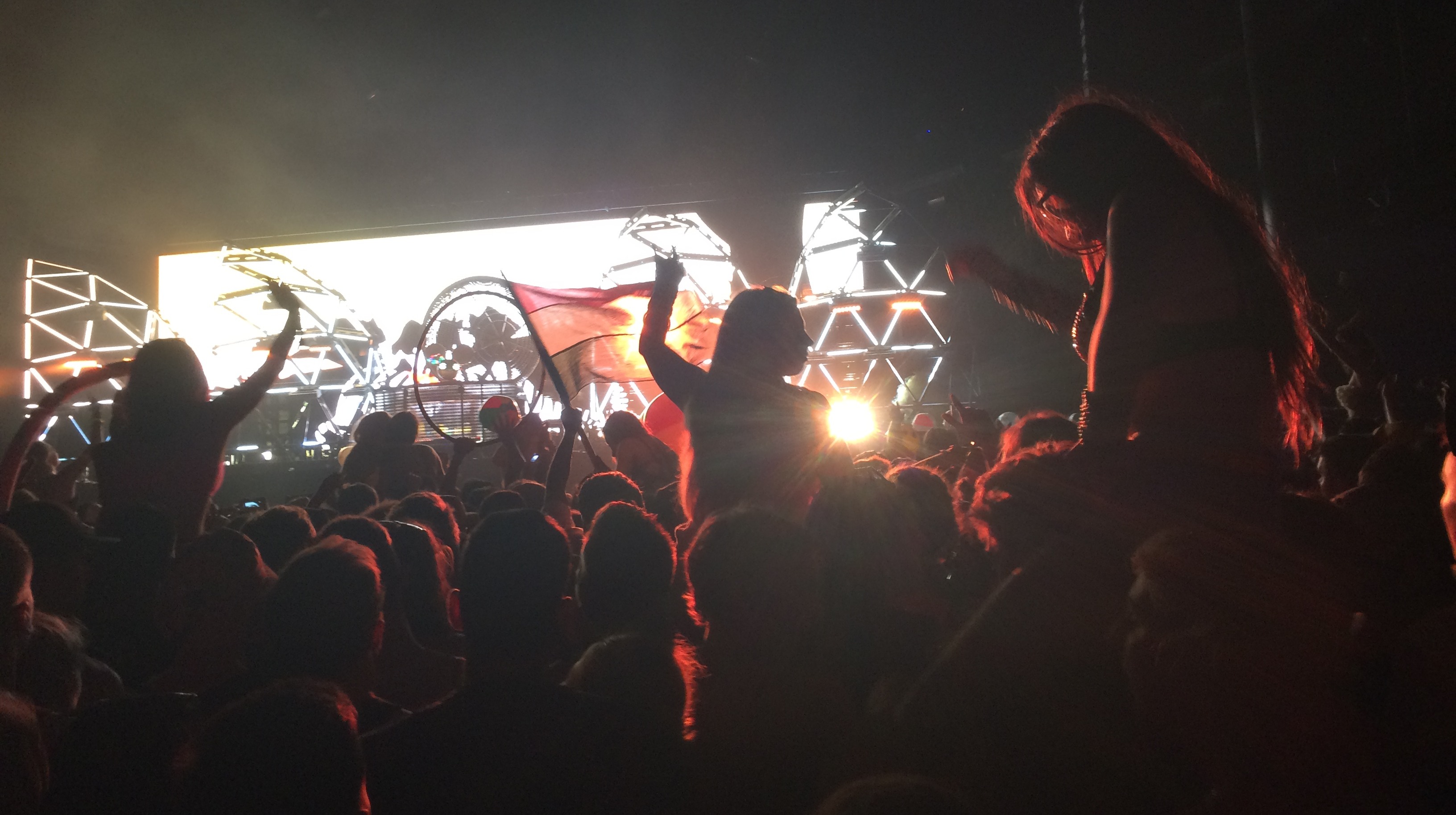
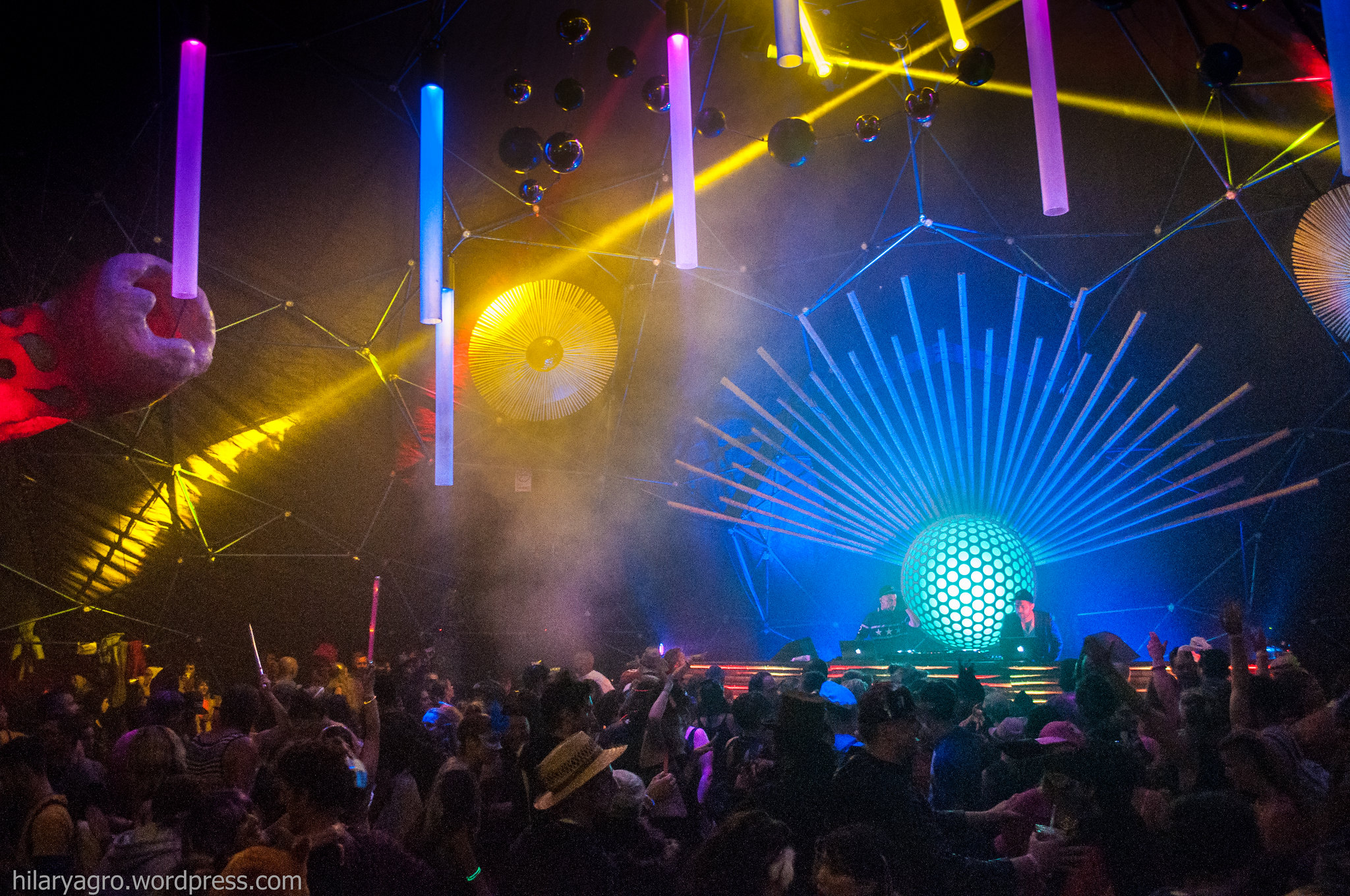
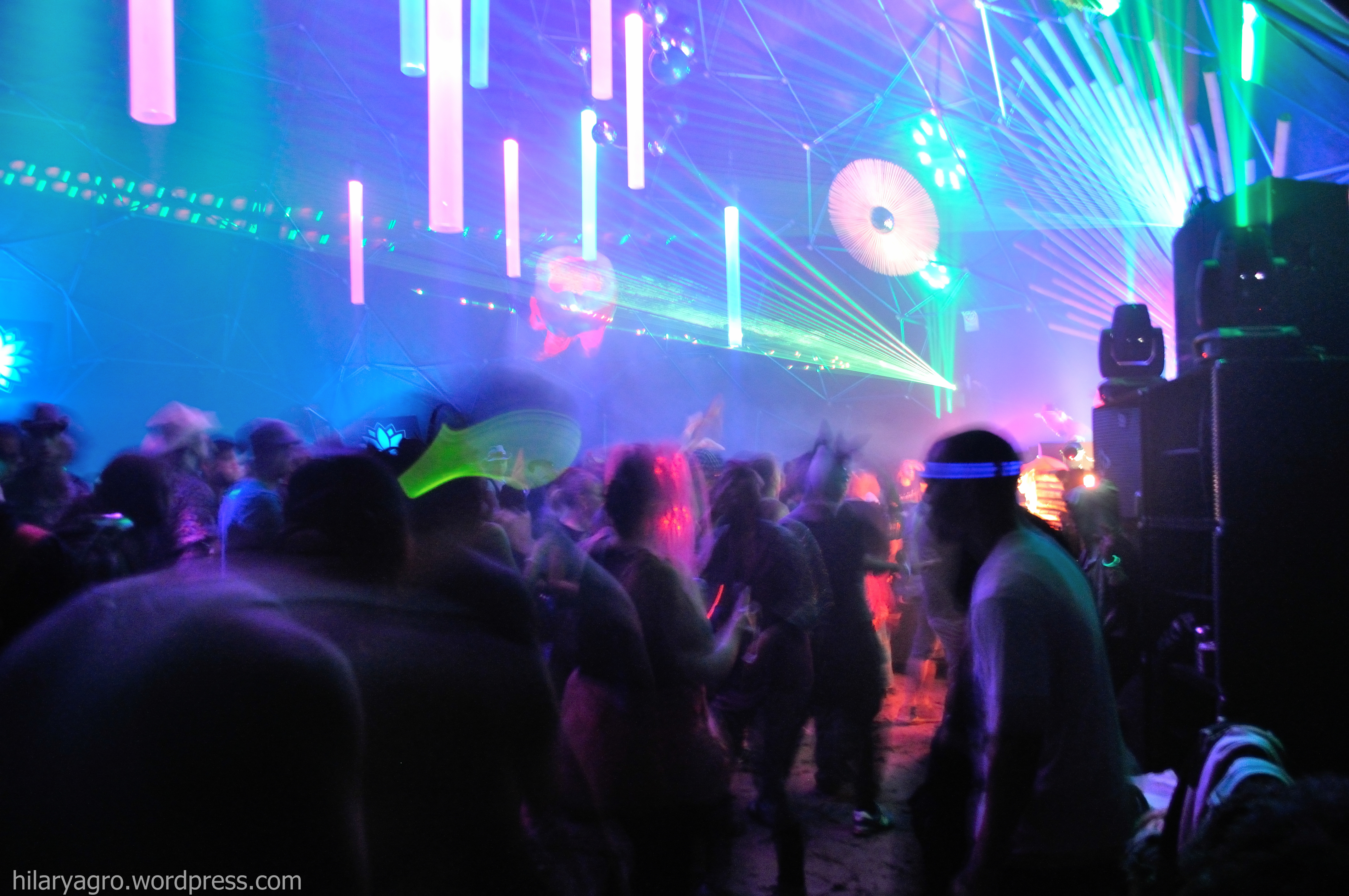
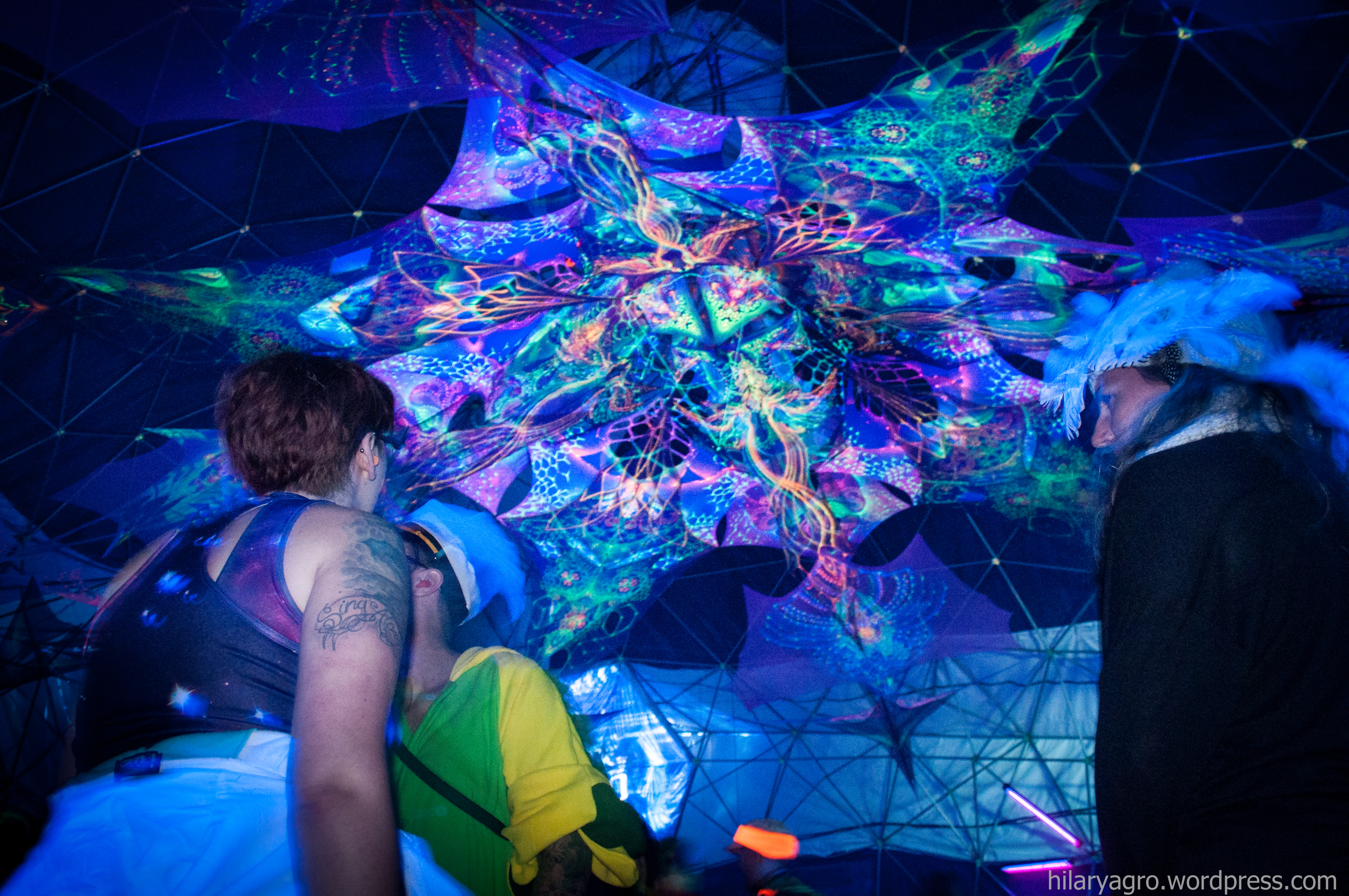
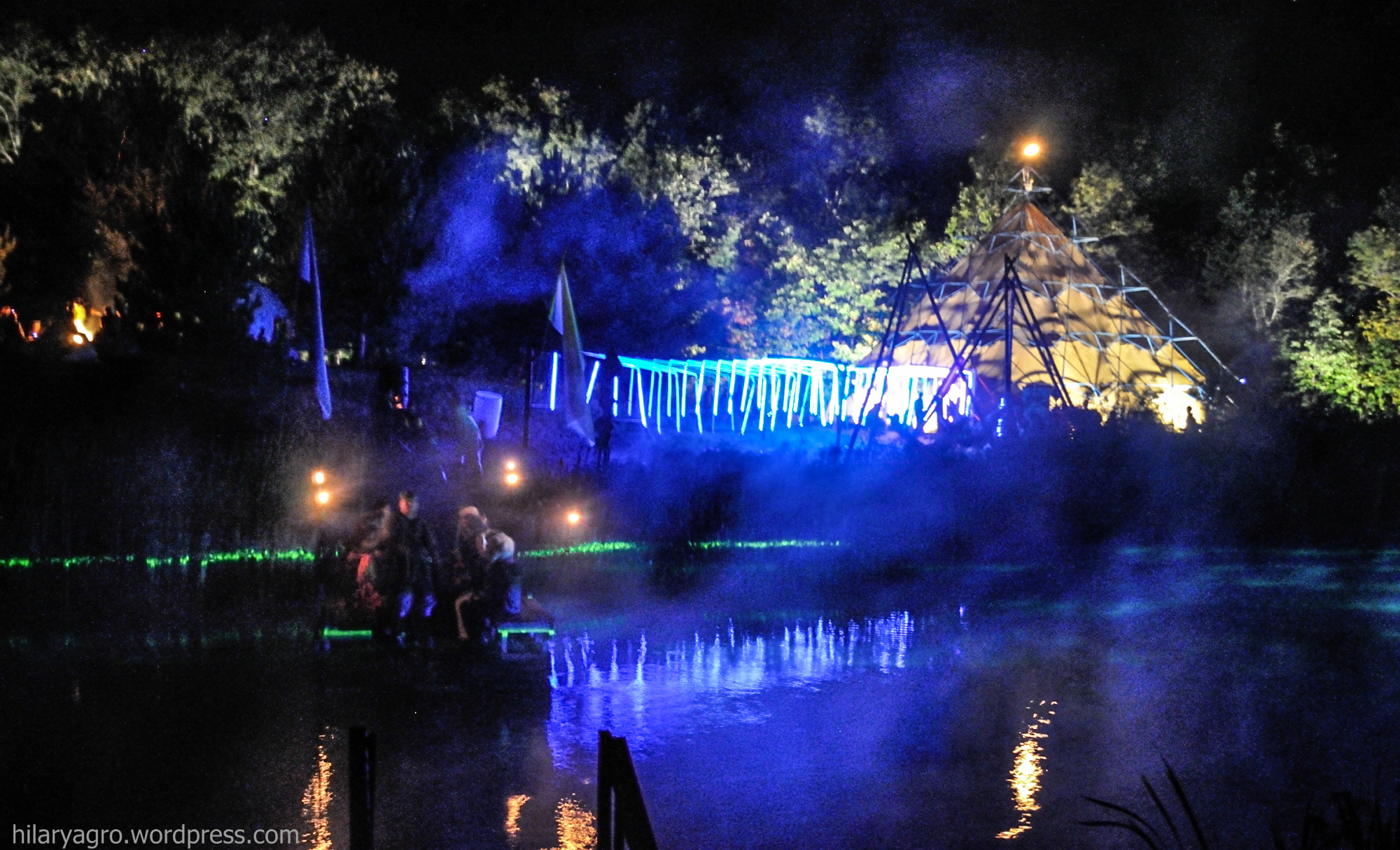
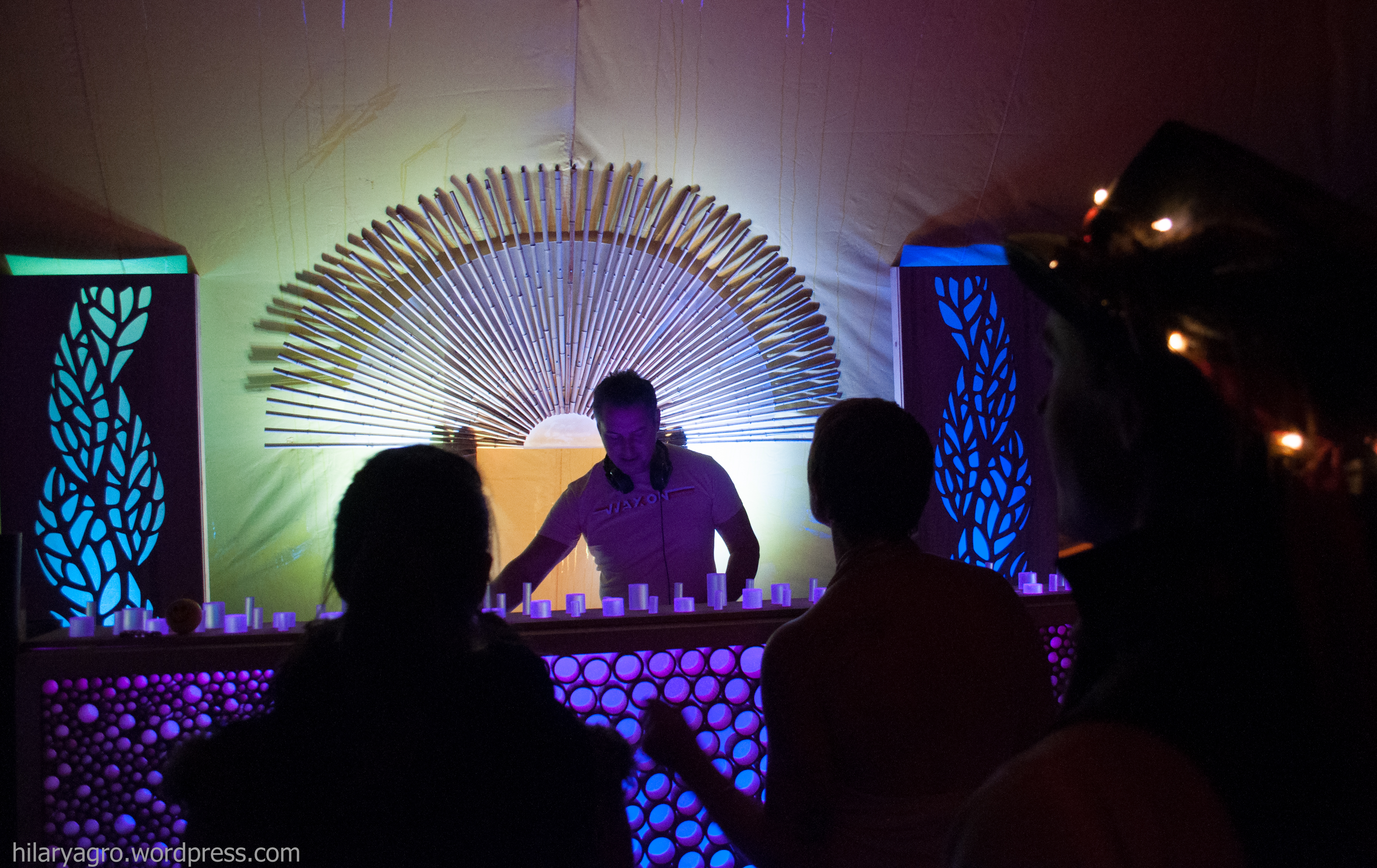
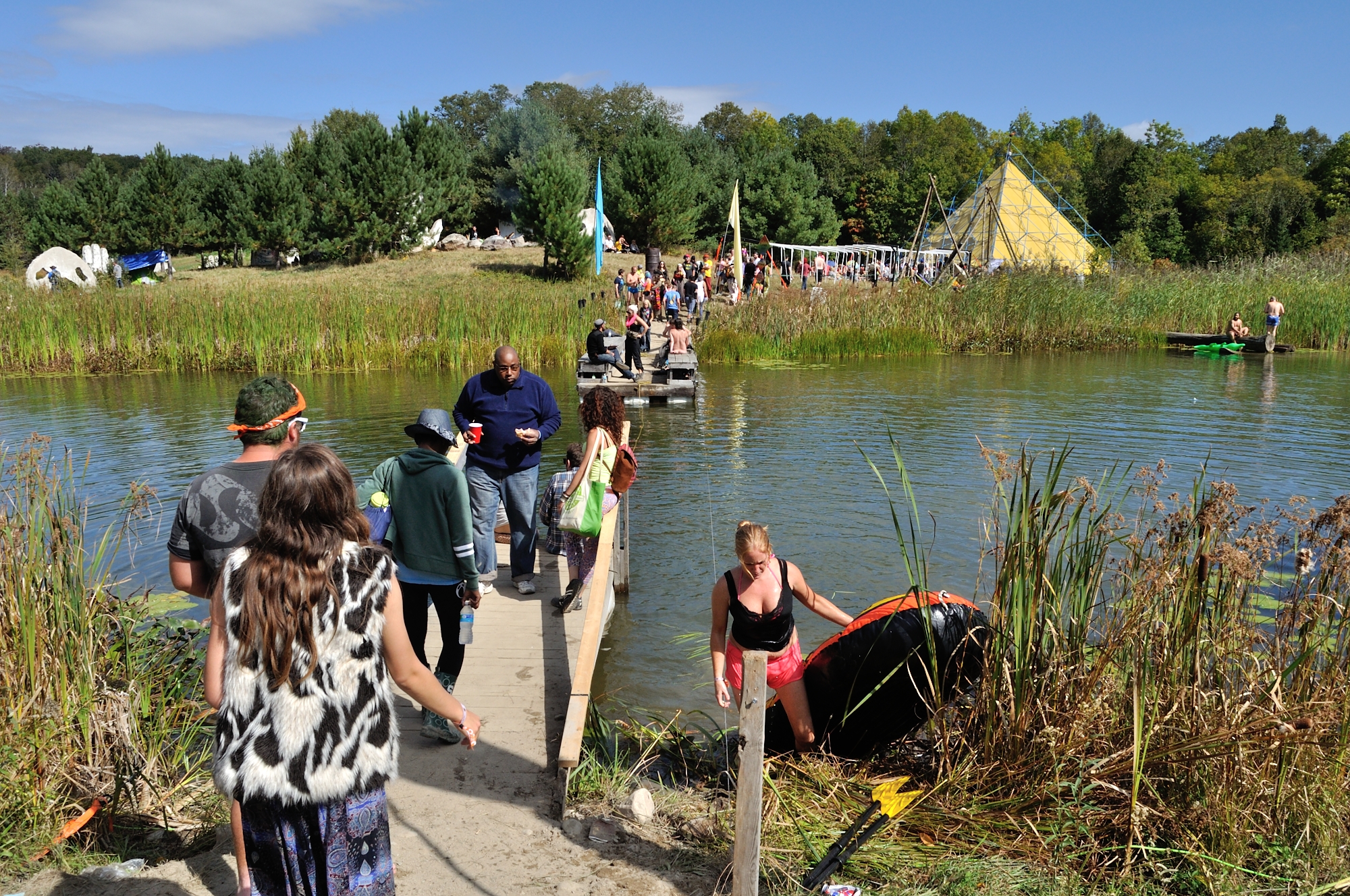
Just like humans, the process of healing is messy, and often incomplete. That is part of its beauty. The ritual, guidance, and communal healing involved in decommodified psychedelic use rooted in traditional wisdom can be seen as embodying a contained loss of control, in contrast with the disciplined pleasure of commodified drug use. The ‘container’ for the chaos, created through the rituals, allows for the porous dissolution of the self that is needed for relational healing. It is a testament to the power of these plant medicines that many people have benefited from them even when used outside of traditional or guided contexts, such as at raves and festivals (Agro 2016; Lehigh 2023). However, even non-traditional countercultural use is still usually embedded within cultural and often ritual context (Devenot et al. 2022), as forms of knowledge and practices are shared in communities of drug users and bolstered by particular practitioners in those groups who engage more deeply with writings, practices and teachings about the medicines; as well, raves and festivals involve collective trance states and the guidance of music (Hutson 2000; Jaimangal-Jones, Pritchard, and Morgan 2010). But as powerful as psychedelic medicines are, they cannot reshape society on their own. They cannot make your boss stop sexually harassing you, or keep strangers from calling you racist slurs, or bring your brother back from prison. How can we truly heal when the harm is ongoing?
The limits of individual healing
“When an individual or family in a healthy community experiences trauma, the community can hold the space for healing. But when the trauma happens to the whole community, who holds the space then?” (McCleave et al. 2024:941)
We are living in a constant state of besiegement by pandemics and genocides and overdose crises and lead and microplastics and sexual violence and failing health care systems and the commodification of everything sacred and the reactive lashings out of our panicky, terrified fellow humans: the Onslaught. Under these conditions, collective healing is complicated, but still possible. Childhood wounds can be made whole, stones turned to gold; we can gain incredible strength from community medicine through a connection to the earth and the embodied experience of feeling safe and accepted. Feeling that in one’s body even for a short time can change everything about what seems possible to a person, and how they relate to others, as it is how the fearful body can learn that safety can exist. This is a crucial part of the foundational worldbuilding work of imagining otherwise. But new wounds are constantly created by the day-to-day experience of Mother Earth’s gifts being stolen, commodified, and sold back to us (Kimmerer 2013); being forced to compete with others in order for our basic needs to be met; being alienated from each other; feeling constantly afraid of abandonment and harm if we don’t pay our rent on time or say the right things in our social group or placate people in power. We can feel in our bodies that something is deeply wrong.
However, the primary modes of healing we have access to in the West—the modes which are subsidized and sanctioned by settler colonial governments, and culturally normalized—are highly individualized and medicalized forms of psychiatry and psychotherapy. This is reflected in the current Western trend towards medicalization, both in rhetoric and in practice, of psychedelics, which
“promotes neoliberal, individualised treatments for distress, which distracts from collective efforts to address root causes of suffering through systemic change. [This discourse] subjects socially-determined distress to psychotropic intervention through the mechanisms of depoliticisation, productivisation, pathologisation, commodification, and de-collectivisation” (Davies et al. 2023:1)
The neoliberal “privatization of stress” (Fisher 2009:19) under capitalism puts the onus on the individual to deal with one’s problems, which is antithetical to the communal set and setting that supports healing through traditional medicines and rituals, and not just of the individual body but of the collective body. “The chemico-biologization of mental illness is of course strictly commensurate with its de-politicization” (Fisher 2009:37), a de-politicization which forecloses on political solutions to mental health problems (and indeed, locates these problems solely within the realm of the mind, reifying their separation from the body, spirit, collective, and ecosystem). Fisher argues that poor mental health is a paradigm of how capitalist realism operates: it’s assumed to be a natural fact of existence, but it’s actually a product of the conditions being hidden by the naturalization itself. This creates a situation in which surface-level solutions to treat the symptoms of capitalism and colonialism—including harm reduction, and policy-level interventions like voting reform and police body cams—are presented as cures to the only problems that actually exist. Vanessa spoke to how frustrating it was to be a part of this system:
Vanessa: When I was working as a counselor, it would be like, you help one person. You help them get an apartment. You help them get stabilized, all the rest of it. And then there’s another person with very similar sets of circumstances. We can help individuals. But if the structures aren’t changing, we’re just going to get caught in this continuous loop of doing the same thing over and over again. And so that was frustrating to me.
Thus, though individual and small-group healing is essential, in the context of capitalism and colonialism it can only ever be a patch-kit solution. If the legal commodification of drug production is seen as an acceptable end goal of anti-prohibition efforts, as it is by psychedelic capitalists (Davies et al. 2023; Devenot et al. 2022), the same colonial violence that underlies prohibition will continue, especially as regards labour and environmental exploitation in the Global South. If the people praising and making careers out of the “new psychedelic renaissance” were to engage with decolonial scholarship and praxis, and build solidarity with people who use non-psychedelic medicines and other anti-oppression activists who have been doing this work for decades, they would hopefully feel compelled to take a hard look at the root causes of the trauma that people are seeking to heal with psychedelics in the first place: the matrix of domination (Collins 1990). Reforms and patch-kit solutions “leave the existing colonial power-over structures in place and unchallenged, but they also leave unchallenged the entire history of genocide, theft, betrayal, oppression, and every manner of cruelty and injustice that had become the painful legacy that every Indigenous person, community, and nation now inherit” (McCaslin and Breton 2014:512).
Despite the wishful thinking of many in the world of psychedelics (Davies et al. 2023; Devenot et al. 2022), psychedelics are unfortunately not magic bullets towards universal oneness outside of cultural contexts which explicitly encourage relational values, and they fundamentally change very little about the status quo when they are disseminated and used in a colonial, hierarchical context. We know this because even neo-Nazis are using psychedelics now, and they remain neo-Nazis (Pace and Devenot 2021). “Psychedelia is no antagonist to late capitalism” (Keel 2022:415): Billionaire venture capitalist and surveillance tech mogul Peter Thiel has praised the “virgin market of for-profit psychedelics” (Brodwin 2018), promising to turn psilocybin mushroom rituals into franchised therapy centres.
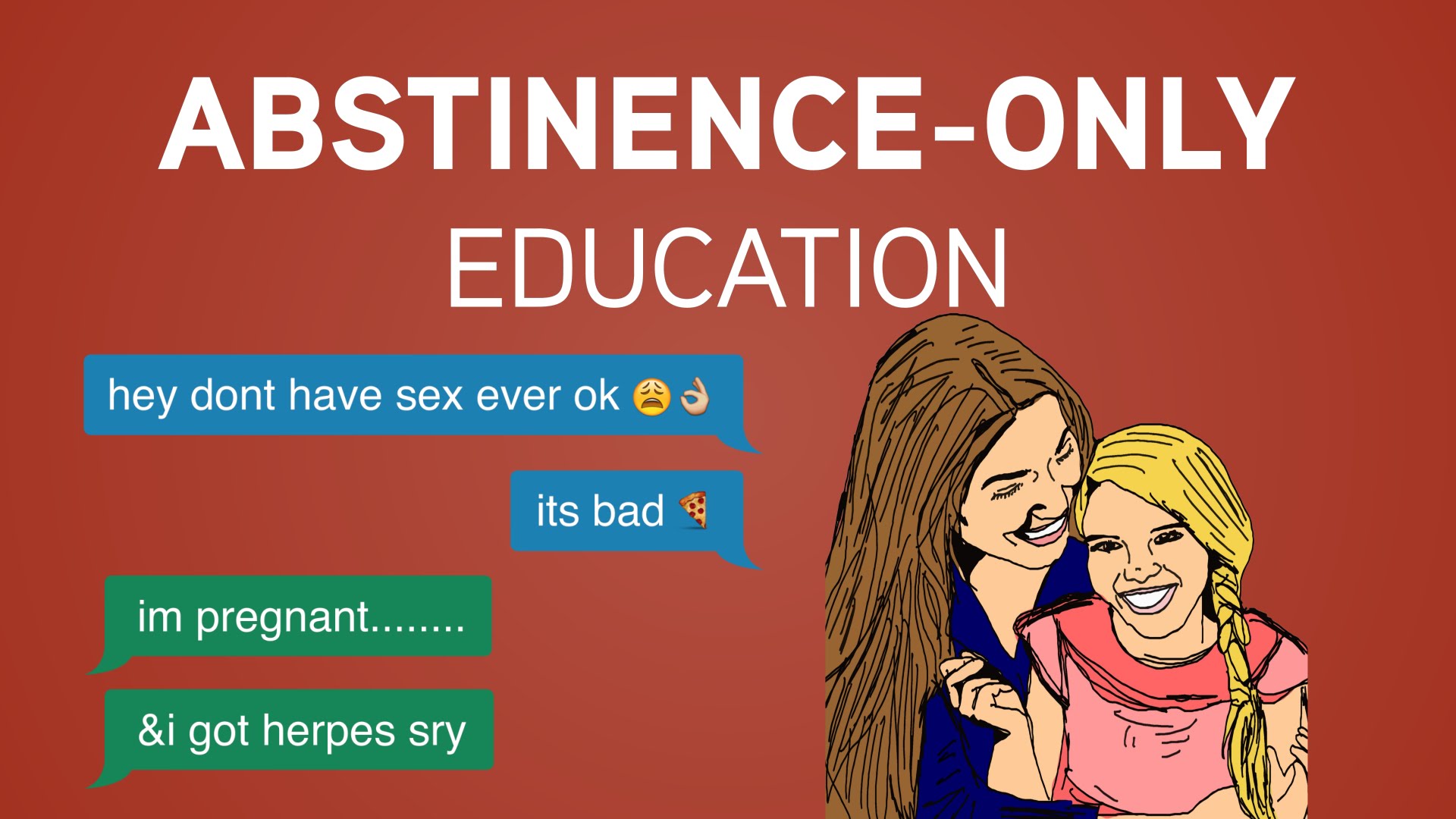
Given the cultural context of a deeply alienated, white supremacist, and individualistic Western society, it is no surprise that the lack of engagement with the wisdoms of traditional Indigenous and/or counterculturally established spiritual and cultural contexts in Western medicalized psychedelic practice is one of the major red flags that critics of the current corporatized psychedelic ‘renaissance’ have been urgently pointing to (Davies et al. 2023; Devenot et al. 2022; Lutkajtis 2020; Ross and Wright 2022; Villeneuve and Prescott 2022). Currently, the miraculous potential to treat veterans for PTSD is being publicized by psychedelic colonizers with very little discussion of ending the military imperialism that creates the conditions of veterans’ trauma in the first place. There is not much profit in preventative medicine as opposed to remedial medicine because profiteering is antithetical to human and non-human health, but prevention should be the foundation of a holistic approach to healing, as is the way of transformative justice: preventing trauma in the first place is always more effective than treating it. Much like the continued dominance of abstinence-only approaches to drug education despite evidence of their inefficacy (Ennett et al. 1994; Lee and O’Malley 2018; Rosenbaum and Hanson 1998) is based in a kind of denialism—the approach of ‘don’t teach youth about drugs, lest it encourage them to use’ is a denial of the reality that youth are naturally drawn towards consciousness alteration, especially when their lives are difficult and unfulfilling—the remedial approach being taken towards trauma treatment is founded in a denial of the material and resolvable sources of the trauma. I add my voice to a growing number of scholars (e.g. Devenot et al. 2022; Falcon 2021b; Fotiou 2019; Lutkajtis 2020; McCleave et al. 2024; Williams et al. 2022) to argue that researchers have an ethical obligation to contextualize and challenge Western psychedelic scholarship that is conducted without a material engagement with decolonization while sacred Indigenous ecologies are being commodified and exploited, and so many of our siblings are sitting in prison, locked away for producing, selling and consuming the very same medicines (cannabis, mushrooms, etc.) whose potential are currently being praised.
Addressing the root causes of trauma thus requires going deeper than the level of the individual or small groups, and instead looking at the systems of violence themselves. The people who need the most healing might actually be those perpetuating the most harm; people who have self-medicated their fears through the addictive accumulation of power over others. To this end, psychedelic medicines can potentially “serve as decolonial tools for designing consciousness, and thereby assist in reorienting human social and environmental relations toward ontologies of relatedness and interconnectedness” (Falcon 2021:144). This is only possible, however, if Indigenous needs and worldviews are prioritized in scholarship, policy and praxis, including emphasizing the material stakes of decolonization through support of Land Back movements (Tuck and Yang 2012; Williams et al. 2022). “Western worldviews hold that plants are objects to be owned, modified, and patented, versus Indigenous worldviews where plants are our living relatives and cannot be owned because they are interconnected with us all” (McCleave et al. 2024:944).
Tuck and Yang warn against uncritically subsuming decolonization into other organizing concerns, turning anti-colonialism into a metaphor or secondary concern. Decolonization is material—it’s about land: “decolonization specifically requires the repatriation of Indigenous land and life” (Tuck and Yang 2012:17). Arguably, the most effective forms of activism will attempt to resist multiple forms of oppression simultaneously. I can’t help but wonder what might happen if we understood all human and civil rights projects to be impossible without Land Back as a foundational tenet.
The land is alive, and it is not ours. It can and should be stewarded, but it cannot and should not be owned any more than a human can or should be owned. Attempts at controlling, dominating and owning the land that gives us life have mutated into the Onslaught, a void demon of our own colonial making, here to show us that we reap what we sow.
“True listening is worship. With the sense of hearing, we listen to creation. One of the great thresholds in reality is the threshold between sound and silence. All good sounds have silence near, behind and within them” (O’Donohue 1997:70).
If you appreciate this essay, please share it with others! This topic is deeply important but it makes people very uncomfortable, so it never gets as much reach as my more palatable “screw billionaires” stuff. But we need to talk about it.
I quit academia to educate without gatekeeping. I’ve compiled a ton of free resources here. If you REALLY want to get down and dirty with that decolonial life, join my Patreοn to get access to exclusive patrons-only writing and videos, including my PhD dissertation, which was embargoed by my university for being too politically spicy. If you’re on a healing journey, you can consult with me about psychedelic use.
Here are three ways to say thank you, and support this work:
Dr. Hilary Agro is an anthropologist, community organizer and mother of two young munchkins who are currently both obsessed with fart jokes.
References
Abu-Lughod, Lila. 1990. “The Romance of Resistance: Tracing Transformations of Power Through Bedouin Women.” American Ethnologist 17(1):41–55.
Agro, Hilary. 2016. “Prohibited Practice: Drug Use, Harm Reduction and Benefit Enhancement in Toronto Rave Culture.” University of Western Ontario.
Alper, Kenneth R., Howard S. Lotsof, and Charles D. Kaplan. 2008. “The Ibogaine Medical Subculture.” Journal of Ethnopharmacology 115(1):9–24.
Brodwin, Erin. 2018. “A Peter Thiel-Backed Startup Has Raised $25 Million to Unleash a ‘Virgin Market of For-Profit Psychedelic Research.’” Business Insider, October.
Brunette-Debassige, Candace. 2018. “From Subjugation to Embodied Self-in-Relation: An Indigenous Pedagogy for Decolonization.” Pp. 199–228 in Sharing Breath: Embodied Learning and Decolonization, edited by S. Batacharya and Y.-L. R. Wong. Edmonton, AB: Athabasca University Press.
Carhart-Harris, Robin L., Robert Leech, Peter J. Hellyer, Murray Shanahan, Amanda Feilding, Enzo Tagliazucchi, Dante R. Chialvo, and David Nutt. 2014. “The Entropic Brain: A Theory of Conscious States Informed by Neuroimaging Research with Psychedelic Drugs.” Frontiers in Human Neuroscience 8:1–22.
Carhart-Harris, Robin L., Suresh Muthukumaraswamy, Leor Roseman, Mendel Kaelen, Wouter Droog, Kevin Murphy, Enzo Tagliazucchi, Eduardo E. Schenberg, Timothy Nest, Csaba Orban, Robert Leech, Luke T. Williams, Tim M. Williams, Mark Bolstridge, Ben Sessa, John McGonigle, Martin I. Sereno, David Nichols, Peter J. Hellyer, Peter Hobden, John Evans, Krish D. Singh, Richard G. Wise, H. Valerie Curran, Amanda Feilding, and David J. Nutt. 2016. “Neural Correlates of the LSD Experience Revealed by Multimodal Neuroimaging.” Proceedings of the National Academy of Sciences of the United States of America 113(17):4853–58.
Collins, Patricia Hill. 1990. “Black Feminist Thought in the Matrix of Domination.” Pp. 541–52 in Black Feminist Thought: Knowledge, Consciousness, and the Politics of Empowerment. Boston: Unwin Hyman.
Coulthard, Glen Sean. 2020. “Once Were Maoists: Third World Currents in Fourth World Anti-Colonialism, Vancouver, 1967–1975.” Pp. 378–391 in Routledge Handbook of Critical Indigenous Studies, edited by B. Hokowhitu, A. Moreton-Robinson, L. Tuhiwai-Smith, C. Andersen, and S. Larkin. London: Routledge.
Davies, James, Brian A. Pace, and Neşe Devenot. 2023. “Beyond the Psychedelic Hype: Exploring the Persistence of the Neoliberal Paradigm.” Journal of Psychedelic Studies 7:1–13.
Devenot, Neşe, Trey Conner, and Richard Doyle. 2022. “Dark Side of the Shroom: Erasing Indigenous and Counterculture Wisdoms with Psychedelic Capitalism, and the Open Source Alternative, or, A Manifesto for Psychonauts.” Anthropology of Consciousness 33(2):476–505.
Ennett, S. T., N. S. Tobler, C. L. Ringwalt, and R. L. Flewelling. 1994. “How Effective Is Drug Abuse Resistance Education? A Meta-Analysis of Project DARE Outcome Evaluations.” American Journal of Public Health 84(9):1394–1401.
Estes, Nick. 2024. Our History Is the Future: Standing Rock Versus the Dakota Access Pipeline, and the Long Tradition of Indigenous Resistance. Chicago: Haymarket Books.
Falcon, Joshua. 2021a. “Designing Consciousness: Psychedelics as Ontological Design Tools for Decolonizing Consciousness.” Design and Culture 13(2):143–63.
Falcon, Joshua. 2021b. “Situating Psychedelics and the War on Drugs Within the Decolonization of Consciousness.” Acme 20(2):151–70.
Fernandez, James W. and Renate L. Fernandez. 2001. “‘Returning to the Path’: The Use of Iboga(Ine) in an Equatorial African Ritual Context and the Binding of Time, Space, and Social Relationships.” Alkaloids: Chemistry and Biology 56:235–47.
Fisher, Mark. 2009. Capitalist Realism. Winchester, UK: Zero Books.
Fotiou, Evgenia. 2016. “The Globalization of Ayahuasca Shamanism and the Erasure of Indigenous Shamanism.” Anthropology of Consciousness 27(2):151–79.
Fotiou, Evgenia. 2019. “The Role of Indigenous Knowledges in Psychedelic Science.” Journal of Psychedelic Studies 4(1):16–23.
Gearin, Alex K. and Neşe Devenot. 2021. “Psychedelic Medicalization, Public Discourse, and the Morality of Ego Dissolution.” International Journal of Cultural Studies 24(6):917–35.
Gow, Peter. 1994. “River People: Shamanism and History in Western Amazonia.” Pp. 90–113 in Shamanism, History, and the State, edited by N. Thomas and C. Humphrey. Ann Arbor: University of Michigan Press.
Graham, Owain J., Gary Rojas Saucedo, and Matteo Politi. 2023. “Experiences of Listening to Icaros during Ayahuasca Ceremonies at Centro Takiwasi: An Interpretive Phenomenological Analysis.” Anthropology of Consciousness 34(1):35–67.
Hutson, S. R. 2000. “The Rave: Spiritual Healing in Modern Western Subcultures.” Anthropological Quarterly 73(1):35–49.
Jaimangal-Jones, Dewi, Annette Pritchard, and Nigel Morgan. 2010. “Going the Distance: Locating Journey, Liminality and Rites of Passage in Dance Music Experiences.” Leisure Studies 29(3):253–68.
Keel, Mat. 2022. “Neuro-Plastic Shamanism? Towards a Political Ontology of Whiteness and the Psychedelic Zeitgeist.” Anthropology of Consciousness 33(2):412–42.
Kimmerer, Robin Wall. 2013. Braiding Sweetgrass. Minneapolis, MN: Milkweed Editions.
Kohek, Maja, Maurice Ohren, Paul Hornby, Miguel Ángel Alcázar-Córcoles, and José Carlos Bouso. 2020. “The Ibogaine Experience: A Qualitative Study on the Acute Subjective Effects of Ibogaine.” Anthropology of Consciousness 31(1):91–119.
Kopnina, Helen. 2019. “Anthropocentrism and Post‐Humanism.” Pp. 1–8 in The International Encyclopedia of Anthropology, edited by H. Callan. Hoboken, NJ: Wiley.
Lee, Heather Sophia and Denalee O’Malley. 2018. “Abstinence-Only: Are You Not Working the Program or Is the Program Not Working for You?” Journal of Social Work Practice in the Addictions 18(3):289–304.
Lehigh, Gabrielle R. 2023. “Transformative Psychedelic Experiences at Music Events: Using Subjective Experience to Explore Chemosocial Assemblages of Culture.”
Lutkajtis, Anna. 2020. “Lost Saints: Desacralization, Spiritual Abuse and Magic Mushrooms.” Fieldwork in Religion 14(2):118–39.
Masco, Joseph. 2023. “The Condition of Our Condition.” Pp. 277–96 in Sovereignty Unhinged: An Illustrated Primer for the Study of Present Intensities, Disavowals, and Temporal Derangements, edited by D. A. Thomas and J. Masco. Durham, NC: Duke University Press.
McCaslin, Wanda D. and Denise C. Breton. 2014. “Justice as Healing: Going Outside the Colonizers’ Cage.” Pp. 511–31 in Handbook of Critical and Indigenous Methodologies, edited by N. K. Denzin, Y. S. Lincoln, and L. T. Smith. Thousand Oaks, CA: SAGE Publications.
McCleave, Christine Diindiisi, Susan Beaulieu, Rainbow Lopez, and Joseph Tafur. 2024. “Traditional and Indigenous Perspectives on Healing Trauma With Psychedelic Plant Medicines.” International Journal of Mental Health and Addiction 22(2):938–50.
Metzl, Jonathan. 2019. Dying of Whiteness: How the Politics of Racial Resentment Is Killing America’s Heartland. New York: Basic Books.
O’Donohue, John. 1997. Anam Cara: A Book of Celtic Wisdom. New York, NY: Harper Perennial.
O’Shaughnessy, Ruth, Katherine Berry, Rudi Dallos, and Karen Bateson. 2023. Attachment Theory: The Basics. New York: Routledge.
Pace, Brian A. and Neşe Devenot. 2021. “Right-Wing Psychedelia: Case Studies in Cultural Plasticity and Political Pluripotency.” Frontiers in Psychology 12:733185.
Rosenbaum, Dennis P. and Gordon S. Hanson. 1998. “Assessing the Effects of School-Based Drug Education: A Six-Year Multilevel Analysis of Project D.A.R.E.” Journal of Research in Crime and Delinquency 35(4):381–412.
Ross, Lily Kay and David Nickles. 2021. “The Trials of Rick Doblin.”
Ross, Lily Kay and iO Tillett Wright. 2022. “Cover Story: Power Trip.”
Todd, Zoe. 2016. “An Indigenous Feminist’s Take On The Ontological Turn: ‘Ontology’ Is Just Another Word For Colonialism.” Journal of Historical Sociology 29(1):4–22.
Tuck, Eve and K. Wayne Yang. 2012. “Decolonization Is Not a Metaphor.” Decolonization: Indigeneity, Education & Society 1(1):1–40.
Villeneuve, Natalie and D. Prescott. 2022. “Examining the Dark Sides of Psychedelic Therapy.” Association For The Treatment Of Sexual Abusers 34(3):1–12.
Williams, Keith, Osiris Sinuhé González Romero, Michelle Braunstein, and Suzanne Brant. 2022. “Indigenous Philosophies and the ‘Psychedelic Renaissance.’” Anthropology of Consciousness 33(2):506–27.
[1] This could be seen in less structured contexts as well such as festivals and small-group ‘trips,’ in which the nature and community aspects, remain. Festival environments also facilitate the healing experience through the structuring aspects of dance and music.
I’m an anthropologist doing my PhD on activism and organizing. I’ve also been an organizer myself for over a decade, primarily focusing on drug policy, but also coalition-building between different groups of people impacted by capitalism (aka, the entire working class). Right now, more than I’ve ever seen in my lifetime, people are ready for change and hungry to take action. So my goal is to facilitate transferring knowledge and experience from seasoned activists to newer ones, so people don’t have to learn lessons the hard way, and we can be as effective as possible in transitioning to a world that isn’t shitty. So here’s what I’ve found so far about what actually works, and what doesn’t.
What works:
“Hope doesn’t preclude feeling sadness or frustration or anger or any other emotion that makes total sense. Hope isn’t an emotion, you know? Hope is not optimism. Hope is a discipline… we have to practice it every single day.” — Mariame Kaba
Building community by making people feel welcome. This is the first and most important step. People won’t trust you if they think you don’t care about them or aren’t actually listening to their needs. Prove to them you care about them first, and create spaces where they feel welcomed, included, listened to and valued.
“[A woman in the group] really started to encourage me and welcome me, like, ‘hey, you’re good at this, you understand what you’re talking about and have passion. Would you consider joining the board and being more involved?'” – a Canadian activist I interviewed on why she got involved with a group
Leveraging labour power – it’s all we’ve got. Unionize and strike.
Targeted, specific, strategic goals.
Creating coalitions based on bonds of trust and support.
Balancing learning with praxis.
Understanding intersectionality.
Seeing all struggles as interconnected.
Being kind to people and hard on systems. (E.g., it’s not “men” that are the problem, it’s patriarchal masculinity. People can and do break free of the systems & programming that are causing them to harm others.)
Practicing hope as a discipline. It’s an action, it’s something you practice, not a feeling.
What doesn’t often work:
Using shame (especially on working class people) – I can’t stress this one enough. You were disciplined using shame in your childhood – how did that make you feel? How do you wish you were treated instead? Probably with patience, kindness, love and clear boundaries. Start treating others, and yourself, that way.
Begging politicians – they don’t care. They only respond to leverage.
Spending all your time reading theory.
Arguing with strangers online.
Dehumanizing others (including people who you disagree with, even people who dehumanize you. This is very hard, but it’s essential).
Playing oppression olympics rather than looking for the overlaps in our struggles.
Nihilism, especially when you tell others there’s nothing we can do – every time you do that, Jeff Bezos smiles and pours himself another glass of adrenochrome.
Relying on saviours, politicians, or anyone with power.
This is not a complete list by any means, just a bit of what’s come out of my own organizing experience and my research (working with & interviewing dozens of seasoned activists). I’m (agonizingly, painstakingly) writing a whole dissertation about it, but I want to start posting tidbits like this on my blog like I used to!
Feel free to leave a comment and discuss with your friends and comrades, and remember:
Focus on what actually works, not what you wish worked. Interrogate whether an approach is based in hate and catharsis, or love and care with a clear-minded appraisal of a situation. What evidence do you have that a certain tactic is effective? What else could be tried? What feels good in your body to do?
For more information and resources, poke around this list! Or just go straight for the best resource by reading the book Let This Radicalize You by Mariame Kaba and Kelly Hayes.
The work I do to put together resources like this and organize in my community takes a lot of time and energy, and I do it for free in my limited spare time as a grad student and mother of two small children.If you are grateful for my work and want to support me making more of it, your help is deeply appreciated and will go to feeding myself and my two little kids:
A former criminal defense attorney himself, he sold cannabis in Pennsylvania, a state where it’s legal. But it’s still illegal federally, and now he’s spending the next 5 years of his life in a cage, torn from his family. He left me the letter below to share with you. They are his parting words. Share them with anyone who still doesn’t understand how the War on Drugs is destroying lives.
To hear the whole story of what happened to him, listen to my interview with Dan, or read one of the articles linked below the letter.
To all free people,
By the time you read this I’ll be inside a federal prison for the first day of my five year sentence for cannabis trafficking.
The last few weeks have been a dystopic and sickening blur as I sought to wind down what was left of my life as a nominally free man.
Tonight will be the last night I sleep next to my wife in several years and tomorrow will be the last time we kiss, touch, or hold one another until I’m free or COVID restrictions cease, an unlikely prospect given the rapacious and adaptable nature of the virus and the utter recalcitrance of the staff to be properly vaccinated. My prison is in “Let’s Go Brandon” country and little as I like Biden I at least agree people should be vaccinated.
This small digression was to provide context for why I will most likely pass my first few weeks to a month inside in quarantine, unable to leave my dorm, obtain commissary, or interact with my new environment. I probably won’t have access to much else save a bunk and a few rancid meals a day until such time as I’m deemed fit to enter the compound and begin my prison life in earnest. The fact I’m vaxxed and double boosted is meaningless although it may keep me alive through the inevitable multiple COVID cases I will be infected with during my sojurn in the human petri dish sans medical care that is prison in America.
My release date will be almost 5 years to the day I walk in, whenever they bother to update it.
Now my personal space will be truncated to a bunk. I will answer largely to a number, stand to be counted, wear only a uniform, and have my day subject to the whim and will of staff, guards, and counselors.
My life in any sense one would want to live it is over for quite a while.
Some people find meaning in this suffering. They rise above it and forge an architecture of righteousness and purpose. Others, poisoned by the assaultive nature of confinement and its incessant aggressions, humiliations, depredations, and losses oscillate between depression and rage, their souls brittle and unable to ever embark any meaningful joys or salutory impulses like patience or peace. The former exit emboldened with a mission to do good. The latter with a wish to die.
I don’t know which I’ll be. I know which I aspire to. But any prediction smacks of the premature.
I can only do what every convict with a release date can do: take it day by day.
For how many days? I do not know.
I don’t know the future. I do know pain.
I’ve experienced agony behind this process that I cannot adequately describe. My abilities fall so short to convey the terror, rage, helplessness, loss, and stultifying, suicidal depression that takes hold of one when a Damoclean sword hangs over one’s head for years on end.
My wife and I strove so mightily to create a new life for ourselves. Away from the risk and pain of my previous life and line of work.
There were some beautiful moments inside of that interstitial fever dream of a life.
We tried to adopt a child. We stood in the high desert Mesa near Taos and hugged narrow mountain passes to siesta at Alpine lakes.
We smoked chopper joints at the rocky Maine coast and watched the spray break on the gray ziggaraut of rock that jutted like an alien edifice or battlement, crenelated and speckled with tidal pools suspended at heights far above the rolling floor of green glassed thunder that leapt at impact.
We saw seals roost at the coves in La Jolla and watched a technicolor sun paint the palms each night.
We sat on a loamy berm above Algiers Point New Orleans with colorful overpainted Queen Anne’s and shotgun bungalows lifted four feet off the dusty ground and watched Oil Tankers and and barges wend their way down the placid, muddied, riverine highway of the Mississippi.
The copper adobe azure sky with Pueblo Terra Cotta of an Indian village outside of Santa Fe and the black glass glacis of the stratotowers of Midtown Manhattan.
We went everywhere COVID would let us post Vax because we knew on some base, elemental level that our world was fragile. One phone call would end it like the Death Star’s laser pulverizing Alderaan.
And one humid night after a mundane day in what would going to be a beautiful life that call came.
We lost our child to be, our sanity, peace, hope, and future.
My refusal to cooperate is well documented. We don’t have to masticate that morsel again.
Instead I want you to know that my mother felt frail when I hugged her goodbye and she shook when she wept. She felt leaflike in my arms. Her 300lb son hugging her 90lb frame while we both sobbed.
My father cried in a way I’d never seen him do in my entire 40 years. His grief so raw and seismic that it almost separated my feet from the ground when it pulsed like orange magma from steaming crater.
I didn’t want to cry after I left them. I wanted to die. I never wanted to see that again and know I caused it. But I did. This did.
My wife and I passed our last night in loving embrace. Whispering our dreams to each other. Things many of you take for granted. Peace. Freedom. Hope. A chance to be together again. I haven’t left her side since 2003 for more than a few months on tour and now I will be gone years.
The gods gave Odysseus and Penelope an eternal night at one point. But no delphic deities touched here. Ours ends at dawn.
She’s my world. And I’m leaving her.
She should have my presence and protection. My love and attention. Instead I leave her with a tear spattered kiss and depart.
I met some of the fellas and said goodbye.
We hugged and slapped backs.
Til the next time, we said. We joked about past travails… the bum deals and the near misses. The fast money and the teeth cracking Ls.
I on boarded a rapid fire stream of advice about prison life as they imparted their wisdom and my friend called from Otisville.
Get your Pax # he said.
112# gets you on the payphone. You’ll be quarantined. Stay level.
He said one day we’d be cracking lobsters next to our wives and eating babka for dessert.
I won’t see or hear from him for years. We’d spoken nearly every day since 2019. He’s been in since 2020.
Before I left one friend said:
Thank you. Thank you for keeping me free. You know what you did. And it’s appreciated.
I said it was my pleasure. And it is.
I didn’t do what I did to buck authority.
I didn’t do it to be a gangster or want to be one.
I didn’t do it to burnish a rep.
I did it for love.
I’m not a hero. I’m a crook. Your parents are heroes. Doctors are heroes. People who house the homeless are heroes. Democracy activists and community organizers are heroes. Not me. .
What I did is the baseline of what a decent human being should do.
I didn’t emmiserate the next person so as to diminish my own fear or pain.
I could never do to another person what was done to me here.
No one else’s wife or mother or father or brother should have to feel like this.
No one else should be sitting in the bedroom in these scant predawn hours so wracked with grief and stress that sleep is a fantastic myth for the nth night running writing their farewell missive to the world, physically ill from sadness, loss, and trepidation.
I look at our wall art, our pillows, and most of all her and I know that I won’t be here for YEARS and I die inside. Each heartbeat is poison pain.
But I could never make anyone trade with me. So I will go. My fate is sealed.
I love the people I saved. Those whom I’m close with and those I never will speak to again. I can one day sleep again knowing that they are free no matter what happened to me.
And although all I want is to be with my wife again for just one more night I also understand I could never be with her at peace knowing my freedom was purchased by the incarceration of others.
Love of humanity. Love of good. Love of my family. Love of an ideal that should be followed even if others break it.
To inform was based in fear. It’s opposite was always based in love.
Remember me well,
I will miss the world fiercely,
But most of all I’ll miss my wife, she is my world.
When I ran away from that raid lurching to freedom I just wanted to see her one more time.
And now as I say goodbye to her and depart for captivity my wish is unaltered.
“Just let me see her one more time….just one more time….I have to make it….one more time.”
Till that time,
Daniel Muessig 61770-509 FCI Morgantown 60 months No cooperation
Dan has asked people to do just one thing, which is to sign this pledge: No Pardons, No Votes. http://pardonsnow.com Agitate your elected officials. Tell them to legalize cannabis (and all drugs) and pardon cannabis (and all drug) prisoners.
Note: I do this abolitionist/anti-prohibition work in my spare time, and it costs a lot in child care money. If you want to help me keep doing it, please consider sending a tip on PayPal, supporting me on Patreon, or sending some diapers for my baby from my Amazon registry. I’m a grad student and mother of two trying to fight against the devastation of the Drug War—every little bit helps.
Other places to find me on the internetranting about drug policy, criminal justice reform, capitalism, psychedelics and anthropology:
I talked to a lot of middle-class recreational drug users for my research. None of them had any idea when they were younger that they’d end up dropping acid on a regular basis when they became successful adults. Very few of them grew up in explicitly drug-positive environments, or even around healthy drug using behaviours. Some, in fact, experienced trauma caused by family alcoholism. (One person, Brad, who did grow up with parents who used recreational drugs, actually ended up adopting a teetotalling stance until age 30 as his form of rebellion1: “My parents were really disappointed. They genuinely were like, ‘Brad we’re really worried about you, you’re not gonna try drugs?'”)
Everyone I talked to remembered being taught anti-drug messages in school, and many were staunchly against drug use themselves as teenagers and young adults.
Dave: I had basically not even smoked weed at that point in my life. The only thing I’d ever done was drink alcohol. I was like, OK, I’ll have a drink, but like, I will not do drugs. I’m not going to throw my life away.
Adam: I was one of those people who years ago, I would have told you, no, I would never do those drugs, drugs are bad, drugs kill people.
So why, then, did they change their minds and start experimenting with consciousness alteration?
Everything is fair game for an anthropologist’s office. You should see my hilarious collection of Far Side comics.
There was a really interesting pattern that came up in discussions of this topic. Without exception, every time I asked a person if they remembered anti-drug education in school, I would be met with the same reaction: a smile and a laugh. They would reminisce on how ridiculous scare tactics are as an educational strategy, chuckling as they remembered advertisements cracking brain-eggs into a frying pan or portraying the average drug user as a person with, as Ella put it, “your teeth falling out, skin all scaly and whatnot”. (“I actually watch those ads on YouTube sometimes because I just think they’re funny,” said Mandy.) They really are pretty funny. I have a “Reefer Madness” poster in my office, partly as a reminder of the messed-up, racist origins of North American drug policy and how that “Danger Will Robinson” paradigm continues today, and partly because it’s hilarious. When drug users laugh at this kind of scare tactic, the laughter comes not only from the ironic awareness that anti-drug education clearly did not work for them, but from the knowledge of how incredibly sensationalized and counterproductive it is in general.
The funniest part is this: Often, drug users talk about how, after being bombarded by frightening images of the worst possible effects of drug use, those internalized messages would actually backfire and have the exact opposite effect of their intention when they ended up trying illegal drugs for the first time. When none of the doomsday predictions come true after their first few times, users are left questioning the accuracy of all of the narratives they’d been given about drugs—including important ones about actual potential dangers.
Eleanor: They do all these anti-drug campaigns, and then you like, smoke weed for the first time. And then you’re like, oh it wasn’t even bad, and you’re like, OK now they’re lying.
Because “You’ll probably dance a lot, hug all your friends and then maybe have a light headache in the morning” isn’t going to terrify the youth.
The only narratives about drug use offered in an educational context are negative and completely over-the-top. When these narratives fail to prevent use, they’re promptly rejected as incongruent with the actual, real experience of being high. A lot of people are underwhelmed, even, after all the drama and hype around illegal drugs. (Fun fact: Your odds of seeing flying purple elephants on a starter dose of magic mushrooms are pretty low.)
Bobby is a 30-year-old raver from Toronto with an impeccable memory and a sweet disposition. He told me about how, when he was just starting to explore the scene, the stigma he had associated with drug users due to educational scare tactics was challenged when he found out that a good friend of his used illegal drugs. This change in perspective in turn caused him to decide to try them himself.
Bobby: I thought about it for a while before I decided to actually do it. And really the main reason I did it was, my best friend at the time—who I went to high school with and spent most of my time around at that time—him and I started going out, he kind of pulled me into the club scene with him. And then, I didn’t even realize it at the time until after a few months, I somehow found out that he’d been doing ecstasy the whole time and I never even knew about it.
In coming to learn that, that’s when I realized, oh okay, maybe drugs aren’t so bad and evil like I was taught, you know. Like as a kid, that’s what we were all taught. I expected this big change in someone and they’d just turn into this person, you know, this evil person, and I didn’t see that, so I was actually kind of shocked and surprised, like really? I didn’t believe him, and he said ‘yeah, I’m on it right now’. And I said oh, okay, well, what does it feel like? And he started telling me more, and I guess gears started turning in my head, and I got curious about it.
And I did a bit of reading and stuff, you know, I Googled it, just to learn some more information, in order to make an informed decision, I guess. So then, yeah, on New Year’s I decided that would be the first time to do it, I waited long enough. So that was the first street drug that I took.
Drug negativity and sex negativity all in one fear-mongering package! Two stigmas for the price of one!
However, from I think age 14 or 15 I was medicated with Ritalin and then Concerta and then Dexedrine. So I guess I had already established some sort of ongoing drug usage.2
But then, what is there to replace those scary life-ruining narratives with? If they’re wrong about pot or ecstasy, what other lies have they told? What else is out there? Curious, bright-eyed little budding drug users are left with nothing to guide them except information from other users and their own personal experimentation. And that’s where problems start. Unchecked experimentation without informed guidelines and boundaries is the main source of bad drug experiences, especially when constrained by access only to unregulated substances (looking at you, prohibition. Man you are just the absolute worst).
Without being armed with any sort of accurate, balanced information about drugs, safe usage or harm reduction, inquisitive experimenters are left to find out for themselves about harms and benefits, relying on their peers and on their own process of trial-and-error to discover a more rounded picture of the world of psychoactive substances. And since not everyone knows about Erowid, you can imagine what kind of ridiculously preventable crap can happen when ‘figuring it out as you go along’ is how it’s done. “Oops, okay, so apparently you shouldn’t re-dose GHB if it’s been less than an hour since your first dose. Too bad I found that out the hard way, by puking on my friend’s shoes and passing out in the middle of a Bassnectar concert. Would have been nice to know beforehand.”
This trial-and-error is a process that often causes damages that could have been be easily avoided had they had access to balanced information about drugs in the first place, framed by a critical-thinking orientation and informed by attention paid to all aspects of drugs’ place in human life: good, bad and neutral. It also—this is where we get into the really controversial stuff—might be preventing a lot of people from experiencing significant benefits from some drugs, especially psychedelics and MDMA.
Don’t do drugs, k gotcha. I can still get wasted on jager though, right? Alcohol’s not a drug.
Scare tactics might prevent some teenagers from trying psychoactive substances, but they leave those who do end up trying them woefully unprepared. Sound familiar? It’s because we’ve already accepted that abstinence-only education is a gigantic, steaming pile of failure when it comes to sex. Sex is an unavoidable part of life, teenagers included, despite what the puritans would like to believe. But guess what–today, right now, in our culture, drugs are an unavoidable part of life too. The odds are extremely good that you’re under the influence of a drug right now. My guess would be caffeine, especially if it’s morning when you’re reading this. Maybe it’s the evening, and you were sipping a glass of wine as you scrolled around Facebook and saw this post. Only you know what’s in your medicine cabinet. Drugs are such a normal part of life that we barely even remember the fact that most of us take them all the time.
Ignoring this fact is either a significant oversight in health education, or a conscious choice to leave those dirty, deviant experimenters who are curious about drugs to fend for themselves. This might make sense, in some cold, heartless neoliberal way, if human beings didn’t have a pretty clear universal desire to both alter our consciousness and experience pleasure. Either we find a way to get rid of that desire (HAH), or we need to acknowledge reality and have a conversation about what to do next.
“The reluctance to acknowledge research findings which show that experimental drug use is a normal part of adolescent development and that it may in fact improve psychological health, prevents genuine reform of abstinence-based drug education” (Keane 2003:229).
Is it time for education based on moderation and information, then, instead of prohibition and abstinence? This is the stance that public education in Canada takes on sex education, and we know it works far better than abstinence-only education. The idea of allowing young people to make their own, even informed, choices about their bodies is one that doesn’t sit well with many policymakers or parents. It makes them grimace and squirm and protest. However, the fact is that these choices are being made by young people regardless of the lack of information they have to making those choices with. The current strategy of leaving youth uninformed or even deliberately misinformed in the hopes that they abstain from drugs (many of which aren’t even harmful unless they’re consumed improperly) is, quite frankly, immoral.
Let’s treat teenagers with some respect, instead of thinking that lying to them is going to protect them from the world.
Please share this, or start a conversation, with anyone you know who is reasonable enough to accept that abstinence-only sex education doesn’t work, but might not have realized that about drug education too.
If you like my writing, please consider supporting me on Patreon, or sending some diapers for my baby from my Amazon list 🙂 I’m a low-income grad student and new mom trying to fight against the devastation of the Drug War—every little bit helps.
Find me on Twitter ranting about drug policy, criminal justice reform, anti-capitalism, psychedelics and anthropology: @HilaryAgro
1 A longer interview excerpt from that story, because it’s hilarious:
Brad: My parents were rock and rollers. My rebellion was spreadsheets, computers and math, and you know, getting a job. Hilary: [Laughs] Brad: I got a mortgage at 21, and I didn’t even have a beer until I was 30. Hilary: Were your parents disappointed? Brad: They were really disappointed. They genuinely were like, “Brad we’re really worried about you, you’re not gonna try drugs?” Hilary: [Laughing] Seriously? Brad: Yeah. And that’s because I was on the path to becoming a miserable square. Like, didn’t live. Didn’t party. Didn’t have fun. And that’s, I mean, I was a workaholic, through my twenties. That’s all I did. So I’m kind of going through my twenties now. Kind of backwards.
2 Note that Bobby’s last comment is a great example of the legal/illegal conflation of what is or is not considered a ‘drug’.
There’s a term that comes up pretty frequently when talking about electronic music events. A search within my interviews (excepts from which are quoted here) and field notes found it mentioned 88 times. Everyone knows what it means, but no one knows exactly how to define it.
Daniel: Vibe is almost a different narcotic of its own. Vibe is… it’s intangible, you can’t touch it, you can only feel it, sense it.
It’s a word I found myself using and implicitly understanding long before I began to think about what it really means. The vibe of, or at, an event can be all levels and qualifiers of ‘great’ and ‘amazing’, or it can be chill, or it can be strange, aggressive, sketchy, even hostile. (Yeah I know. Describing this explicitly is awkward already. Bear with me, we’ll wince together.)
On the dance floor people move from one area to another, soaking up as many different sensations and feelings as they can. I say sensations because each area has its own vibe, or energy, that can be felt. Participants have described this vibe primarily as a subtle form of communication among people. It is both body language and an intangible energy that is given off by people and can be felt by others. – Brian Rill (2010)
As usual when I’m trying to unpack terms we all take for granted in the rave scene, I feel a little silly doing it. (Trying to define, in academic language, what exactly a ‘bro’ is was one of the funniest things I’ve had to do while writing up my research.) Pulling apart the concept of ‘vibe’ felt like deconstructing a joke – talking about it explicitly ruins what makes it special; its very existence is made of an implicit shared understanding of a subjective experience. The word started to lose all meaning, as it will soon for you if you keep reading this post.
But there was still something bugging me. Some important meaning hidden in the way people talk about it. It seems trivial, but it turns out that the vibe of an event indexes much more than it would appear.
Hilary: So you say the crowd is really important to you. Can you describe the kind of vibe that you enjoy? Mandy: Um… Open-minded. Uh, I like weird people. [Laughs] Like, a diverse crowd, I think. I can tell when people are there for something other than the music. And then it kind of just ruins, like, the vibe.
Steven: All the frat boys were showing up and pissing on the trees, and it was just not the right community or vibe anymore.
Ali: You get a certain vibe when you go into places. Like, I don’t know, I’m a very intuitive person, I feel like I read people well, and I just know whether I’m like, in a safe place or not. [Laughs] It sounds so corny, but it’s true.
What are the things that affect the vibe of an event? The décor, the lighting, the music, the attitude of the staff members (especially security), the size of the event, the theme (if any), the type of clothes people are wearing, the time of day or night, the type of drugs being consumed, and the age of attendees. But dwarfing all of these factors in its impact on the vibe is one key element. Pinpointing and exploring this element became an important focus of my research, as it underlies one of the main problems at raves, particularly the mainstream ones that young and inexperienced people are more likely to attend.
The first event I attended where the overall negative vibe began to stray into very uncomfortable territory due to this particular factor occurred late in July, and it’s a story which incidentally includes some good illustrations of harm reduction in practice. My partner Diego, our good friend Jake and I were at a techno event. Jake had taken three hits of acid, which had made him unusually chatty, though he was also feeling self-conscious and not fully able to articulate his thoughts.
“I’m going to rely on you guys tonight, ok? You’re my guides,” he told Diego and I. I told him he seemed to be keeping it together pretty well. “I have no baseline for what would be considered keeping it together right now,” he responded. I laughed and told him he was doing fine, trying to make sure he felt he had a basis of support for his trip.
The place was still pretty empty. Two girls were sitting on some flat leather seating around a low table in one of the corners. Since there was plenty of room, and my legs were still sore from an event the night before, I went to sit down. The girls whispered to each other and stared at me. I ignored them, but suspecting what was going on, gave them the courtesy of exaggeratedly rubbing my knees and back for effect. Finally one of them walked over.
“This is a private booth,” she said.
“Oh,” I responded, looking at the empty seats. I briefly considered playing dumb and making her spell it out even more for me, but decided on being straightforward. “Can I just sit here for a few minutes?”
She looked unhappy, but was too shocked at my shameless impertinence to argue. “I guess so.”
I could tell she wasn’t going to be able to enjoy herself until I left. Diego, highly unimpressed with her attitude, told me to take as much time as I needed. Her indignance made me think about the purely relative basis of wealth and status. How could she enjoy the exclusivity of having paid for a private booth if it was no longer private? A bottle-service booth so empty that non-VIPs could accidentally wander in and sit down throws the arbitrary and pretentious nature of these booths in their occupants’ face and devalues the experience completely. Despite feeling bad for the type of person whose feathers could become so ruffled at such an absurdist challenge to their power, my own distaste for being asked to leave an empty seat that could fit five people kept me in place. Wanting very different things from the same event, we were both clear examples of ruining the vibe for one another, for very different reasons.
After a few minutes—enough time to preserve my Marxist dignity without causing her glares of annoyance to turn into sad, sad rage—we went to dance. The music was excellent, but I could already tell that the general feeling of this event was not to my taste. I found that I could not face the DJ, as a blinding strobe light was positioned directly above his head. All I could hear was the incredibly loud bass, which is apparently an acquired taste, as I frequently disagree with my musical connoiseur friends Brad and Daniel on the value of being able to hear anything but said bass. The smoke machine was so intense and the venue so small that when I opened the door to the bathroom I actually wondered if there was a separate smoke machine in there as well. Regardless, none of these factors were all that bad, and the venue was unique, so it seemed worth staying.
With all this stimulation, however, Jake began to feel somewhat overwhelmed. I took him outside for some air and gave him a water bottle that I’d been filling up in the bathroom. I went back inside and wrote down in my fieldnotes to “Google ‘smoke machine toxicity’” which made me laugh at how inadequate the conception of ‘risk’ in the rave scene really is, as I’m considered to be a risk taker. Soon, however, I felt a tap on my shoulder. Jake had returned, looking anxious. He asked me to come help him outside.
In the smoking area, I found out that two young men were accusing him of drugging their friend, who I’ll call Pale Sweat-Face. Seeing that Pale Sweat-Face looked sweaty and pale, Jake had offered him some of the water I’d given him, which they were convinced for some reason contained GHB as well. Apparently, Jake, in his acid-influenced reasoning that communication barriers were all that stood in the way of understanding, reconciliation and friendship, had tried to use meticulous honesty and tell them that since the water had been out of his possession for a few minutes while I filled it up in the bathroom, he couldn’t technically guarantee there was nothing in it, but that he trusted the person who filled it up. I swore to them that it was just water, and that of course none of us would give someone GHB without knowing. I could feel the eyes of the security guard watching us. Pale Sweat-Face had clearly taken something; he looked disoriented and woozy. I was more concerned about Jake, however; this type of conflict can easily set off a bad trip for a person on psychedelics. I knew Jake fairly well and had seen him handle LSD capably before, but three hits is a sizeable amount for anyone, and bad trips can be a terrifying experience.
I couldn’t place something about the attitude of the young men, however. I couldn’t tell if they were accusing us because they actually thought we did it, or because they were choosing to be intentionally antagonistic and argumentative, something I’d rarely seen in the rave scene but have definitely witnessed from intoxicated men and women many times at ‘regular’ bars. When I realised the latter might be the case, I stopped trying to convince them we’d done nothing, grabbed Jake and went back inside.
We attempted to shake off the unpleasantness by dancing. We reassured a frazzled Jake, still peaking on LSD, that he’d done nothing wrong; he was just trying to be nice and share water with someone who looked like they needed it. He shook his head and gave me a hug. “Reality is so complicated right now,” he muttered.
We were just starting to enjoy ourselves again when a tall blonde man in his early twenties approached me. “Do you want to dance?” He placed his hand on the small of my back.
Being a woman in the rave scene, I had quickly become adept at conveying the body language of thanks, that’s enough, and that is all the interaction we will be having tonight. It is an essential skill and one that all women who participate in nightlife develop in some way. Fending off unwanted advances is unfortunately a standard part and parcel of the experience of women at many of these events. When body language fails, things get even more awkward and you’re forced to try words instead. Words are tough when you’re socialized to never be direct and assertive, though, so these little messy situations happen neverendingly, and they always suck.
I began to run through the familiar rolodex of conflicting emotional responses to the blonde guy’s question. The heart of the conflict, which most women are intimately familiar with and which is being challenged in contemporary feminist activism, is the perceived need to be gentle in declining a man’s advances, and appreciative of their supposed inherently complimentary nature. How do I say no without being rude? It’s an exhausting and ridiculous question women find themselves asking over and over. We should be asking an entirely different one, but I won’t get into that right now.
“Sure, if you’re ok that my husband is right there,” is what I chose to respond to the blonde guy. The idea behind this approach was that, in the unlikely case that he still didn’t lose interest upon hearing this, it would indicate that he was genuinely just interested in dancing briefly and nothing more, which would be fine.
But Jake and Diego were already intervening on my behalf. Diego put his arm around me and Jake asked the man to back off. Knowing them, I am sure this kind of overprotectiveness would not have happened if we had not already felt an aggressive, unwelcome vibe from the event. I talk to strangers all the time at these things, I am doing research after all. But the whole situation, it seemed, just smelled wrong to them. We hadn’t been meeting friendly, smiling, open people at this place. Why should this person be any different?
Yet I felt no better for not being allowed to deal with the situation on my own. When I told them this, Jake mused reflectively about his instinctive drive to intervene. “Maybe I’m more protective of you because you’re like one of my herd.”
The whole thing felt gross. We eventually decided that the music was not good enough to make up for the aggressive vibe of the event, and decided to go to the after-hours club to keep dancing and attempt to salvage the night (and Jake’s trip). As we turned the corner outside on the street, we saw a group of four young men. One was the blonde who had asked me to dance. The other three were the same men with the ambiguously aloof and hostile attitudes who had sent Jake’s trip spiraling into a bad direction by accusing him of giving one of them GHB. Things clicked into place. I hadn’t even realised they were in the same group. They’d apparently been kicked out because of their friend’s drugged-out behaviour.
Despite having had more than enough of all four of them, I couldn’t fight the mama hen instinct in me to check on Pale Sweat-Face and make sure he’d be OK. I tried to convince them once more that I hadn’t put GHB in the water by showing them one of the business cards I made to give to people interested in my research. “I work in harm reduction, I’m the last person who would drug someone.”
One guy examined my card and looked up at me. “You’re not just being a bitch right now?”
We left.
The real heart of the ‘vibe’ at an event isn’t the decor, or the venue, or the age of the attendees. Though of course it’s not the only factor (which I hope was made clear by the above narrative), by far the most important one seems to simply be the reason why the men are there. Are they there to dance and enjoy the music, or are they there for basically any other reason? If it’s the latter, it’s going to end up fucking up the night for some or all of the poor kiddos who just want to dance.
Vibe is basically summed up in how the men at an event behave. Towards each other, but particularly, of course (sigh) towards women. Either way, if people don’t feel safe, they won’t have fun. And the only real dangers at raves come not from something inherent in drug use, or from a risk of fires or some bullshit (looking at you, Toronto FD, couldja stop?), but from the unpredictable and self-reinforcing behaviour of some men.
There’s a dance version of Maslow’s hierarchy of needs (can we call it Agro’s hierarchy of rave needs? Cause I would totally love that to be my legacy), and not worrying about walking piles of aggression when you’re trying to party is right at the bottom. It’s foundational. Talking to people all along the gender spectrum, and digging into their thoughts about the vibe at their favourite (and least favourite) events, it became clear that the comfort and safety of women is the key factor that determines everything else. Right above safety is a lack of judgement from other people. We’re all at these things to get away from the constant social judgements we receive on a daily basis for being the weirdos we are, and play with the arbitrary rules and boundaries about what to wear, say and do that we’re forced to follow in everyday life. When people say, “the vibe of that place is awesome”, what they’re really saying is, “I’m a woman and nobody grinded their dick into my hip at that place even though I was wearing only my bra” and “I’m a guy and I felt like I could hug my male friends without getting hit by a stinky wave of judgemental testosterone from those unsmiling dudes in flat-brimmed hats in the corner”.
Ahhh, bros.
Happy International Women’s Day.
As always, names have been changed and if you think I’m right, wrong or completely full of shit, feel free to let me know.
If you like my writing, please consider supporting me on Patreon, or sending some diapers for my baby from my Amazon list 🙂 I’m a low-income grad student and new mom trying to fight against the devastation of the Drug War—every little bit helps.
Find me on Twitter ranting about drug policy, criminal justice reform, anti-capitalism, psychedelics and anthropology: @HilaryAgro
Describing, in words, what it’s like to be at a rave is one of the most difficult things I’ve had to do for my research. How can one possibly describe what it feels like to be there, in the moment? The unbounded ego loss, the embodied sensations, the immediacy of the act—by its very nature, the meaning of the experience is lost in any attempt to translate it into text.
It’s as it should be, really. The space in which we live our daily lives is one in which everything we do and see and think is translated into language. Language is the only means we have of shortening the distance between each other, that maddening asymptote at the root of all human conflict and knowledge and love. If coming together to dance is one of the ways we manage to climb out of that mediated space, out of our heads, our worlds constantly defined and categorized and re-defined and re-categorized, over and over—then this liminal experience being impossible to truly put into words is what makes it so special.
But it sure as hell makes it difficult to write a thesis on it.
So there we were, dancing in the Crystal 6 tent at Harvest Festival. This was it, the culmination of weeks of preparation and hours of driving and money and excitement and hassle and anticipation. Dirty Decibels were on stage, killing it as always, and we lost ourselves in the beat. Our collective movements were punctuated by those delightful, individual moments of weirdness and joy that are unique to these types of gatherings. At one point I discovered that the person whose homemade LED-lined suit I had been admiring earlier in the night was an old friend I’d known since childhood but not seen in a decade. At another point, I tried on a friend’s kaleidoscope glasses, which were so ridiculously intense in that environment that it took me a good few minutes to come back down to earth after the experience.
But mostly, I danced. We danced. Sharing the space, the sound, smiles, water, we vibrated inside a transcendent cloud of music as millions have before us and will long after we’re gone in one long continuum of human experience. Under lasers and smoke and what looked like gigantic pink Fleshlights suspended from the ceiling, we danced.
* * *
After a few hours, the Crash tent began calling my name. I’d been hearing cryptic rumours all day about something extraordinary waiting inside the mythical psytrance tent. Diego, Erica, Dave, Zach and I got into a huddle. We knew that if we didn’t make an effort to check it out now, we risked getting stuck in the dancing equivalent of an ass-groove on the couch and never leaving Crystal 6 at all. So, like toddlers about to play in the snow, we bundled and layered up for the cold trek down the hill.
Moving shapes and distractions passed by on either side as, on autopilot, my vision stuck to the familiar pattern of the front-back-side-to-side world of eggshell-white ceilings and hallways. By chance, though, I looked up. And the sky exploded above me.
My breath caught in the cold air as we all stopped to stare up at the magnificent cathedral of stars that the city hides from us year-round. Here was yet another one of those indescribably magical moments where my communication medium of choice can do nothing but yield to the power of my second favourite, photos. But of course, photos need to be captured in the moment. And it was too cold for that. So, resolving to postpone serious photographic exploration until next year, on we went.
If the sum of the earth’s beauty is a double sided coin of the greatest treasures that both nature and humanity have to offer (under, of course, the debateable assumption that these are separate spheres), stepping into the Crash tent after that natural display was like getting immediately punched in the face by the other side of the coin. I mean, holy shit.
I spotted my friend Daniel, who stood a head above everyone else. He was not surprised by my flabbergasted reaction. “People walk into this tent and are either blown away and fall in love, or look as if they just witnessed a horrific beating,” he told me with a grin. “There’s not a lot of reactions in between.”
Psytrance Squid had a fun time at the glowstick factory.
We got lost in a time vortex. I spent an unknowable amount of time staring at the wall of meticulously crafted string art alone. This was the most ridiculous place I’d ever been inside. Blacklights and artwork and some sort of enormous alien vortex hanging above us that looked like a giant squid broke into a glowstick factory owned by Timothy Leary. The five of us who went in thought we’d be there for just a couple minutes. But we couldn’t look away. We staggered out 45 minutes later still unable to entirely comprehend what we just saw. We walked back up the hill, carrying the fortunes from cookies we’d been given by a random stranger, and blinking through the neon shine leftover in our fields of vision.
Then, just because, Aurora fucking Borealis happened. Out of nowhere. In the sky. So, there was that.
I mean, you can’t make this stuff up.
* * *
We decided it was high time to finally head to the Pyramid. Bundling up once more, we wove our way out past the ping-pong table and ran into Bobby, a friend who works on the sound crew. He was carrying a shovel and looked exhausted but cheerful. “I’ve been digging trenches for power cables for the past two hours,” he sighed, wiping his forehead. Of course we hadn’t even noticed the hardworking people in the background of the event, making sure everything went smoothly. We just took for granted that everything seemed to magically work out. I gave him a hug and thanked him for doing what he did.
“This is a world-class festival,” said Zach, as we looked out over the multicoloured river. “Justin is a visionary.”
Afterwards, I talked to Daniel, one of my go-to people for answers to complex questions about the scene in Toronto, about how on earth a thing like this exists. “I could literally talk for hours about what makes that event so special and spectacular,” he told me. “But it boils down to this: incredible achievements are possible if nobody is trying to take credit for them.”
“I’d still like to hear more about WHY they do it,” I asked him. I thought about the other, bigger, more commercial festivals I’d been to. “It seems obvious of course, but it’s really pretty amazing to resist the temptation to allow monetization to just chip away at the thing.”
“I’ve spent a lot of time trying to understand the ‘why’ you speak of—it is there, and not something easily explained in a few words,” he replied. “But it is a ‘why’ that speaks to the inherent good that is possible with humans if we accept that each of us mean well, but have weaknesses that we are both honest to others about and, more importantly, with ourselves about.”
“It seems so difficult to really not be cynical about it. It feels too good to be true,” I admitted to him. “We’re like wounded puppies that have been beaten so much by unbridled consumerism and the invisible hand of the market that we don’t recognize the warm, loving hand of actual, no-fine-print-or-hidden-catches human positivity.”
“I’ve told the organizers of Breakandenter and Boxofkittens, Harvest Festival, Justin, who continues to be a good friend to this day, and Bobby who now works for him, Dave, Irving, this whole circle of organizers—guys, I’m a better human being as a result of what you’ve done.”
* * *
At the Pyramid, finally, I had my first experience hearing a well-known DJ named Medicineman, and his (along with Dirty Decibels) was my favourite set of the weekend. It blew me away and kept me dancing despite the creeping fatigue setting in. Still, the frequency of breaks I was needing to be able to keep going was steadily increasing. The Crystal 6 tent where we’d spent most of our time did not have any seating—the one thing I would have changed about the setup—a fact which I was feeling in my legs hours later. At one point I sat down on a leather couch next to a man in a steampunk outfit. The smile I gave him turned to a frown of deep, deep disappointment as I realised that I’d sat down squarely in a freezing cold puddle of water. But it all worked out, as his sympathy turned into a long conversation about salsa dancing—he was an instructor—and relationships.
I went outside and watched the sun come up as I peed on the grass at the edge of some trees, revelling in the glory of not using a portapotty, one of life’s little joys. As the last of our dance-generated body warmth began to fade, we finally gathered up our things and went back to the tent to add more layers on before the final leg of the journey—one last trip to the Screaming Heads.
Leaning up against the monument in the weak, misty sunlight, I reflected on all the tiny little moments that come together to make a weekend like this so unforgettable. Sharing a chat over the fire of a warming barrel. Seeing the joy on someone else’s face and feeling it through them. Saying you wish you had something and the other person has it on them at exactly that moment. Or telling someone you need something and they end up going way out of their way to get it for you (thanks for the batteries, Brad). Sharing a pee in the woods with a stranger, squatting and bonding. Walking by dozens, hundreds of unique, fascinating individuals, who each one you could spend a lifetime getting to know and it wouldn’t be enough—like the most contented-looking man in history stroking a fox-fur around his shoulders, or the guy in the purple wig and “Peanut-Free Elephant” sign—the many strangers-turned-friends you end up recognizing at events all the time. The Wizard making you sing Bird is the Word as you cross the river. (It didn’t work out very well but it was funny.) Shared water at just the right moment. Surprise hugs from behind. Exchanging smiles with a stranger who you know, as far as it is possible to know the inside of another person’s experience, is feeling the same way you are.
Photo Credit: Cory Richardson.
That moment in your tent when your head finally hits the balled-up sweater that is your pillow, and all you can do is dream, wide awake, as reality converges on half-asleep fantasies and you drift blissfully in between, not caring about sleep because when life is that sweet you can’t tell the difference, and it doesn’t matter.
* * *
There was a beautiful five-second period between when I woke up and when the morning tent-sweats hit me. Had we been teleported to the surface of Mercury? No, the sun had just turned our tent into an orange dome of FIRE.
I staggered out, opened the cooler and began stuffing my face with grapes. I overheard a conversation just ahead of me that I was intrigued by, and wandered over to join in. It was indeed a very fascinating conversation. And I would very much love to tell you about it. However, I can’t. I can’t talk about something which is an integral part of the experience of these precious spaces for many people. Because no matter how looming or far away it seems from moment to moment, we live under the constant threat of having everything taken away from us due to stigma- and fear-based legislation and moral scapegoating.
And it makes me angry. It should make you angry too. This bullshit needs to end.
My conversation with this intelligent, fascinating person eventually turned, somehow (ahem, so weird how this happens when I’m around), to the topic of capitalism and wealth disparity. Floating on a cloud of unshakeable post-dancing contentment as I was, I think it was the first time that I’ve been able to calmly converse with someone who believes that “Having ten times more stuff comes from doing ten times more stuff,” and “wealth comes from adding value to the world”, while maintaining a straight face and completely open mind. Maybe money does make you a better person. Maybe you can save the fucking spotted owl with money. Who knows. Anything is possible.
Cough.
Diego and I decided to go for a quick walk around. We followed the sound of raucous music coming from the Pyramid and ended up at the ferry. A few naked bodies were swimming in the water, and I wished I had the energy to join them. I knew it would feel good, but that first two-second shock was enough to keep me from jumping in. Two of them climbed onto the ferry as we crossed. “How’s the water?” I asked.
“Amazing,” beamed the naked woman.
The dripping-wet guy beside her caught my eye and shook his head surreptitiously with a grin. No, it’s freezing, his expression said. I laughed. I was just wondering what the older woman in pastel golf clothes beside me thought of the whole scene, when she jokingly complimented the girl’s butt. So I didn’t dream up this whole magical place, then. It was real, at least for another few precious hours.
What I did to this sandwich was practically indecent.
We danced to Osunlade’s lovely, unpredictable set with a remarkable amount of unexplained energy. Our “ten-minute walk” turned into two hours of a dusty encore as we enjoyed the first real sun all weekend. At some point I ended up eating a bacon and avocado sandwich that tasted like a thousand rainbows dipped in Thor’s chest sweat, provided by the infamous Charlie Brown. This doesn’t really add anything to the narrative, I just think you should know how good that sandwich was.
As we made our way onto a small hill to survey the crowd, I was fascinated by a girl in mushroom-patterned socks and a straw hat with tiny sunflowers who was simultaneously walking, dancing, drinking a beer, and hooping at the same time. I complimented her when she arrived near us, and she told me about what discovering hula hooping had done for her.
“Hooping is my centre, my meditation, my connection with the universe, where I find myself,” she smiled. “If I feel a negative thought coming, I lose focus and drop it,” she gestured to the hoop. “So it just keeps me centred.”
As I watched people dance and talk and laugh, I tried to spot figures I recognized in the crowd. I thought about the two uncomfortable-looking bro’s I’d spotted the first night who looked like they were utterly bemused at how all their high school bullying victims had managed to all gather together in one place. I smiled, imagining their transformation over the weekend as they become one of us. Swallowed up and neutralized by the hippies, like white blood cells converging in.
I popped the last of my sandwich into my mouth and we began to make our way home.
* * *
I like life. A lot. I didn’t use to. But knowing what it feels like to not enjoy life, and having climbed all those hills and won all those battles, I now try to wring as much joy out of it as I possibly can. This has ended up with me sometimes getting a little too excited about the things I get excited about. I’m used to friends rolling their eyes at me and taking my enthusiastic recommendations with a grain of salt. I don’t really care, because fuck it, if I want to have 50 number-one-absolute-most-favourite songs, I will. If I have several best friends, it’s not because I can’t pick, it’s because they’re all the single best people I’ve ever met. Yes, this show will change your life. Yes, that massage was the greatest thing that’s ever happened to me. Yes, this cheese is making me reevaluate all my life choices and dearest belief systems in the attempt to reconcile its very existence. Yeah I know it’s from Costco. Doesn’t matter.
The thing is, when you live your life in constant hyperbole like this, even if it’s based on a deep, ineffable appreciation for all that humanity has to offer, it really screws you over when something like Harvest comes around. You’ve used up all your words and there are none left that really do it justice.
But sometimes, even if you want so badly to be able to turn it into words and make sense of it, a feeling is good enough on its own.
NOTE: I will not be discussing my regular research topic (drug use) in this post–despite how much I hate the ‘don’t ask, don’t tell’ status quo between festival culture and the outside world that regulates us–out of respect to the organizers of Harvest. All names have been changed.
I inspected the external flash and took a few test photos. I’d found the flash on Craigslist. The eyes of the Richmond Hill man I was buying it from widened in shock when I told him we were on our way to a music festival.
“You’re going to bring your camera equipment?” he asked. “I’d never bring mine to something like that. Won’t it get stolen?”
I packed up the flash and got out a wad of $20 bills. “I think it’ll be fine. This isn’t a big festival full of drunk people,” I said as I handed him the money. “It’s called Harvest Festival. It’s just a bunch of nice hippies.”
“I wouldn’t trust anyone at a festival,” he replied. He clearly thought I was being naïve, but accepted the cash without further comment. Was I being naïve? I’d never actually been to this festival before. I mean, I wasn’t going to just leave my camera lying around or anything. But from what I knew about Harvest, it wasn’t the type of place to worry too much.
Just a bunch of nice hippies.
Diego and I drove up with two friends of ours, part of an extended group of people we’d met and became close to through my research. To be honest, we’d never really spent quality time with Erica and Dave before. We had slept in their house, though, when they were out of town. On their wedding night. “We won’t be needing it,” reasoned Erica when she offered, as if it was no big deal to add ‘last-minute houseguests’ onto the list of wedding day preparations. “Make yourselves at home!” That’s the kind of people they are.¹
Arrival: Welcome to your wildest dreams
As we rolled into the campgrounds, we were greeted by bright lights and 15-foot stone faces wearing 3D glasses. Diego carefully threaded the car through lines of campers dragging bags and coolers. “Happy Harvest!” chirped the man who exchanged our tickets for wristbands. We’d hear that refrain a lot over the weekend.
What a perfect welcoming sign. Photo credit: Becca MJ
Concentrating on bringing our stuff to our campsite was difficult while being blasted by unexpected weirdness from every angle. Disoriented but excited, we passed the sounds of drums ringing through the chilly autumn air from a hill dotted with bonfires. Grown adults wearing galaxy tights and onesies spilled out of a gigantic pink dome pumping out tribal techno. Chinese lanterns and hand-painted signs—one said “Beware! Clothing optional past this point”—lined the crooked pathway. We reached our spot near the enormous LED owl that one of our several dozen campmates had created for the occasion. As we set up our tent in the wet grass, I remember being glad I’d heeded the many warnings beforehand from seasoned Harvesters on Facebook to bring rain boots or spend the weekend regretting it.
The first night was low-key, spent drinking beer and socializing in the Thermodome, the pink structure near the entrance. (“Thunderdome?” I asked as we entered. “No, Thermodome! There’s no fighting in here,” called a grinning stranger.) I was told that this understated Friday is intentionally planned by the festival’s organizers, to ensure most people wouldn’t be too wiped out before the main night. They carefully design the entire weekend’s flow to maximize how and when the majority of people will be able to spend their energy without burning out. Their plan worked for us at least, as we were in bed before 3 am.
As I would soon discover, the fact that the work of the organizers is centred entirely around curating the most unabashedly creative experience possible, rather than maximizing profit, comes through in hundreds of ways. The collaboration of countless people on endless delightful tiny details adds up to a weekend where everywhere you turn, something new and weird and delightful is waiting to make you wonder, once more, how a perfect place like this can exist in a world so often full of pain and sorrow.
Weather and unity
Rain pounding on the tent woke me up then lulled me into a contented semi-slumber. I didn’t know what to expect of the day ahead of me. I had heard very few specifics. But the knowing smiles, the glint in the eyes of the people who’d strongly recommended I go to Harvest for my research formed the foundation of the anticipation coursing through me.
A rare break in the clouds.
About when I gave up on sleeping in, knowing I’d regret it later, I heard voices approaching outside. A man in a yellow rain slicker combo, purple tie and Santa hat walked into our campsite with a boom box, talking about the spirit molecule. I smiled and felt the familiar feeling of being at home with my fellow eccentrics.
I left Diego snoring in the tent and went with Erica and Dave to visit a few buddies in a nearby campsite, where they got to discover that being friends with me involves hearing me explain my research to someone at least once every hour anytime I’m at an event. (For purposes of informed consent and all that, but also it’s just my favourite topic and I never get tired of talking to people about it.)
I chatted with a guy about Burning Man as his friend made cup after cup of individually-brewed coffee for anyone who wanted one. Another man offered tea. “Is it caffeinated?” I asked, aware of the irony of being wary of the most benign of substances, considering the specific ways in which I usually respond to joking accusations of being a narc.
“I’ve got both. Black tea, and a non-caffeinated mix of green and white tea,” he reassured me. With a subtle nod to my topic of interest, he poetically explained the reason behind having both options: “There’s a lot of yang at these things, so I always make sure to have some yin.”
Suddenly, we heard cries coming from the camp next door, just up the hill. A girl ran down to our tent. “Can we get some help over here?” Their canopy had blown over in the strong winds. Several of us sprung into action and went to help out. I unclipped heavy hanging decorations then went to find rope as Dave joined in the group of people attempting to keep the weight of the huge burlap top from further breaking the metal supports. Within minutes, we’d moved and stabilized the canopy. Ad-hoc festival teamwork at its finest. When the sun broke through the clouds, a cheer rolled through the festival from all corners of the grounds.
We decided it was high time to go for a walk and check out the infamous Crash tent. As I waited for Erica and Dave to get their rain ponchos, I watched our campmate Ian painstakingly cut out pieces of cardboard and tape them together for his costume, undaunted by the misty rain. His creation didn’t look like much so far, but he certainly seemed determined.
The live music stage.
During our walk, we discovered why Crash, the psytrance stage, is called Crash: It’s in the shape of an enormous cartoon spaceship, crashed into the ground. This was my first taste of the extent of the unbridled creativity that went into that unbelievable tent (which I’ll talk more about in Part Two). Our visit was cut short, however, when a torrent of rain began in earnest. On the way back we passed by the rope-powered barge that led towards the Pyramid, from which bass music was already climbing out in waves. That barge would be my nexus of introspection throughout the coming day and night. It would be the source of both an anxious dilemma about the double-edged intersection between my research methods and my personality, and fleeting moments of zen-like calm that could muffle the surrounding chaos into soft wisps of pulsing sound, buttressing an untouchable, serene joy.
Liftoff
At 3 pm, we decided to begin the day’s real journey. For the next two hours, we got our costumes on and made food, including the most pathetically utilitarian pot of Kraft Dinner I’ve ever seen – chunks of cheese clinging to dry, sticky clumps of noodles. We shoveled it in regardless, juggling makeup brushes and clothing layers in the indecisive rain, under a layered chorus of giggling fits. The important thing was to get some sort of sustenance inside us, as difficult as it was during that particular point in time. Food is often more of a nuisance than a pleasure at festivals, especially as night descends and lengthens into near eternity. But constant maintenance of food in the belly is crucial to festival success for many, many reasons.
The mural that people THOUGHT that anyone could add to. It was different every time we walked by it. Turns out it was supposed to be one artist’s work and people didn’t know that.
“Let’s go check out the Pyramid,” suggested Dave. Decked out in a hodgepodge of feathers and thrift store miscellanea from head to toe, we walked past murals and giant spiderwebs and port-a-potties towards the barge to cross the river.
Wizard, the bargeman, gestured to the rope that needed manning. “Can I get someone to do the thing with the things?” With an impressive balancing act between jovial and sarcastic, he peppered our journey with casually hilarious banter as we were slowly pulled across. Just as I was about to get out my phone to take a video so I could remember exactly why it was so funny and prevent what’s happening right this second, which is that I can’t remember what the hell he said, he began a speech about putting away electronic devices and living in the moment. Well. So much for that.
I perhaps could have remembered that I was actually intentionally there not only to experience, but to document, and done it anyway. But though the ravenously obsessive documentarian inside me is not inclined to agree, I’ve gotten the sense from some people that it’s good once in a while to just let go and be able to remember only vague feelings rather than specifics. “I’m always trying to find a balance between capturing moments as they happen, and experiencing them to the fullest while they’re happening,” Dave told me later in a conversation about taking photos. My instinct to obsessively document stems from a frustratingly unpredictable memory, and though the kind of research I’m doing (ethnographic) is a perfect outlet to harness and utilize that instinct, finding the limit has been difficult and the source of much perfectionistic agony. I’m lucky that some of my friends have been very accommodating about giving me permission to turn my recorder on when we’re out at events.
Go to the Pyramid, they said. It’ll be fun, they said.
Our walk into the pyramid was framed by a square tunnel of rainbow LEDs. I teetered a little as we went, with confused sea legs from barely a few minutes’ ride. We followed a man who looked like he’d inherited Joseph and the Technicolour Dreamcoat’s jacket and found a matching wig and pants. As we approached the booming, colossal yellow shrine, music pulsated from the walls, grinding into the ground and making my hair shake. Erica looked back at me with the same overwhelmed expression that was likely on my own face. We took a deep breath and the four of us walked inside.
I’m a little fuzzy on exactly what happened in the next sixty seconds. All I have are flashes of memory and a very strong feeling of being entirely not at all in the right state of mind for the seething cacophony of humanity that was inside.
We turned around and went back to the campsite.
“I need a nap after that nap.”
Waiting out the rain once again, our plan to have a snack break and disco naps turned into about an hour and a half of pretending the inside of our tent was a palace made of cheese, and a spaceship, in that order. It made perfect sense in context. Maybe you had to be there.
“Don’t forget we have to rave later,” Dave reminded us. We lamented having spent all our potential nap time giggling and eating tomatoes. Festivals are a marathon, not a sprint, and an ironic amount of planning has to go into lasting the whole night. It’s funny how much work having fun can be. “To think that it’s only seven o’clock is terrifying,” groaned Erica. At least twelve hours of partying still lay ahead of us.
I know. To jokingly complain about this is the quintessence of privilege, and we’re fully aware of it. There’s no guilt involved, really; it’s not a productive feeling. There’s only so much you can do. No, it’s not fair that we get to live this life. It’s not fair that we’re able to spend our weekends seeking pleasure rather than safety from gunfire. But fairness is irrelevant when nobody deserves anything, and everyone deserves everything. As long as our days in the real world are spent trying to chip away at all those infuriating inequities that blight our species, this utopic respite from that real world is medicine for the soul.
We devoted some time to preparing for the night ahead of us. Hot dogs scarfed, water bottles filled, granola bars packed, sweaters and onesies chosen. Earplugs, magnesium, Gatorade powder, chapstick, gum, headlamps. Harm reduction and benefit enhancement all wrapped into one responsible package. All the necessities of experienced campers and ravers, tucked away in our fanny packs so our future selves would spend the rest of the night thinking about how thoughtful we are. “Type A partying” became the running joke at an event earlier in the summer.
Getting our water ready for the night: This is me doing “science”. Ethnography is a strange endeavour.
As prepared as we were, there was something worrying me. Something in the form of shooting pains running from my right knee to midway up my back. All day, they’d been worsening. The sun had only just set and I was already scared that I wouldn’t make it through the night.
Enter… The Masseuse. Just a few feet away from where I sat munching on a cookie in front of the fire, a girl was sitting in front of a guy, receiving what looked like a possible solution to my problem.
“What do I have to do to get in on one of those?” I asked him. “Just come over here and sit down,” he answered with a warm smile.
This massage… It wasn’t just the solution to my aching back problem. It felt like the solution to every problem I’ve ever had. Unicorns and rainbows fell from his hands directly into my back and kicked the shit out of the Party-Pooping Pain Monster that had taken up residence there. I don’t think I ever need to try heroin because I know what it feels like now.
Sometimes, at the very best festivals, exactly what you need can just fall right into your lap. Harvest provides.
Partial photo credit to Diego for putting up with me constantly climbing on his shoulders for a better shot. Photography pro tip: marry a human tripod.
Waves of ecstatic cheering grew louder as we walked towards the Crystal 6 stage for the 8:00 circus show. We joined the crowd of people and strained to get a good view as fireballs exploded into the air to the tune of absurdist commentary from the loudspeakers. I climbed on Diego’s shoulders to snap a few photos but we eventually gave up and went to go see the “Screaming Heads” we’d heard so much about.
There they were, perched like dominoes in the moonlight. A monolithic hall of mirrors, giant stone faces swallowed up by the darkness. It’s been a long time since I’ve sat and basked in the sounds of a hippie drum circle around a campfire. I’d never done it surrounded by the Canadian transformational festival version of Stonehenge. It was nice. These moments of reflection and peace balance out the laughing, dancing insanity that takes up the majority of our time, giving meaning to both experiences that would otherwise be lost. The yin to the yang.
¹ Later we went to their reception where Dave, the groom, was wearing zebra tights, a tank top with a pepperoni pizza pattern on it, and a bow tie. You can see why we knew we’d get along famously. On the drive up we skipped the small talk and went straight into a political analysis of socioeconomic disparity and the pros and cons of research thereof.
If you like my writing, please consider supporting me on Patreon, or sending some diapers for my baby from my Amazon list 🙂 I’m a low-income grad student and new mom trying to fight against the devastation of the Drug War—every little bit helps.
Find me on Twitter ranting about drug policy, criminal justice reform, anti-capitalism, psychedelics and anthropology: @HilaryAgro
Like most academics, I’m obsessive. I spend a lot of my free time doing searches for new research on recreational drug use. I do this partly because there’s a big gap in drug use and policy research that I’m waiting for someone to fill, and I can’t just let it go. I keep checking to see if someone’s addressed it yet, unable to seriously consider that I might have to be the one to fill it. Surely I’m just not looking hard enough. It must be hiding under some ethnographic couch cushion that I just haven’t lifted up yet.
You see, the perspectives and opinions that I have found in the field of social science drug research vary. There are different people coming from different backgrounds believing and arguing for different things. But almost all of the existing literature, both popular and academic, on illegal drug use is in agreement about one key assumption. It’s an unquestioned assumption which drives almost all research on drug users, yet drug users themselves laugh at it for its simplicity and ignorance:
The assumption that illegal drugs are inherently bad. All of them.
Can’t it be both true and not true?
Bad for individuals, bad for society. They are a scourge on humanity, they destroy lives and, boiled down to the essentials, are just a (complicated) problem to be solved. Some say we desperately need to find a way to get rid of all drugs. Some advocate for harm reduction, saying, well, drugs suck but we’re not going to get rid of them, so let’s at least reduce the harm they cause (while we figure out how to get rid of them). Some tout their potential medical benefits—man, have you been reading the news? Marijuana cures EVERYTHING!—but in doing so they maintain subservience to a strictly controlled biomedical framework as the only acceptable place for drugs that aren’t alcohol.
Probably thanks to where funding comes from, there just aren’t many researchers raising their hands from the back of the class to timidly propose that maybe, just maybe, we should question that assumption before we run around trying to solve problems. Because if our assumption is wrong, well, shit. Then the problem might be entirely different from what we think it is. There may not even be a problem.
Now, if you’ve ever actually worked with drug addicts, or been one, you may be about to angrily call me a naive idiot for implying that there’s no problem. Yes, some illegal drugs definitely cause problems. Huge ones.1 We’re all pretty aware of that. On the other hand, if you’ve ever been around responsible drug users, or been one yourself2, you may feel relieved to see this issue even acknowledged. Because the difference between problematic use or addiction and truly unproblematic recreational drug use, as muddled and complicated as the Venn diagram between the two may be, is what’s missing from most conversations about illegal drug users. The fact that its very existence is in question is what is wrong with the conversation on drug policy. The consistent denial of shades of grey is unforgivably ignorant after so many years.
Where are the social scientists critiquing the ‘all drugs are bad’ assumption?
They took drugs, they hugged, they laughed, they went home to their jobs and nothing bad happened. Why do researchers pretend these people don’t exist?
I have struggled to find existing research that really reflects the kind of work I’m currently doing. Everything comes from a problem-based orientation. That was my focus at the start, having drank the social-epidemiology Kool-Aid, but in keeping with the tradition of ethnographic research, I maintained no particular attachment to my original orientation and spent much of my time in the field questioning my own assumptions. Thus the conclusions I’m starting to reach from my fieldwork are somewhat unexpected, which is fairly common in anthropology. But because of it I’m at a loss to find many other researchers who think about drug use in the same way. Laymen, oh sure, plenty. But published research, not so much. (One can assume that this is heavily due to preexisting and self-perpetuating biases in funding sources. Paradigms don’t go down without a fight, especially those that are so usefully attached to marginalizing certain handy scapegoat populations.)
Some researchers have come close. Geoffrey Hunt, David Moore and others remind us to not leave out the concept of pleasure from analyses of drug use, but this is still a recommendation in service of the goal of use-reduction. I’ve also, of course, found research that challenges the mainstream status quo in other ways; Philippe Bourgois and Michael Agar are two obvious big names who’ve had incredibly profound effects on the study of addicted populations: “You can’t understand and explain an intoxicated corner of a society without a critique of the larger society that produced the historical conditions that make that corner the place that it is,” said Agar in his unbelievably entertaining memoir of a lifetime of drug policy research.
The goal I set out with in my research on ‘party drugs’ in the rave scene was based on that important idea, to figure out solutions through a holistic understanding of a drug-abusing population. But Bourgois and Agar study populations of drug users that generally, when it comes down to it, really hate the drugs that they use. They have good reason to. The difference in my research is that the underlying assumption that drug use is always a social problem is flawed when it comes to groups that may actually be using, and even benefiting from, recreational drugs in ways that don’t negatively affect them or the people around them.
What if non-addicted drug users really, just… kinda want their drug use to be left alone?
What if the problems stemming directly from their drug use are fairly minimal, and the benefits significant? What if most of the dangers are actually caused by the laws put in place to supposedly protect them?
If my guiding question is “Gee, why are all these people doing such a bad thing as consuming party drugs” (which, without the explicit value judgment, was indeed one of my research questions3), I’m asking the wrong question—if I’m asking it because I want to get them to stop, not because I really want to know the answer and am open to whatever it is. Taking for granted the same assumptions underlying most of the preexisting research, and asking “Why are these particular people using drugs?” only as a means of understanding enough to further the specific goal of a particular agenda—such as harm reduction or use prevention—my ears might not be open to hearing the actual answer, rather than an answer that confirms those same original assumptions. The actual answer might challenge those assumptions. The actual answer could be, for some people: Because there are few downsides and tons of upsides, and they know it.
I probably just haven’t looked hard enough for someone else who’s talked about this though. So does anyone know of published social science research on drug use that isn’t grounded in problem-based assumptions? Arriving at an answer that challenges the status quo is both exhilarating and terrifying, but since I’m only a grad student, and it’s a topic absolutely riddled with stigma, it leans more towards terrifying. So someone please point out the couch cushion that I’m overlooking so I can flip it over and see if there are any crumbs I can sweep up and cling onto to help prove I’m not crazy.
1Note that they are actually, in turn, only symptoms of deeper structural problems, usually socioeconomic in origin.
2And chances are you are one, because—surprise!—if you drink alcohol, you are a drug user. But fine, we’ll stick to illegal drugs.
3Even while I disagreed with the value judgement—I’ve always been a proponent of the positive aspects of illegal drug use—I got the sense that a subtext of detached Mr. Mackey-ness was necessary to appeal to those in charge of funding decisions and am only now realising that I’m going to have to openly challenge it, as career-destroying as it might be.
If you like my writing, please consider supporting me on Patreon, or sending some diapers for my baby from my Amazon list 🙂 I’m a low-income grad student and new mom trying to fight against the devastation of the Drug War—every little bit helps.
Find me on Twitter ranting about drug policy, criminal justice reform, anti-capitalism, psychedelics and anthropology: @HilaryAgro
I’ve found it highly interesting to hear drug users trash talk other drugs, even while they’re high on their own preferred substance. Gina* thinks that alcohol is the worst drug around, and only smokes pot. Albert drinks, and takes MDMA or coke whenever it’s offered, but he shakes his head when he sees his friends smoking cigarettes. They both think GHB is for idiots, and neither of them, of course, thinks that a drug’s legality has anything to do with its acceptability.
Judging other users doesn’t inherently make you a hypocrite, because not all drugs are created equal–I myself think crack is incredibly destructive and that weed is practically harmless, even though I don’t use either. But the opinions are just so strong on all sides that, just for fun (oh yes, this is indeed my idea of fun), I created a visual expression of the general spectrum of legal/illegal, acceptable/unacceptable drugs based on my interviews and fieldwork in the Toronto rave scene:
Subjective perceptions of the social acceptability of party drugs versus their legality. (Click to embiggen.)
Having ecstasy, LSD, marijuana (for now), or cocaine on your person can get you thrown in jail. Alcohol, caffeine, and tobacco, you can consume to your little adult heart’s content. However, these drugs’ legal status doesn’t reflect how people view them in terms of their perceived morality.
There are ‘moral’, socially acceptable or legitimate, drugs, and there are immoral/unacceptable/illegitimate drugs. While many in the mainstream accept the status quo of conflating a drug’s legality with its acceptability—I never get tired of hearing a drunk person say “I don’t use drugs!”, it kills me every time—most people and groups have their own personal categorizations of what substances are acceptable or unacceptable to consume. In particular, to those who choose to use both legal and illegal drugs, a drug’s morality by no means correlates with its legality. Just ask Gina and Albert.*
The reasons behind deeming a drug as socially or morally acceptable are complex, but they most often involve a combination of personal experience, family/peer group/media influence, perception of addictive potential, and cost/benefit analysis in terms of harms and pleasures. Right now I could still make a different graph for different age groups, levels of user experience, and what people say vs. what their behaviour actually indicates. I know that every single person has a different version of this in their own head, but I’m curious about what this graph would generally look like for where you live. Where would these drugs fall on the spectrum for your social group or city? Have you noticed differences based on music sub-genres?
Note: Check out the interesting discussion of this post on reddit, where I find out that I’m wrong about nitrous’ legal status, and also have to explain the concepts of subjectivity and perspective about fifty times.
Some notes:
This chart is a rough first version – it still needs some adjusting. (Well, it doesn’t need anything because it doesn’t even need to exist. But still.) But more importantly, my research is ethnographic, not scientific; this is all very unofficial, I just did it for fun and to help visualize a theme I’m working on.
Corrections: The “level of abuse potential” should say perceivedlevel of abuse potential. Also, nitrous is not illegal in Canada.
The bottom left I have affectionately termed the “Boogeyman Corner” because those drugs are ironically still subject to the same stigma that, in the mainstream, equally affects these ravers’ preferred drugs.
Obviously, everything in existence has abuse potential, including all of these drugs. I took that fact as given when assigning levels of abuse potential as it would be pointless for every single one to have a lightning bolt.
The “legal” axis is less strictly defined. I sort of put things there based not only on whether or not they’re legal (which is a yes or no question) but on how restricted their use is, how close they are to potentially being legalized in the future, the degree of care I see people using to hide their use of each drug, the fear of potential law enforcement from users of each one, etc. Things like prescription drugs are hard to place because they’re technically legal but used recreationally (and thus illegally) by people at events. They should probably be on the illegal side but whatever.
So many different drugs fit into the Reseach Chemicals (RCs) category that it’s just a can of worms I didn’t feel like opening. Hence the generalized categorizations.
Most ravers have little or no experience with opiates, since they’re the least compatible with the main point of electronic music events, which is dancing.
The social acceptability of many of these (note the ones with a *) is context-dependent and very ambiguous (which makes them extra interesting!):
Alcohol, for example, tends to be the one that people both criticize and consume most frequently. It’s especially criticized in comparison to other recreational drugs, but still used more frequently than any other, mainly due to a) its wide availability and legal status, and b) the ability to easily and progressively manage dosage.
Cocaine is similarly badmouthed by some and loved by others (sometimes both at once from the same person). I could maybe even switch its place with ketamine.
GHB is very context-dependent in that it’s the drug that causes the most frequent overdoses, so people use the derogatory term “G’ed out” a lot, but using it responsibly is acceptable.
Mushrooms are considered perfectly acceptable in general, but most people say they wouldn’t feel comfortable using them at crowded music events.
*Gina and Albert are aggregate people I just invented to make a point. But they definitely represent the opinions of real people I’ve met.
If you like my writing, please consider supporting me on Patreon, or sending some diapers for my baby from my Amazon list 🙂 I’m a low-income grad student and new mom trying to fight against the devastation of the Drug War—every little bit helps.
Find me on Twitter ranting about drug policy, criminal justice reform, anti-capitalism, psychedelics and anthropology: @HilaryAgro